google.com, pub-2032008856654686, DIRECTO, f08c47fec0942fa0

Qué significa el enrojecimiento por microagujas y cuándo es anormal

Understand microneedling redness: what normal healing looks like, warning signs of infection or complications, and practical aftercare and prevention tips. Now!

Have you ever wondered whether the redness after microneedling is just normal healing or a sign that something is wrong?

Qué significa el enrojecimiento por microagujas y cuándo es anormal

I’ll go through what causes the redness you see and feel after microneedling, explain the normal patterns of healing, and tell you when redness is a reason to contact a clinician. I’ll also share practical aftercare steps and prevention measures I use or recommend so you can feel confident about recovery and know when to seek help.

What is microneedling and why does it cause redness?

Microneedling is a controlled skin injury created by tiny needles to stimulate collagen production and skin remodeling. I find it useful to think of the redness as the visible part of the body’s repair process in response to those micro-injuries.

The basic mechanics

When needles penetrate the epidermis and sometimes the dermis, they create microchannels and tiny areas of trauma. I know that trauma triggers blood flow, immune cell recruitment, and fluid accumulation — all of which contribute to redness and warmth.

The role of inflammation

Inflammation is the body’s natural response to injury and is essential for tissue repair and collagen remodeling. I expect the inflammatory response to produce transient redness (erythema), mild swelling, and occasional pinpoint bleeding as part of normal healing.

How needle depth and technique affect redness

Needle depth, speed, and pressure determine how much tissue is injured, so deeper treatments typically cause more pronounced redness and longer recovery. I always emphasize that devices, technique, and practitioner skill are major factors in both the intensity and duration of redness.

Typical timeline of redness after microneedling

Knowing what to expect day by day helps me decide whether my own redness is normal. The timeline varies by depth and individual skin sensitivity, but there is a predictable pattern I rely on when counseling people.

Time after treatment Expected appearance Typical symptoms
Immediate (0–6 hours) Bright, uniform redness and pinpoint bleeding in deeper treatments Warmth, tightness, minimal pain
6–48 hours Erythema persists, swelling peaks, possible light crusting Mild tenderness, tingling
48–72 hours Redness begins to fade; flaky skin or micro-crusts may appear Itchiness as healing progresses
3–7 días Redness continues to reduce substantially; most return-to-work times Dryness, scaling
7–14 days Residual mild pinkness may remain, especially with deeper treatments Normal activity resumed, sun protection important
>14 days Redness usually resolved; any persistent intense redness is concerning If still red or worsening, seek evaluation

I use this table to set realistic expectations and to decide when redness is outside the normal window.

Types and appearances of normal redness

The way redness looks can tell me a lot about the healing stage. Recognizing the normal variants helps me avoid unnecessary worry.

Uniform erythema

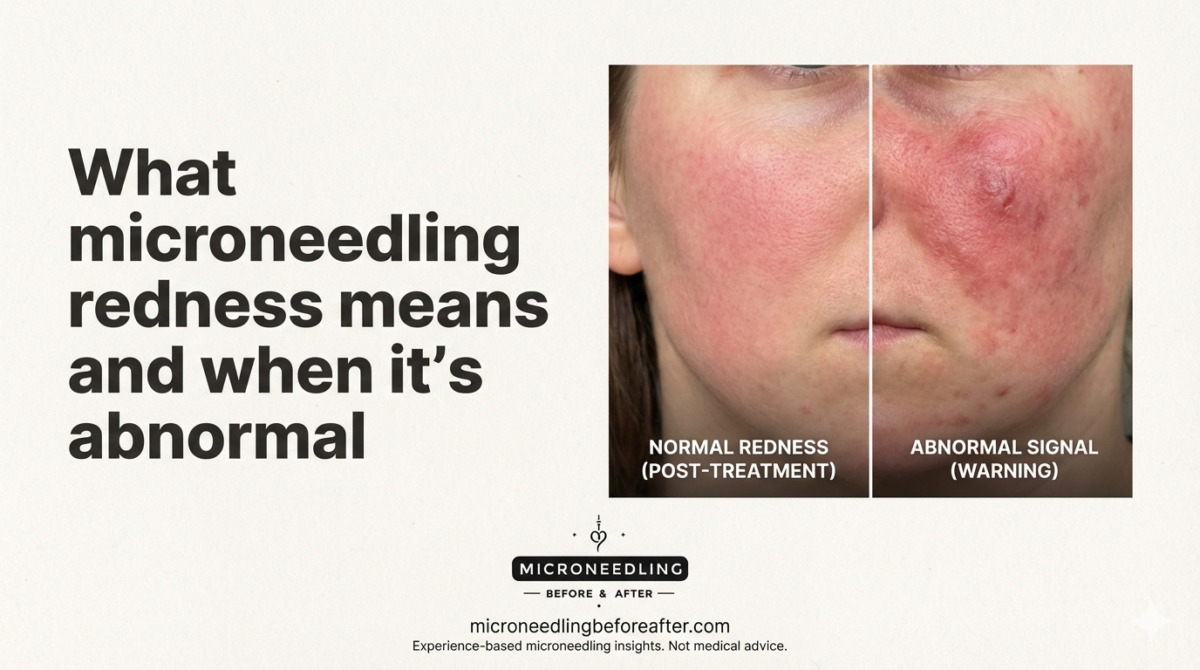
Uniform, diffuse redness across treated areas is the most common immediate reaction and signals increased blood flow. I expect this to be brightest right after the session and start fading within a day or two.

Pinpoint bleeding or petechiae

Tiny pinprick bleeding or pinpoint red dots occur when capillaries are briefly disrupted, particularly with deeper needling. I consider this normal as long as it stops quickly and does not progress to heavy bleeding.

Mild swelling and warmth

Some edema and heat are normal signs of inflammation and usually peak within the first 48 hours. I treat these symptoms conservatively with cold compresses and elevation when practical.

Factors that increase redness intensity and duration

Several variables influence how red and how long redness lasts, and I always review these before and after treatments.

Needle depth and device type

Deeper penetration and motorized pens often produce more intense and longer-lasting redness compared with shallow manual rollers. I advise clients that aggressive depth settings will extend recovery time.

Skin type and tone

Fitzpatrick skin types with more pigment may have different inflammatory responses and higher risk for pigment changes. I take a more cautious approach with darker skin tones to reduce prolonged inflammation and hyperpigmentation risk.

Pre-treatment skin condition

If the skin is inflamed, sunburned, actively acneic, or irritated at the time of needling, redness can be exaggerated and healing prolonged. I always counsel avoiding treatment on actively inflamed skin.

Medications and recent topical products

Retinoids, recent isotretinoin use, or blood thinners can increase sensitivity, bleeding, and healing time. I ensure these factors are disclosed before microneedling to tailor the plan and reduce complication risk.

Practitioner technique and sterility

Technique, hygiene, and device maintenance matter. Poor technique, reused needles, or inadequate sterility can increase trauma and risk of complications like infection — both of which prolong redness. I prefer experienced providers who follow strict protocols.

When redness becomes abnormal

Redness moves from normal to abnormal when it is excessive, worsens instead of improving, or is accompanied by concerning signs. I use specific criteria to determine whether to escalate care.

Red flags for abnormal redness

I consider these red flags:

  • Increasing intensity of redness after 48–72 hours rather than gradual fading.
  • Severe pain or worsening tenderness not explained by expected inflammation.
  • Foul-smelling or excessive purulent discharge.
  • Widespread swelling, blister formation, or spreading red streaks.
  • Systemic signs like fever, chills, or swollen lymph nodes. When any of these occur, I contact a clinician promptly.

Persistent discoloration beyond expected timeline

If redness remains pronounced past two weeks or evolves into dark brown or blue discoloration, I treat this as abnormal and investigate causes like post-inflammatory hyperpigmentation or vascular changes.

Causes of abnormal or prolonged redness

Understanding potential causes helps me identify the problem quickly and select appropriate treatment paths.

Infection (bacterial, fungal, or viral)

Infections can cause escalating redness, pain, pus, and systemic symptoms. I look for localized signs like warmth, increased tenderness, and purulent drainage and do not hesitate to seek medical care when I suspect infection.

Allergic contact dermatitis or topical reaction

Some products used after microneedling (actives, fragrances, preservatives) can cause allergic or irritant dermatitis that presents as persistent redness, swelling, and itch. I often suspect a reaction when redness is itchy and coincides with new product application.

Rosacea or inflammatory conditions flare

Microneedling can trigger flare-ups in rosacea-prone skin, leading to prolonged facial redness, telangiectasia, and burning sensations. I screen for rosacea history before recommending treatments and adjust protocols accordingly.

Post-inflammatory hyperpigmentation (PIH)

Prolonged inflammation can cause the skin to produce excess pigment, turning red areas brown or blue over time. I watch closely in darker skin and treat inflammation aggressively to lower PIH risk.

Hypertrophic scarring or keloid formation

Over-aggressive treatments, genetic predisposition, or trauma in susceptible individuals can lead to raised, red scar tissue. I consider prior history of keloids a strong contraindication and avoid deep needling in those cases.

Granulomatous or delayed hypersensitivity reactions

Rarely, a delayed immune reaction to materials (topical agents, particulate contaminants) can produce persistent redness, small nodules, and induration. I assess for nodular changes and refer to dermatology when necessary.

How to tell infection versus normal healing

Distinguishing infection from normal post-procedural inflammation is critical. I use specific comparisons to help me decide.

Característica Normal healing Infección
Momento Peaks within 48 hours, then improves Worsens after 48–72 hours
Dolor Mild-to-moderate, improving Increasing, severe pain
Discharge Clear or minimal serous fluid Purulent, yellow/green, or foul-smelling
Systemic signs None Fever, chills, malaise
Skin warmth Mild local warmth Intense warmth spreading beyond treated area
Lymphadenopathy None Tender swollen lymph nodes may be present

If I see patterns matching the “Infection” column, I seek medical evaluation and often start empiric treatment after assessment.

Immediate steps if abnormal redness appears

If my redness looks concerning, I have a clear, conservative checklist I follow before things escalate.

Stop topical products

I immediately stop any active serums, exfoliants, or fragranced products. I switch to a bland, fragrance-free barrier moisturizer and avoid unknown or new products until evaluated.

Keep the area clean and gentle

I cleanse with a mild, non-irritating cleanser and avoid scrubbing. I use clean hands, pat dry, and apply a sterile or clean dressing if drainage is present.

Apply cold compresses and avoid heat

Cold compresses can reduce swelling and transiently lessen redness and discomfort. I avoid hot showers, saunas, and exercise that increases blood flow to the face.

Contact the provider if worsening

If redness intensifies, drainage appears, or systemic symptoms develop, I contact the treating clinician or a dermatologist promptly for evaluation and possible testing (cultures, KOH, or biopsy).

When to seek urgent care

I seek urgent care if I have a fever, severe pain, rapidly spreading redness, or signs of systemic infection. I don’t delay because infections can progress quickly.

Treatments clinicians may use for abnormal redness

Treatment depends on the cause of prolonged redness, and I find that early targeted therapy often prevents long-term issues.

Topical or oral antibiotics

If a bacterial infection is suspected, clinicians may prescribe topical or oral antibiotics based on severity and culture results. I follow prescriptions exactly as directed to ensure eradication.

Topical steroids or antihistamines

For allergic or inflammatory reactions, a short course of topical steroids (under clinician guidance) or oral antihistamines can reduce inflammation and itch. I avoid unprescribed steroid use on infected areas.

Antifungal or antiviral therapy

If fungal or viral causes are suspected (e.g., herpes simplex reactivation), specific antifungal or antiviral medications are required. I obtain appropriate testing if the presentation is atypical.

Intralesional steroids or silicone for scarring

Raised hypertrophic scars or keloids may benefit from intralesional steroid injections, pressure therapy, or silicone sheets. I consult a dermatologist early if scarring is a concern.

Light-based therapies

Vascular lasers or IPL can address persistent redness and telangiectasia after inflammation has fully settled. I prefer waiting until active inflammation is gone before using lasers.

Diagnostic biopsy

If the lesion is unusual or not responding to standard treatments, a skin biopsy can clarify granulomatous or other pathologies. I recommend a biopsy when a diagnosis is unclear.

Preventing abnormal redness: pre-treatment screening and preparation

Most abnormal outcomes can be minimized with careful preparation and prudent treatment planning, and I make this a priority.

Medical and medication review

I ask about isotretinoin use, anticoagulants, immunosuppressants, and antibiotics before treatment. I postpone microneedling if someone has been on isotretinoin in the past 6–12 months or is actively immunosuppressed.

Skin assessment and treatment customization

I evaluate active acne, rosacea, or open lesions and avoid treating compromised skin. I tailor needle depth and session frequency to skin type and healing ability.

Patch testing for topical add-ons

When using platelet-rich plasma (PRP) or topical growth factors, I consider patch testing or conservative application to reduce the risk of allergic or bio-reactive issues. I also confirm sterile preparation to reduce infection risk.

Pre-treatment skincare adjustments

I advise stopping retinoids and strong exfoliants at least 3–7 days before, depending on tolerance and clinician guidance. I also recommend optimizing skin hydration and sun protection in the weeks prior.

My aftercare routine that I recommend

Good aftercare is the most important determinant of whether redness resolves quickly and without complication. This is the stepwise routine I usually recommend.

Periodo de tiempo Hacer No
Immediate (0–24 hours) Gently cleanse with lukewarm water and a mild cleanser; apply a sterile, bland moisturizer or healing ointment Use active serums, makeup, exfoliants, or harsh soaps
24–72 hours Continue gentle cleansing; cold compresses for swelling; sleep on clean pillows Sauna, heavy exercise, direct sun, and swimming
3–7 días Use fragrance-free barrier creams; avoid retinoids and acids Apply strong topicals, pick or peel at crusts
7–14 days Reintroduce gentle actives gradually if cleared by provider; always use SPF Aggressive resurfacing or deeper treatments

I recommend SPF 30+ mineral sunscreen and physical sun avoidance for several weeks, as UV exposure worsens inflammation and increases PIH risk.

Recommended product types

I prefer fragrance-free cleansers, ceramide-rich moisturizers, and occlusive ointments (like petrolatum) if needed. I avoid vitamin C, AHAs, BHAs, and retinoids for at least 1–2 weeks post-treatment unless cleared by the clinician.

Special populations and considerations

Certain groups need additional caution because their skin reacts differently or underlying conditions change the risk profile. I address these proactively.

Darker skin tones (Fitzpatrick IV–VI)

The risk of PIH is higher in darker skin, so I use more conservative depths and emphasize quick inflammation control. I also monitor post-procedure pigment changes and treat early to minimize long-term discoloration.

Rosacea-prone skin

I screen for rosacea and either avoid microneedling or use gentler protocols, because needling can exacerbate flushing and persistent redness. If someone has rosacea, I coordinate with their dermatologist on pre- and post-treatment measures.

Sensitive or reactive skin

Those with sensitive skin require slower, milder approaches and patch testing for topical adjuncts. I often recommend one superficial session first to assess tolerance.

Pregnant or breastfeeding people

I generally advise delaying elective microneedling during pregnancy due to limited data and potential for systemic absorption of topical adjuncts. I recommend discussing timing with obstetric care providers.

Immunocompromised individuals

People on immunosuppressants or with immune conditions have higher infection risk and delayed healing; I avoid microneedling or proceed only with careful medical clearance and strict aseptic technique.

How long until redness fully resolves and skin looks normal?

The endpoint depends on depth, skin type, and any complications, but I can give a practical framework.

Short-term procedures (superficial)

If needles were shallow, most redness resolves in 1–3 days, with occasional light pinkness up to a week. I allow makeup after 24–48 hours if the skin is intact.

Deeper procedures (medical or aggressive)

Deeper sessions can produce visible pinkness for 1–2 weeks and subtle residual pink undertones for several months as collagen remodeling continues. I warn clients that full remodeling outcomes occur over months, so some color variations are expected during that time.

Persistent or chronic redness

If redness persists beyond 2–4 weeks or increases after initial improvement, I evaluate for infection, ongoing inflammation, PIH, or vascular changes. I treat the cause rather than ignoring persistent redness.

Preguntas frecuentes (FAQ)

I answer common questions I hear to help you make informed choices and manage expectations.

Can I put makeup on after microneedling?

I generally recommend waiting at least 24–48 hours before applying non-mineral makeup, and only if the skin has no open wounds or heavy discharge. Mineral makeup may be better tolerated earlier, but less is more during early healing.

Is it normal to have scabs?

Small micro-crusts or scabs from superficial bleeding are normal and should not be forcibly removed. I let them fall off naturally while keeping the area moist with bland ointments.

Will redness always lead to scarring?

No. Normal post-procedure redness does not mean scarring, and most scarring is related to infection, aggressive treatment, or individual predisposition like keloids. I monitor healing to prevent scarring and treat early if it begins.

How long should I avoid exercise and sweating?

I recommend avoiding strenuous exercise and heavy sweating for 48–72 hours because sweat and increased blood flow can exacerbate redness and infection risk. Light activity is usually fine once redness and open areas have settled.

Can microneedling cause permanent redness?

Permanent redness is uncommon but can occur with vascular damage, rosacea exacerbation, or scar formation. I minimize this risk through conservative protocols and by addressing complications early.

My checklist before booking a microneedling session

I use a simple pre-treatment checklist to reduce the chance of abnormal redness and complications. I encourage others to adopt a similar approach.

  • Disclose medications and acne/isotretinoin history.
  • Avoid retinoids and exfoliants for several days before.
  • Assess for active infections, cold sores, or inflamed acne.
  • Discuss depth, needle type, and realistic downtime with the provider.
  • Plan sun avoidance and arrange post-procedure care.

I find that following these steps prevents many of the issues that cause abnormal redness.

When to see a dermatologist versus returning to your treatment provider

If the redness seems like a straightforward extension of normal healing, I call the original provider first for advice. If there are signs of infection, systemic symptoms, nodules, unusual pigment changes, or if the provider cannot confidently manage the problem, I seek a dermatologist for specialized assessment and interventions.

Reflexiones finales

Redness after microneedling is typically a normal sign of healing, and most cases settle with simple, gentle care. I take persistent, worsening, or unusual redness seriously and recommend early contact with a clinician when I see red flags — addressing problems early prevents long-term consequences and speeds recovery.

Exosoma vs. factor de crecimiento después de la microaguja

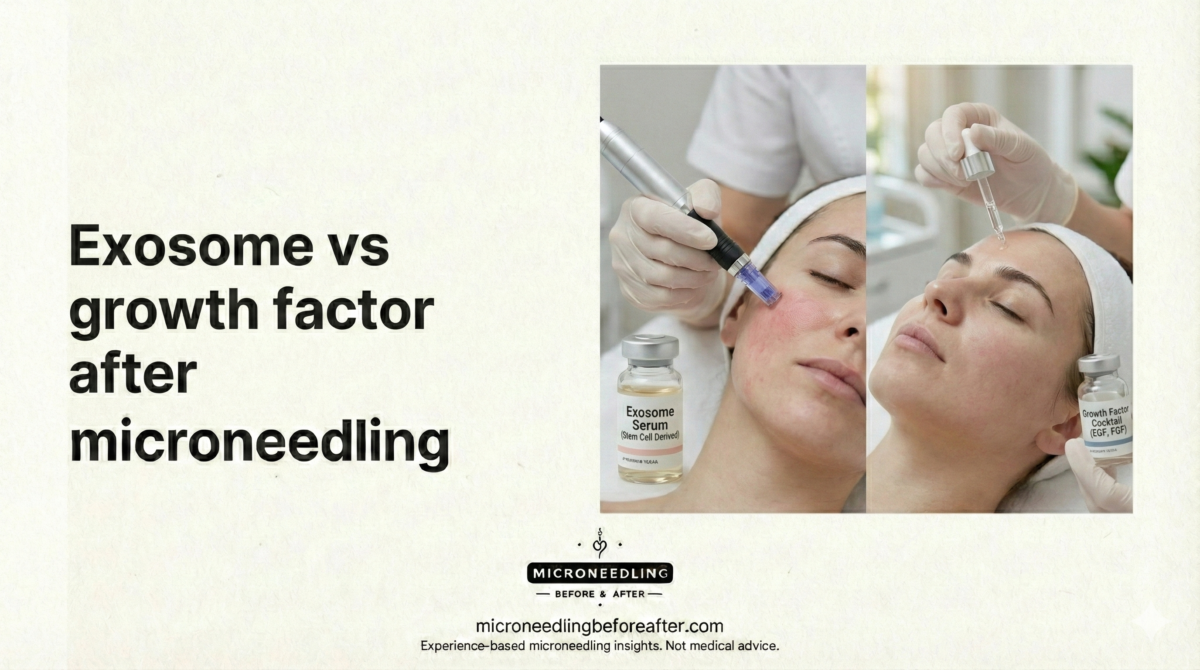
Exosomes vs growth factors after microneedling: compare mechanisms, evidence, safety, protocols, and practical guidance to help clinicians and patients choose.!

? Which is more effective and appropriate to use after microneedling: exosomes or growth factors?

Introduction: framing the decision between exosomes and growth factors

I often encounter patients and colleagues who ask whether exosomes or growth factors offer superior outcomes after microneedling. Both classes of biologics aim to enhance wound healing, collagen remodeling, and skin rejuvenation, but they differ fundamentally in composition, mechanism of action, regulatory status, and practical handling. In this article I explain those differences, review current evidence and safety considerations, and provide practical protocols and decision-making guidance to help clinicians and patients make an informed choice.

What microneedling does and why adjuncts matter

Microneedling creates controlled microinjuries in the epidermis and dermis to stimulate wound-healing pathways, collagen induction, and remodeling. I explain why topical biologic adjuncts are used after the procedure: microneedling transiently increases skin permeability, allowing larger molecules to reach dermal targets more effectively. By applying growth-promoting agents immediately after treatment, practitioners can theoretically amplify regenerative signaling and accelerate visible improvement.

Mechanistic overview of microneedling

I clarify that microneedling triggers a cascade of hemostasis, inflammation, proliferation, and remodeling. The initial inflammatory phase recruits platelets and immune cells, which secrete cytokines and growth factors that recruit fibroblasts and stimulate neocollagenesis. Adjunctive biologics aim to modify or enhance specific elements of these phases to improve quality and speed of repair.

What are exosomes?

Exosomes are extracellular vesicles (EVs) approximately 30–150 nm in diameter, secreted by many cell types, including mesenchymal stem/stromal cells (MSCs). I describe that they carry proteins, lipids, mRNA, microRNA, and other signaling molecules, functioning as intercellular messengers that modulate recipient cell behavior.

Biological actions of exosomes relevant to skin repair

I outline the primary mechanisms by which exosomes contribute to skin regeneration:

  • Modulation of immune response: exosomes can shift macrophage polarization toward a reparative phenotype (M2), reducing prolonged inflammation.
  • Angiogenesis: exosomal cargo often includes pro-angiogenic factors that support neovascularization.
  • Fibroblast activation and matrix remodeling: microRNAs and proteins within exosomes promote fibroblast proliferation and collagen synthesis while balancing matrix metalloproteinase activity.
  • Anti-apoptotic and antioxidant effects: exosomes can support cell survival and mitigate oxidative stress in injured tissue.

Sources and manufacturing of exosomes

I note that exosomes are commonly derived from cultured cells such as human umbilical cord MSCs, adipose-derived MSCs, or other cell lines. Manufacturing methods include differential centrifugation, ultrafiltration, size-exclusion chromatography, and tangential flow filtration, followed by characterization for particle size, concentration, and protein markers. Quality control and donor screening are critical for safety and reproducibility.

What are growth factors?

Growth factors are soluble proteins or peptides (for example, epidermal growth factor [EGF], platelet-derived growth factor [PDGF], basic fibroblast growth factor [bFGF/FGF-2], transforming growth factor-beta [TGF-β]) that bind specific cell surface receptors and activate intracellular signaling cascades that regulate proliferation, migration, differentiation, and extracellular matrix synthesis.

Biological actions of growth factors relevant to skin repair

I summarize major actions:

  • EGF: stimulates keratinocyte proliferation and migration, helping re-epithelialization.
  • PDGF: chemoattractant for fibroblasts and smooth muscle cells; promotes matrix deposition.
  • FGF: stimulates fibroblast proliferation and angiogenesis.
  • TGF-β: regulates collagen synthesis and remodeling; can promote scar formation at high concentrations. I emphasize that growth factors have direct receptor-mediated effects and a relatively well-understood dose-response relationship.

Key differences between exosomes and growth factors

The differences are significant in mechanism, complexity, and clinical implications. I provide a comparative table to make distinctions clear.

Característica Exosomes Factores de crecimiento
Composition Lipid bilayer vesicles carrying proteins, mRNA, microRNA, lipids Single or combinations of soluble protein/peptide ligands
Mecanismo Multimodal: deliver regulatory RNAs/proteins to modify cell behavior and intercellular signaling Receptor-mediated activation of signaling cascades (direct agonists)
Source variability Depends on donor cell type and culture conditions; complex cargo Recombinant proteins or isolated from plasma/platelets; defined molecules
Stability Often require cold chain; can be lyophilized/stabilized formulations available Some are stable topically; others require refrigeration; shorter half-lives in vivo
Regulatory status Evolving; many products lack formal FDA approval for aesthetic indications Recombinant growth factors have regulatory precedents in some indications; topical cosmetic formulations variable
Dosing complexity Difficult to standardize by bioactivity units; measured by particle count, protein content Easier to quantify in mass/concentration; defined dosing possible
Immunogenicity Potentially lower if from human sources, but risks exist with allogeneic material Low to moderate; depends on source and impurities
Biological breadth Broad immunomodulatory effects; can influence many pathways Targeted effects tied to specific receptors

I use this table to underline that exosomes are inherently more complex and potentially pleiotropic, whereas growth factors provide targeted signaling.

Evidence base: clinical and preclinical studies

I summarize preclinical and clinical evidence and emphasize quality and limitations.

Preclinical data

I note that numerous animal studies demonstrate that exosomes from MSCs accelerate wound closure, reduce scar formation, and increase collagen organization. Growth factors have long-standing preclinical evidence showing promotion of re-epithelialization and collagen synthesis.

Clinical data for growth factors after microneedling

I state that clinical studies on topical growth factors (often combined in serums) applied after microneedling show improvements in texture, firmness, and pigment irregularity. PRP (platelet-rich plasma), a growth-factor rich autologous option, has more robust clinical literature supporting improved outcomes when combined with microneedling for acne scars and skin rejuvenation.

Clinical data for exosomes after microneedling

I explain that clinical data for exosomes in aesthetic dermatology are emerging but more limited. Small case series and pilot studies report accelerated healing, reduced postprocedural erythema, and improvements in texture when exosome preparations are applied after microneedling. High-quality, randomized, controlled trials are currently sparse, and heterogeneity in exosome products complicates interpretation.

Limitations of current evidence

I emphasize that differences in product source, manufacturing, concentration, and application protocol make direct comparisons difficult. Regulatory oversight is limited for many cosmetic biologic products, which affects study reproducibility and product quality.

Safety and regulatory considerations

Safety is paramount in aesthetic procedures that incorporate biologic products.

Safety profile of growth factors

I indicate that topical growth factor products—especially autologous PRP—have generally favorable safety records, with transient erythema and swelling being the most common adverse events. Rare theoretical risks include aberrant cell proliferation if improperly used in oncology patients; thus I recommend screening for active malignancy and caution in patients with histories of skin cancer.

Safety profile of exosomes

I explain that exosomes are biologically active and can modulate immune responses. While clinical reports seldom show severe adverse events, potential risks include immune reactions, transmission of unwanted signals (e.g., pro-tumorigenic signals), and contamination if manufacturing controls are inadequate. Long-term safety data are limited.

Regulatory landscape

I summarize regulatory status concisely:

  • Many growth factor-containing topical cosmetics are classified as cosmetics and are subject to less stringent regulation than drugs.
  • Some growth factors have approved medical uses; for example, PDGF in wound healing products for diabetic ulcers.
  • Exosome products frequently occupy a gray zone; the FDA has issued warnings about some exosome products marketed with unapproved claims. I advise clinicians to verify product registration, manufacturing standards (GMP), and available safety data before use.

Practical aspects of product handling and storage

I cover logistics that affect clinical use.

Storage and shelf life

I note that many exosome products require cold storage (refrigeration or freezing) and may be supplied frozen or lyophilized to stabilize cargo. Growth factor serums and PRP preparations also may need refrigeration, but many topical growth factor creams are formulated for ambient stability.

Preparation and sterility

I emphasize that sterile technique is essential when applying any biologic to microneedled skin. Autologous PRP must be prepared in a closed system under aseptic conditions. Commercial exosome and growth factor preparations should be opened and applied according to manufacturer instructions to avoid contamination.

Timing and technique of application after microneedling

I outline practical protocols for maximizing effect and safety.

Immediate application vs delayed application

I explain that microneedling creates transient microchannels that usually close within 4–24 hours depending on depth. I recommend applying biologic adjuncts immediately after microneedling to maximize dermal delivery. However, in cases where product sterility is uncertain or when a patient has high infection risk, delaying or avoiding application may be prudent.

Typical protocol for application

I provide a sample stepwise protocol that I use or recommend:

  1. Perform microneedling under sterile conditions with appropriate topical anesthetic.
  2. Immediately cleanse the treated area with sterile saline.
  3. Apply the chosen biologic: exosome suspension, growth factor serum, or autologous PRP. Distribute evenly using sterile applicators, avoiding pooling.
  4. Optionally, perform a second pass of very light microneedling only if indicated and with caution.
  5. Apply a sterile occlusive dressing or barrier serum as directed by the product instructions.
  6. Advise the patient on postprocedure care and followup.

I add that clinicians should document product lot numbers and consent patients regarding the biologic used.

Dosage, concentration, and treatment frequency

Dosing varies widely among products. I discuss practical recommendations.

Exosomes

Because standardized bioactivity units are largely lacking, clinicians often rely on particle count (e.g., particles/mL) or total protein content. I recommend following manufacturer guidance, using the lowest effective dose validated in clinical studies when available, and monitoring response. Typical regimens involve a single application immediately postprocedure and repeated microneedling sessions every 4–6 weeks for a series of 3–4 treatments.

Growth factors

Topical growth factor serums usually list concentrations in micrograms or IU; follow manufacturer instructions. PRP dosing is determined by platelet concentration and volume; most microneedling protocols use 2–5 mL of PRP applied to the face. Treatment frequency commonly mirrors exosome protocols: 3–6 treatments spaced 4–6 weeks apart, with maintenance sessions every 3–6 months.

Comparative efficacy: expected outcomes and timelines

I describe realistic expectations for patients.

Early improvements

Both exosomes and growth factors can reduce postprocedural erythema and accelerate re-epithelialization within days to a week. Patients frequently notice reduced downtime when biologics are used.

Intermediate outcomes (weeks to months)

Improvements in texture, pore size, and superficial scar appearance may be apparent after 4–8 weeks as collagen remodeling proceeds. Growth factors encourage keratinocyte proliferation and fibroblast activation, while exosomes may produce more modulation of inflammation and angiogenesis.

Long-term remodeling (3–6 months)

Clinical improvements in scar appearance, skin laxity, and fine lines mature over months. I note that combining biologics with multiple microneedling sessions tends to yield cumulative benefits.

Combination approaches and synergistic use

I discuss how exosomes and growth factors can be used together or with other modalities.

Combining exosomes and growth factors

I explain that some clinicians combine exosomes and growth factor serums to harness complementary effects: growth factors for receptor-mediated proliferation and exosomes for immunomodulation and microRNA-mediated regulation. Limited clinical reports suggest additive benefits, but robust comparative trials are lacking.

Combining with PRP, lasers, and topical actives

I note that autologous PRP is commonly used with microneedling and has a strong evidence base. Combining microneedling with fractional lasers, chemical peels, or topical retinoids (after healing) can enhance outcomes. I caution against combining aggressive resurfacing modalities in the same session without careful patient selection.

Patient selection and contraindications

Patient safety requires appropriate screening.

Contraindications and cautions

I list common contraindications:

  • Active infection at the treatment site (herpes simplex, cellulitis, etc.)
  • Isotretinoin therapy within the last 6–12 months (I usually recommend a 6-month washout for microneedling; some practitioners extend to 12 months)
  • Uncontrolled diabetes with poor wound healing
  • Bleeding disorders or anticoagulant therapy (assess risk vs benefit)
  • Active cancer in the area or uncontrolled systemic malignancy (biologics may theoretically influence tumor microenvironment)
  • Pregnant or breastfeeding patients (limited safety data; use caution)
  • Known allergy to any product vehicle or excipient

Counseling and informed consent

I stress the importance of documenting a discussion that covers expected benefits, limitations, off-label or investigational product status, and potential risks, particularly with exosome products that may lack regulatory approval for cosmetic use.

Cost, accessibility, and practice considerations

I describe the economic and logistical factors that influence product choice.

Comparación de costos

Exosome products often command higher prices than standard topical growth factor serums or PRP due to production complexity and newer market positioning. Patients should be informed about cost per session and the expected number of sessions for meaningful results.

Availability and supply chain

I note that exosome availability can be inconsistent across markets, and cold chain logistics may limit access, particularly in smaller practices. Growth factor serums and PRP kits are generally more accessible.

Practical case examples

I provide two brief illustrative cases to contextualize usage.

Case 1: Moderate acne scarring, limited budget

I might recommend a series of microneedling treatments combined with autologous PRP, performed every 4–6 weeks for 3–4 sessions. PRP offers a cost-effective, autologous growth factor source with good evidence for scar improvement.

Case 2: Patient seeking accelerated healing and has higher budget

I may recommend microneedling with immediate application of a validated exosome product (from a reputable manufacturer with GMP standards), followed by maintenance sessions and adjunctive topical growth factor-based serums. I counsel regarding limited long-term safety data and higher cost.

How I evaluate product quality before use

I list practical quality checks I perform.

  • Verify manufacturing standards (GMP certification or equivalent).
  • Review available safety data and peer-reviewed studies on that product.
  • Request certificates of analysis and donor screening information for cell-derived products.
  • Confirm storage and handling recommendations, and ensure my clinic can maintain the cold chain.
  • Assess sterility packaging and single-use delivery systems to minimize contamination risk.

Postprocedure aftercare and instructions

I provide a simple aftercare protocol I give patients.

  • Keep the treated area clean and avoid active rubbing or exfoliation for 48–72 hours.
  • Avoid makeup for at least 24 hours if possible; when resumed, use mineral-based, non-comedogenic products.
  • Use gentle cleansers and broad-spectrum sunscreen daily once re-epithelialization is complete.
  • Avoid retinoids and strong actives for at least 5–7 days or per clinician guidance.
  • Report any signs of infection (increasing pain, purulent drainage, fever) immediately.

Common questions and misconceptions

I address frequently asked items I hear in practice.

Is one option guaranteed to be better?

I emphasize that no option guarantees superior outcomes for every patient. Clinical response depends on baseline skin condition, product quality, protocol, and patient adherence.

Are exosomes just a marketing fad?

I argue that exosomes have a strong biological rationale and encouraging preclinical data, but clinical adoption should be tempered by scrutiny of product quality and regulatory compliance. They are not merely a trend, but they require rigorous evidence to become mainstream.

Can I use exosomes or growth factors at home?

I advise against home microneedling combined with potent biologics. Professional administration ensures sterile technique, appropriate device settings, and safer handling of biologic products.

Practical decision-making framework

I propose a concise framework I use to decide between exosomes and growth factors for patients.

  1. Assess patient goals, budget, and tolerance for experimental options.
  2. Review medical history and contraindications.
  3. Prefer autologous PRP or well-characterized growth factor serums when regulatory clarity or budget is a priority.
  4. Consider exosomes if clinical urgency for accelerated healing exists, the patient is informed and consents to off-label use, and a high-quality product is available with appropriate safety documentation.
  5. Document rationale, product details, and follow-up plan.

Future directions and research needs

I outline areas where further data are needed.

  • Standardized potency assays for exosome bioactivity to allow dose-response studies.
  • High-quality randomized controlled trials comparing exosomes, growth factors, and PRP after microneedling.
  • Long-term safety monitoring for cell-derived biologics to assess oncologic and immunologic risks.
  • Head-to-head comparative effectiveness studies to guide best practices.

Summary and practical recommendations

I summarize the key takeaways and give actionable recommendations.

  • Both exosomes and growth factors can augment microneedling outcomes by enhancing healing and collagen remodeling.
  • Growth factors (including PRP) are better characterized clinically and are generally more cost-effective and accessible.
  • Exosomes offer broader, multimodal signaling that may confer advantages in modulating inflammation and scar quality, but evidence and regulatory oversight are currently more limited.
  • I recommend choosing products from reputable manufacturers, applying biologics immediately after microneedling under sterile conditions, and following established treatment intervals (usually 3–4 sessions, spaced 4–6 weeks).
  • Informed consent and thorough documentation are essential, especially when using products with evolving regulatory status.

Practical comparison table: quick-reference for clinicians

I include a concise table that clinicians can use as a quick reference during consultations.

Question Growth Factors (incl. PRP) Exosomes
Typical cost per session Low–moderate Moderate–high
Ease of access Widely available Variable; may require special ordering
Regulatory clarity Better (many topical GFs well-established) Evolving; many products unapproved for aesthetics
Clinical evidence after microneedling Moderate to strong (esp. PRP) Emerging; limited RCTs
Handling/storage Refrigeration common; easier Often requires cold chain; sensitive
Safety profile Generally favorable; autologous PRP safest Favorable in reports; long-term data limited
Ideal use case Routine scar/rejuvenation protocols Cases where immunomodulation/angiogenesis is targeted

Reflexiones finales

I encourage clinicians and patients to weigh evidence, safety, and practical constraints when choosing between exosomes and growth factors for use after microneedling. In my practice I tailor recommendations to the individual, prefer proven, reproducible options when evidence is stronger, and consider newer biologics like exosomes selectively when benefits justify cost and the product meets high manufacturing and safety standards. I remain attentive to emerging high-quality data that will further clarify the optimal use of these promising adjuncts.

Cambios en la piel entre el día 1 y el día 3 con microagujas

Microagujas Día 1 vs Día 3: enrojecimiento esperado, hinchazón, descamación, consejos de cuidado, tiempo de recuperación y cuándo llamar a su proveedor.

¿Has notado una gran diferencia en cómo se ve y se siente tu piel entre el primer y el tercer día después de la microaguja?

Cambios en la piel entre el día 1 y el día 3 con microagujas

Les explicaré lo que veo y siento el primer día en comparación con el tercer día después de la microaguja. Les explicaré por qué ocurren estos cambios, qué es normal y qué debería llevarme a consultar con un profesional.

¿Qué es la microaguja y cómo funciona?

Considero la microaguja como una lesión controlada en la piel que desencadena su reparación. Unas agujas diminutas crean microcanales en la epidermis y la dermis superficial, lo que desencadena una cascada de inflamación, producción de colágeno y remodelación.

Entiendo que este proceso es intencionalmente disruptivo porque los mecanismos de reparación del cuerpo crean nuevo colágeno y elastina, y mejoran la textura de la piel con el tiempo. Los efectos a corto plazo forman parte de esa secuencia de curación.

El cronograma básico que espero después de la microaguja

Me gusta dividir la fase inicial en inmediata (en cuestión de horas), día 1, día 2, día 3 y la primera semana. Cada fase presenta signos y sensaciones predecibles a medida que la piel pasa de la lesión aguda a la regeneración.

Me centraré principalmente en el contraste entre el día 1 y el día 3, pero también describiré las consecuencias inmediatas y lo que sigue durante la primera semana para que las diferencias tengan más sentido.

Consecuencias inmediatas (0–6 horas)

Normalmente noto enrojecimiento y sangrado localizado justo después del procedimiento. Puede haber una sensación de calor y tirantez, y a veces, un hormigueo o escozor, ya que los microcanales están frescos.

A menudo observo un líquido seroso (plasma transparente) en la superficie a medida que la piel reacciona, y los profesionales suelen aplicar sueros calmantes o solución salina estéril de inmediato. La esterilidad inmediata y un cuidado delicado son esenciales para reducir el riesgo de contaminación.

Cómo se ve y se siente mi piel en las primeras horas

Normalmente mi piel luce quemada por el sol y se siente caliente al tacto. Si hubo sangrado, suele ser mínimo y se detiene rápidamente.

Preveo que el enrojecimiento estético sea notable; es posible que haya hinchazón, pero suele ser leve. Evito aplicarme maquillaje y mantengo la zona protegida e hidratada.

Día 1: Fase inflamatoria aguda

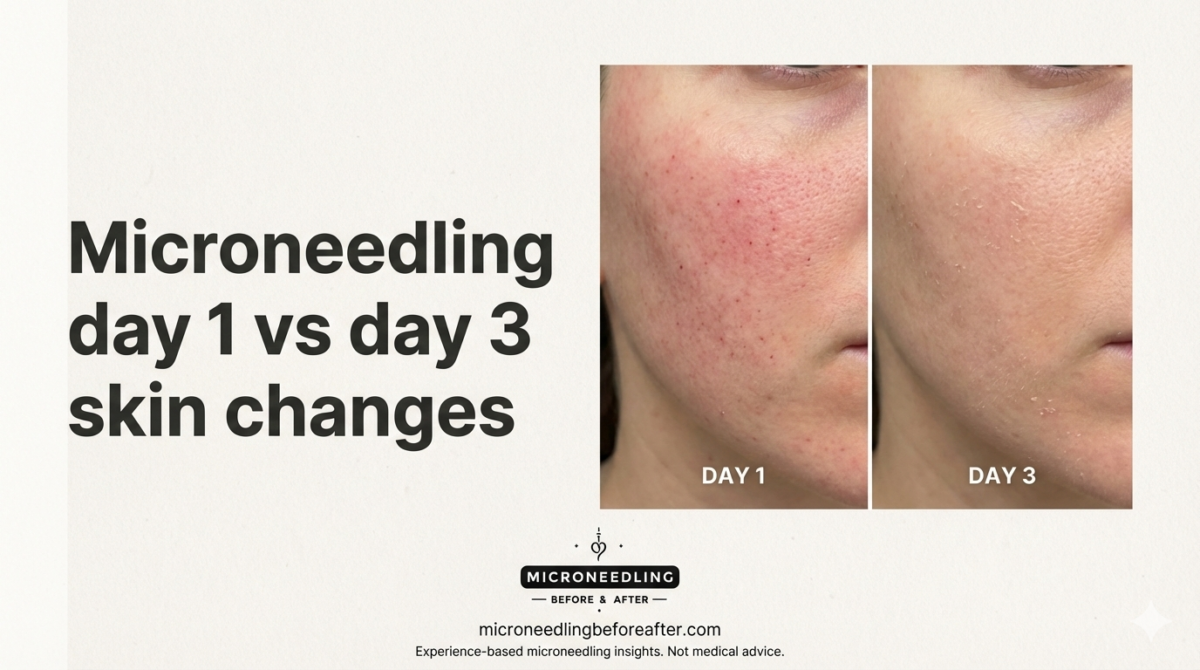
El primer día, preveo un eritema (enrojecimiento) considerable, sensibilidad y una sensación de tirantez y calor. La barrera cutánea está comprometida, por lo que soy más propensa a sufrir escozor por el agua, los productos para el cuidado de la piel o los cambios de temperatura.

Puedo notar pequeñas costras donde se produjeron microlesiones más intensas, y a veces un sangrado mínimo o restos de suero. Por mi parte, mantengo un cuidado mínimo y suave: limpio con agua tibia, aplico un suero hidratante suave y evito los irritantes.

Síntomas típicos que veo el día 1

Generalmente experimento:

  • Piel de color rojo brillante o rosada similar a una quemadura solar moderada.
  • Tirantez e hinchazón leve, especialmente alrededor de los ojos o en zonas delgadas.
  • Sensibilidad leve a moderada, pero no dolor intenso.
  • Posible sangrado o supuración puntual que desaparece en cuestión de horas.

Considero importante evitar el maquillaje, las cremas pesadas o cualquier ingrediente activo el primer día para prevenir irritaciones e infecciones.

¿Qué pasa debajo de mi piel el día 1?

Biológicamente, sé que el cuerpo está desencadenando una respuesta inflamatoria. Las células inmunitarias acuden rápidamente a las microlesiones, aumenta el flujo sanguíneo y se liberan citocinas para iniciar la limpieza y la señalización.

Esta inflamación es necesaria para atraer fibroblastos e iniciar las vías productoras de colágeno. Los microcanales permanecen abiertos, lo que hace que la piel sea más permeable y vulnerable.

Día 2: Curación temprana y mayor sensibilidad

Para el segundo día, el enrojecimiento suele persistir, pero puede empezar a extenderse o adquirir un tono rosado más apagado. A veces noto una hinchazón más pronunciada a medida que se acumulan líquidos, y pueden aparecer pequeñas costras o escamas a medida que la epidermis comienza a desprenderse de las células dañadas.

Tengo mucho cuidado de no frotarme ni arrancarme las costras. También sigo protegiendo mi piel de la luz solar y evito el ejercicio intenso que aumenta el flujo sanguíneo y la hinchazón.

En qué se diferencia el día 2 del día 1

El segundo día, mi piel puede sentirse más tirante y seca porque la barrera cutánea pierde agua. A veces noto una ligera descamación, y el maquillaje sigue sintiéndose arriesgado y puede acentuar los problemas de textura.

Por lo general, sigo evitando los activos tópicos y limito el cuidado de la piel a un limpiador suave, un suero hidratante (por ejemplo, ácido hialurónico) y un humectante muy suave.

Día 3: Transición a la fase de reparación

El tercer día marca un punto de inflexión para mí. El enrojecimiento suele empezar a disminuir, aunque puede persistir según la intensidad del tratamiento y factores individuales. Puedo notar más sequedad, descamación y una textura similar a la del papel de lija a medida que la epidermis superficial se desprende.

También empiezo a sentir menos sensibilidad y más tirantez a medida que se forma piel nueva. Los microcanales suelen cerrarse o reducirse mucho para el tercer día, y puedo empezar a considerar la reintroducción de tratamientos de apoyo muy suaves si mi médico me lo permite.

Signos comunes que veo el día 3

Observo con frecuencia:

  • Enrojecimiento reducido pero todavía presente, a menudo rosado en lugar de rojo brillante.
  • Sequedad, descamación o descamación leve a medida que las células epidérmicas muertas se desprenden.
  • Menos dolor y menos microcanales abiertos.
  • Un ligero picor a medida que avanza la curación, que trato de no rascarme.

Considero que este es el momento en que puedo volver al maquillaje ligero o al protector solar mineral con color si es necesario, pero procedo con cautela y solo con fórmulas no irritantes.

Comparación directa: Día 1 vs. Día 3

Preparé una comparación clara para poder ver rápidamente qué esperar y cómo adaptar mi atención.

Característica Día 1 Día 3
Enrojecimiento Brillante, intenso, parecido a una quemadura solar. Disminuido, más rosado, irregular
Hinchazón A menudo presente, leve-moderado Generalmente reducida, localizada
Dolor/sensibilidad Malestar moderado y agudo Más abajo, más como tirantez/picazón
Sangría Posible sangrado inmediato puntual Raro; canales mayormente cerrados
Supuración/Llorando Posible en las primeras horas Poco común; seco o ligeramente escamoso
Textura de la piel Suave pero inflamado Apretado, seco, escamoso, como papel de lija
Microcanales Abierto y altamente permeable Mayormente cerrado o resellable
Tolerancia al maquillaje No recomendado Puede ser tolerado (mineral/teñido)
Restricciones de actividad Estricto (sin sudar, sol) Todavía se necesita precaución, pero más flexibilidad.

Confío en esta tabla como una referencia rápida cuando decido con qué cuidado debo tratar mi piel en estos días.

¿Por qué ocurre el cambio del día 1 al día 3?

Entiendo que la respuesta inflamatoria inicial es responsable del enrojecimiento y la sensibilidad inmediatos. En un plazo de 48 a 72 horas, la inflamación disminuye y comienza la reepitelización: las células epidérmicas proliferan para volver a sellar la barrera.

También sé que el sistema inmunitario elimina los residuos y que los fibroblastos productores de colágeno empiezan a funcionar en cuestión de días. Estas reparaciones estructurales tempranas reducen el enrojecimiento y el dolor, pero a menudo producen tirantez y descamación a medida que la capa superior se normaliza.

Cómo las variables del tratamiento afectan los cambios del día 1 al 3

Soy consciente de que varios factores modifican la gravedad y la velocidad de la recuperación:

  • Profundidad de la aguja e intensidad del tratamiento: los tratamientos más profundos producen mayor enrojecimiento y una recuperación más lenta.
  • Tipo de dispositivo: Los dispositivos de lápiz automatizados y los sistemas profesionales a menudo producen perfiles de lesiones diferentes a los de los rodillos domésticos.
  • Tipo de piel y clasificación de Fitzpatrick: Los tonos de piel más oscuros tienen un mayor riesgo de hiperpigmentación posinflamatoria y pueden tener una cronología visible diferente.
  • Condiciones preexistentes: el acné activo, la rosácea o el eczema pueden complicar la curación.
  • Medicamentos: La isotretinoína reciente, los anticoagulantes o los inmunosupresores afectan los resultados.

Siempre le revelo mi historial médico a mi proveedor para que pueda ajustar la profundidad de la aguja y los cuidados previos y posteriores según corresponda.

Cuidados posteriores recomendados que sigo día a día

Mantengo una rutina conservadora y sensata que protege la función de barrera y fomenta la curación.

Postoperatorio inmediato (horas 0 a 6)

Si es necesario, doy toques suaves con una gasa estéril y utilizo solo el producto que me proporcionó el profesional sanitario, que suele ser un gel hidratante estéril o una solución salina. Evito tocarme la cara con las manos sin lavar y me siento en un ambiente limpio.

Intento mantener la cabeza elevada y evitar cualquier cosa que aumente el flujo sanguíneo facial. No aplico hielo directamente sobre la piel tratada a menos que me lo indiquen, y si uso frío, lo mantengo envuelto y por un tiempo breve.

Rutina del día 1

Me limpio la piel con un limpiador suave y sin espuma, y agua tibia. Aplico un sérum hidratante suave (generalmente ácido hialurónico o un sérum reparador recetado) y una crema hidratante ligera e hipoalergénica.

Me mantengo alejado del sol directo y evito el ejercicio intenso, la sauna, los baños calientes y el alcohol, que pueden aumentar el flujo sanguíneo. Duermo con la cabeza elevada si hay hinchazón.

Rutina del día 2

Continúo con la limpieza e hidratación suaves. Si se me indica, puedo añadir un producto de factor de crecimiento estéril o plasma rico en plaquetas (PRP) si se usa en la clínica, pero solo si lo aplica un profesional o un producto casero estéril de eficacia comprobada.

Sigo evitando ingredientes activos como ácidos y retinoides. Mantengo la protección solar y las barreras físicas cuando estoy al aire libre.

Rutina del día 3

Si el enrojecimiento ha empezado a disminuir y mi médico lo ha aprobado, reintroduzco cuidadosamente el maquillaje mínimo (mineral o no comedogénico) y mi protector solar. Utilizo productos suaves y evito los exfoliantes.

Continúo hidratando la piel para reducir la descamación y evitar rascarla o pelarla. Si noto calor persistente, enrojecimiento que empeora o secreción, consulto a mi médico de inmediato.

Lo que evito durante los días 1 a 3

Hago una lista estricta de actividades y productos prohibidos durante los primeros tres días:

  • Sin peelings químicos, exfoliaciones, retinoides ni ácidos.
  • No hay duchas de agua caliente, saunas ni baños de vapor.
  • No realizar ejercicio intenso que provoque sudoración abundante.
  • No nadar en piscinas, jacuzzis o aguas abiertas debido al riesgo de infección.
  • Sin manipulación facial agresiva (frotar, masajear).

Considero que seguir estas restricciones reduce las complicaciones y acelera la curación de forma cómoda.

Productos que uso y por qué

Prefiero ingredientes simples, clínicamente probados, que promuevan la hidratación y la reparación de la barrera sin irritantes.

  • Limpiador suave (sin espuma, sin fragancia): limpia sin resecar.
  • Sérum de ácido hialurónico: Rehidrata la dermis y la epidermis sin irritar.
  • Hidratante ligero a base de ceramidas o péptidos: favorece la reparación de la barrera cutánea.
  • Protector solar físico (óxido de zinc): protege la piel en proceso de curación de los cambios de pigmentación provocados por los rayos UV.

Evito la vitamina C, los AHA/BHA y los retinoides durante al menos una semana o más si mi piel todavía está inflamada.

Uso de factores de crecimiento, PRP y sueros

Si mi médico utilizó PRP durante la sesión, sigo su cronograma para volver a usar los productos habituales. El PRP y los sueros con factores de crecimiento pueden mejorar la cicatrización, pero deben ser estériles y administrarse clínicamente.

Solo utilizo sueros profesionales según las indicaciones. La calidad de los productos de factor de crecimiento de venta libre es variable, y confío en la orientación de mi médico.

Cuándo reanudar los tratamientos activos y más agresivos

Generalmente espero al menos de 3 a 7 días antes de volver a aplicar activos suaves y de 2 a 4 semanas antes de usar retinoides o exfoliantes químicos más fuertes, según la intensidad. Las instrucciones de mi médico son mi guía principal.

For deeper microneedling, I might wait 4–6 weeks to resume full-strength actives. I monitor my skin’s appearance and sensitivity and reintroduce one product at a time.

Potential complications I watch for

I am vigilant for signs that healing isn’t following a normal course and I’ll contact my provider for these:

  • Increasing redness, warmth, swelling after day 3.
  • Yellow or green discharge, crusting with malodor—possible infection.
  • Fever, chills, or generalized unwellness.
  • Severe pain not controlled by OTC analgesics.
  • New blistering or spreading rash.

I understand that early treatment of infection or other complications reduces scarring and adverse outcomes.

Post-inflammatory hyperpigmentation (PIH) risk

I pay close attention to sun protection because UV exposure during healing increases PIH risk. For darker skin tones, the risk of PIH is higher, so I use strict sun avoidance and physical sunscreens.

If I notice dark patches developing in the weeks after treatment, I consult my provider about topical lightening agents or procedures that are safe post-microneedling.

When to call my clinician versus managing at home

I call my clinician if:

  • Symptoms worsen after day 3.
  • I see pus, spreading redness, or hard painful nodules.
  • I have systemic symptoms like fever.

I manage mild redness, dryness, and peeling at home with conservative care—hydration, sunscreen, and patience—but I won’t hesitate to seek help for anything unusual.

How needle depth and treatment intensity affect day 1–3 differences

I find that treatments using longer needles (e.g., >1.0 mm) produce more dramatic day 1 redness and longer-lasting visible effects through day 3 and beyond. Superficial microneedling (0.25–0.5 mm) often produces milder symptoms that resolve faster.

I also consider the treated area: eyelids and neck are thinner and can swell more; thicker areas like the cheeks tolerate deeper passes with different healing.

Table: Typical recovery expectations by needle depth

Profundidad de la aguja (mm) Typical Day 1 Typical Day 3 Recovery Window
0.25–0.5 Mild redness Minimal pink, quick resolution 1–3 days
0.5–1.0 Moderate redness, some swelling Reduced redness, flaking begins 3–7 días
>1.0 Pronounced redness, swelling, possible pinpoint bleeding Pinkness persists, scabbing possible 1–2+ weeks

I use this table to set my expectations and plan aftercare.

Special considerations for different skin types

If I have oily or acne-prone skin, I avoid microneedling during active cystic outbreaks as it can spread bacteria. For sensitive or rosacea-prone skin, I choose conservative settings and anticipate longer redness.

I’m especially cautious with Fitzpatrick IV–VI skin tones, where PIH risk is higher. I consult a board-certified provider experienced with darker skin to minimize pigmentary complications.

Combinando la microaguja con otros tratamientos

I’m often asked if microneedling can be combined with PRP, vitamin C, or topical medications. Combining with PRP is a common clinic practice and may enhance results when done sterilely.

I avoid applying active topical ingredients immediately after microneedling at home, because microchannels increase absorption and can cause irritation or systemic exposure. If combining treatments, I defer to the practitioner’s protocol.

How to handle itching and flaking on day 3

When itchiness starts around day 3, I resist scratching and instead use a cool compress and increased hydration. I apply a bland, fragrance-free moisturizer frequently to reduce flaking and soothe the skin.

If itching is severe, I contact my clinician; they may recommend an oral antihistamine or a topical steroid for short-term relief.

Makeup and sunscreen use by day 3

I usually wait at least 48–72 hours before applying any makeup. By day 3, if my skin looks calmer, I choose mineral makeup (zinc/titanium dioxide) to reduce irritation and avoid occlusive, heavy formulations.

Sunscreen is essential—physical sunscreens are preferred until the barrier fully recovers. I make it a habit to reapply every two hours outdoors.

Nutrition, sleep, and lifestyle to support healing

I know that good sleep, hydration, a balanced diet, and avoiding smoking help my skin repair faster. I prioritize protein and vitamin C in my diet, which support collagen synthesis and healing.

I reduce alcohol intake and avoid NSAIDs right after treatment only if my clinician advises, because some practitioners prefer to avoid NSAIDs for the first 24–48 hours to not blunt the inflammatory phase that stimulates collagen production. I follow my clinician’s guidance here.

My realistic expectations for the first 3 days

I remind myself that the first three days are about healing, not results. I don’t expect smoother skin immediately; instead, I expect temporary redness, tightness, and some flaking.

Visible improvements in texture and tone typically emerge in weeks to months as collagen remodeling progresses. Patience and consistent aftercare give me the best outcome.

Frequently asked questions I get asked

Can I shower on day 1 or day 3?

I usually shower with lukewarm water and avoid high pressure directly to the face. By day 3 showers are more comfortable, but I still avoid hot water and steam.

I don’t use bath products with perfumes or exfoliating beads while my skin is healing.

Is it normal to have scabs or bleeding?

Pinpoint bleeding during or immediately after treatment can be normal, especially with deeper needling. Scabs may form but I don’t pick them; picking raises the risk of scarring and hyperpigmentation.

If scabbing is extensive or accompanied by pus, I contact my provider.

When can I exercise again?

I typically wait 48–72 hours before returning to strenuous exercise. By day 3 light activities are usually okay, but I avoid heavy sweating that could irritate the skin.

I listen to my body—if my face is still warm and puffy, I postpone intense workouts.

Final thoughts and practical checklist I follow for days 1–3

I keep a simple checklist to ensure I don’t compromise healing:

  • Cleanse gently twice daily with lukewarm water.
  • Hydrate with hyaluronic acid and a bland moisturizer.
  • Use physical sunscreen and avoid sun exposure.
  • No makeup for at least 48–72 hours; use mineral if necessary afterward.
  • Avoid actives, steam, and heavy exercise for 3+ days.
  • Watch for signs of infection and contact my clinician if they arise.

I find that following these guidelines helps me move from the acute inflammatory phase on day 1 to a calmer, reparative state by day 3, setting the stage for long-term improvement.

If you want, I can outline a specific product list suitable for sensitive post-microneedling care or a tailored timeline based on needle depth and skin type.

es_MXSpanish