
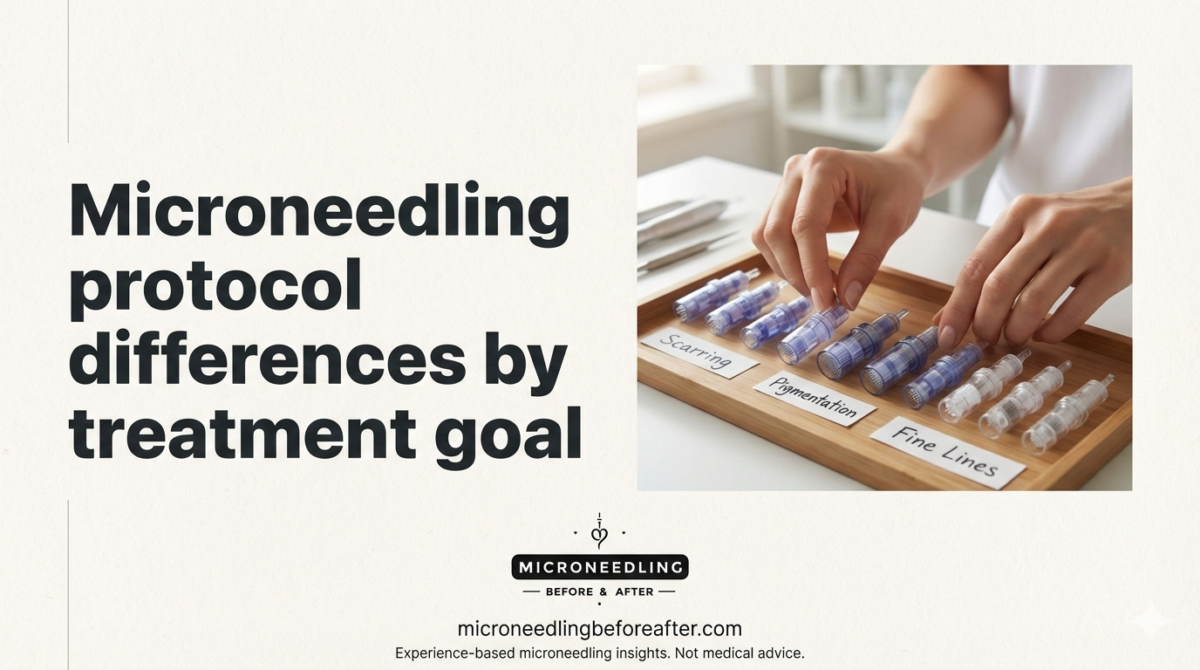
¿Qué protocolo específico de microagujas logrará mejor el resultado del tratamiento que busco para un paciente en particular?
Diferencias en el protocolo de microagujas según el objetivo del tratamiento
Presentaré una revisión estructurada y detallada de cómo cambian los protocolos de microagujas según el objetivo del tratamiento. Mi objetivo es brindar una guía práctica y basada en la evidencia para poder seleccionar la profundidad, los dispositivos, los accesorios y los cuidados posteriores que optimicen la seguridad y la eficacia para cada indicación.
Descripción general de la microaguja y los criterios de valoración clínicos
Considero que la microaguja es un término general que describe la microlesión controlada en la piel para inducir la remodelación y permitir la administración transdérmica. Destaco que los parámetros del tratamiento (longitud de la aguja, tipo de dispositivo, número de pases, punto final y accesorios) son los factores que ajusto para alcanzar objetivos específicos.
Justificación biológica y respuestas esperadas
Entiendo que la microaguja estimula las cascadas de cicatrización de heridas, la producción de colágeno y elastina, y puede modular la pigmentación y la cicatrización. Cabe destacar que los resultados dependen de la intensidad de la lesión, la anatomía focal y la biología del paciente, incluyendo la edad, el estado hormonal y el tipo de piel.
Tipos de dispositivos y diferencias prácticas
Resumiré las principales categorías de dispositivos y cómo influyen en la selección del protocolo. La elección del dispositivo afecta la precisión, el control de la profundidad, la comodidad del paciente y la compatibilidad con tratamientos complementarios como la radiofrecuencia o los fármacos biológicos tópicos.
Rodillos manuales, bolígrafos automatizados y microagujas RF
Prefiero las plumas automatizadas para el tratamiento facial porque proporcionan una entrada de aguja vertical uniforme y una profundidad ajustable. Utilizo la microaguja de radiofrecuencia cuando necesito coagulación térmica, además de una lesión mecánica, para reafirmar la piel o remodelar cicatrices.
Configuración de agujas, selección de cartuchos y preocupaciones sobre esterilidad
Selecciono los cartuchos según la longitud y el calibre de la aguja; siempre utilizo puntas estériles de un solo paciente para minimizar el riesgo de infección. Cabe destacar que el calibre de la aguja modifica el traumatismo tisular y el riesgo de sangrado: las agujas más delgadas causan menos sangrado, mientras que las agujas más gruesas pueden crear un canal más amplio para la administración tópica.
Variables clave del tratamiento y criterios de valoración clínicos
Definiré los parámetros que ajuste y los resultados clínicos que busco durante el tratamiento. Ser explícito sobre estas variables ayuda a estandarizar los protocolos y gestionar las expectativas.
Profundidad de la aguja, número de pasadas, velocidad y punto final
Normalmente varío la profundidad de la aguja desde 0,25 mm para el rejuvenecimiento superficial hasta 3,5 mm para cicatrices profundas de acné o estrías corporales. Evalúo el resultado según la respuesta del tejido: un sangrado puntiforme visible y una supuración serosa indican una alteración dérmica adecuada para la remodelación en muchos protocolos de cicatrices, mientras que el eritema sin sangrado puede ser suficiente para el rejuvenecimiento superficial.
Frecuencia y curso de los tratamientos
Normalmente espacio los tratamientos según la profundidad: tratamientos superficiales cada 2 a 4 semanas y protocolos más profundos o agresivos cada 6 a 8 semanas para permitir la remodelación. Adaptaré el número total de sesiones a la indicación; por ejemplo, de 3 a 6 sesiones para rejuvenecimiento general y de 4 a 8 (o más) para cicatrices de acné graves.
Selección de pacientes y tipos de piel Fitzpatrick
Evalúo cuidadosamente el historial del paciente, la medicación, la enfermedad cutánea activa y el tipo de piel Fitzpatrick para determinar el riesgo de hiperpigmentación postinflamatoria (HPI) y otras complicaciones. Clasificaré mi enfoque de forma diferente para Fitzpatrick I-III y IV-VI para reducir las secuelas pigmentarias.
Preparación previa al tratamiento y mitigación de riesgos
Suelo utilizar un régimen de preacondicionamiento para pacientes de alto riesgo: retinoides tópicos o factor de crecimiento en pacientes de bajo riesgo y blanqueamiento/inhibidores de la tirosinasa con precaución para pieles más oscuras. Suspendo los retinoides cuando sea clínicamente necesario y recomiendo profilaxis antiviral para pacientes con antecedentes de herpes simple al tratar las zonas periorales.
Protocolos por objetivo de tratamiento — tabla resumen
Proporcionaré una tabla general para comparar los parámetros recomendados por objetivo. Esto nos ayudará a mí y a los lectores a relacionar rápidamente los objetivos con la configuración típica del dispositivo, los criterios de valoración, la frecuencia y los complementos.
| Objetivo del tratamiento | Profundidad típica de la aguja (mm) | Tipo de dispositivo | Punto final | Frecuencia | Adjuntos comunes |
|---|---|---|---|---|---|
| Rejuvenecimiento superficial de la piel (líneas finas, textura) | 0,25–0,75 | Bolígrafo automatizado | Eritema difuso, sangrado nulo o mínimo | Cada 2 a 4 semanas, 3 a 6 sesiones | Factores de crecimiento tópicos, vitamina C |
| Cicatrices de acné (rodantes/en forma de vagón de carga) | 1,5–3,0 | Microagujas automatizadas con lápiz o RF | Sangrado puntual, exudado dérmico gelatinoso | Cada 6 a 8 semanas, 4 a 8 sesiones o más | Combinación de PRP/PRF, fragmentación cruzada y subcisión |
| Cicatrices quirúrgicas o hipertróficas | 1,5–3,0 (más profundo para cicatrices ancladas) | Microagujas automatizadas con lápiz/RF | Sangrado puntual, liberación del anclaje | Cada 6 a 8 semanas | Adjunto de inyección de esteroides, lámina de silicona |
| Hiperpigmentación / melasma | 0,25–1,0 (cauteloso) | Bolígrafo automatizado | Eritema leve, evitar sangrado abundante. | Cada 3 a 6 semanas, enfoque conservador | Ácido tranexámico tópico, alternativas a la hidroquinona |
| Restauración del cabello (cuero cabelludo) | 0,5–2,5 | Bolígrafo automatizado | Sangrado leve aceptable | Cada 2 a 6 semanas dependiendo de la profundidad | PRP/PRF, minoxidil tópico |
| Estrías | 1,5–3,5 | Bolígrafo o rodillo automatizado | Sangrado puntual | Cada 6 a 8 semanas | PRP, retinoides tópicos |
| Administración transdérmica (administración de fármacos/péptidos) | 0,25–1,5 | Bolígrafo automatizado | No se requiere sangrado para protocolos de solo parto | Según sea necesario | Mesoterapia, péptidos y administración de corticosteroides. |
Protocolos de rejuvenecimiento superficial de la piel
Realizo microagujas superficiales cuando el objetivo principal es mejorar el tono de la piel, el tamaño de los poros, las irregularidades leves de la textura y las líneas de expresión. Generalmente utilizo agujas cortas y menos pasadas para minimizar el tiempo de recuperación y el riesgo de pigmentación.
Configuración del dispositivo y complementos para el rejuvenecimiento
Normalmente, establezco una profundidad de aguja de entre 0,25 y 0,75 mm para el rejuvenecimiento facial. Aplico factores de crecimiento tópicos, péptidos o vitamina C inmediatamente después del tratamiento o mediante mesoterapia para aumentar la permeabilidad.
Frecuencia, resultados esperados y tiempo de inactividad
Programo sesiones cada 2 a 4 semanas y espero mejoras graduales en la textura después de 3 a 6 sesiones. Recomiendo a los pacientes que tengan eritema y descamación superficial de 24 a 72 horas, pero que la mayoría de ellos tengan un tiempo mínimo de inactividad social.
Protocolos para la cicatrización del acné
Abordo las cicatrices del acné con un protocolo que equilibra la profundidad para la inducción de colágeno con el potencial de hiperpigmentación, especialmente en pieles más oscuras. Selecciono ajustes más profundos y permito intervalos de cicatrización más largos.
Profundidad de la aguja, pases y estrategias de combinación
Para cicatrices onduladas y en forma de vagón, suelo utilizar microagujas de 1,5 a 3,0 mm, con múltiples pasadas dirigidas a las zonas cicatrizadas. Suelo combinar la microaguja con PRP/PRF o radiofrecuencia fraccionada para mejorar la remodelación del colágeno y, a veces, la acompañé con subcisión para liberar zonas ancladas profundamente.
Cronograma, resultados y gestión de expectativas
Espacié las sesiones cada 6 a 8 semanas y planifiqué de 4 a 8 sesiones o más, dependiendo de la gravedad de la cicatriz. Advierto que una mejoría significativa suele requerir terapias complementarias y que la maduración completa puede tardar varios meses.
Protocolos quirúrgicos y de cicatrices hipertróficas
Trato las cicatrices quirúrgicas con microagujas más profundas para suavizar la textura, aumentar la flexibilidad y permitir el uso de esteroides o adyuvantes enzimáticos. Adapto mi enfoque a la edad y la vascularidad de la cicatriz.
Estrategias para pacientes con hipertrofia y propensión a queloides
Soy precavido con los pacientes con propensión a queloides y suelo evitar protocolos agresivos; en su lugar, utilizo microagujas conservadoras combinadas con administración intralesional de esteroides. Vigilaré la aparición de signos de cicatrización hipertrófica y consideraré la derivación cuando las lesiones estén activas.
Consideraciones sobre la elección del dispositivo y la profundidad
Para cicatrices planas más antiguas, puedo usar 1,5-2,5 mm; para cicatrices ancladas, la subcisión combinada con microagujas a profundidades similares puede producir una mejoría del contorno. En algunos casos, utilizo microagujas de radiofrecuencia para introducir remodelación térmica, pero con cuidado de no exacerbar la hipertrofia cicatricial.
Protocolos para la hiperpigmentación y el melasma
Abordo los trastornos pigmentarios con cautela, ya que la microaguja puede tanto beneficiar como perjudicar la pigmentación. Reduzco la profundidad y la frecuencia de aplicación mientras utilizo agentes tópicos complementarios para prevenir la hiperpigmentación pigmentaria.
Protocolos conservadores y terapia tópica complementaria
Suelo seleccionar una profundidad de 0,25 a 1,0 mm con sangrado mínimo y uso ácido tranexámico, vitamina C o ácido azelaico en combinación. Evitaré tratamientos agresivos en melasmas activos y priorizaré la preparación con agentes tópicos durante varias semanas antes.
Reducción del riesgo de hipertensión inducida por el embarazo
Instauro protección solar estricta y puedo iniciar tratamientos tópicos con hidroquinona o alternativas sin hidroquinona antes del tratamiento para pieles de alto riesgo. Evitaré repetir las sesiones hasta que la inflamación remita y seré cauteloso con cualquier protocolo que produzca inflamación intensa.
Protocolos de restauración del cabello
Utilizo la microaguja en casos de alopecia androgenética y otras afecciones de pérdida de cabello para mejorar la administración transdérmica de factores de crecimiento y estimular los folículos. La profundidad de aplicación depende del cuero cabelludo y suele ser más profunda que en tratamientos faciales.
Profundidad, complementos de PRP/PRF y cadencia del tratamiento
Utilizo de 0,5 a 2,5 mm según la zona del cuero cabelludo y la densidad capilar; en la práctica habitual se utilizan 1,5 mm para las zonas del vértice. Suelo combinar la microaguja con PRP/PRF y programo sesiones cada 4-6 semanas para 3-6 tratamientos antes de una nueva evaluación.
Expectativas de resultados y terapia combinada
Les informo a mis pacientes que los resultados son progresivos y, a menudo, mejores cuando se combinan con terapias tópicas u orales como el minoxidil tópico o los antiandrógenos. Monitoreo la aparición de infecciones del cuero cabelludo y foliculitis, y enfatizo la adherencia a un programa de mantenimiento regular.
Protocolos para estrías
Trato las estrías con una profundidad relativamente agresiva para alcanzar la dermis inferior, ya que estas lesiones implican una alteración dérmica más profunda. Manejo las expectativas del paciente sobre una resolución parcial, no completa.
Profundidad de la aguja y terapias complementarias
Suelo usar profundidades de 1,5 a 3,5 mm en zonas del cuerpo con dermis más gruesa y las combino con PRP o retinoides tópicos para estimular la remodelación. Espaciaré los tratamientos cada 6 a 8 semanas y recomiendo varias sesiones para lograr cambios significativos en la textura.
Consideraciones de seguridad para la carrocería
Realizo pruebas en áreas extensas al tratarlas y aconsejo sobre el manejo del dolor durante sesiones más largas. Considero la posibilidad de usar anestesia local en sesiones más largas o profundas para mejorar la comodidad del paciente.
Administración transdérmica de fármacos y productos biológicos
Utilizo la microaguja para mejorar la penetración de productos tópicos, péptidos, moléculas pequeñas o biológicos con mínima absorción sistémica. La profundidad y el momento de la aplicación tópica son variables clave.
Profundidad y timing para una entrega óptima
Para la mayoría de las aplicaciones tópicas, utilizo de 0,25 a 1,5 mm para crear canales sin que se formen costras gruesas. Aplico el agente terapéutico inmediatamente después del procedimiento para aprovechar los microcanales abiertos y, a menudo, ocluyo brevemente para aumentar la captación.
Consideraciones de seguridad y farmacocinética
Me aseguro de que los agentes aplicados sean apropiados para uso transdérmico y asesoro a los pacientes sobre la posible exposición sistémica. Evito compuestos no aprobados o no validados y cumplo con las normativas locales.
Protocolos para la zona periorbitaria y labial
Trato la piel periorbitaria y los labios de forma conservadora debido a la dermis fina y al mayor riesgo de hematomas y cambios de pigmentación. Ajusto la profundidad y la técnica para garantizar la seguridad.
Ajustes de profundidad y matices técnicos
Normalmente utilizo entre 0,25 y 0,5 mm alrededor de los párpados y entre 0,5 y 1,0 mm en las zonas periorales. Realizo pases mínimos, mantengo una presión suave y evito puntos finales agresivos en estas zonas delicadas.
Adyuvantes y anestesia
Prefiero cremas anestésicas tópicas y una postura cómoda del paciente. Combino el tratamiento con PRP o rellenos de ácido hialurónico solo cuando está clínicamente indicado y tengo experiencia en estas áreas.
Anestesia, control del dolor y comodidad del paciente.
Equilibro la analgesia adecuada con la seguridad, especialmente para tratamientos más profundos o prolongados. Utilizo anestesia tópica para la mayoría de los tratamientos faciales y considero la posibilidad de realizar bloqueos nerviosos para sesiones corporales extensas.
Anestésicos tópicos, duración del adormecimiento y seguridad
Aplico anestésicos tópicos entre 30 y 45 minutos antes y utilizo oclusión para mejorar la penetración cuando es necesario. Soy cauteloso con las mezclas que contienen epinefrina en la cara y evito los bloqueos nerviosos faciales completos repetidos, a menos que esté capacitado y esté indicado.
Control de infecciones, contraindicaciones y lista de verificación de seguridad
Me apego a una estricta técnica aséptica, protocolos de cribado y revisión de contraindicaciones para minimizar las complicaciones. Documento el consentimiento informado y tomo fotografías basales como parte de mi práctica habitual.
Contraindicaciones absolutas y relativas
No trataré infecciones activas, uso intenso de isotretinoína en los últimos 6 a 12 meses, enfermedades autoinmunes activas con inestabilidad ni heridas sin cicatrizar. Tengo precaución en caso de embarazo, anticoagulación, predisposición a queloides y diabetes no controlada.
Reconocimiento y manejo de complicaciones
Monitoreo la infección, el eritema prolongado, las cicatrices y la hiperpigmentación postoperatoria (HPI). Trato la infección bacteriana de inmediato con antibióticos e inicio el tratamiento temprano de la HPI con aclaradores tópicos y protección solar.
Cuidados y expectativas posteriores al tratamiento
Proporciono instrucciones explícitas por escrito sobre los cuidados posteriores para controlar la inflamación, prevenir infecciones y mejorar los resultados. La adherencia del paciente influye considerablemente en los resultados, por lo que reviso lo que se debe y no se debe hacer, tanto verbalmente como por escrito.
Cuidados postoperatorios inmediatos y primera semana
Recomiendo una limpieza suave, evitar el maquillaje durante 24 horas siempre que sea posible, usar protector solar de forma continua y usar crioterapia para la hinchazón. Desaconsejo el uso de ingredientes activos como retinoides y ciertos ácidos durante al menos 48-72 horas o más si la epidermis está dañada.
Programa de cuidado y mantenimiento de la piel a largo plazo
Recomiendo un programa de mantenimiento adaptado a la indicación original; por ejemplo, tratamientos superficiales trimestrales para un rejuvenecimiento continuo o potenciadores periódicos de PRP para el mantenimiento capilar. También haré hincapié en la protección solar constante y en el uso de agentes tópicos que complementen los beneficios de la microaguja.
Combinando la microaguja con otras modalidades
Utilizo terapia combinada cuando los beneficios sinérgicos compensan el coste adicional o el tiempo de inactividad. Programaré las combinaciones con cuidado, ya sea en la misma sesión (p. ej., microagujas + PRP) o en varias semanas (p. ej., microagujas antes del láser).
PRP/PRF, peelings químicos, láseres y rellenos
Suelo combinar la microaguja con PRP/PRF para amplificar el estímulo colagenogénico, especialmente para la cicatrización y el rejuvenecimiento. Evito los láseres ablativos agresivos inmediatamente después de la microaguja; si los combino, programo los láseres después de la cicatrización inicial de la microaguja o viceversa, según los riesgos.
Documentación, consentimiento y medición de resultados
Documento fotos de referencia, configuración del dispositivo, profundidad de la aguja, número de pases, accesorios utilizados y la puntuación de dolor reportada por el paciente. También establezco objetivos de resultados medibles y plazos para la evaluación de seguimiento.
Fotografía estandarizada y escalas de resultados
Utilizo fotografías estandarizadas y escalas de clasificación de cicatrices (p. ej., clasificación global de cicatrices de acné) para cuantificar el progreso. También solicitaré mediciones de resultados reportadas por los pacientes para registrar su satisfacción subjetiva.
Solución de problemas comunes
Abordo la respuesta subóptima, la hiperpigmentación inflamatoria crónica (HIP), el eritema persistente y la infección con intervenciones específicas y modificaciones del protocolo. Rara vez abandono la microaguja, pero modifico la estrategia y considero modalidades alternativas cuando es necesario.
Falta de respuesta y escalada del protocolo
Si un paciente no responde tras una prueba adecuada, escalo el tratamiento aumentando la profundidad, añadiendo tratamientos complementarios como PRP o combinándolo con subcisión/radiofrecuencia. Reevaluaré el tipo de piel, la adherencia y la patología subyacente antes de modificar el tratamiento.
Manejo de la HIE y la inflamación prolongada
Inicié tratamientos conservadores de aclaramiento y evité otros desencadenantes inflamatorios cuando se presenta HIE. Considero el uso de ácido tranexámico tópico, ácido azelaico y ciclos cortos de esteroides de baja potencia en brotes inflamatorios, con la asesoría de un especialista.
Mesas prácticas para uso clínico
Proporciono una hoja de trucos clínicos que resume indicaciones, profundidades, frecuencias y complementos para referencia de rutina en la práctica.
| Indicación | Profundidad (mm) | Frecuencia | Punto final | Adjunto común |
|---|---|---|---|---|
| Líneas finas / textura superficial | 0,25–0,75 | 2–4 semanas | Eritema | Péptidos tópicos |
| Cicatrices moderadas de acné | 1,5–2,5 | 6–8 semanas | Sangrado puntual | PRP/PRF |
| Cicatrices graves de acné | 2,5–3,5 | 6–10 semanas | Sangrado + remodelación | RF, subcisión |
| Melasma / hiperpigmentación | 0,25–1,0 (conservador) | 3–6 semanas | Eritema leve | Ácido tranexámico |
| Restauración del cabello del cuero cabelludo | 1.0–2.5 | 4–6 semanas | Sangrado leve aceptable | PRP, minoxidil tópico |
| Estrías | 1,5–3,5 | 6–8 semanas | Sangría | PRP, retinoides tópicos |
| Lista de verificación de cuidados previos y posteriores |
|---|
| Revisar medicamentos y contraindicaciones |
| Pretratar con agentes tópicos si está indicado |
| Asegúrese de que las agujas y los cartuchos sean estériles y de un solo uso. |
| Aplicar anestesia tópica según sea necesario. |
| Post-tratamiento: limpieza suave, sin maquillaje durante 24 h, protector solar, evitar retinoides durante 48-72 h |
| Proporcionar contacto de emergencia en caso de infección o eventos adversos |
Consideraciones éticas y regulatorias
Me aseguro de que todos los productos utilizados con microagujas cumplan con los marcos regulatorios y de que los usos fuera de indicación se divulguen en el consentimiento. Me mantendré al día con las regulaciones locales relacionadas con los productos sanguíneos autólogos (p. ej., PRP/PRF) y las aprobaciones de dispositivos.
Consentimiento informado y educación del paciente
Obtengo el consentimiento informado por escrito que describe los beneficios, riesgos, alternativas y costos esperados. Me aseguro de que los pacientes comprendan el tiempo de recuperación, la necesidad de múltiples tratamientos y los requisitos de mantenimiento.
Reflexiones finales y marco de toma de decisiones clínicas
Considero la microaguja como una herramienta personalizable, no como un tratamiento universal. Al adaptar sistemáticamente la profundidad de la aguja, el dispositivo, el resultado, los accesorios y el cuidado posterior al objetivo específico del tratamiento y al fenotipo del paciente, puedo optimizar los resultados y minimizar las complicaciones.
Algoritmo práctico que utilizo en la clínica
- Definir el objetivo principal del tratamiento y establecer expectativas de resultados realistas.
- Evaluar el tipo de piel, el tipo de cicatriz y el historial médico.
- Elija el dispositivo, la profundidad y el punto final adecuados para el objetivo.
- Seleccione complementos como PRP, agentes tópicos o terapias combinadas.
- Proporcionar preparación previa al tratamiento e instrucciones detalladas para el cuidado posterior.
- Documentar la configuración y los resultados y adaptar el plan en función de la respuesta.
Utilizaré este marco para seleccionar protocolos de microagujas de forma fiable y reproducible. Aplicar estas decisiones estructuradas me ayudará a garantizar que cada paciente reciba un protocolo seguro y adaptado a sus objetivos.
 Spanish
  English