google.com, pub-2032008856654686, DIRECTO, f08c47fec0942fa0

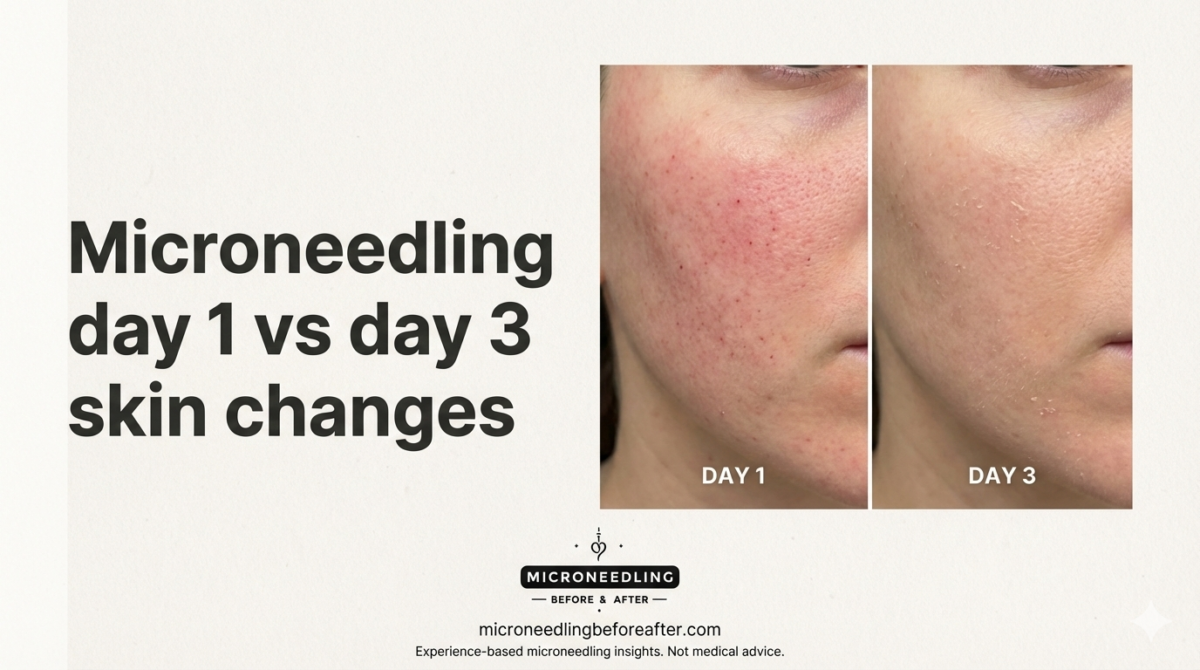
Cambios en la piel entre el día 1 y el día 3 con microagujas

Microagujas Día 1 vs Día 3: enrojecimiento esperado, hinchazón, descamación, consejos de cuidado, tiempo de recuperación y cuándo llamar a su proveedor.

¿Has notado una gran diferencia en cómo se ve y se siente tu piel entre el primer y el tercer día después de la microaguja?

Cambios en la piel entre el día 1 y el día 3 con microagujas

Les explicaré lo que veo y siento el primer día en comparación con el tercer día después de la microaguja. Les explicaré por qué ocurren estos cambios, qué es normal y qué debería llevarme a consultar con un profesional.

¿Qué es la microaguja y cómo funciona?

Considero la microaguja como una lesión controlada en la piel que desencadena su reparación. Unas agujas diminutas crean microcanales en la epidermis y la dermis superficial, lo que desencadena una cascada de inflamación, producción de colágeno y remodelación.

Entiendo que este proceso es intencionalmente disruptivo porque los mecanismos de reparación del cuerpo crean nuevo colágeno y elastina, y mejoran la textura de la piel con el tiempo. Los efectos a corto plazo forman parte de esa secuencia de curación.

El cronograma básico que espero después de la microaguja

Me gusta dividir la fase inicial en inmediata (en cuestión de horas), día 1, día 2, día 3 y la primera semana. Cada fase presenta signos y sensaciones predecibles a medida que la piel pasa de la lesión aguda a la regeneración.

Me centraré principalmente en el contraste entre el día 1 y el día 3, pero también describiré las consecuencias inmediatas y lo que sigue durante la primera semana para que las diferencias tengan más sentido.

Consecuencias inmediatas (0–6 horas)

Normalmente noto enrojecimiento y sangrado localizado justo después del procedimiento. Puede haber una sensación de calor y tirantez, y a veces, un hormigueo o escozor, ya que los microcanales están frescos.

A menudo observo un líquido seroso (plasma transparente) en la superficie a medida que la piel reacciona, y los profesionales suelen aplicar sueros calmantes o solución salina estéril de inmediato. La esterilidad inmediata y un cuidado delicado son esenciales para reducir el riesgo de contaminación.

Cómo se ve y se siente mi piel en las primeras horas

Normalmente mi piel luce quemada por el sol y se siente caliente al tacto. Si hubo sangrado, suele ser mínimo y se detiene rápidamente.

Preveo que el enrojecimiento estético sea notable; es posible que haya hinchazón, pero suele ser leve. Evito aplicarme maquillaje y mantengo la zona protegida e hidratada.

Día 1: Fase inflamatoria aguda

El primer día, preveo un eritema (enrojecimiento) considerable, sensibilidad y una sensación de tirantez y calor. La barrera cutánea está comprometida, por lo que soy más propensa a sufrir escozor por el agua, los productos para el cuidado de la piel o los cambios de temperatura.

Puedo notar pequeñas costras donde se produjeron microlesiones más intensas, y a veces un sangrado mínimo o restos de suero. Por mi parte, mantengo un cuidado mínimo y suave: limpio con agua tibia, aplico un suero hidratante suave y evito los irritantes.

Síntomas típicos que veo el día 1

Generalmente experimento:

  • Piel de color rojo brillante o rosada similar a una quemadura solar moderada.
  • Tirantez e hinchazón leve, especialmente alrededor de los ojos o en zonas delgadas.
  • Sensibilidad leve a moderada, pero no dolor intenso.
  • Posible sangrado o supuración puntual que desaparece en cuestión de horas.

Considero importante evitar el maquillaje, las cremas pesadas o cualquier ingrediente activo el primer día para prevenir irritaciones e infecciones.

¿Qué pasa debajo de mi piel el día 1?

Biológicamente, sé que el cuerpo está desencadenando una respuesta inflamatoria. Las células inmunitarias acuden rápidamente a las microlesiones, aumenta el flujo sanguíneo y se liberan citocinas para iniciar la limpieza y la señalización.

Esta inflamación es necesaria para atraer fibroblastos e iniciar las vías productoras de colágeno. Los microcanales permanecen abiertos, lo que hace que la piel sea más permeable y vulnerable.

Día 2: Curación temprana y mayor sensibilidad

Para el segundo día, el enrojecimiento suele persistir, pero puede empezar a extenderse o adquirir un tono rosado más apagado. A veces noto una hinchazón más pronunciada a medida que se acumulan líquidos, y pueden aparecer pequeñas costras o escamas a medida que la epidermis comienza a desprenderse de las células dañadas.

Tengo mucho cuidado de no frotarme ni arrancarme las costras. También sigo protegiendo mi piel de la luz solar y evito el ejercicio intenso que aumenta el flujo sanguíneo y la hinchazón.

En qué se diferencia el día 2 del día 1

El segundo día, mi piel puede sentirse más tirante y seca porque la barrera cutánea pierde agua. A veces noto una ligera descamación, y el maquillaje sigue sintiéndose arriesgado y puede acentuar los problemas de textura.

Por lo general, sigo evitando los activos tópicos y limito el cuidado de la piel a un limpiador suave, un suero hidratante (por ejemplo, ácido hialurónico) y un humectante muy suave.

Día 3: Transición a la fase de reparación

El tercer día marca un punto de inflexión para mí. El enrojecimiento suele empezar a disminuir, aunque puede persistir según la intensidad del tratamiento y factores individuales. Puedo notar más sequedad, descamación y una textura similar a la del papel de lija a medida que la epidermis superficial se desprende.

También empiezo a sentir menos sensibilidad y más tirantez a medida que se forma piel nueva. Los microcanales suelen cerrarse o reducirse mucho para el tercer día, y puedo empezar a considerar la reintroducción de tratamientos de apoyo muy suaves si mi médico me lo permite.

Signos comunes que veo el día 3

Observo con frecuencia:

  • Enrojecimiento reducido pero todavía presente, a menudo rosado en lugar de rojo brillante.
  • Sequedad, descamación o descamación leve a medida que las células epidérmicas muertas se desprenden.
  • Menos dolor y menos microcanales abiertos.
  • Un ligero picor a medida que avanza la curación, que trato de no rascarme.

Considero que este es el momento en que puedo volver al maquillaje ligero o al protector solar mineral con color si es necesario, pero procedo con cautela y solo con fórmulas no irritantes.

Comparación directa: Día 1 vs. Día 3

Preparé una comparación clara para poder ver rápidamente qué esperar y cómo adaptar mi atención.

Característica Día 1 Día 3
Enrojecimiento Brillante, intenso, parecido a una quemadura solar. Disminuido, más rosado, irregular
Hinchazón A menudo presente, leve-moderado Generalmente reducida, localizada
Dolor/sensibilidad Malestar moderado y agudo Más abajo, más como tirantez/picazón
Sangría Posible sangrado inmediato puntual Raro; canales mayormente cerrados
Supuración/Llorando Posible en las primeras horas Poco común; seco o ligeramente escamoso
Textura de la piel Suave pero inflamado Apretado, seco, escamoso, como papel de lija
Microcanales Abierto y altamente permeable Mayormente cerrado o resellable
Tolerancia al maquillaje No recomendado Puede ser tolerado (mineral/teñido)
Restricciones de actividad Estricto (sin sudar, sol) Todavía se necesita precaución, pero más flexibilidad.

Confío en esta tabla como una referencia rápida cuando decido con qué cuidado debo tratar mi piel en estos días.

¿Por qué ocurre el cambio del día 1 al día 3?

Entiendo que la respuesta inflamatoria inicial es responsable del enrojecimiento y la sensibilidad inmediatos. En un plazo de 48 a 72 horas, la inflamación disminuye y comienza la reepitelización: las células epidérmicas proliferan para volver a sellar la barrera.

También sé que el sistema inmunitario elimina los residuos y que los fibroblastos productores de colágeno empiezan a funcionar en cuestión de días. Estas reparaciones estructurales tempranas reducen el enrojecimiento y el dolor, pero a menudo producen tirantez y descamación a medida que la capa superior se normaliza.

Cómo las variables del tratamiento afectan los cambios del día 1 al 3

Soy consciente de que varios factores modifican la gravedad y la velocidad de la recuperación:

  • Profundidad de la aguja e intensidad del tratamiento: los tratamientos más profundos producen mayor enrojecimiento y una recuperación más lenta.
  • Tipo de dispositivo: Los dispositivos de lápiz automatizados y los sistemas profesionales a menudo producen perfiles de lesiones diferentes a los de los rodillos domésticos.
  • Tipo de piel y clasificación de Fitzpatrick: Los tonos de piel más oscuros tienen un mayor riesgo de hiperpigmentación posinflamatoria y pueden tener una cronología visible diferente.
  • Condiciones preexistentes: el acné activo, la rosácea o el eczema pueden complicar la curación.
  • Medicamentos: La isotretinoína reciente, los anticoagulantes o los inmunosupresores afectan los resultados.

Siempre le revelo mi historial médico a mi proveedor para que pueda ajustar la profundidad de la aguja y los cuidados previos y posteriores según corresponda.

Cuidados posteriores recomendados que sigo día a día

Mantengo una rutina conservadora y sensata que protege la función de barrera y fomenta la curación.

Postoperatorio inmediato (horas 0 a 6)

Si es necesario, doy toques suaves con una gasa estéril y utilizo solo el producto que me proporcionó el profesional sanitario, que suele ser un gel hidratante estéril o una solución salina. Evito tocarme la cara con las manos sin lavar y me siento en un ambiente limpio.

Intento mantener la cabeza elevada y evitar cualquier cosa que aumente el flujo sanguíneo facial. No aplico hielo directamente sobre la piel tratada a menos que me lo indiquen, y si uso frío, lo mantengo envuelto y por un tiempo breve.

Rutina del día 1

Me limpio la piel con un limpiador suave y sin espuma, y agua tibia. Aplico un sérum hidratante suave (generalmente ácido hialurónico o un sérum reparador recetado) y una crema hidratante ligera e hipoalergénica.

Me mantengo alejado del sol directo y evito el ejercicio intenso, la sauna, los baños calientes y el alcohol, que pueden aumentar el flujo sanguíneo. Duermo con la cabeza elevada si hay hinchazón.

Rutina del día 2

Continúo con la limpieza e hidratación suaves. Si se me indica, puedo añadir un producto de factor de crecimiento estéril o plasma rico en plaquetas (PRP) si se usa en la clínica, pero solo si lo aplica un profesional o un producto casero estéril de eficacia comprobada.

Sigo evitando ingredientes activos como ácidos y retinoides. Mantengo la protección solar y las barreras físicas cuando estoy al aire libre.

Rutina del día 3

Si el enrojecimiento ha empezado a disminuir y mi médico lo ha aprobado, reintroduzco cuidadosamente el maquillaje mínimo (mineral o no comedogénico) y mi protector solar. Utilizo productos suaves y evito los exfoliantes.

Continúo hidratando la piel para reducir la descamación y evitar rascarla o pelarla. Si noto calor persistente, enrojecimiento que empeora o secreción, consulto a mi médico de inmediato.

Lo que evito durante los días 1 a 3

Hago una lista estricta de actividades y productos prohibidos durante los primeros tres días:

  • Sin peelings químicos, exfoliaciones, retinoides ni ácidos.
  • No hay duchas de agua caliente, saunas ni baños de vapor.
  • No realizar ejercicio intenso que provoque sudoración abundante.
  • No nadar en piscinas, jacuzzis o aguas abiertas debido al riesgo de infección.
  • Sin manipulación facial agresiva (frotar, masajear).

Considero que seguir estas restricciones reduce las complicaciones y acelera la curación de forma cómoda.

Productos que uso y por qué

Prefiero ingredientes simples, clínicamente probados, que promuevan la hidratación y la reparación de la barrera sin irritantes.

  • Limpiador suave (sin espuma, sin fragancia): limpia sin resecar.
  • Sérum de ácido hialurónico: Rehidrata la dermis y la epidermis sin irritar.
  • Hidratante ligero a base de ceramidas o péptidos: favorece la reparación de la barrera cutánea.
  • Protector solar físico (óxido de zinc): protege la piel en proceso de curación de los cambios de pigmentación provocados por los rayos UV.

Evito la vitamina C, los AHA/BHA y los retinoides durante al menos una semana o más si mi piel todavía está inflamada.

Uso de factores de crecimiento, PRP y sueros

Si mi médico utilizó PRP durante la sesión, sigo su cronograma para volver a usar los productos habituales. El PRP y los sueros con factores de crecimiento pueden mejorar la cicatrización, pero deben ser estériles y administrarse clínicamente.

Solo utilizo sueros profesionales según las indicaciones. La calidad de los productos de factor de crecimiento de venta libre es variable, y confío en la orientación de mi médico.

Cuándo reanudar los tratamientos activos y más agresivos

Generalmente espero al menos de 3 a 7 días antes de volver a aplicar activos suaves y de 2 a 4 semanas antes de usar retinoides o exfoliantes químicos más fuertes, según la intensidad. Las instrucciones de mi médico son mi guía principal.

For deeper microneedling, I might wait 4–6 weeks to resume full-strength actives. I monitor my skin’s appearance and sensitivity and reintroduce one product at a time.

Potential complications I watch for

I am vigilant for signs that healing isn’t following a normal course and I’ll contact my provider for these:

  • Increasing redness, warmth, swelling after day 3.
  • Yellow or green discharge, crusting with malodor—possible infection.
  • Fever, chills, or generalized unwellness.
  • Severe pain not controlled by OTC analgesics.
  • New blistering or spreading rash.

I understand that early treatment of infection or other complications reduces scarring and adverse outcomes.

Riesgo de hiperpigmentación postinflamatoria (HPI)

I pay close attention to sun protection because UV exposure during healing increases PIH risk. For darker skin tones, the risk of PIH is higher, so I use strict sun avoidance and physical sunscreens.

If I notice dark patches developing in the weeks after treatment, I consult my provider about topical lightening agents or procedures that are safe post-microneedling.

When to call my clinician versus managing at home

I call my clinician if:

  • Symptoms worsen after day 3.
  • I see pus, spreading redness, or hard painful nodules.
  • I have systemic symptoms like fever.

I manage mild redness, dryness, and peeling at home with conservative care—hydration, sunscreen, and patience—but I won’t hesitate to seek help for anything unusual.

How needle depth and treatment intensity affect day 1–3 differences

I find that treatments using longer needles (e.g., >1.0 mm) produce more dramatic day 1 redness and longer-lasting visible effects through day 3 and beyond. Superficial microneedling (0.25–0.5 mm) often produces milder symptoms that resolve faster.

I also consider the treated area: eyelids and neck are thinner and can swell more; thicker areas like the cheeks tolerate deeper passes with different healing.

Table: Typical recovery expectations by needle depth

Profundidad de la aguja (mm) Typical Day 1 Typical Day 3 Recovery Window
0.25–0.5 Mild redness Minimal pink, quick resolution 1–3 days
0.5–1.0 Moderate redness, some swelling Reduced redness, flaking begins 3–7 días
>1.0 Pronounced redness, swelling, possible pinpoint bleeding Pinkness persists, scabbing possible 1–2+ weeks

I use this table to set my expectations and plan aftercare.

Special considerations for different skin types

If I have oily or acne-prone skin, I avoid microneedling during active cystic outbreaks as it can spread bacteria. For sensitive or rosacea-prone skin, I choose conservative settings and anticipate longer redness.

I’m especially cautious with Fitzpatrick IV–VI skin tones, where PIH risk is higher. I consult a board-certified provider experienced with darker skin to minimize pigmentary complications.

Combinando la microaguja con otros tratamientos

I’m often asked if microneedling can be combined with PRP, vitamin C, or topical medications. Combining with PRP is a common clinic practice and may enhance results when done sterilely.

I avoid applying active topical ingredients immediately after microneedling at home, because microchannels increase absorption and can cause irritation or systemic exposure. If combining treatments, I defer to the practitioner’s protocol.

How to handle itching and flaking on day 3

When itchiness starts around day 3, I resist scratching and instead use a cool compress and increased hydration. I apply a bland, fragrance-free moisturizer frequently to reduce flaking and soothe the skin.

If itching is severe, I contact my clinician; they may recommend an oral antihistamine or a topical steroid for short-term relief.

Makeup and sunscreen use by day 3

I usually wait at least 48–72 hours before applying any makeup. By day 3, if my skin looks calmer, I choose mineral makeup (zinc/titanium dioxide) to reduce irritation and avoid occlusive, heavy formulations.

Sunscreen is essential—physical sunscreens are preferred until the barrier fully recovers. I make it a habit to reapply every two hours outdoors.

Nutrition, sleep, and lifestyle to support healing

I know that good sleep, hydration, a balanced diet, and avoiding smoking help my skin repair faster. I prioritize protein and vitamin C in my diet, which support collagen synthesis and healing.

I reduce alcohol intake and avoid NSAIDs right after treatment only if my clinician advises, because some practitioners prefer to avoid NSAIDs for the first 24–48 hours to not blunt the inflammatory phase that stimulates collagen production. I follow my clinician’s guidance here.

My realistic expectations for the first 3 days

I remind myself that the first three days are about healing, not results. I don’t expect smoother skin immediately; instead, I expect temporary redness, tightness, and some flaking.

Visible improvements in texture and tone typically emerge in weeks to months as collagen remodeling progresses. Patience and consistent aftercare give me the best outcome.

Preguntas frecuentes que me hacen

Can I shower on day 1 or day 3?

I usually shower with lukewarm water and avoid high pressure directly to the face. By day 3 showers are more comfortable, but I still avoid hot water and steam.

I don’t use bath products with perfumes or exfoliating beads while my skin is healing.

Is it normal to have scabs or bleeding?

Pinpoint bleeding during or immediately after treatment can be normal, especially with deeper needling. Scabs may form but I don’t pick them; picking raises the risk of scarring and hyperpigmentation.

If scabbing is extensive or accompanied by pus, I contact my provider.

When can I exercise again?

I typically wait 48–72 hours before returning to strenuous exercise. By day 3 light activities are usually okay, but I avoid heavy sweating that could irritate the skin.

I listen to my body—if my face is still warm and puffy, I postpone intense workouts.

Final thoughts and practical checklist I follow for days 1–3

I keep a simple checklist to ensure I don’t compromise healing:

  • Cleanse gently twice daily with lukewarm water.
  • Hydrate with hyaluronic acid and a bland moisturizer.
  • Use physical sunscreen and avoid sun exposure.
  • No makeup for at least 48–72 hours; use mineral if necessary afterward.
  • Avoid actives, steam, and heavy exercise for 3+ days.
  • Watch for signs of infection and contact my clinician if they arise.

I find that following these guidelines helps me move from the acute inflammatory phase on day 1 to a calmer, reparative state by day 3, setting the stage for long-term improvement.

If you want, I can outline a specific product list suitable for sensitive post-microneedling care or a tailored timeline based on needle depth and skin type.

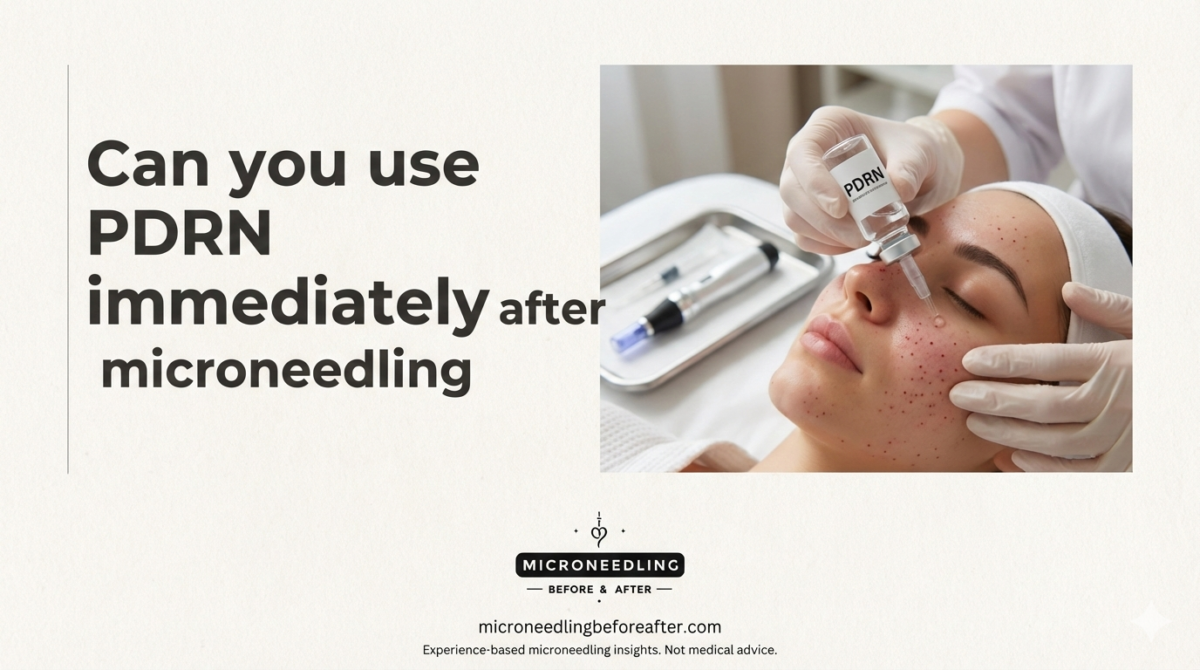
¿Se puede utilizar PDRN inmediatamente después de la microaguja?

Conozca si se puede utilizar PDRN estéril inmediatamente después de la microaguja: beneficios, riesgos, protocolos y cuándo esperar para obtener resultados seguros y óptimos.

¿Puedo aplicar PDRN inmediatamente después de la microaguja o debo esperar?

¿Se puede utilizar PDRN inmediatamente después de la microaguja?

A menudo me preguntan si el PDRN (polidesoxirribonucleótido) se puede usar inmediatamente después de la microaguja. En este artículo, explicaré la ciencia, los protocolos prácticos, los beneficios y los riesgos, y lo que haría personalmente si me sometiera a un tratamiento de microagujas y quisiera añadir PDRN.

Qué quiero decir con PDRN y por qué es importante

Comenzaré con una explicación sencilla: la PDRN es una preparación de fragmentos de ADN derivados de pescado (comúnmente salmón) que se utiliza en medicina estética y regenerativa para promover la reparación tisular. Se cree que actúa mediante varios mecanismos, como la estimulación de fibroblastos, la angiogénesis (crecimiento de nuevos vasos sanguíneos) y la modulación de la inflamación. Dado que la microaguja crea microlesiones controladas que activan las vías de reparación, combinarla con agentes regenerativos como la PDRN parece lógico, pero existen consideraciones prácticas y de seguridad.

Cómo funciona la microaguja y por qué son importantes los tratamientos tópicos

Quiero aclarar los conceptos básicos. La microaguja crea microcanales en la piel que cumplen tres funciones: estimular la cicatrización de heridas, aumentar la producción de colágeno y elastina, y aumentar temporalmente la permeabilidad de la piel para que los productos tópicos puedan penetrar más profundamente.

A menudo explico a mis pacientes que la barrera cutánea se vuelve más permisiva durante un breve periodo después de la punción. Este periodo puede mejorar la absorción de sustancias beneficiosas, siempre que el producto sea adecuado y estéril.

La ventana de absorción mejorada

Los microcanales creados mediante microagujas suelen permanecer abiertos de minutos a horas, con una mayor permeabilidad que puede durar hasta 24-48 horas, dependiendo de la profundidad de la aguja, el dispositivo y la cicatrización individual. Cabe destacar que esta ventana es un arma de doble filo: puede facilitar la administración de ingredientes activos, pero también puede permitir la entrada de contaminantes o causar una absorción sistémica excesiva de formulaciones inapropiadas.

¿Por qué los médicos consideran combinar PDRN con microagujas?

Seré sincero: combinar la PDRN con la microaguja se ha convertido en una práctica común en muchas clínicas debido a las condiciones favorables para su aplicación. Los microcanales de la microaguja permiten que la PDRN alcance capas más profundas, donde puede influir en los fibroblastos y las células endoteliales vasculares.

Desde mi perspectiva, las principales razones por las que los médicos agregan PDRN son:

  • Entrega mejorada: llega más PDRN a la dermis que con la piel intacta.
  • Sinergia: la microaguja por sí sola estimula el colágeno; la PDRN puede amplificar la regeneración y reducir el tiempo de inactividad.
  • Efectos antiinflamatorios y angiogénicos: PDRN puede acelerar la recuperación y mejorar la calidad del tejido.

Base de evidencia: qué dicen la literatura y los informes clínicos

Quiero ser transparente: si bien existen informes preclínicos y clínicos prometedores que respaldan el efecto regenerativo de la PDRN y su uso con microagujas, la cantidad de ensayos controlados aleatorizados de alta calidad específicos para la aplicación inmediata después de la punción es limitada. Muchos ensayos demuestran que la PDRN promueve la cicatrización de heridas, mejora la textura de la piel y reduce la inflamación cuando se usa en inyecciones o como mesoterapia tópica. Las series de casos y los estudios piloto suelen reportar mejores resultados cuando se aplica la PDRN con microagujas, pero ensayos comparativos más rigurosos reforzarían las recomendaciones.

Lo que los médicos suelen informar

En mi experiencia y según informes de muchos profesionales, la aplicación inmediata de PDRN estéril (ya sea como solución inyectable intradérmica o como suero tópico estéril aplicado sobre la piel tratada con la aguja) suele reducir el eritema, acelerar la recuperación y lograr una mejoría clínica mayor que la microaguja por sí sola. Sin embargo, estas observaciones suelen realizarse en entornos de práctica clínica, no en grandes ensayos aleatorizados.

¿Es seguro utilizar PDRN inmediatamente después de la microaguja?

La seguridad es mi principal preocupación al combinar tratamientos. En resumen, sí, siempre que se cumplan ciertas condiciones. Solo recomendaría la aplicación inmediata si el producto es de grado médico, estéril y está diseñado para uso transdérmico o intradérmico. Evitaría cualquier sérum cosmético no estéril, aceite esencial o compuesto desconocido inmediatamente después de la punción.

Condiciones clave de seguridad en las que insisto

  • Esterilidad: La PDRN debe ser estéril. Las únicas opciones que consideraré son la PDRN inyectable o las formulaciones tópicas estériles de grado médico.
  • Vía de administración: Use formulaciones indicadas para inyección o uso tópico posterior a un procedimiento. No utilice suplementos orales ni productos de cuidado facial caseros para este fin.
  • Técnica limpia: El área del procedimiento debe estar preparada adecuadamente y la clínica debe seguir una técnica aséptica.
  • Evaluación de pacientes: realizo pruebas de detección de infecciones activas, uso reciente de isotretinoína, trastornos hemorrágicos, embarazo y enfermedades autoinmunes graves antes de combinar terapias.

Pros y contras de la solicitud inmediata de PDRN

Me gusta sopesar los beneficios frente a los riesgos para que los pacientes puedan tomar una decisión informada.

Ventajas (Aplicación inmediata) Contras (Aplicación inmediata)
Entrega dérmica mejorada a través de microcanales Mayor riesgo si el producto no está estéril o se manipula de forma inadecuada
Curación potencialmente más rápida y enrojecimiento reducido. Posible hipersensibilidad o irritación inesperada (raro)
Posible mejora del colágeno y la angiogénesis. Costo y necesidad de un producto/habilidad de grado clínico
Puede aplicarse mediante inyección o vía tópica estéril. Superioridad comparativa a largo plazo poco clara frente a la aplicación tardía

Utilizo esta tabla para decidir con los pacientes si proceder inmediatamente o escalonar el tratamiento.

Aplicación inmediata vs. aplicación diferida: consideraciones prácticas

Suelo considerar dos enfoques principales: aplicación inmediata (durante la misma cita, justo después de la microaguja) o aplicación diferida (esperando horas o días). Cada enfoque tiene su lógica.

¿Por qué debería solicitar la PDRN de inmediato?

Solicito PDRN inmediatamente cuando:

  • El PDRN es una parte prevista del protocolo de tratamiento y es estéril.
  • Quiero una máxima administración dérmica durante el período de mayor permeabilidad.
  • El paciente no tiene contraindicaciones y comprende los riesgos y beneficios.

En tales casos, puedo administrar PDRN por vía intradérmica mediante agujas de mesoterapia o aplicar un suero tópico estéril de PDRN y usar agujas para mejorar una penetración más profunda.

¿Por qué podría retrasar la solicitud del PDRN?

Podría retrasar la solicitud cuando:

  • El producto no está certificado para uso inmediato posterior al procedimiento.
  • El paciente tiene antecedentes de piel sensible, reacciones alérgicas o alergias inciertas al pescado.
  • Quiero evitar cualquier riesgo de irritación por la combinación de tratamientos de forma inmediata.
  • La clínica carece de PDRN estéril o protocolos asépticos adecuados.

Retrasar el tratamiento entre 24 y 72 horas todavía puede permitir buenos resultados y minimizar ciertos riesgos, en particular con formulaciones menos estudiadas.

Protocolos prácticos que utilizo (paso a paso)

Compartiré protocolos prácticos en primera persona para que veas cómo lo haría en la clínica. Sigue siempre las normativas locales y las instrucciones del producto.

Pre-procedimiento

Les pido a los pacientes que:

  • Evite los retinoides tópicos y exfoliantes durante 3 a 7 días.
  • Evite los AINE o suplementos que aumenten el sangrado (a menos que sea médicamente necesario).
  • Informe cualquier herpes labial activo, infecciones, uso reciente de isotretinoína o embarazo.
  • Realice una prueba de parche del producto PDRN si hay antecedentes de alergias o material de origen incierto.

Limpio y desinfecto completamente el área, uso anestesia tópica si es necesario y preparo suministros estériles.

Durante la microaguja

Selecciono la profundidad de la aguja según la zona y la condición: menos profunda para texturas superficiales, más profunda para cicatrices. Realizo la microaguja en condiciones estériles.

Si planeo solicitar PDRN inmediatamente:

  • Opción 1: Se aplica PDRN tópico estéril sobre el área y se deja absorber a través de microcanales abiertos.
  • Opción 2: Microinyecciones intradérmicas (mesoterapia) de PDRN en la dermis inmediatamente después o durante la sesión, según el protocolo.

Me aseguro de que la fórmula de PDRN esté indicada para aplicación dérmica, provenga de una fuente confiable y se almacene/manipule de manera aséptica.

Post-procedimiento

Instruyo a los pacientes a:

  • Mantenga el área limpia y evite el maquillaje durante 24 horas si es posible.
  • Utilice limpiadores suaves y evite los agentes activos durante varios días.
  • Es de esperar que aparezcan enrojecimiento, hinchazón leve y sangrado localizado de inmediato; estos son síntomas típicos.
  • Use protector solar una vez que la piel comience a reepitelizarse.

A menudo recomiendo continuar usando productos tópicos estériles PDRN durante varios días o semanas después del procedimiento para favorecer la regeneración.

Métodos de administración: inyección versus aplicación tópica

I find it helpful to compare delivery options in a table so patients understand choices.

Delivery Method How I use it Ventajas Contras
Intradermal injections (mesotherapy) Small-volume injections into the dermis right after needling or in a separate pass Direct delivery to target layers; controlled dosing Requires injection skills; more invasive; potential for bruising
Sterile topical serum applied immediately Apply sterile PDRN serum onto needled skin, occlude briefly if needed Non-invasive; easy to apply; good dermal penetration via channels Dependent on molecular size/formulation; must be sterile
Combination (topical + injection) Inject where needed (scars) and topically apply elsewhere Customized approach; maximal coverage More complex; cost and time

In my practice I choose based on the patient’s goals, tolerance, and cost considerations.

Contraindications and precautions I never ignore

I take contraindications seriously. I won’t use PDRN immediately after microneedling in patients with:

  • Active skin infection at the treatment site (bacterial, viral, or fungal)
  • Recent systemic isotretinoin (depending on timing per specialist guidance)
  • Known hypersensitivity to any component of the PDRN product or fish allergy concerns (I use caution if fish allergy is true)
  • Uncontrolled autoimmune disease or immunosuppression without specialist clearance
  • Pregnancy or breastfeeding unless product safety is established and discussed with the patient

I always document informed consent and explain that while PDRN is generally well tolerated, no treatment is risk-free.

Side effects and how I manage them

I’m honest with patients: the most common side effects are mild and transient—redness, swelling, tenderness, or tiny crusts. Serious complications are rare but can include infection or a hypersensitivity reaction.

If infection is suspected I start appropriate antibiotics and work with dermatology or infectious disease as needed. For persistent or unusual reactions I stop PDRN and investigate the cause.

Cost and practical considerations

I’m mindful that adding PDRN increases cost. Injectable PDRN mesotherapy and medical-grade topical PDRN are typically more expensive than standard serums. I outline expected costs and benefits so patients can decide whether the potential faster recovery or improved outcomes justifies the expense.

I also check regulatory status in my country and use products approved or widely used in the clinical community.

My recommended timeline for someone considering PDRN with microneedling

Below I outline a practical timeline I often recommend to patients.

Momento What I do/advise
Day -7 to -3 Discontinue retinoids and exfoliants; evaluate medications and allergies
Day 0 (procedure) Microneedling under aseptic conditions; apply sterile PDRN immediately if using this approach or inject intradermally as indicated
Day 1–3 Continue sterile topical PDRN formulations if prescribed; gentle care; avoid makeup and irritants
Day 4–14 Monitor healing; introduce gentle moisturizer and sun protection; consider follow-up PDRN applications or additional mesotherapy sessions per protocol
Weeks 4–12 Expect progressive improvement in collagen remodeling; repeat microneedling + PDRN sessions typically spaced 4–6 weeks if indicated

I tailor this plan to each patient and product instructions.

Combining PDRN with other adjunctive treatments

I’m often asked if PDRN can be combined with PRP, growth factors, or hyaluronic acid. My answer: yes, but carefully.

  • PRP: Using PRP plus PDRN is an option many clinicians use; the two agents have complementary mechanisms. If combining, I follow strict sterile technique and consider staged or simultaneous delivery.
  • Growth factors/peptides: These can be synergistic but I avoid mixing products in the same syringe unless the manufacturer permits it.
  • Hyaluronic acid: Injectable HA fillers should not be placed into acutely needled or infected skin. I sequence treatments to minimize overlapping downtime and infection risk.

I emphasize that combining multiple agents increases complexity and potential interactions, so I only proceed when I can confirm product compatibility and safety.

My guidance on product selection and storage

I only use PDRN products that are medical-grade, come with sterility assurance, and are recommended for injection or post-procedure topical use. I store them per manufacturer instructions—typically refrigerated—and avoid using any vial or bottle past its recommended in-use time once opened.

If I receive a new PDRN product, I check the lot number, expiration date, and storage conditions. I refuse to use any product that looks cloudy or contaminated.

Frequently asked questions I address with patients

Will PDRN reduce redness immediately after microneedling?

I tell patients that PDRN can help modulate inflammation and some report reduced erythema and faster tissue calming. It’s not an instant magic fix, but it can shorten visible downtime in many cases.

Can PDRN cause allergic reactions?

I explain that significant allergic reactions are uncommon because PDRN molecules are small fragments and typically low-immunogenic. However, if someone has a severe fish allergy, I proceed with caution and consider patch testing or avoiding fish-derived products altogether.

How many sessions will I need?

I frame this as individualized: most treatment plans involve multiple sessions spaced 4–6 weeks apart for cumulative collagen remodeling. Many people see improvement after 1–3 sessions, with refinement over months.

Can I self-administer topical PDRN at home after in-office microneedling?

I discourage home microneedling and unsupervised use of non-sterile products. If a clinician prescribes a sterile topical PDRN for home use, I instruct careful hygiene, refrigeration if required, and clear application steps.

Is PDRN appropriate for scarring and pigmentation?

I say yes—PDRN can support dermal remodeling, which may improve acne scars, surgical scars, and skin texture. For pigmentation, results depend on the pigment etiology; PDRN helps healing but may need to be combined with other targeted therapies for best pigment outcomes.

Practical checklist I use before applying PDRN immediately

I give patients a short checklist so they know I’ll only proceed when all points are met:

  • Product: Sterile, medical-grade PDRN intended for dermal/intradermal use
  • Asepsis: Clinic and staff follow sterile technique
  • Screening: No active infection, recent isotretinoin, pregnancy, or serious immune compromise
  • Consent: Patient informed about risks, benefits, costs, and alternatives
  • Emergency plan: Clinic prepared to manage rare adverse reactions

I won’t compromise on any item on that list.

My final recommendations

I believe immediate application of PDRN after microneedling can be beneficial when done correctly. If I were to undergo microneedling myself and wanted the potential advantages of PDRN, I would:

  • Use a reputable clinic with strict aseptic technique.
  • Choose medical-grade, sterile PDRN formulated for dermal use.
  • Discuss my medical history, allergies, and expectations with the clinician.
  • Consider intradermal injections for targeted scar treatment or a sterile topical application for broader coverage.
  • Continue topical PDRN and sun protection during the first week to support healing.

I’m cautious but optimistic about the combination. The available mechanistic data and clinical experience support it, but I also stress individualized care and appropriate safety measures.

Summary table: Quick decision guide I use in clinic

Question My decision point
Is the PDRN sterile and indicated for dermal/intradermal use? If no → don’t use immediately; if yes → consider immediate application
Does the patient have active infection or contraindication? If yes → delay or cancel; if no → proceed with caution
Does the clinic follow aseptic protocols and proper storage? If no → do not proceed; if yes → proceed
Is the goal rapid recovery and enhanced dermal remodeling? If yes → immediate PDRN may be beneficial
Does the patient prefer non-invasive vs injection? If non-invasive → sterile topical PDRN; if aggressive scar treatment → consider intradermal injection

I use this guide to structure discussions and set realistic expectations.

Closing thoughts and what I’d ask you next

If you’re considering PDRN with microneedling I’d ask about your skincare history, any allergies, medications, and your primary goals (texture, scars, pigmentation, overall rejuvenation). That information helps me tailor the approach—immediate application, delayed application, injection, or topical—and set a safe, effective plan.

If you want, tell me what your primary concern is and whether you plan to have the procedure in a clinic or at home. I can give more tailored advice about timing, product types, and what to look for in a provider.

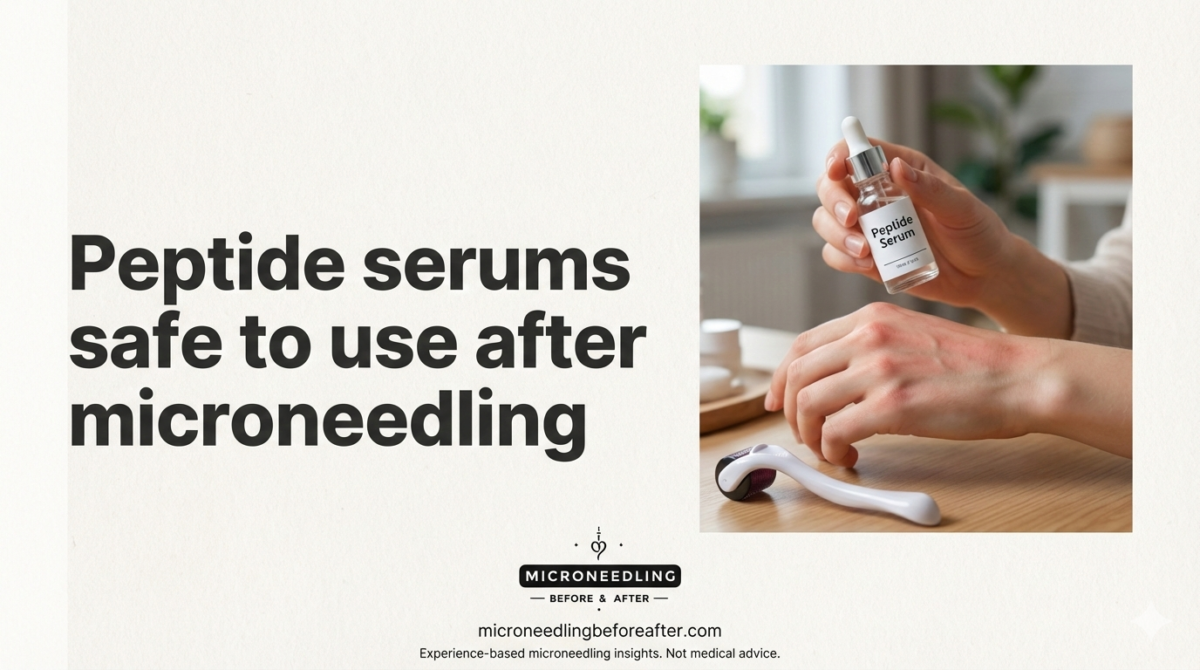
Sueros peptídicos seguros para usar después de la microaguja

Discover when and which peptide serums are safe after microneedling – timing, gentlest peptide picks, copper peptide caution, ingredients to avoid and care tips

Can I use peptide serums después de la microaguja, and which ones are genuinely safe for my skin?

Introducción

I’ve had my fair share of microneedling sessions, and I know the questions that pop up afterward: what can I put on my skin, when can I go back to my usual routine, and are peptide serums safe? I’ll walk through the science, practical timing, product choices, and safety tips so I can make an informed choice and protect my skin while maximizing results.

What microneedling does to your skin

Microneedling creates controlled micro-injuries in the epidermis and sometimes the dermis, depending on needle depth. I think of it as a signal to my skin to repair itself: the microchannels trigger inflammation, collagen and elastin production, and increased permeability for topical products.

Why post-procedure skincare matters

What you apply after microneedling matters because those microchannels temporarily boost absorption and because the skin is in a vulnerable inflammatory state. If I use the wrong ingredients too soon, I can intensify irritation, cause contact reactions, or slow healing. If I use the right ingredients at the right time, I can support repair and enhance results.

What peptides are and how they work

Peptides are short chains of amino acids that act as signaling molecules for skin cells. I think of them as tiny messengers that tell my skin to build collagen, calm inflammation, or improve barrier function. They’re generally gentle and targeted, which is why many people reach for peptide serums after procedures—provided they’re used carefully.

Are peptide serums safe to use after microneedling?

Short answer: many peptide serums can be safe and beneficial after microneedling, but timing and the specific peptide matter. I usually avoid immediately slapping on every active I own. Some peptides are soothing and hydrating, while others (particularly copper peptides) come with debate about immediate post-procedure use. I’ll break down what’s generally safe, what to avoid, and why.

Timeline: when to use peptides after microneedling

How soon I introduce peptides depends on the needle depth and whether the microneedling was professional or at-home.

  • 0–24 hours: Skin is very reactive. I stick to sterile saline or a simple, fragrance-free hydrating product like pure hyaluronic acid and avoid most actives.
  • 24–72 hours: The inflammation usually starts settling. I may start gentle peptide serums if they’re non-irritating.
  • 72+ hours: I generally reintroduce stronger actives and more varied peptides, assuming healing is progressing normally.

Below is a simple table comparing needle depth and suggested timing for peptides and actives.

Needle depth Tiempo de inactividad típico Peptides — safe to use? Strong actives (retinoids, high-dose vitamin C)
≤ 0.25–0.5 mm (home micro-needling) Minimal (few hours) Often safe after 24 hours if no irritation Wait 48–72 hours; patch test
0,5–1,0 mm 24–48 horas Start gentle peptides after 24–48 hours Wait 72+ hours, depending on healing
1.0–2.5 mm (professional) Several days to 1 week Use caution; introduce peptides after 48–72 hours or per clinician guidance Avoid for 5–7+ days; follow professional advice
> 2.5 mm (medical procedures) Longer, clinician-monitored Follow clinician’s protocol — may be delayed Only under clinician supervision

I pay attention to how my skin actually looks and feels rather than rigidly following a clock. If there’s redness, open areas, or crusting, I wait longer.

Which peptides are generally safe and why

I separate peptides into categories based on their typical use and safety profiles after microneedling.

Soothing and reparative peptides (usually safe early)

  • Palmitoyl tripeptide-1 and Palmitoyl tetrapeptide-7 (Matrixyl family): I find these supportive for collagen and skin repair and usually tolerate them well. They’re small signal peptides aimed at stimulating ECM (extracellular matrix) and reducing inflammation.
  • Oligopeptide-1 (often referred to as EGF): This growth factor-like peptide can aid in repair. I’m cautious but many practitioners use EGF-type products after microneedling to support healing; timing depends on depth and clinician preference.
  • Pentapeptides and oligopeptides that claim barrier support: These are typically mild and useful for restoring skin function.

Cosmetic performance peptides (tolerated with caution)

  • Acetyl Hexapeptide-8 (Argireline): I use this for expression-line concerns; it’s generally gentle and may be introduced early if my skin isn’t overly inflamed.
  • Palmitoyl Tripeptide-5 / Tripeptide complexes: These aim to mimic growth factors and support collagen. I introduce them once the worst of the inflammation subsides.

Copper peptides (GHK-Cu, copper tripeptide)

  • Copper peptides are controversial in the immediate post-procedure window. Some studies and practitioners suggest copper peptides can support wound healing and regeneration; others caution that copper can alter metalloproteinase activity and might interfere with growth factor-driven repair in the immediate inflammatory phase. Personally, I avoid copper peptides for the first 24–72 hours after microneedling and discuss timing with my clinician for deeper treatments. If I plan to use copper peptides, I introduce them only after visible healing is underway.

Growth factors vs peptides

  • Growth factors (EGF, PDGF) are not classic peptides but protein signals. Some clinicians use them after microneedling to accelerate repair, but they can be potent. I follow clinician guidance for these and generally wait until the initial re-epithelialization phase has started.

Table: Common peptides, their benefits, and recommended wait time after microneedling

Peptide / Type Principales beneficios Typical wait time after microneedling (general guidance)
Palmitoyl Tripeptide-1 (Matrixyl) Stimulates collagen, reduces wrinkles 24–48 hours if minimal irritation
Palmitoyl Tetrapeptide-7 Anti-inflammatory, collagen support 24–48 horas
Acetyl Hexapeptide-8 (Argireline) Minimizes expression-related lines 24–48 horas
Tripeptide-1 / Tripeptide complexes Repair and collagen synthesis 24–72 hours depending on irritation
Oligopeptide-1 (EGF) Cell proliferation, repair 24–72 hours; clinician preference for deeper needling
GHK-Cu (copper peptide) Promotes repair, but debated Delay 48–72+ hours or follow clinician advice
Synthetic small peptides (cosmetic blends) Various anti-aging effects 24–72 hours, introduce slowly

I use these as guidelines, not hard rules. My observation of how my skin responds determines the final timing.

Formulation features I prefer after microneedling

When I look for a peptide serum to use after a session, I focus less on marketing and more on the formula:

  • Fragrance-free and alcohol-free: These minimize irritation.
  • Low to moderate peptide concentrations rather than extremely high doses that could be irritant.
  • Hydrating base (hyaluronic acid, glycerin) helps soothe and maintain moisture.
  • Minimal additional actives: I avoid formulas heavy with acids, retinoids, or strong vitamin C right away.
  • pH close to skin-neutral: Extremely low pH formulas can sting.

I especially like serums that combine gentle peptides and humectants without added essential oils or exfoliating acids.

Ingredientes que se deben evitar inmediatamente después de la microaguja

Some ingredients can inflame or sensitize microneedled skin if applied too soon. I avoid:

  • Retinoids (retinol, tretinoin) for at least 72 hours, often longer for deeper treatments.
  • Strong or high-concentration vitamin C (L-ascorbic acid) right away — it can sting and provoke redness.
  • AHAs/BHAs (glycolic, lactic, salicylic acids) — these chemical exfoliants can overstrip delicate post-procedure skin.
  • Benzoyl peroxide — too harsh and drying.
  • High concentrations of alcohol or denatured alcohol — they worsen barrier disruption.
  • Fragrances and essential oils — risk of contact sensitization.
  • Physical scrubs and manual exfoliation — obviously avoid.

Below is a quick reference table.

Ingredient type Use after microneedling? Why
Ácido hialurónico Yes (immediately) Hydration, soothing
Gentle peptides (non-copper) Yes (24–48 hours) Repair signalers, low irritation
Péptidos de cobre Use cautiously (48–72+ hours) Controversial effect on immediate healing
retinoides No (wait 72+ hours) Irritation, delayed healing
Strong vitamin C No (wait 48–72 hours) Stinging and irritation
AHAs/BHAs No (wait 72+ hours) Further compromise barrier
Fragrances/essential oils Avoid Riesgo de reacción alérgica

I find the safest early strategy is to favor hydration and controlled peptides rather than aggressive actives.

Practical, step-by-step post-microneedling routine I follow

Below I lay out a routine I use as a template; I adapt it to needle depth and clinician instructions.

Immediate care (first 0–6 hours)

  • I cleanse gently with sterile saline or a very mild, fragrance-free cleanser.
  • I apply a sterile, hydrating hyaluronic acid serum or a clinician-recommended post-procedure product.
  • I avoid makeup, exfoliants, and rugs.

First 24 hours

  • I continue gentle hydration and avoid active serums.
  • I use cool compresses for discomfort and keep the skin protected from sun and heat.
  • If my clinician provided a specific post-procedure product (often barrier-repair creams or growth-factor formulations), I follow that plan.

24–72 horas

  • If the skin looks calm, I may introduce a gentle peptide serum that’s fragrance-free and low in other actives.
  • If redness persists or if there’s heavy scabbing, I delay peptides until healing is more advanced.
  • For deeper professional needling, I often wait longer and consult the clinician.

After 72 hours and ongoing

  • Provided there’s normal healing, I reintroduce more targeted peptide blends and, eventually, other actives in a phased manner.
  • I prioritize sun protection and moisturizing barrier repair as I bring back retinoids and vitamin C under guidance.

I listen to my skin. If anything stings, it goes into the “stop” pile immediately.

How I introduce a new peptide serum safely

When I try a new peptide serum after microneedling, I do these steps:

  1. Patch test on an area of healed skin before applying to the entire treated area.
  2. Start with a small amount and use every other day to monitor for reactions.
  3. Observe for 48–72 hours for redness, bumps, or irritation.
  4. If tolerated, gradually increase frequency and then concentration.

Patience is key. Faster reintroduction isn’t always better.

Home microneedling vs professional microneedling — what I change

I use different rules depending on the device and depth:

  • Home dermarollers or devices that use ≤ 0.5 mm needles: I’m more comfortable starting gentle peptides after 24 hours, assuming no irritation.
  • Professional microneedling (1.0 mm and above): I’m more conservative and rely on clinician instructions. I often wait 48–72+ hours for peptides and longer for stronger actives.
  • Microneedling with PRP or growth factors: I follow the provider’s protocol exactly since those procedures are designed with compatible topicals in mind.

I treat professional procedures with more caution because they penetrate deeper and have higher absorption.

Special situations and skin types

Sensitive skin and rosacea

I’m extra cautious. I tend to wait longer and choose the gentlest formulations — mainly humectants and low-irritant peptides — and I consult my dermatologist.

Acne-prone skin

If I have active acne lesions in the treated area, I avoid microneedling until controlled. Post-procedure, I avoid benzoyl peroxide and other drying agents until the skin is intact.

Darker skin tones

I watch for post-inflammatory hyperpigmentation (PIH). I avoid aggressive actives early and use soothing peptides and sun protection to reduce PIH risk. I also follow professional advice for timing.

Keloid scarring or history of poor wound healing

I consult a dermatologist or plastic surgeon; microneedling may not be appropriate, and peptide timing will be clinician-directed.

Why I’m cautious about copper peptides right after microneedling

Copper peptides (GHK-Cu) are known to promote repair and collagen production, but I’m careful with them early on for several reasons:

  • Copper ions can modulate matrix metalloproteinases (MMPs) and other enzymes involved in remodeling; timing may influence whether they help or hinder the initial inflammatory-to-repair transition.
  • Some clinicians report better results when copper peptides are used after the early inflammatory period or as part of a staged protocol.
  • Evidence isn’t definitive, so I prefer waiting 48–72 hours after minor microneedling or longer after deeper procedures.

If I decide to use copper peptides, I introduce them only once the skin shows signs of re-epithelialization and no open areas.

Combining peptides with other actives later on

Once the skin has settled (often 72+ hours or per clinician guidance), I reintroduce actives in a layered, cautious manner:

  • Vitamin C (L-ascorbic acid): I start at lower concentrations and observe; I usually wait a week for professional microneedling.
  • Retinoids: I bring them back later, often after 1–2 weeks, starting at a lower frequency.
  • AHAs/BHAs: I reintroduce slowly once the barrier is stable.

When I combine peptides with other actives, I favor alternating nights or layering with a hydrator in between to minimize irritation.

Practical tips I follow to reduce risk

  • I only microneedle skin that’s clean and free of active infection.
  • I avoid aggressive ingredients for several days after microneedling.
  • I use SPF religiously once I’m out in the sun again—sunscreen is non-negotiable.
  • I keep tools sterile for home microneedling and replace rollers/disposable heads per manufacturer guidance.
  • I consult a dermatologist if I have underlying skin conditions or if a reaction occurs.

Signs I should stop a peptide serum and seek help

I stop using the serum immediately if I notice:

  • Increasing or spreading redness after initial improvement
  • New pustules or signs of infection
  • Severe burning or stinging beyond the first 24 hours
  • Intense swelling or systemic symptoms

If concerning signs appear, I contact my clinician or dermatologist promptly.

Examples of peptide-friendly product attributes (what I look for)

When scanning labels, I look for:

  • “Fragrance-free”, “alcohol-free”
  • Short ingredient list with humectants (hyaluronic acid, glycerin)
  • Peptide names I recognize (palmitoyl tripeptide, palmitoyl tetrapeptide, oligopeptide)
  • No listed retinol, high-dose vitamin C, or alpha hydroxy acids
  • pH around 5–7 (skin-neutral)

I prefer simplicity after a procedure.

FAQ — common questions I answer from experience

Can I use any peptide serum immediately after microneedling?

Not any. I avoid potentially irritating formulations immediately and steer clear of copper peptides for 24–72 hours as a precaution. Gentle, hydrating peptide serums can be introduced after monitoring skin reaction.

Will peptides get deeper into the skin because of microneedling?

Yes, microneedling increases absorption. That’s beneficial if the peptide is safe and intended to promote repair, but it also means more caution is needed to prevent irritation from aggressive actives.

Can peptides cause inflammation after microneedling?

They can if the formulation has irritants or if the peptide itself elicits a reaction. Most cosmetic peptides are well tolerated, but individual sensitivity varies.

Are growth factors the same as peptides, and are they safe?

Growth factors are protein signals that can support repair. They are not classic short peptides and can be more potent. I follow clinician advice for growth factor use after microneedling.

How long before I can use retinoids again?

I typically wait at least 72 hours after mild microneedling and longer after deeper procedures. I reintroduce retinoids gradually and monitor for irritation.

How I choose between professional advice and anecdotal tips

I use my clinician’s guidance as the primary source because they know my specific treatment depth and skin condition. I supplement that with peer-reviewed literature and cautious personal experimentation. If a product claim sounds too good to be true (e.g., immediate dramatic tightening combined with deep penetration), I treat it skeptically.

Expectativas realistas que establezco para los resultados

Microneedling plus careful post-procedure care, including peptides introduced appropriately, can improve texture, firmness, and tone over time. I don’t expect overnight miracles. I expect gradual improvement over weeks to months, and I track progress with photos and notes.

Final checklist I use after microneedling when considering peptides

  • Did I consult the clinician who performed the procedure? If yes, follow their recommendations.
  • Is the skin showing significant open wounds or heavy crusting? If yes, wait.
  • Is the peptide serum fragrance-free, alcohol-free, and low in other actives? If yes, consider a cautious introduction after 24–72 hours.
  • Does the product contain copper peptides? If yes, consider waiting 48–72 hours or longer and consult my provider.
  • Have I patch-tested the product on healed skin? If no, patch-test first.

Conclusión

I find that peptide serums can be a helpful component of post-microneedling care when chosen and timed correctly. My approach is conservative: immediate hydration, avoidance of harsh actives, gradual reintroduction of gentle peptides, and clinician consultation for deeper or medical treatments. By listening to my skin and following these principles, I support healing while working toward the anti-aging and skin-repair benefits I want.

If you’d like, I can suggest an example 14-day post-microneedling routine tailored to a specific device depth or recommend ingredient combinations to look for in a peptide serum based on your skin type.

es_MXSpanish