
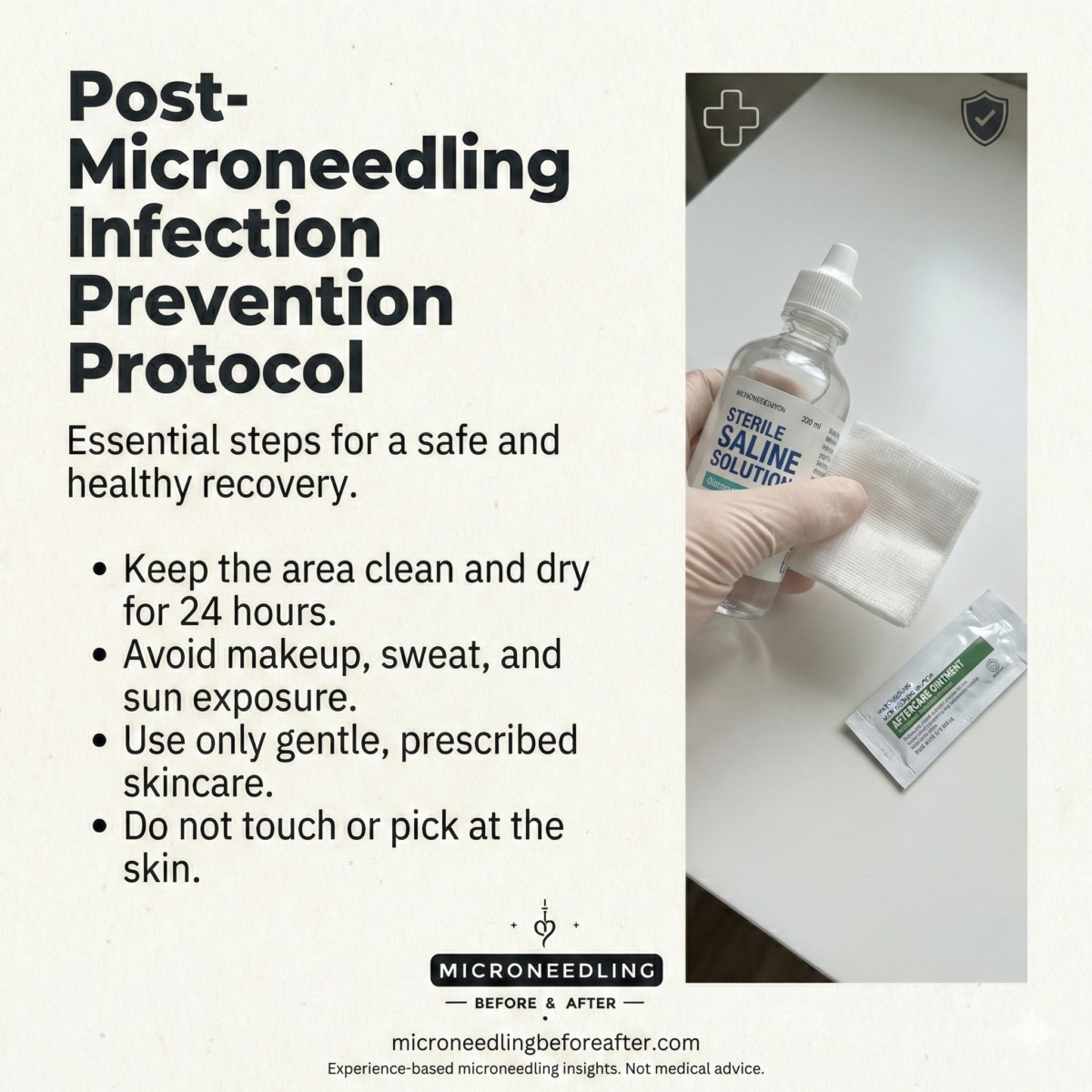
¿Cómo puedo prevenir sistemáticamente las infecciones después de la microaguja y mantener a mis pacientes seguros, optimizando al mismo tiempo los resultados?
Introducción
Presento un protocolo integral de prevención de infecciones para el cuidado posterior a la microaguja, que sintetiza las mejores prácticas clínicas, los pasos prácticos del flujo de trabajo y las estrategias de educación del paciente. Redacté este protocolo para que fuera práctico para los profesionales clínicos que realizan microagujas o para los gestores clínicos responsables de las políticas de control de infecciones. Mi objetivo es reducir las complicaciones infecciosas, mejorar la cicatrización de las heridas y que las instrucciones posteriores al procedimiento sean claras y reproducibles.
Por qué es importante la prevención de infecciones después de la microaguja
Entiendo que la microaguja crea intencionalmente microlesiones controladas en la piel para estimular la remodelación. Estos microcanales evaden transitoriamente la barrera epidérmica, lo que aumenta el riesgo teórico y real de invasión bacteriana, vírica y fúngica. Prevenir la infección es esencial no solo para evitar complicaciones agudas, sino también para prevenir cicatrices, cambios pigmentarios e interrupciones del tratamiento.
Breve revisión de la fisiología de la microaguja y el riesgo de infección
Utilizo la microaguja para estimular el colágeno mediante la creación de microcanales que suelen cerrarse en cuestión de horas o días, dependiendo de la profundidad de la punción. La profundidad de la lesión, el estado de la piel y las aplicaciones tópicas o biológicas complementarias (PRP, sueros) influyen en la susceptibilidad a los patógenos. Los microorganismos comunes implicados después del procedimiento incluyen Staphylococcus aureus, especies de estreptococos, virus del herpes simple (VHS-1) y, ocasionalmente, micobacterias atípicas tras el uso de dispositivos o soluciones contaminados.
Alcance y audiencia
Redacté este protocolo para profesionales clínicos colegiados (dermatólogos, cirujanos plásticos, médicos estéticos, enfermeras practicantes, auxiliares médicos) y personal clínico responsable de la atención perioperatoria. Las secciones que abordan el lenguaje de cara al paciente están redactadas para que pueda adaptarlas como instrucciones de alta impresas.
Evaluación de riesgos previa al procedimiento
Comienzo evaluando los factores de riesgo de infección específicos del paciente, los factores de procedimiento y los factores ambientales.
Historial del paciente y evaluación médica
Recopilo una historia enfocada que incluye:
- Infecciones por VHS previas o recurrentes (herpes labial).
- Infecciones cutáneas activas (impétigo, foliculitis, celulitis) en la zona a tratar.
- Uso reciente o actual de inmunosupresores sistémicos, productos biológicos o corticosteroides sistémicos en dosis altas.
- Uso reciente de isotretinoína (en los últimos 6 a 12 meses) y el momento de los tratamientos anteriores.
- Diabetes, glucosa no controlada u otras comorbilidades que perjudican la cicatrización de heridas.
- Trastornos hemorrágicos o terapia anticoagulante que podrían complicar la atención posterior al procedimiento.
Documento estos hallazgos y analizo el aumento del riesgo con el paciente cuando es relevante.
Examen físico y evaluación de la piel
Inspecciono la zona a tratar para detectar infecciones activas, lesiones acneiformes, dermatitis o tatuajes recientes. Pospongo la microaguja si hay infecciones activas o piel agrietada. En caso de acné extenso, considero posponer o tratar primero el acné para minimizar la carga bacteriana.
Consideraciones sobre pruebas previas al procedimiento y profilaxis
Individualizo pruebas y profilaxis:
- Para los pacientes con VHS recurrente, prescribo profilaxis antiviral (por ejemplo, aciclovir o valaciclovir) comenzando 24 horas antes y continuando durante 5 a 7 días después del tratamiento, siguiendo los protocolos locales.
- Para pacientes inmunodeprimidos o con antecedentes de infecciones atípicas, consulto o remito a un especialista.
- No prescribo antibióticos sistémicos de forma rutinaria como profilaxis a todos los pacientes, ya que la evidencia no respalda la profilaxis universal y su uso excesivo promueve la resistencia. Reservo los antibióticos sistémicos para indicaciones clínicas específicas o signos tempranos de infección.
Entorno clínico y manejo de dispositivos
Mantengo un entorno limpio y controlado y procedimientos estrictos de manipulación de dispositivos para minimizar la contaminación.
Gestión de dispositivos y agujas
Siempre que sea posible, utilizo cartuchos de agujas estériles de un solo uso o conjuntos de agujas desechables. Si utilizo instrumental reutilizable, me aseguro de que la esterilización se realice mediante autoclave, según las directrices del fabricante y las normativas locales. Guardo los dispositivos en su envase estéril hasta el momento de su uso.
Higiene de superficies y manos
Exijo higiene de manos para todo el personal y uso guantes durante el contacto con los pacientes. Desinfecto las superficies de los procedimientos entre pacientes con desinfectantes de grado hospitalario registrados por la EPA. Minimizo el desorden y los posibles fómites en la sala de procedimientos.
Técnica aséptica para materiales adjuntos
Considero el PRP, los factores de crecimiento o los sueros como vectores potenciales. Preparo los adyuvantes biológicos en un área limpia, utilizo una técnica estéril y los aplico inmediatamente después de su preparación. Evito mezclar productos o usar viales multidosis sin una extracción aséptica adecuada.
Técnica de procedimiento para minimizar la infección
Utilizo pasos de procedimiento que reducen la contaminación y el traumatismo tisular.
Preparación de la piel
Limpio la piel a fondo. Utilizo gluconato de clorhexidina o povidona yodada como antiséptico previo al procedimiento, dejando que la solución se seque completamente antes de aplicar la punción. Evito los limpiadores con alcohol, que pueden desnaturalizar temporalmente las proteínas epidérmicas, pero los uso con precaución si así lo exigen las normas de la práctica médica.
Anestesia local y agentes tópicos
Utilizo anestésicos tópicos en tubos desechables o envases estériles. Tras retirar la anestesia, vuelvo a limpiar la zona con un antiséptico antes de la punción. Evito aplicar emolientes o maquillaje no estériles antes del procedimiento.
Profundidad, pases y presión de la aguja
Selecciono la profundidad de la aguja adecuada para la indicación y el grosor de la piel. Evito ajustes demasiado agresivos que provoquen un daño tisular extenso que supere el objetivo terapéutico. Controlo el número de pases y mantengo una técnica consistente para evitar traumatismos excesivos que puedan predisponer a infecciones.
Adyuvantes (PRP, sueros)
Al aplicar PRP u otros adyuvantes biológicos, confirmo la esterilidad. Aplico los adyuvantes con instrumental estéril y evito el contacto entre el producto almacenado y superficies no estériles.
Cuidados postoperatorios inmediatos (primeras 0 a 24 horas)
Doy instrucciones precisas verbales y escritas y resumo verbalmente los puntos clave al momento del alta.
Limpieza y aderezo inmediatos
Limpio la zona tratada con solución salina normal estéril o una gasa empapada en solución salina estéril. Puedo aplicar una capa fina de un emoliente estéril no comedogénico o un bálsamo postoperatorio recomendado por un médico en un tubo desechable para reducir la pérdida de agua transepidérmica y proporcionar una barrera temporal. Evito los ungüentos que puedan atrapar bacterias, a menos que esté específicamente indicado.
Aconsejo a los pacientes que eviten los vendajes oclusivos a menos que se les indique, ya que la oclusión puede aumentar la humedad y la proliferación bacteriana. Si utilizo un vendaje oclusivo (rara vez), les doy instrucciones claras para retirarlo y un cronograma.
Restricciones de actividad y exposición
Aconsejo a los pacientes que:
- Evite tocarse la cara con las manos sin lavar.
- No aplicar maquillaje durante al menos 24 horas (o según las instrucciones específicas del producto).
- Evite baños calientes, saunas, piscinas y jacuzzis durante 72 horas para reducir la exposición a patógenos transmitidos por el agua.
- Evite el ejercicio intenso durante 24 a 48 horas para limitar la transpiración y la transferencia de bacterias.
Control del dolor
Recomiendo acetaminofén o AINE de corta duración, salvo que estén contraindicados. Evito recomendar aspirina a pacientes con riesgo de sangrado, salvo indicación médica.
Cronograma posterior al procedimiento e instrucciones detalladas de cuidado
La siguiente cronología divide la atención en fases claras para que los pacientes sepan qué esperar y cuándo buscar ayuda.
0–24 horas: respuesta epitelial inicial
La piel tratada suele presentar eritema y puede presentar edema. Recomiendo una limpieza suave con solución salina estéril o un limpiador suave no irritante dos veces al día. Recomiendo aplicar el bálsamo postoperatorio recetado o una crema hidratante estéril sin perfume según las indicaciones. No recomiendo el uso de exfoliantes, retinoides ni tónicos con alcohol.
24–72 horas: recuperación de la barrera y reepitelización
Durante este período, los microcanales comienzan a cerrarse. Recomiendo mantener una higiene suave y continua, evitar el maquillaje hasta que sea clínicamente apropiado y evitar constantemente las piscinas, los jacuzzis y la sudoración intensa. Reforzo la adherencia a la profilaxis antiviral si está indicada.
3–7 días: curación continua y posible descamación leve
Preveo una reducción gradual del eritema y, ocasionalmente, una ligera descamación. Recomiendo usar protector solar de amplio espectro (FPS 30 o superior) al aire libre y bloqueadores físicos si la piel es sensible. Recomiendo evitar los agentes activos tópicos (retinoides, exfoliantes químicos, vitamina C fuerte) hasta la reepitelización completa.
>7 días: reanudación del cuidado normal de la piel
Permito la reintroducción de los ingredientes activos para el cuidado de la piel una vez que la epidermis haya cicatrizado completamente y no haya costras ni zonas abiertas. Si se combina con otros procedimientos (p. ej., láser), garantizo un intervalo seguro según la recuperación del tejido y el riesgo.
Tabla: Instrucciones claras para el paciente después del procedimiento (folleto conciso)
| Periodo de tiempo | Acción que instruyo | Productos a utilizar | Actividades a evitar |
|---|---|---|---|
| Inmediatamente (0–24 h) | Enjuague suavemente con solución salina/limpiadora estéril; aplique una capa fina del bálsamo recetado 2 a 3 veces al día. | Solución salina estéril; tubo de bálsamo de un solo uso (recomendado por el médico) | Maquillaje, tocarse la cara, duchas calientes, piscinas, saunas. |
| 24–72 horas | Continúe con una limpieza e hidratación suaves; controle si hay aumento de dolor o enrojecimiento. | Humectante sin fragancia; antiviral (si se prescribe) | Ejercicio intenso, exposición prolongada al sol, natación. |
| 3–7 días | Espere descamación; comience a aplicar protector solar suavemente cuando esté al aire libre. | Protector solar físico (óxido de zinc), limpiador suave. | Retinoides, peelings químicos, exfoliación agresiva. |
| >7 días | Reanude el cuidado normal de la piel si la curación es completa; comuníquese con la clínica si la curación es tardía. | Reanudar los productos elegidos después de la aprobación del médico | Proceda con otros procedimientos solo después de la autorización del médico. |
Reconocer la infección: signos, diagnóstico diferencial y acción temprana
Hago hincapié en el reconocimiento temprano para permitir un tratamiento rápido.
Signos clínicos de infección
Enseño a los pacientes a buscar atención inmediata para:
- Aumento del dolor localizado más allá del malestar esperado.
- Eritema creciente que se propaga en lugar de desaparecer.
- Nuevo drenaje purulento o costras de color verde amarillento.
- Fiebre, escalofríos o síntomas sistémicos.
- Desarrollo de vesículas o lesiones agrupadas sugestivas de VHS.
Imitadores y diferenciadores comunes
Yo diferencio entre respuestas inflamatorias normales e infecciones:
- El eritema posterior al procedimiento generalmente alcanza su punto máximo temprano y luego mejora.
- Las pústulas estériles o pápulas transitorias por oclusión o reacción al producto pueden imitar una infección, pero generalmente no son dolorosas ni progresivas.
- El VHS se presenta tempranamente con vesículas agrupadas y puede estar asociado con pródromos (hormigueo, ardor).
En caso de duda, realizo una evaluación clínica y, si es necesario, cultivo de drenaje o hisopado de lesiones para realizar pruebas de PCR bacterianas o virales.
Manejo de la sospecha de infección
Individualizo el tratamiento en función de la presentación, la probabilidad del organismo y los factores del paciente.
Infección bacteriana localizada leve
Puedo iniciar un antibiótico oral empírico dirigido a patógenos cutáneos comunes (p. ej., dicloxacilina, cefalexina) mientras espero los resultados del cultivo, ajustando el tratamiento según la sensibilidad. Considero el uso de antibióticos tópicos (p. ej., mupirocina) para infecciones superficiales focales, en combinación con el tratamiento oral si está indicado.
Infección grave o que se propaga
Organizo una evaluación urgente y puedo iniciar antibióticos de amplio espectro, organizar el cuidado de la herida y considerar la hospitalización si ocurre compromiso sistémico o progresión rápida.
Infecciones herpéticas
Ante la sospecha de VHS, inicio inmediatamente el tratamiento antiviral (p. ej., valaciclovir). Asesoro sobre la posible formación de cicatrices y la necesidad de tratamiento incluso si el paciente no tenía antecedentes de herpes diagnosticado, ya que la microaguja puede desencadenar episodios primarios o recurrentes.
Infecciones micobacterianas o fúngicas atípicas
Sospecho de micobacterias atípicas o patógenos fúngicos con presentación tardía (semanas), lesiones nodulares o supurantes, o falta de respuesta a los antibióticos habituales. Obtengo cultivos, realizo pruebas de bacilos ácido-alcohol resistentes y remito al paciente a enfermedades infecciosas según corresponda.
Administración y documentación de antibióticos
Evito el uso reflejo de antibióticos empíricos sin indicación clínica. Documento los hallazgos clínicos, la justificación de la decisión, los cultivos obtenidos y la información del paciente en la historia clínica. Sigo los patrones locales de antibiograma al seleccionar la terapia empírica.
Situaciones especiales
Procedimientos combinados (PRP, fibrina rica en plaquetas, láseres)
Al combinar la microaguja con PRP o láser, presto mayor atención a la esterilidad y puedo modificar las instrucciones posteriores al procedimiento, incluyendo evitar la inmersión en agua durante más tiempo y un cuidado más estricto de la herida. Me aseguro de que el intervalo entre la microaguja y otros procedimientos de rejuvenecimiento sea seguro y esté basado en la evidencia.
Pacientes inmunodeprimidos
Abordo a los pacientes inmunodeprimidos con extrema precaución. Considero la posibilidad de consultar y puedo posponer la microaguja electiva. De proceder, mantengo una asepsia estricta, considero la administración de antivirales profilácticos si está indicado y realizo un seguimiento más estrecho.
Pacientes embarazadas o en período de lactancia
Evalúo el perfil riesgo-beneficio. Puedo posponer la microaguja estética durante el embarazo, a menos que esté clínicamente indicado. Si el tratamiento continúa, evito productos con agentes contraindicados y registro el consentimiento informado.
Microagujas para el hogar y dispositivos de consumo
Desaconsejo o impongo limitaciones estrictas para la microaguja en casa con dispositivos que atraviesan la barrera dérmica (longitudes de aguja >0,25 mm). Instruyo a los pacientes sobre el mayor riesgo de infección derivado del uso no estéril en casa y recomiendo tratamientos profesionales como alternativas más seguras. Si un paciente va a usar un dispositivo en casa, le proporciono instrucciones detalladas de limpieza y uso único.
Educación del paciente y consentimiento por escrito
Obtengo el consentimiento informado, que incluye una explicación explícita del riesgo de infección, la evolución esperada, los signos de complicaciones y la información de contacto para urgencias. Proporciono una hoja de alta impresa o electrónica que resume las recomendaciones clave y cuándo llamar.
Tabla: Lista de verificación clínica para la prevención de infecciones (para uso clínico)
| Tarea | Realizado (S/N) | Notas |
|---|---|---|
| Se documentó la prueba de detección de infección previa al procedimiento | ||
| Se administra profilaxis antiviral cuando esté indicado | ||
| Cartucho de aguja estéril de un solo uso preparado | ||
| Se aplicó un antiséptico para la piel y se secó. | ||
| PRP/suero preparado asépticamente | ||
| Instrucciones posteriores al procedimiento proporcionadas y documentadas | ||
| Cita de seguimiento programada (o se le informa al paciente cuándo) |
Plan de seguimiento y vía de escalada
Programo una cita de seguimiento en un plazo de 48 a 72 horas (por teléfono o telemedicina) para pacientes de alto riesgo o que hayan recibido tratamientos intensivos o complementos biológicos. Recomiendo una evaluación presencial ante cualquier síntoma preocupante. Mantengo un criterio bajo para cultivos, análisis de sangre y derivación a un especialista si se presenta una evolución atípica.
Mejora de la calidad y seguimiento de la morbilidad
Realizo un seguimiento de los eventos adversos, las tasas de infección y las complicaciones de los procedimientos. Reviso los casos en reuniones de morbilidad y mortalidad o de mejora de la calidad para perfeccionar los protocolos. Audito periódicamente los registros de esterilización, el manejo de dispositivos y la capacitación del personal.
Consideraciones legales, regulatorias y de facturación
Adapto mis protocolos a las normativas locales sobre esterilización de dispositivos, etiquetado de productos y alcance de la práctica. Documento el consentimiento informado y las indicaciones clínicas para respaldar la defensa médico-legal. Codifico y facturo adecuadamente el tiempo y los servicios asociados con complicaciones o atención posoperatoria.
Ejemplos y escenarios prácticos
Incluyo algunos escenarios clínicos para ilustrar cómo aplico el protocolo.
Escenario 1: Paciente con antecedentes de herpes labial recurrente
Receto valaciclovir 500 mg por vía oral dos veces al día, comenzando 24 horas antes del tratamiento y continuando durante 5 días después. Documento la terapia y verifico el cumplimiento terapéutico en las visitas de seguimiento.
Escenario 2: Celulitis localizada temprana 4 días después del procedimiento
Evalúo la zona, obtengo una muestra de la herida para cultivo e inicio un tratamiento antibiótico oral empírico contra estafilococos y estreptococos mientras espero los resultados. Concerto una cita de seguimiento presencial en un plazo de 48 horas.
Escenario 3: Lesiones nodulares retardadas después de la combinación de microagujas y PRP
Sospecho de una infección micobacteriana atípica, obtengo una biopsia de tejido y cultivos, incluyendo AFB, y remito al especialista en enfermedades infecciosas para una terapia combinada prolongada con base en pruebas de sensibilidad.
Recomendaciones para la selección de productos
Recomiendo productos con esterilidad clara y envases de un solo uso. A continuación, se muestra una tabla concisa con la guía del producto.
Tabla: Productos que recomiendo y los que aconsejo evitar
| Recomendado | Evitar o usar con precaución |
|---|---|
| Cartuchos de agujas estériles de un solo uso | Reutilización de cartuchos multiuso sin esterilización |
| Tubos de anestesia de un solo uso o envases estériles | Frascos comunitarios o tubos sin sellar |
| Solución salina estéril para limpieza inmediata | Irrigación con agua del grifo para el cuidado inicial de las heridas |
| Desinfectantes de superficies registrados por la EPA | Desinfectantes inadecuados o remedios caseros no verificados |
| PRP estéril de calidad médica preparado asépticamente | Sueros de origen desconocido o viales multidosis abiertos en un entorno no estéril |
Formación y competencia del personal
Me aseguro de que el personal reciba capacitación basada en competencias en técnicas asépticas, configuración de dispositivos, evaluación de pacientes, detección de complicaciones e instrucción posoperatoria. Mantengo registros de capacitación y realizo reevaluaciones periódicas de competencias.
Plantillas de documentación y folleto de muestra para el paciente
Utilizo plantillas concisas para estandarizar la documentación: evaluación de riesgos previa al procedimiento, consentimiento informado con lenguaje sobre riesgo de infección, números de lote de dispositivos estériles e instrucciones para el alta. Un ejemplo de folleto para el paciente incluye un cronograma breve y señales de alerta claras, y entrego una copia al alta.
Limitaciones y juicio clínico
Reconozco que las recomendaciones deben adaptarse a la epidemiología local, las restricciones regulatorias, los factores individuales de cada paciente y la evolución de la evidencia. Baso mis decisiones en las mejores prácticas actuales, estando preparado para modificar el protocolo a medida que surjan nuevos datos.
Resumen y conclusiones clave
Resumo los principios básicos:
- Examinar a los pacientes para detectar el riesgo de infección y posponer el tratamiento cuando esté indicado.
- Utilice agujas estériles de un solo uso o esterilización validada para dispositivos reutilizables.
- Utilice una preparación cutánea antiséptica y una técnica aséptica para los productos y complementos.
- Proporcionar instrucciones claras y escritas posteriores al procedimiento con un cronograma.
- Reconocer los signos tempranos de infección y actuar rápidamente con cultivos apropiados y terapia dirigida.
- Mantener una documentación exhaustiva, capacitación del personal y monitoreo de calidad.
Considero que la prevención de infecciones tras la microaguja es una combinación de planificación del procedimiento, técnica meticulosa, educación del paciente y gestión oportuna de las complicaciones. Implementar un protocolo estructurado reduce las tasas de infección, mejora la satisfacción del paciente y protege tanto a pacientes como a profesionales sanitarios.
Descargo de responsabilidad
Ofrezco este protocolo como recurso informativo y no como sustituto del criterio médico individualizado. Recomiendo a los profesionales clínicos que apliquen las normativas locales y consulten a sus colegas especialistas en enfermedades infecciosas o dermatología en casos complejos. Si lo desea, puedo redactar instrucciones de alta imprimibles, un póster clínico con los pasos a seguir para el personal o una lista de verificación editable y adaptada a su consulta.
 Spanish
  English