
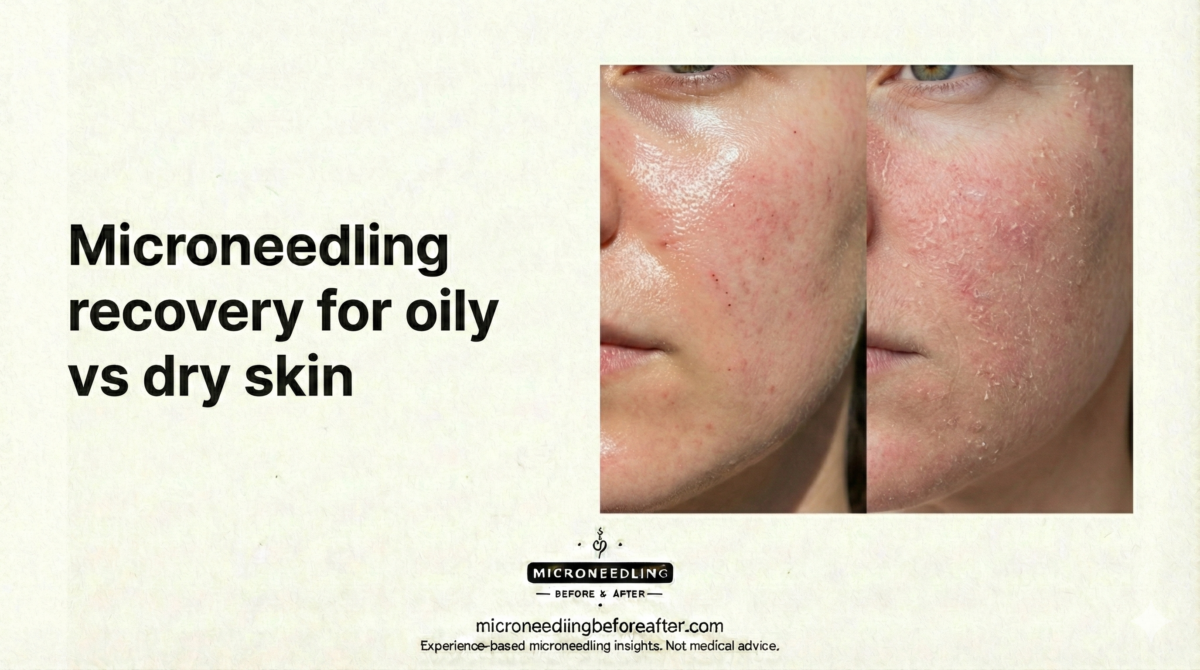
¿Has considerado cómo se sentirá la recuperación de la microaguja para tu tipo de piel y qué pasos específicos tomaría si tuviera piel grasa o seca?
Recuperación con microagujas para piel grasa vs. piel seca
Explicaré el proceso de recuperación de la microaguja, centrándome en las diferencias entre piel grasa y seca. Me baso en principios clínicos y cuidados posteriores prácticos para ofrecer una guía clara y paso a paso que seguiría o recomendaría a mis clientes.
Qué hace la microaguja y por qué es importante la recuperación
La microaguja crea microlesiones controladas en la piel para estimular la producción de colágeno y mejorar la absorción de los productos tópicos. Siempre enfatizo que la recuperación no es una simple espera pasiva, sino un período activo en el que el cuidado adecuado influye en resultados como la mejora de la textura, la remodelación de cicatrices y el control de la pigmentación. Las estrategias de recuperación deben adaptarse al tipo de piel, ya que la función de barrera, la producción de sebo y la propensión a la inflamación difieren entre la piel grasa y la seca.
Cómo el tipo de piel cambia el proceso de recuperación
Considero el tipo de piel un factor clave al planificar el cuidado posterior a la microaguja. La piel grasa suele producir más sebo y puede ser más propensa a la congestión de los poros o a brotes de acné después del procedimiento. La piel seca suele presentar una función de barrera deficiente, una mayor pérdida de agua transepidérmica (TEWL) y una tirantez y descamación más notorias después del tratamiento. Comprender estas diferencias fisiológicas me permite recomendar limpiadores, hidratantes y medidas de protección adecuados.
Diferencias fisiológicas clave entre la piel grasa y la piel seca
Quiero resumir las diferencias funcionales más importantes para que mis recomendaciones de cuidados posteriores tengan sentido.
- Producción de sebo: La piel grasa produce más sebo, lo que puede atrapar bacterias y aumentar el riesgo de inflamación después de la microaguja. La piel seca tiene baja producción de sebo y tiene dificultades para retener la humedad.
- Integridad de la barrera cutánea: La piel seca suele tener una barrera cutánea deteriorada que requiere apoyo inmediato para reducir la pérdida de agua transcutánea (TEWL) y la irritación. La piel grasa puede tener una barrera cutánea intacta, pero es propensa al acné.
- Tendencias de curación: La piel grasa puede verse menos inflamada visualmente debido al brillo graso, pero puede desarrollar comedones o pústulas. La piel seca presenta descamación, enrojecimiento y tirantez más pronunciados.
- Riesgo de pigmentación: ambos tipos pueden desarrollar hiperpigmentación postinflamatoria (HPI), pero la piel grasa y propensa al acné puede tener un riesgo ligeramente mayor si aparecen lesiones inflamatorias.
Cronograma típico de microagujas: qué esperar
Considero útil presentar una cronología general que se aplique a todos los tipos de piel y luego destacar las diferencias para la piel grasa y seca dentro de cada etapa.
Inmediato (0–24 horas)
Se espera eritema (enrojecimiento), calor y un leve sangrado localizado justo después del procedimiento. El rostro puede sentirse tirante o ligeramente hinchado. En pieles grasas, el exceso de sebo puede aparecer en cuestión de horas, mientras que en pieles secas suele sentirse incómodamente tirante.
Temprano (24–72 horas)
El enrojecimiento y la sensibilidad disminuyen gradualmente. En la piel seca, la descamación y la descamación comienzan a notarse alrededor del segundo o tercer día, a medida que la piel elimina las células microdañadas. En la piel grasa, controlo la presencia de poros obstruidos y pequeñas pústulas; la frecuencia de limpieza y el uso de productos no comedogénicos son cruciales.
Intermedio (3–7 días)
La mayor parte de la recuperación superficial visible se produce. La piel seca puede continuar descamada y sentirse tirante hasta una semana, por lo que recomiendo protocolos de reparación de la barrera cutánea. La piel grasa generalmente recupera su brillo original, pero persiste el riesgo de brotes; recomiendo una limpieza suave pero eficaz y medidas antimicrobianas si es necesario.
A largo plazo (semanas 2 a 12)
La remodelación del colágeno se produce en cuestión de semanas o meses. Superviso los resultados, como la mejora de la textura, la suavización de las cicatrices y los cambios en la pigmentación. Recomiendo usar protección solar e introducir gradualmente los ingredientes activos según el tipo de piel y su tolerancia.
Comparación de recuperación lado a lado
Utilizo esta tabla para brindar una comparación rápida y práctica de los síntomas y preocupaciones de la piel grasa frente a la piel seca durante la recuperación.
| Fase de recuperación | Piel grasa: problemas comunes | Piel seca: problemas comunes |
|---|---|---|
| 0–24 horas | Exceso de grasa, posibles poros obstruidos. | Intensa tirantez, escozor |
| 24–72 horas | Mayor riesgo de pústulas y brotes de acné superficiales. | Descamación, descamación, tirantez pronunciada |
| 3–7 días | Regrese a la oleosidad inicial; esté atento a los comedones | Descamación continua; necesita reparación de la barrera. |
| 2 a 12 semanas | Mayor riesgo de PIH si se produce inflamación | Sensible a los principios activos; riesgo de pigmentación si no se restaura la barrera. |
Preparación previa al tratamiento que recomiendo
Siempre preparo la piel para reducir complicaciones y mejorar los resultados. La preparación varía según el tipo de piel.
Recomendaciones generales previas al tratamiento
Normalmente recomiendo suspender los retinoides o exfoliantes químicos fuertes de 3 a 7 días antes, evitar la exposición solar activa y llegar con la piel limpia y sin maquillaje. Evalúo la medicación y el historial médico para descartar contraindicaciones, como el uso reciente de isotretinoína.
Consejos específicos para pieles grasas
Si hay acné activo, puedo recomendar un tratamiento tópico con peróxido de benzoilo o una rutina de cuidado cutáneo antimicrobiana a corto plazo. Les recomiendo a mis clientes que eviten usar productos nuevos, potencialmente irritantes, en las semanas previas al procedimiento.
Consejos específicos para pieles secas
Me centro en mejorar la función barrera antes de la microaguja. Suelo recomendar una hidratación intensiva con cremas hidratantes ricas en ceramidas y la suspensión temporal de agentes secantes fuertes (peróxido de benzoilo, tónicos con alcohol). También puedo recomendar un humectante suave como el ácido hialurónico antes del tratamiento.
Cuidados posteriores inmediatos (primeras 24 a 48 horas)
El cuidado posterior inmediato marca la pauta para la recuperación. Doy instrucciones claras que yo mismo seguiría.
Limpieza y protección
Limpio suavemente la piel tratada con un limpiador suave sin espuma y agua tibia. Evito frotar o usar paños abrasivos. Tanto para pieles grasas como secas, recomiendo evitar el maquillaje durante al menos 24 horas y usar solo productos aprobados por el profesional.
Refrescante y calmante
Suelo recomendar compresas frías (no hielo directamente sobre la piel) para reducir la hinchazón y el calor. Las medidas antiinflamatorias, como los sueros calmantes tópicos (centella asiática, pantenol o ácido azelaico para pieles con tendencia acneica), pueden ayudar según la tolerancia.
Aderezo y prevención de la contaminación
Insisto en que la piel tratada es esencialmente una superficie microherida. Recomiendo evitar tocarse la cara con las manos sucias, evitar saunas y baños de vapor, y evitar las piscinas durante al menos 48 a 72 horas.
Plan de recuperación día a día para piel grasa
Describo un protocolo específico que seguiría día a día para pieles grasas para reducir los brotes y favorecer la curación.
Día 0 (día del procedimiento)
- Limpie suavemente y siga la aplicación tópica inmediatamente posterior al procedimiento que indique el médico (a menudo, un suero antimicrobiano o curativo).
- Evite la aplicación de maquillaje y protector solar si el médico le recomienda esperar; de lo contrario, utilice un FPS mineral solo si está permitido.
- Utilice compresas frías para mayor comodidad.
Hago hincapié en que los aceites iniciales aparecerán y no son intrínsecamente malos, pero evito los limpiadores agresivos que los decapan.
Día 1–2
- Limpie dos veces al día con un limpiador espumoso suave con pH equilibrado para eliminar el exceso de sebo y minimizar la irritación.
- Aplique un suero hidratante ligero, no comedogénico (a base de ácido hialurónico) y una crema hidratante no comedogénica.
- Si tengo tendencia al acné, puedo usar ácido azelaico tópico, ya que tiene propiedades antiinflamatorias y antimicrobianas y, por lo general, se tolera mejor que el peróxido de benzoilo inmediatamente después de la microaguja. Consulto con mi médico antes de empezar a usar cualquier ingrediente activo.
Día 3–5
- Continúe con una limpieza suave y una hidratación ligera.
- Introduzca niacinamida tópica (hasta 5%) para ayudar a regular la producción de sebo y reducir la inflamación si se tolera.
- Mantenga la vista vigilada para detectar signos de infección o brotes pustulosos; comuníquese con mi médico si las lesiones se vuelven generalizadas o dolorosas.
Día 6–14
- Reintroduzca gradualmente los tratamientos antiacné de rutina (peróxido de benzoilo, ácido salicílico) solo después de confirmar que la barrera cutánea se está recuperando y con la guía del médico.
- Continúe con una protección solar estricta y evite las cremas oclusivas pesadas que pueden atrapar el sebo y exacerbar los comedones.
Plan de recuperación día a día para la piel seca
Ofrezco un protocolo paralelo para piel seca, centrado en restaurar la barrera y minimizar la descamación.
Día 0 (día del procedimiento)
- Utilice el ungüento o suero curativo recomendado por el médico; a menudo se sugiere un oclusivo más espeso para reducir la TEWL en piel seca.
- Evite el maquillaje durante al menos 24 horas y mantenga la piel hidratada con una crema cicatrizante según las indicaciones.
Día 1–2
- Limpie con un limpiador ultra suave y sin espuma una o dos veces al día, utilizando un contacto mínimo con el agua para reducir el escozor.
- Aplicar sueros hidratantes (ácido hialurónico de bajo peso molecular) seguidos de un humectante rico que contenga ceramidas y colesterol para reconstruir las capas lipídicas.
- Utilice un oclusivo como vaselina por la noche, si está permitido, para retener la humedad.
Día 3–5
- Es posible que se produzca descamación o peladura; utilice una exfoliación física suave solo si lo recomienda mi médico (raramente se recomienda en esta etapa temprana).
- Continúe la humectación enfocada en la reparación de la barrera con una aplicación dos veces al día.
- Evite las duchas calientes, los tónicos a base de alcohol y cualquier ingrediente secante.
Día 6–14
- Reintroduzca lentamente ingredientes activos suaves como sueros peptídicos o vitamina C de baja concentración si los tolera; evite los retinoides hasta que la piel esté completamente curada.
- Continúe con una protección solar estricta y mantenga una rutina de hidratación rica.
Ingredientes y productos recomendados
Me parece eficaz presentar los ingredientes recomendados en una tabla que contrasta lo que recomiendo para cada tipo de piel y lo que hay que evitar.
| Tipo de piel | Ingredientes que recomiendo | Ingredientes que evito en la recuperación temprana |
|---|---|---|
| Aceitoso | Ácido hialurónico, niacinamida, ácido azelaico, limpiadores poco irritantes, humectantes ligeros no comedogénicos. | Oclusivos fuertes, aceites minerales que pueden obstruir, retinoides fuertes, exfoliantes físicos. |
| Seco | Ceramidas, colesterol, ácidos grasos, ácido hialurónico, pantenol, oclusivos (petrolato) | Tónicos a base de alcohol, peróxido de benzoilo (inmediatamente después), ácidos fuertes, retinoides al principio. |
Hago hincapié en que las marcas específicas de productos son menos importantes que la tolerabilidad de los ingredientes y el etiquetado no comedogénico para pieles grasas.
Antimicrobianos y manejo del acné
Puedo incluir ácido azelaico tópico o antimicrobianos recetados para personas con acné activo. Si sospecho que hay sobrecrecimiento bacteriano o una infección importante, consulto o dermatólogo para posibles antibióticos orales u otras intervenciones.
Protección solar y prevención de la pigmentación.
Considero que la protección solar durante la recuperación es fundamental. La exposición a los rayos UV aumenta el riesgo de hipertensión inducida por el embarazo y perjudica la remodelación del colágeno.
Recomendaciones de protección solar
Recomiendo usar un FPS de amplio espectro (FPS) de 30 a 50 todos los días. Para pieles grasas, prefiero protectores solares minerales o químicos ligeros, etiquetados como no comedogénicos. Para pieles secas, elijo protectores solares con humectantes añadidos o los combino con una capa hidratante debajo del protector solar.
Control adicional de la pigmentación
Si la hiperpigmentación pilosa (PIH) es una preocupación, considero introducir agentes aclaradores tópicos como ácido tranexámico, niacinamida o hidroquinona en dosis bajas solo después de la reepitelización completa y con orientación profesional. Evito iniciar agentes blanqueadores potentes inmediatamente después de la microaguja.
Cuándo contactar a un profesional
Indico a los clientes que busquen ayuda profesional si experimentan alguno de los siguientes síntomas:
- Aumento del dolor, calor o enrojecimiento que se extiende más allá de las áreas esperadas (posible infección).
- Drenaje purulento o aumento de lesiones pustulosas.
- Hinchazón severa o signos de una reacción alérgica (urticaria, síntomas sistémicos).
- Nuevos cambios de pigmentación que se propagan rápidamente.
Subrayo que la intervención temprana previene complicaciones a largo plazo.
Manejo de complicaciones: infección, HIE y brotes de acné
Describiré cómo manejo las complicaciones más comunes y cómo la prevención difiere según el tipo de piel.
Infección
Si sospecho que hay una infección, recomiendo suspender cualquier tópico potente y contactar a un profesional de la salud. El tratamiento puede incluir antibióticos orales o tópicos, según el cultivo y el criterio clínico.
Hiperpigmentación postinflamatoria (HPI)
El manejo de la HPI incluye protección solar estricta y la posterior introducción de agentes aclaradores tópicos bajo supervisión. En el caso de la piel grasa con HPI relacionada con el acné, controlar rápidamente la inflamación reduce el riesgo de HPI.
brotes de acné
Trabajo con un profesional para equilibrar la terapia antimicrobiana y los agentes antiinflamatorios. Para la piel grasa, puede ser útil aplicar ácido azelaico tópico de forma temprana o un régimen temporal que incluya antibióticos tópicos. Para la piel seca que desarrolla acné debido a las cremas hidratantes oclusivas, modifico la rutina de cuidado de la piel a hidratantes más ligeros y no comedogénicos.
Volviendo a los ingredientes activos
Hago hincapié en un enfoque cauteloso y gradual para reintroducir principios activos fuertes.
retinoides
Normalmente espero al menos de 7 a 14 días antes de volver a aplicar los retinoides, y a menudo más tiempo para la microaguja profunda o la piel seca. Empiezo con concentraciones más bajas y las aplico cada dos noches, desarrollando gradualmente la tolerancia.
Exfoliantes químicos (AHA/BHA)
Evito los ácidos durante un mínimo de 5 a 7 días, y durante más tiempo para pieles sensibles o secas. Para pieles grasas con tendencia acneica, el ácido salicílico puede ser útil, pero debe reintroducirse lentamente y en concentraciones más bajas.
Vitamina C y otros principios activos
La vitamina C puede ser irritante; la reintroduzco después de la reepitelización y controlo el escozor. Los péptidos y los sueros con factores de crecimiento suelen ser seguros en etapas tempranas y pueden favorecer la cicatrización.
Diferencias entre la microaguja profesional y la microaguja en casa y su recuperación
Aclararé las diferencias de recuperación dependiendo de la profundidad y la configuración de la aguja.
Microagujas profesionales en el consultorio
Los procedimientos profesionales suelen utilizar agujas más largas y crear microcanales más profundos, lo que provoca un enrojecimiento más pronunciado y un periodo de cicatrización ligeramente más largo. Sigo de cerca el cuidado posterior del profesional y espero un mayor énfasis en evitar la contaminación y una protección solar estricta.
Microagujas en casa (rodillos derma)
Los dispositivos caseros utilizan agujas más cortas y producen efectos más leves y superficiales. La recuperación suele ser más rápida y menos intensa, pero el riesgo de esterilización inadecuada e infección es mayor si no se siguen los protocolos. Recomiendo precaución y recomiendo tratamientos profesionales para problemas cutáneos importantes.
Mantenimiento a largo plazo y expectativas
Establezco expectativas realistas: la microaguja estimula el colágeno durante meses y suele requerir varias sesiones. Recomiendo un programa de mantenimiento y tratamientos complementarios.
Número de sesiones e intervalos
Normalmente recomiendo de 3 a 6 sesiones con un intervalo de 4 a 6 semanas para los tratamientos de remodelación de colágeno, pero los planes individualizados dependen del problema de la piel, la profundidad de la punción y la respuesta. Para un rejuvenecimiento superficial, pueden ser suficientes menos sesiones.
Tratamientos complementarios
Suelo combinar la microaguja con terapias tópicas controladas, como sueros con factores de crecimiento o PRP (plasma rico en plaquetas), bajo supervisión. Recomiendo no aplicar capas de activos potentes inmediatamente después del procedimiento y usar sueros hidratantes de apoyo durante el periodo de cicatrización.
Consejos prácticos de estilo de vida durante la recuperación
Incluyo medidas de estilo de vida que yo mismo aplico para apoyar una curación óptima.
- Sueño: Priorizo el sueño adecuado para favorecer la reparación de los tejidos.
- Dieta: Como alimentos ricos en proteínas y mantengo una hidratación suficiente y micronutrientes, especialmente vitamina C y zinc.
- Evite fumar y beber alcohol en exceso: ambos perjudican la cicatrización de heridas y la producción de colágeno.
- Ejercicio: evito el ejercicio extenuante que induce sudoración intensa durante 48 a 72 horas para reducir el riesgo de contaminación.
Maquillaje y consideraciones sociales
Entiendo que muchas personas desean retomar sus actividades sociales rápidamente. Ofrezco consejos prácticos sobre el momento adecuado para maquillarse y las opciones de camuflaje.
Cronología del maquillaje
Normalmente recomiendo evitar el maquillaje durante al menos 24 horas, pero para tratamientos más profundos, es más seguro esperar de 48 a 72 horas. Cuando vuelvo a maquillarme, elijo cosméticos minerales no comedogénicos y los aplico con herramientas limpias.
Camuflaje para el enrojecimiento
Sugiero fórmulas con tonos verdes o productos correctores de color solo después de que la piel se haya reepitelizado y con precaución al realizar pruebas de parche, especialmente en piel seca para evitar una mayor irritación.
Consideraciones de costos y elección de un proveedor
Recomiendo buscar un profesional con experiencia que siga protocolos de esterilización. Los tratamientos más económicos pueden ser tentadores, pero pueden aumentar el riesgo de una técnica deficiente y complicaciones. Busco profesionales con instrucciones claras de cuidados previos y posteriores, y un entorno limpio y profesional.
Ejemplos de casos: cómo adaptaría los planes de recuperación
Presento dos casos hipotéticos para ilustrar las diferencias prácticas.
Caso 1: Mujer de 28 años con piel grasa y propensa al acné
Yo trataría previamente el acné activo, consideraría la administración de antimicrobianos, usaría sueros hidratantes ligeros y niacinamida durante la cicatrización y reintroduciría el ácido salicílico gradualmente. Vigilaría de cerca la aparición de pústulas y recomendaría contactar inmediatamente si se sospecha una infección.
Caso 2: Mujer de 45 años seca y sensible
Reforzaría la barrera cutánea antes del tratamiento, usaría productos oclusivos y ricos en ceramidas inmediatamente después, evitaría los activos durante un periodo más prolongado y reintroduciría los retinoides gradualmente durante varias semanas. Controlaría la descamación y la descamación de forma proactiva.
Resumen y lista de verificación práctica
Resumo los puntos esenciales y proporciono una lista de verificación concisa que sigo.
- Pretratamiento: Detener los activos fuertes, mejorar la barrera para piel seca, reducir el acné inflamado para piel grasa.
- Cuidado inmediato: Limpieza suave, serums calmantes, evitar contaminación y sol.
- Primera semana: Piel grasa: controlar el sebo con hidratantes no comedogénicos; Piel seca: priorizar la oclusión y las ceramidas.
- Reintroducción de activos: Gradual; pausa más larga para procedimientos secos y más profundos.
- Esté atento a las complicaciones: infección, hiperpigmentación inducida por el embarazo (PIH), brotes de acné: comuníquese con un profesional lo antes posible.
- Mantenimiento: Pueden ser necesarias varias sesiones; combinar con protección solar y estilo de vida saludable.
Lista de verificación (imprimible):
| Tarea | Aceitoso | Seco |
|---|---|---|
| Preparación previa al tratamiento | Controlar el acné; evitar productos nuevos | Construir barrera; hidratar |
| Día 0–2 | Limpiador suave dos veces al día; ácido hialurónico; evitar cremas pesadas. | Limpiador suave; humectante rico en ceramidas; oclusivo por la noche. |
| Día 3–7 | Introducir niacinamida; vigilar la aparición de pústulas. | Continuar con la reparación de la barrera; evitar los activos |
| Semana 2+ | Reintroducir gradualmente los activos | Reintroducción lenta de principios activos; utilizar péptidos primero |
| Protección solar | FPS diario no comedogénico | FPS hidratante diario |
Recomendaciones finales y mi nota profesional de cierre
Recomiendo abordar la microaguja con un plan adaptado a tu tipo de piel. Si tuviera que priorizar tres acciones durante la recuperación, serían: proteger la piel del sol, fortalecer la barrera cutánea (sobre todo si está seca) y evitar la introducción de activos fuertes demasiado pronto. También recalco la importancia de trabajar con un profesional cualificado que ofrezca instrucciones personalizadas para el cuidado posterior. Si lo deseas, puedo ayudarte a diseñar un régimen personalizado para después del procedimiento, basado en tus preferencias de productos, tu historial médico y la intensidad del tratamiento con microagujas que planeas someterte.
 Spanish
  English