
google.com, pub-2032008856654686, DIRECTO, f08c47fec0942fa0

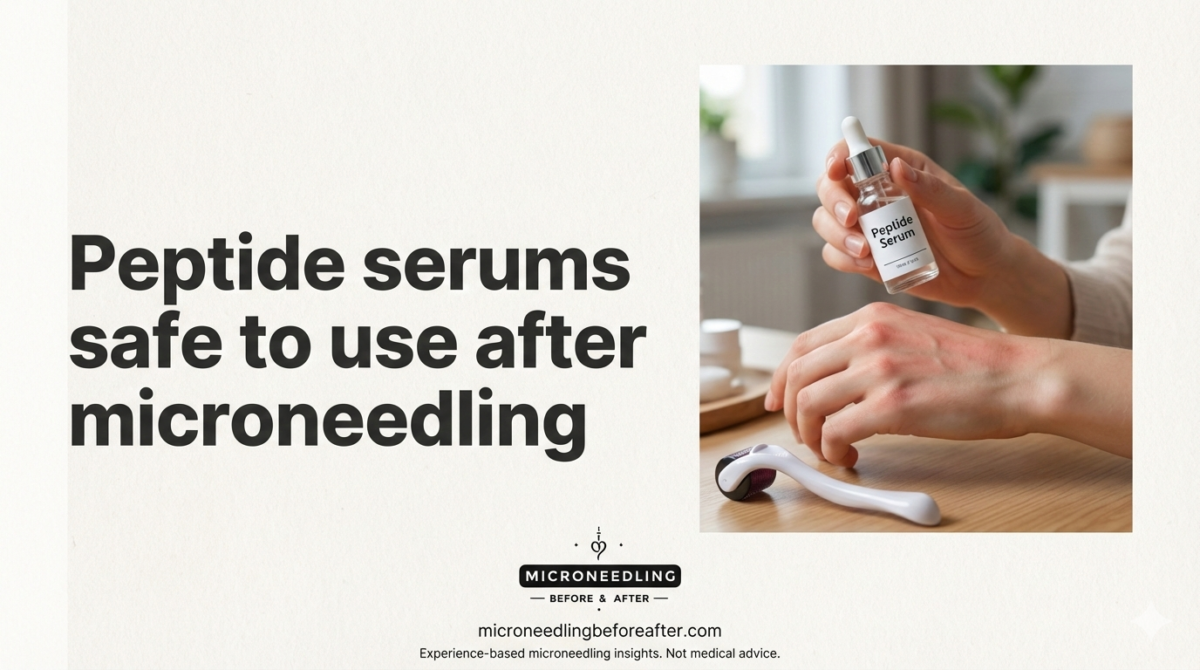
Sueros peptídicos seguros para usar después de la microaguja

Discover when and which peptide serums are safe after microneedling – timing, gentlest peptide picks, copper peptide caution, ingredients to avoid and care tips

Can I use peptide serums después de la microaguja, and which ones are genuinely safe for my skin?

Introducción

I’ve had my fair share of microneedling sessions, and I know the questions that pop up afterward: what can I put on my skin, when can I go back to my usual routine, and are peptide serums safe? I’ll walk through the science, practical timing, product choices, and safety tips so I can make an informed choice and protect my skin while maximizing results.

What microneedling does to your skin

Microneedling creates controlled micro-injuries in the epidermis and sometimes the dermis, depending on needle depth. I think of it as a signal to my skin to repair itself: the microchannels trigger inflammation, collagen and elastin production, and increased permeability for topical products.

Why post-procedure skincare matters

What you apply after microneedling matters because those microchannels temporarily boost absorption and because the skin is in a vulnerable inflammatory state. If I use the wrong ingredients too soon, I can intensify irritation, cause contact reactions, or slow healing. If I use the right ingredients at the right time, I can support repair and enhance results.

What peptides are and how they work

Peptides are short chains of amino acids that act as signaling molecules for skin cells. I think of them as tiny messengers that tell my skin to build collagen, calm inflammation, or improve barrier function. They’re generally gentle and targeted, which is why many people reach for peptide serums after procedures—provided they’re used carefully.

Are peptide serums safe to use after microneedling?

Short answer: many peptide serums can be safe and beneficial after microneedling, but timing and the specific peptide matter. I usually avoid immediately slapping on every active I own. Some peptides are soothing and hydrating, while others (particularly copper peptides) come with debate about immediate post-procedure use. I’ll break down what’s generally safe, what to avoid, and why.

Timeline: when to use peptides after microneedling

How soon I introduce peptides depends on the needle depth and whether the microneedling was professional or at-home.

  • 0–24 hours: Skin is very reactive. I stick to sterile saline or a simple, fragrance-free hydrating product like pure hyaluronic acid and avoid most actives.
  • 24–72 hours: The inflammation usually starts settling. I may start gentle peptide serums if they’re non-irritating.
  • 72+ hours: I generally reintroduce stronger actives and more varied peptides, assuming healing is progressing normally.

Below is a simple table comparing needle depth and suggested timing for peptides and actives.

Needle depth Tiempo de inactividad típico Peptides — safe to use? Strong actives (retinoids, high-dose vitamin C)
≤ 0.25–0.5 mm (home micro-needling) Minimal (few hours) Often safe after 24 hours if no irritation Wait 48–72 hours; patch test
0,5–1,0 mm 24–48 horas Start gentle peptides after 24–48 hours Wait 72+ hours, depending on healing
1.0–2.5 mm (professional) Several days to 1 week Use caution; introduce peptides after 48–72 hours or per clinician guidance Avoid for 5–7+ days; follow professional advice
> 2.5 mm (medical procedures) Longer, clinician-monitored Follow clinician’s protocol — may be delayed Only under clinician supervision

I pay attention to how my skin actually looks and feels rather than rigidly following a clock. If there’s redness, open areas, or crusting, I wait longer.

Which peptides are generally safe and why

I separate peptides into categories based on their typical use and safety profiles after microneedling.

Soothing and reparative peptides (usually safe early)

  • Palmitoyl tripeptide-1 and Palmitoyl tetrapeptide-7 (Matrixyl family): I find these supportive for collagen and skin repair and usually tolerate them well. They’re small signal peptides aimed at stimulating ECM (extracellular matrix) and reducing inflammation.
  • Oligopeptide-1 (often referred to as EGF): This growth factor-like peptide can aid in repair. I’m cautious but many practitioners use EGF-type products after microneedling to support healing; timing depends on depth and clinician preference.
  • Pentapeptides and oligopeptides that claim barrier support: These are typically mild and useful for restoring skin function.

Cosmetic performance peptides (tolerated with caution)

  • Acetyl Hexapeptide-8 (Argireline): I use this for expression-line concerns; it’s generally gentle and may be introduced early if my skin isn’t overly inflamed.
  • Palmitoyl Tripeptide-5 / Tripeptide complexes: These aim to mimic growth factors and support collagen. I introduce them once the worst of the inflammation subsides.

Copper peptides (GHK-Cu, copper tripeptide)

  • Copper peptides are controversial in the immediate post-procedure window. Some studies and practitioners suggest copper peptides can support wound healing and regeneration; others caution that copper can alter metalloproteinase activity and might interfere with growth factor-driven repair in the immediate inflammatory phase. Personally, I avoid copper peptides for the first 24–72 hours after microneedling and discuss timing with my clinician for deeper treatments. If I plan to use copper peptides, I introduce them only after visible healing is underway.

Growth factors vs peptides

  • Growth factors (EGF, PDGF) are not classic peptides but protein signals. Some clinicians use them after microneedling to accelerate repair, but they can be potent. I follow clinician guidance for these and generally wait until the initial re-epithelialization phase has started.

Table: Common peptides, their benefits, and recommended wait time after microneedling

Peptide / Type Principales beneficios Typical wait time after microneedling (general guidance)
Palmitoyl Tripeptide-1 (Matrixyl) Stimulates collagen, reduces wrinkles 24–48 hours if minimal irritation
Palmitoyl Tetrapeptide-7 Anti-inflammatory, collagen support 24–48 horas
Acetyl Hexapeptide-8 (Argireline) Minimizes expression-related lines 24–48 horas
Tripeptide-1 / Tripeptide complexes Repair and collagen synthesis 24–72 hours depending on irritation
Oligopeptide-1 (EGF) Cell proliferation, repair 24–72 hours; clinician preference for deeper needling
GHK-Cu (copper peptide) Promotes repair, but debated Delay 48–72+ hours or follow clinician advice
Synthetic small peptides (cosmetic blends) Various anti-aging effects 24–72 hours, introduce slowly

I use these as guidelines, not hard rules. My observation of how my skin responds determines the final timing.

Formulation features I prefer after microneedling

When I look for a peptide serum to use after a session, I focus less on marketing and more on the formula:

  • Fragrance-free and alcohol-free: These minimize irritation.
  • Low to moderate peptide concentrations rather than extremely high doses that could be irritant.
  • Hydrating base (hyaluronic acid, glycerin) helps soothe and maintain moisture.
  • Minimal additional actives: I avoid formulas heavy with acids, retinoids, or strong vitamin C right away.
  • pH close to skin-neutral: Extremely low pH formulas can sting.

I especially like serums that combine gentle peptides and humectants without added essential oils or exfoliating acids.

Ingredientes que se deben evitar inmediatamente después de la microaguja

Some ingredients can inflame or sensitize microneedled skin if applied too soon. I avoid:

  • Retinoids (retinol, tretinoin) for at least 72 hours, often longer for deeper treatments.
  • Strong or high-concentration vitamin C (L-ascorbic acid) right away — it can sting and provoke redness.
  • AHAs/BHAs (glycolic, lactic, salicylic acids) — these chemical exfoliants can overstrip delicate post-procedure skin.
  • Benzoyl peroxide — too harsh and drying.
  • High concentrations of alcohol or denatured alcohol — they worsen barrier disruption.
  • Fragrances and essential oils — risk of contact sensitization.
  • Physical scrubs and manual exfoliation — obviously avoid.

Below is a quick reference table.

Ingredient type Use after microneedling? Why
Ácido hialurónico Yes (immediately) Hydration, soothing
Gentle peptides (non-copper) Yes (24–48 hours) Repair signalers, low irritation
Péptidos de cobre Use cautiously (48–72+ hours) Controversial effect on immediate healing
retinoides No (wait 72+ hours) Irritation, delayed healing
Strong vitamin C No (wait 48–72 hours) Stinging and irritation
AHAs/BHAs No (wait 72+ hours) Further compromise barrier
Fragrances/essential oils Avoid Riesgo de reacción alérgica

I find the safest early strategy is to favor hydration and controlled peptides rather than aggressive actives.

Practical, step-by-step post-microneedling routine I follow

Below I lay out a routine I use as a template; I adapt it to needle depth and clinician instructions.

Immediate care (first 0–6 hours)

  • I cleanse gently with sterile saline or a very mild, fragrance-free cleanser.
  • I apply a sterile, hydrating hyaluronic acid serum or a clinician-recommended post-procedure product.
  • I avoid makeup, exfoliants, and rugs.

First 24 hours

  • I continue gentle hydration and avoid active serums.
  • I use cool compresses for discomfort and keep the skin protected from sun and heat.
  • If my clinician provided a specific post-procedure product (often barrier-repair creams or growth-factor formulations), I follow that plan.

24–72 horas

  • If the skin looks calm, I may introduce a gentle peptide serum that’s fragrance-free and low in other actives.
  • If redness persists or if there’s heavy scabbing, I delay peptides until healing is more advanced.
  • For deeper professional needling, I often wait longer and consult the clinician.

After 72 hours and ongoing

  • Provided there’s normal healing, I reintroduce more targeted peptide blends and, eventually, other actives in a phased manner.
  • I prioritize sun protection and moisturizing barrier repair as I bring back retinoids and vitamin C under guidance.

I listen to my skin. If anything stings, it goes into the “stop” pile immediately.

How I introduce a new peptide serum safely

When I try a new peptide serum after microneedling, I do these steps:

  1. Patch test on an area of healed skin before applying to the entire treated area.
  2. Start with a small amount and use every other day to monitor for reactions.
  3. Observe for 48–72 hours for redness, bumps, or irritation.
  4. If tolerated, gradually increase frequency and then concentration.

Patience is key. Faster reintroduction isn’t always better.

Home microneedling vs professional microneedling — what I change

I use different rules depending on the device and depth:

  • Home dermarollers or devices that use ≤ 0.5 mm needles: I’m more comfortable starting gentle peptides after 24 hours, assuming no irritation.
  • Professional microneedling (1.0 mm and above): I’m more conservative and rely on clinician instructions. I often wait 48–72+ hours for peptides and longer for stronger actives.
  • Microneedling with PRP or growth factors: I follow the provider’s protocol exactly since those procedures are designed with compatible topicals in mind.

I treat professional procedures with more caution because they penetrate deeper and have higher absorption.

Special situations and skin types

Sensitive skin and rosacea

I’m extra cautious. I tend to wait longer and choose the gentlest formulations — mainly humectants and low-irritant peptides — and I consult my dermatologist.

Acne-prone skin

If I have active acne lesions in the treated area, I avoid microneedling until controlled. Post-procedure, I avoid benzoyl peroxide and other drying agents until the skin is intact.

Darker skin tones

I watch for post-inflammatory hyperpigmentation (PIH). I avoid aggressive actives early and use soothing peptides and sun protection to reduce PIH risk. I also follow professional advice for timing.

Keloid scarring or history of poor wound healing

I consult a dermatologist or plastic surgeon; microneedling may not be appropriate, and peptide timing will be clinician-directed.

Why I’m cautious about copper peptides right after microneedling

Copper peptides (GHK-Cu) are known to promote repair and collagen production, but I’m careful with them early on for several reasons:

  • Copper ions can modulate matrix metalloproteinases (MMPs) and other enzymes involved in remodeling; timing may influence whether they help or hinder the initial inflammatory-to-repair transition.
  • Some clinicians report better results when copper peptides are used after the early inflammatory period or as part of a staged protocol.
  • Evidence isn’t definitive, so I prefer waiting 48–72 hours after minor microneedling or longer after deeper procedures.

If I decide to use copper peptides, I introduce them only once the skin shows signs of re-epithelialization and no open areas.

Combining peptides with other actives later on

Once the skin has settled (often 72+ hours or per clinician guidance), I reintroduce actives in a layered, cautious manner:

  • Vitamin C (L-ascorbic acid): I start at lower concentrations and observe; I usually wait a week for professional microneedling.
  • Retinoids: I bring them back later, often after 1–2 weeks, starting at a lower frequency.
  • AHAs/BHAs: I reintroduce slowly once the barrier is stable.

When I combine peptides with other actives, I favor alternating nights or layering with a hydrator in between to minimize irritation.

Practical tips I follow to reduce risk

  • I only microneedle skin that’s clean and free of active infection.
  • I avoid aggressive ingredients for several days after microneedling.
  • I use SPF religiously once I’m out in the sun again—sunscreen is non-negotiable.
  • I keep tools sterile for home microneedling and replace rollers/disposable heads per manufacturer guidance.
  • I consult a dermatologist if I have underlying skin conditions or if a reaction occurs.

Signs I should stop a peptide serum and seek help

I stop using the serum immediately if I notice:

  • Increasing or spreading redness after initial improvement
  • New pustules or signs of infection
  • Severe burning or stinging beyond the first 24 hours
  • Intense swelling or systemic symptoms

If concerning signs appear, I contact my clinician or dermatologist promptly.

Examples of peptide-friendly product attributes (what I look for)

When scanning labels, I look for:

  • “Fragrance-free”, “alcohol-free”
  • Short ingredient list with humectants (hyaluronic acid, glycerin)
  • Peptide names I recognize (palmitoyl tripeptide, palmitoyl tetrapeptide, oligopeptide)
  • No listed retinol, high-dose vitamin C, or alpha hydroxy acids
  • pH around 5–7 (skin-neutral)

I prefer simplicity after a procedure.

FAQ — common questions I answer from experience

Can I use any peptide serum immediately after microneedling?

Not any. I avoid potentially irritating formulations immediately and steer clear of copper peptides for 24–72 hours as a precaution. Gentle, hydrating peptide serums can be introduced after monitoring skin reaction.

Will peptides get deeper into the skin because of microneedling?

Yes, microneedling increases absorption. That’s beneficial if the peptide is safe and intended to promote repair, but it also means more caution is needed to prevent irritation from aggressive actives.

Can peptides cause inflammation after microneedling?

They can if the formulation has irritants or if the peptide itself elicits a reaction. Most cosmetic peptides are well tolerated, but individual sensitivity varies.

Are growth factors the same as peptides, and are they safe?

Growth factors are protein signals that can support repair. They are not classic short peptides and can be more potent. I follow clinician advice for growth factor use after microneedling.

How long before I can use retinoids again?

I typically wait at least 72 hours after mild microneedling and longer after deeper procedures. I reintroduce retinoids gradually and monitor for irritation.

How I choose between professional advice and anecdotal tips

I use my clinician’s guidance as the primary source because they know my specific treatment depth and skin condition. I supplement that with peer-reviewed literature and cautious personal experimentation. If a product claim sounds too good to be true (e.g., immediate dramatic tightening combined with deep penetration), I treat it skeptically.

Expectativas realistas que establezco para los resultados

Microneedling plus careful post-procedure care, including peptides introduced appropriately, can improve texture, firmness, and tone over time. I don’t expect overnight miracles. I expect gradual improvement over weeks to months, and I track progress with photos and notes.

Final checklist I use after microneedling when considering peptides

  • Did I consult the clinician who performed the procedure? If yes, follow their recommendations.
  • Is the skin showing significant open wounds or heavy crusting? If yes, wait.
  • Is the peptide serum fragrance-free, alcohol-free, and low in other actives? If yes, consider a cautious introduction after 24–72 hours.
  • Does the product contain copper peptides? If yes, consider waiting 48–72 hours or longer and consult my provider.
  • Have I patch-tested the product on healed skin? If no, patch-test first.

Conclusión

I find that peptide serums can be a helpful component of post-microneedling care when chosen and timed correctly. My approach is conservative: immediate hydration, avoidance of harsh actives, gradual reintroduction of gentle peptides, and clinician consultation for deeper or medical treatments. By listening to my skin and following these principles, I support healing while working toward the anti-aging and skin-repair benefits I want.

If you’d like, I can suggest an example 14-day post-microneedling routine tailored to a specific device depth or recommend ingredient combinations to look for in a peptide serum based on your skin type.

Los mejores sueros de péptidos de colágeno para la reparación de cicatrices de acné y el cuidado posterior con microagujas.

Los mejores sérums de colágeno y péptidos para el cuidado posterior a la microaguja: reparan las cicatrices del acné, aumentan la firmeza y la hidratación, además de incluir EGF, péptidos de cobre y ácido hialurónico. Ahora.

Me encanta probar nuevos sérums, y comparar opciones ricas en péptidos es uno de mis pasatiempos favoritos de belleza. Ahora mismo estoy viendo una línea variada: el sérum XY Professional EGF Peptides (con factor de crecimiento epidérmico y ampolla de células madre de ginseng), productos de la Korea Microneedling Academy para microagujas en casa y profesionales, el sérum antiedad The Ordinary Multi-Peptide + Copper Peptides 1% y el sérum Le Mieux Collagen Peptide con ácido hialurónico. Cada uno promete potenciar la firmeza, la textura o la hidratación de formas ligeramente diferentes, así que estoy deseando ver qué ingredientes y formatos ofrecen resultados realmente notables.

Los tratamientos tópicos con péptidos y factores de crecimiento han evolucionado desde la investigación en cicatrización de heridas y la dermatología clínica hasta convertirse en un producto de cuidado de la piel generalizado en las últimas décadas. Los péptidos de cobre, el EGF, los péptidos que favorecen el colágeno y los extractos de células madre vegetales son el resultado de esta transición hacia la ciencia. Contar con este tipo de productos puede contribuir a la reparación natural de la piel y la producción de colágeno, mejorar la elasticidad y las líneas de expresión, y potenciar la hidratación y el tono general, especialmente al combinarlos con tratamientos como la microaguja, que aumenta su absorción. En este artículo, analizaré cada producto en detalle, comparando ingredientes, texturas, beneficios declarados y para qué tipos de piel o rutinas son más adecuados, para que puedas decidir cuál se adapta mejor a tus necesidades.

Suero facial con péptidos EGF XY Professional — Ampolla de células madre de ginseng (Corea)

Recientemente probé el Sérum de Péptidos EGF para el Rostro XY Professional, con Factor de Crecimiento Epidérmico y Ampolla de Células Madre de Ginseng, de la Academia Coreana de Microagujas, como parte de mi rutina de cuidado posterior a la microaguja para reparar las cicatrices del acné. A continuación, comparto mi análisis práctico: para qué es mejor, por qué me gusta, una descripción clara de su propósito y características principales, una evaluación de la calidad general y una lista equilibrada de ventajas y desventajas basada en mi experiencia.

uso principal

Aplicación prevista

Uso este sérum principalmente como producto de cuidado específico después de las sesiones de microagujas, centrándome en la reparación de las cicatrices del acné. Está formulado para favorecer la renovación de la piel y corregir las irregularidades de su textura, por lo que está indicado para su aplicación en el rostro (y en el cuero cabelludo si se desea) para mejorar el tono y la elasticidad. En mi caso, el objetivo principal era facilitar la recuperación, reducir la apariencia de las cicatrices deprimidas del acné y ayudar a que la piel luciera más suave y radiante entre sesiones.

Cómo lo usé

Apliqué una pequeña cantidad después de mis sesiones de microagujas, una vez que la piel se había calmado (siguiendo las indicaciones de la clínica de esperar a que el enrojecimiento inmediato disminuyera). Los días sin tratamiento, usé el sérum por la noche, después de la limpieza facial y antes de la hidratación. Siempre hago una prueba en una zona específica y aplico una capa fina para evitar sobrecargar la piel recién tratada.

Por qué nos gusta este producto

Beneficios destacados que noté

Me gusta este serum porque combina varios ingredientes poderosos que se recomiendan comúnmente para la cicatrización de heridas y la mejora de la textura de la piel. La inclusión de EGF (factor de crecimiento epidérmico) y un Complejo peptídico Me pareció especialmente adecuado para mis necesidades de cuidado posterior a la microaguja: estos ingredientes están diseñados para favorecer la renovación de la piel. El impulso adicional de niacinamida ayudó a igualar el tono de la piel y calmar el enrojecimiento, mientras que péptidos de cobre Contribuyó a una sensación más firme y resistente con el tiempo.

Experiencia sensorial y packaging

La textura es ligera y se absorbe rápidamente, lo que agradecí al aplicarlo en capas. después de la microaguja. El envase tipo ampolla (típico de Cuidado de la piel coreano Los sueros se sienten de alta calidad e higiénicos. Me gustó que se comercialice tanto para rostro como para cuero cabelludo. Usé una pequeña cantidad en una zona con pérdida de cabello que estoy tratando y la fórmula no me pareció demasiado pesada.

Una descripción general del propósito y las características clave de los productos

Propósito del producto

El suero de péptidos EGF XY Professional está diseñado como un tratamiento concentrado para impulsar la renovación de la piel, Mejora la textura y realza la luminosidad. Está dirigido a quienes desean apoyar la recuperación después de un procedimiento (como la microaguja) y a quienes buscan abordar los signos de la edad o las afecciones de la piel madura. Al estar formulado tanto para el rostro como para el cuero cabelludo, es versátil para diversas aplicaciones específicas.

Características e ingredientes clave

  • EGF (factor de crecimiento epidérmico):incluido para apoyar la renovación y recambio celular, lo que puede ser beneficioso después de la microaguja cuando se activan los procesos de reparación de la piel.
  • Complejo peptídico:una mezcla destinada a promover la firmeza y la apariencia de una piel más suave.
  • Niacinamida:ayuda tono de piel uniforme y puede reducir la apariencia de decoloración postinflamatoria común en las cicatrices del acné.
  • Péptidos de cobre:asociado con una mejora elasticidad y suavidad, un complemento útil para pieles maduras o con cicatrices.
  • Extracto de células madre de ginseng:añade apoyo antioxidante y un componente de “cuidado especial” destinado a mejorar la apariencia de la piel madura o estresada.
  • Fórmula coreana para el cuidado de la piel:El suero se inspira en las tendencias científicas cosméticas más avanzadas de la belleza coreana, priorizando tanto la eficacia como la experiencia sensorial.

Estas características en conjunto lo convierten en un producto correctivo y de uso posterior al procedimiento, en lugar de un humectante diario básico.

calidad general

Formulación y rendimiento

En cuanto a su formulación, el sérum se siente bien equilibrado: es potente sin ser grasoso. Tras varias semanas de uso constante junto con mis sesiones de microagujas, noté mejoras graduales en la textura y una apariencia más suave alrededor de las cicatrices de acné deprimidas. Mi piel también lucía ligeramente más radiante y con un tono uniforme, lo cual atribuyo a... niacinamida y mezcla de péptidos. La administración en ampolla mantiene los ingredientes activos frescos y concentrados.

Seguridad y tolerabilidad

El sérum me resultó bastante tolerable, pero aun así recomiendo hacer una prueba en una zona pequeña, especialmente después de procedimientos como la microaguja. Esperé a que la sensibilidad inicial disminuyera antes de aplicarlo directamente en las zonas recién tratadas. Si tienes piel muy reactiva o propensa al eccema, introduce el producto lentamente. La fórmula contiene varios ingredientes activos, por lo que aplicarlo correctamente en capas (una fina y luego una hidratante que fortalezca la barrera cutánea) ayuda a prevenir la irritación. En general, me pareció un producto de calidad profesional que se adapta a las necesidades de la piel después de un procedimiento.

pros y contras

Ventajas

  • Contiene EGF y un potente Complejo peptídico para apoyar la renovación de la piel, lo cual es ideal para el cuidado posterior con microagujas.
  • Niacinamida Ayuda a emparejar el tono de la piel y mejorar la textura: útil para la decoloración posterior al acné.
  • Péptidos de cobre y Extracto de células madre de ginseng Añade elasticidad y apoyo antioxidante.
  • Textura ligera y de rápida absorción que se aplica bien debajo de los humectantes.
  • El empaque tipo ampolla se siente higiénico y de primera calidad.
  • El uso dual para rostro y cuero cabelludo aumenta la versatilidad para quienes tratan múltiples áreas.
  • Formulado con Cuidado de la piel coreano Experiencia, ofreciendo ciencia cosmética avanzada en una fórmula elegante.

Contras

  • Debido a que contiene varios principios activos, puede resultar excesivo si se aplica con demasiada frecuencia inmediatamente después de una microaguja intensiva; el momento es importante.
  • No es económico: está posicionado como un producto de calidad profesional vinculado a los suministros de la academia de microagujas, por lo que el costo puede ser más alto que el de los sueros del mercado masivo.
  • Algunos usuarios con piel muy sensible pueden experimentar inicialmente una leve irritación o escozor; es importante realizar una prueba en el parche.
  • El producto está específico, por lo que si estás buscando un suero simple de un solo ingrediente, esto puede parecer demasiado complejo.

Estoy encantada con el Sérum de Péptidos EGF para Rostro XY Professional, Ampolla de Células Madre de Ginseng con Factor de Crecimiento Epidérmico BOOST, suministrado por la academia de Microagujas de Corea, como parte de mi rutina de cuidado posterior para la reparación de cicatrices de acné. No es una solución milagrosa de la noche a la mañana, pero es un tratamiento cuidadosamente formulado que favorece la cicatrización, mejora la textura y la luminosidad cuando se usa de forma constante y responsable después de la microaguja. Mi último consejo: úsalo como complemento de una rutina de cuidado posterior completa (limpieza suave, protección solar e hidratantes que reparan la barrera cutánea) y deja que los ingredientes activos hagan efecto.

XY Professional EGF Peptide Face Serum — Ginseng Stem Cell Ampoule (Korea)

Sérum Multi-Peptide + 1% Copper Peptide de The Ordinary: antiedad para líneas de expresión y elasticidad de la piel.

Yo alcanzo The Ordinary Multi-Peptide + Péptidos de cobre 1% principalmente por su papel en la promoción colágeno y favorecer la reparación de la piel. Cuando estoy tratando reparación de cicatrices de acné o cuidar mi piel después microagujas, Quiero un producto que ayude al proceso de cicatrización sin irritar la barrera cutánea dañada. Este sérum está diseñado como... multipéptido fórmula con péptidos de cobre, que son conocidos por su papel en cicatrización de heridas, elasticidad de la piel, y estimula proteínas como el colágeno y la elastina, que son importantes para reparar cicatrices de acné hundidas o texturizadas.

Lo uso como cuidado posterior específico una vez que mi piel se ha calmado tras el procedimiento y mi médico me da el visto bueno. En mi caso, eso significa que puedo esperar las primeras 24-72 horas después de una sesión de microagujas en la clínica (o seguir el cronograma de mi médico) y luego aplicar este sérum para favorecer la regeneración y la firmeza sin añadir ácidos ni retinoides agresivos.

Me gusta este suero porque combina potentes... péptidos con cobre, Creando un enfoque específico para el cuidado regenerativo de la piel sin fragancias fuertes ni extras innecesarios. Razones por las que sigo recomendándolo y usándolo:

  • Se dirige a síntesis de colágeno y elasticidad de la piel—dos factores clave para mejorar la apariencia de cicatrices de acné.
  • La fórmula es liviana y se absorbe rápidamente, por lo que se combina bien con otros hidratantes suaves y protectores solares en los que confío para el cuidado posterior a la microaguja.
  • Es rentable en comparación con muchos sueros de factores de crecimiento profesionales, por lo que puedo usarlo de manera constante sin preocuparme por el presupuesto.
  • El producto es sencillo (sin fragancias ni colorantes), por lo que experimento una irritación mínima cuando se usa adecuadamente.

Siempre me recuerdo a mí misma y a los demás que debemos hacer una prueba localizada y seguir las instrucciones de cuidado posterior a la microaguja de un profesional certificado. Valoro que este sérum me proporcione un refuerzo de péptidos localizado sin añadir exfoliantes ni retinoides que puedan inflamar la piel recién tratada.

Mi lectura sobre el propósito de The Ordinary Multi-Peptide + Péptidos de cobre 1% Es simple: es un concentrado suero peptídico Diseñado para apoyar la estructura de la piel y promover una tez más firme y resistente. Para reparación de cicatrices de acné y Cuidados posteriores a la microaguja, estas son las características que considero más relevantes:

  • Péptidos de cobre (GHK-Cu)Conocidos por su papel en la señalización de los mecanismos de reparación de la piel y en el apoyo a la formación de colágeno y glicosaminoglicanos. Estas acciones son directamente relevantes para la remodelación del tejido cicatricial y la mejora de la textura con el tiempo.
  • complejo multipeptídico:Una mezcla de péptidos que se enfocan en diferentes aspectos del envejecimiento y la reparación de la piel, ayudando a mejorar la firmeza, reducir la apariencia de líneas finas y apoyar la restauración general del andamiaje.
  • Textura de suero liviana que se absorbe rápidamente, ideal cuando necesitas aplicar una capa de humectante calmante o una crema reparadora de barrera después de la microaguja.
  • Fórmula minimalista sin fragancia, que reduce el riesgo de irritación durante los períodos sensibles posteriores al procedimiento.

Cuando lo uso después de la microaguja, sigo un cronograma prudente: dejo que mi piel se asiente durante el periodo inicial recomendado (normalmente de 24 a 72 horas, según la intensidad del tratamiento y la recomendación de mi médico), y luego empiezo a aplicar una capa fina de este sérum una o dos veces al día. Lo combino con una crema hidratante suave y no comedogénica y un tratamiento riguroso. protector solar Durante el día. Con el paso de las semanas, busco mejoras graduales en la textura y la firmeza, en lugar de milagros de la noche a la mañana.

En mi experiencia, la calidad general de este sérum es alta para su precio. La fórmula es eficaz, centrada en principios activos. péptidos y cobre Sin aditivos innecesarios. En cuanto a su rendimiento, he notado una mejor elasticidad de la piel y una sutil suavidad con el uso constante. Para las cicatrices del acné, los péptidos no son una solución rápida (los resultados se desarrollan con el paso de los meses), pero son una opción práctica y de menor riesgo para favorecer la remodelación después de procedimientos como la microaguja.

Algunos puntos prácticos que he valorado:

  • El empaque es funcional y protege el suero de contaminantes con un diseño de gotero.
  • La textura no es grasa y es compatible con la mayoría de las capas hidratantes que uso para el cuidado posterior.
  • Funciona bien con otros activos suaves cuando se usan en forma espaciada adecuadamente (por ejemplo, evito usar vitamina C fuerte o retinoides al mismo tiempo sin guía profesional).

Sin embargo, tengo que tener en cuenta las reglas de mezcla: algunos profesionales sugieren evitar el uso simultáneo de vitamina C de alta potencia y péptidos de cobre debido a interacciones teóricas, y siempre sigo las instrucciones de mi proveedor después de la microaguja para evitar la irritación.

Ventajas:

  • Favorece la producción de colágeno. y reparación de la piel, útil para cicatriz de acné remodelación.
  • Contiene péptidos de cobre, que están asociados con cicatrización de heridas y elasticidad de la piel.
  • Textura ligera y de rápida absorción que se aplica bien en capas. Cuidados posteriores a la microaguja rutinas.
  • La fórmula minimalista sin fragancia reduce el riesgo de irritación en la piel sensibilizada.
  • Asequible y accesible en comparación con muchos sueros peptídicos de grado médico.

Contras:

  • Los resultados son graduales: los péptidos ayudan con el tiempo, pero no son una solución instantánea para las cicatrices.
  • Some caution about combining with certain actives (strong vitamin C or chelating compounds); I follow professional advice on layering after procedures.
  • Because it contains copper, there can be a slight metallic note or finish that some people notice, though it doesn’t bother me.
  • Not a replacement for professional treatments; I use it as a supportive at-home step alongside microneedling and in-office guidance.

yo encuentro The Ordinary Multi-Peptide + Péptidos de cobre 1% to be a reliable, budget-friendly option for supporting skin recovery and encouraging colágeno y elasticidad after microneedling. I treat it as a supportive tool rather than a standalone cure for acne scars. When I couple it with professional microneedling, consistent sun protection, and barrier-focused moisturizers, it becomes a meaningful part of my scar-repair aftercare regimen. As always, I recommend patch-testing, following timing guidance from your treatment provider, and listening to your skin as you reintroduce actives after any in-office procedure.

The Ordinary Multi-Peptide + 1% Copper Peptide Serum — Anti-Aging for Fine Lines  Skin Elasticity

Le Mieux Collagen Peptide Anti-Aging Face Serum with Hyaluronic Acid — 1 oz (Paraben- & Sulfate-Free)

Le Mieux Collagen Peptide Serum – Concentrated, Creamy Anti Aging Face Serum with Skin Contouring Peptides & Moisturizing Hyaluronic Acid (1 oz / 30 ml)

uso principal

What I reach for during microneedling aftercare

I use this serum primarily to support hydration and skin resiliency after microneedling procedures. Its main role for me is to provide a moisture-rich, peptide-forward treatment that complements the skin’s natural remodeling process. While microneedling creates channels that can enhance topical absorption, I always follow my provider’s timing and guidance — for many people, a nutrient-dense, concentrated formula like this is best once the immediate post-procedure redness and open channels have begun to calm.

Por qué nos gusta este producto

Practical benefits that matter in aftercare

What I like most about the Le Mieux serum is its combination of collagen peptides, ácido hialurónico, y ceramidas in a creamy, non-watery base. That texture feels nourishing on compromised skin without being sticky. The double encapsulated, timed-release delivery stood out to me because it seems to sustain activity throughout the day and night rather than dumping actives all at once. I also appreciate that it’s formulated without parabens or sulfates, and is cruelty free — small details that add up when I’m carefully selecting products for sensitive, post-procedure skin.

Una descripción general del propósito y las características clave de los productos

Intended results and standout ingredients

Le Mieux designed this formula to address multiple concerns: dryness, dehydration, minor visible sun damage, and loss of firmness. For my microneedling aftercare routine, that multipurpose approach is useful because the skin often needs both moisture and support for structural repair.

Key features I focus on:

  • Skin-contouring peptides: Peptides are the headline act here. They support the skin’s structural proteins and can help improve the look of texture and firmness over time. For acne scar repair, peptides can be part of a broader remodeling strategy.
  • Moisturizing hyaluronic acid (the product calls it the Master Molecule): This is the serum’s base and provides deep hydration and a plumping effect. Especially after microneedling, locking in moisture is crucial for comfort and recovery.
  • Nourishing ceramides: Ceramides help restore the skin barrier, which is essential after any resurfacing treatment.
  • Marine algae: Adds antioxidative and soothing benefits to support stressed skin.
  • Double encapsulated, timed-release technology: This provides targeted and sustained absorption of actives, which I liked because it supports gradual delivery rather than overwhelming freshly treated skin.
  • Clean formulation: No binders, thickeners, fillers, sulfates, or parabens.

How I use it

I pat a small amount onto damp skin after cleansing and any practitioner-approved post-microneedling steps. Because of the creamy base, a little goes a long way. I follow up with a gentle barrier-repair moisturizer and, if daytime, a broad-spectrum sunscreen once my skin has recovered enough for sun protection.

calidad general

My take on formulation, texture, and performance

I consider this a high-quality option in the collagen peptides serum category. The texture feels luxe — thicker than a typical water-based serum but not heavy like a cream. That balance translates to good compliance: it layers well under moisturizers and sits comfortably on the skin.

Performance-wise, I noticed improved hydration and a smoother look to texture after consistent use. I can’t promise dramatic scar erasure overnight — that’s not realistic for any topical — but over weeks of regular use the skin looked more supple and the tone slightly more even. The timed-release peptide system felt like a thoughtful touch; I often felt hydration benefits lasting into the evening after a morning application.

Product quality also extends to ingredient transparency. The absence of fillers and harsh additives, combined with the use of clinically familiar ingredients (peptides, hyaluronic acid, ceramides), gave me confidence this fit well into a sensitive or post-procedure routine — again assuming timing is approved by a clinician.

pros y contras

What I liked and what to watch for

Ventajas

  • Concentrated, creamy texture provides rich hydration without feeling greasy.
  • Collagen peptides y timed-release technology offer sustained support for skin remodeling efforts.
  • Hyaluronic acid (Master Molecule) as a nourishing base boosts moisture retention and comfort after microneedling.
  • Ceramides and marine algae add barrier support and antioxidant properties, both useful in aftercare.
  • Clean formulation: no parabens, no sulfates, no fillers, y cruelty free.
  • Good layering ability under moisturizers and sunscreen.

Contras

  • Because it’s richer than water-based serums, some people with very oily or acne-prone skin might find it too emollient for daily use on untreated areas.
  • It’s not an instant scar-fixer; topical peptides support appearance over time but aren’t a replacement for professional resurfacing strategies.
  • As with any active product applied after microneedling, timing is crucial — applying too soon can be irritating. I always recommend confirming with your clinician before introducing new serums immediately after treatment.
  • Price point is higher than drugstore options, which may matter if you’re on a budget and using frequently.

Final thoughts I keep this serum in my rotation for microneedling aftercare and for periods when my skin needs concentrated hydration plus peptide support. It feels intentional in both formulation and sensory experience. If you’re looking for a creamy, peptide-rich serum to support reparación de cicatrices de acné and hydration post-microneedling, this one is a top contender — provided you follow your provider’s guidance on when to start using active serums after a procedure.

Le Mieux Collagen Peptide Anti-Aging Face Serum with Hyaluronic Acid — 1 oz (Paraben-  Sulfate-Free)

Comparison of the three peptide serums

I reviewed the three peptide-focused serums side-by-side so I could see where each product shines and where it might not be the ideal fit. Below I summarize the main specifications, what they mean in practice, and a compact comparison table to visualize the differences.

How I read the specifications

  • Primary actives — the ingredients most likely to drive the anti-aging or restorative effects (EGF, copper peptides, hyaluronic acid, etc.).
  • Concentration notes — whether the product highlights a specific percentage or unique peptide strength (e.g., “1% copper peptides”).
  • Texture / base — important for layering, feel on skin, and whether the product is more nourishing (creamier) or lightweight (water/gel serum).
  • Delivery technology — features like encapsulation, timed release, or ampoule format that affect absorption and longevity on skin.
  • Target concerns / recommended uses — the skin issues each formula emphasizes (fine lines, elasticity, radiance, hydration, face vs scalp).
  • “Free-from” claims and cruelty status — helpful for those avoiding parabens/sulfates or seeking cruelty-free products.
  • Other notes — any special positioning (for example, marketed for microneedling supplies or scalp use).

Comparison table

Specification / Feature XY Professional EGF Peptides Serum (Korea) The Ordinary Multi-Peptide + Péptidos de cobre 1% Le Mieux Collagen Peptide Serum (30 ml)
Primary actives EGF + peptide complex, niacinamide, copper peptides, ginseng stem cell extract Multi-peptide complex + Copper peptides (1%) Collagen peptides, hyaluronic acid (Master Molecule), ceramides, marine algae
Noted concentration Not explicitly % aside from ingredient highlights Copper peptides 1% (explicit) Not given as %; formulation emphasizes concentrated/creamy base
Texture / base Lightweight ampoule/serum (Korean luxurious formula) — suitable for both face and scalp Lightweight serum (typical water/glycerin-based feel) Concentrated, creamy serum — nourishing, richer base
Delivery technology Ampoule format / Korean delivery focus (rapid absorption) Standard serum formulation (no special encapsulation noted) Double-encapsulated, timed-release technology
Target concerns Skin renewal, radiance, evening tone, elasticity — marketed for face & scalp; also referenced for microneedling supplies Anti-aging: fine lines, skin elasticity, firmness, overall peptide support Hydration, skin contouring, dryness/dehydration, sagging, minor sun damage
Use with microneedling / scalp Marketed toward microneedling academy supplies; also indicated for scalp use Commonly used in anti-aging routines; not specifically marketed for microneedling or scalp Positioned for facial anti-aging and contouring; not specifically for scalp
Free-from / cruelty Not specified in provided copy Not specified in provided copy (brand generally transparent about formulation) No parabens or sulfates; cruelty-free; no fillers or thickeners
Size (typical) Varies by SKU (ampoule style product) Varies by SKU (usually 30 ml or similar) 1 oz / 30 ml
Best for (my view) Someone who wants EGF + niacinamide and options for scalp care or microneedling-adjacent products Someone who wants a focused peptide + copper peptide booster with a light texture and clear % concentration Someone who prefers a richer, long-wear peptide serum with hyaluronic acid and timed-release delivery

My quick take

  • If I want a product that addresses both face and scalp and I’m curious about EGF and ginseng stem cell extracts, I lean toward the XY Professional EGF Peptides Ampoule.
  • If I want a clear, peptide-forward formula with a stated 1% copper peptide concentration and a lightweight feel for layering, I prefer The Ordinary’s Multi-Peptide + Copper Peptides 1%.
  • If I’m after a richer, moisture-first peptide serum with advanced delivery (double-encapsulation) and explicit “no parabens/sulfates” and cruelty-free claims, I’d choose Le Mieux.

If you’d like, I can add a short recommended routine for each product (how to layer them with vitamin C, retinoids, or use after microneedling), or produce a printable one-page comparison for quick reference. Which would help you most?

Conclusión

After testing and comparing the three serums, here’s my overall take: each product brings a different strength to an anti-aging routine. The XY Professional EGF Peptides Ampoule impressed me for its regenerative focus and rich texture, The Ordinary Multi-Peptide + Copper Peptides 1% stood out for a targeted, science-forward peptide complex that supports firmness, and the Le Mieux Collagen Peptide Serum felt comforting and hydrating with good skin-contouring ingredients. None of them is a universal winner — the right choice depends on your skin goals and tolerance for actives.

XY Professional EGF Peptides Serum (EGF + Ginseng stem cell Ampoule)

I liked this for its emphasis on epidermal growth factor and botanical boosters that aim to support skin repair and radiance. It feels nourishing and is a nice pick if you want a restorative, slightly richer serum.

The Ordinary Multi‑Peptide + Copper Peptides 1%

This one is my go-to when I want a concentrated, clinical-feeling peptide blend aimed at firmness and fine lines. It’s lightweight and layers well under creams, and I appreciate the clear, ingredient-focused approach.

Le Mieux Collagen Peptide Serum

I enjoyed this as a moisturizing, creamy peptide serum that also delivers hyaluronic acid for immediate plumping. It’s pleasant to use and works well for skin that needs hydration and a softer-looking texture.

Drawbacks

  • XY Professional EGF Peptides Ampoule
    • Can be richer/heavier than a typical lightweight serum, so it might feel too occlusive for very oily skin.
    • EGF products can be pricier and may require consistent use to see benefits.
  • The Ordinary Multi‑Peptide + Copper Peptides 1%
    • Copper peptides can be incompatible with certain actives (e.g., some vitamin C forms); layering requires some attention.
    • Potent actives may irritate very sensitive skin — patch testing is important.
  • Le Mieux Collagen Peptide Serum
    • The creamy texture may not suit oily or acne-prone skin types.
    • Results for “collagen boosting” can be subtle and gradual; expectations should be realistic.

Also, a general caution: if you plan to use any of these with microneedling (especially in a professional or at-home setting), make sure the product is appropriate for post-procedure use and sterile. If in doubt, check with a professional — microneedling can increase absorption but also the risk of irritation or infection with non-sterile products.

Recommendation — Who Each Is Best For

  • If you want targeted, science-driven peptide support for firmness and don’t mind navigating actives: I recommend The Ordinary Multi‑Peptide + Copper Peptides 1% (best for peptide-savvy users and those focused on fine lines and elasticity).
  • If you’re after skin repair and a richer, restorative serum with botanical support: I recommend the XY Professional EGF Peptides Ampoule (best for mature or dry skin and people who want a regenerative boost).
  • If your priority is hydration, skin plumping and a pleasant, creamy texture: I recommend Le Mieux Collagen Peptide Serum (best for dry or combination skin needing moisture and smoothing).

If you have sensitive skin, are pregnant or breastfeeding, or are unsure about combining actives, I’d strongly suggest patch testing and consulting a dermatologist. For microneedling use, follow professional guidance and prioritize sterile, appropriate serums.

If you’d like, I can help you pick the best one for your exact skin type and routine — tell me about your skin concerns and current products.

Divulgación: como asociado de Amazon, gano con las compras que califican.

es_MXSpanish