
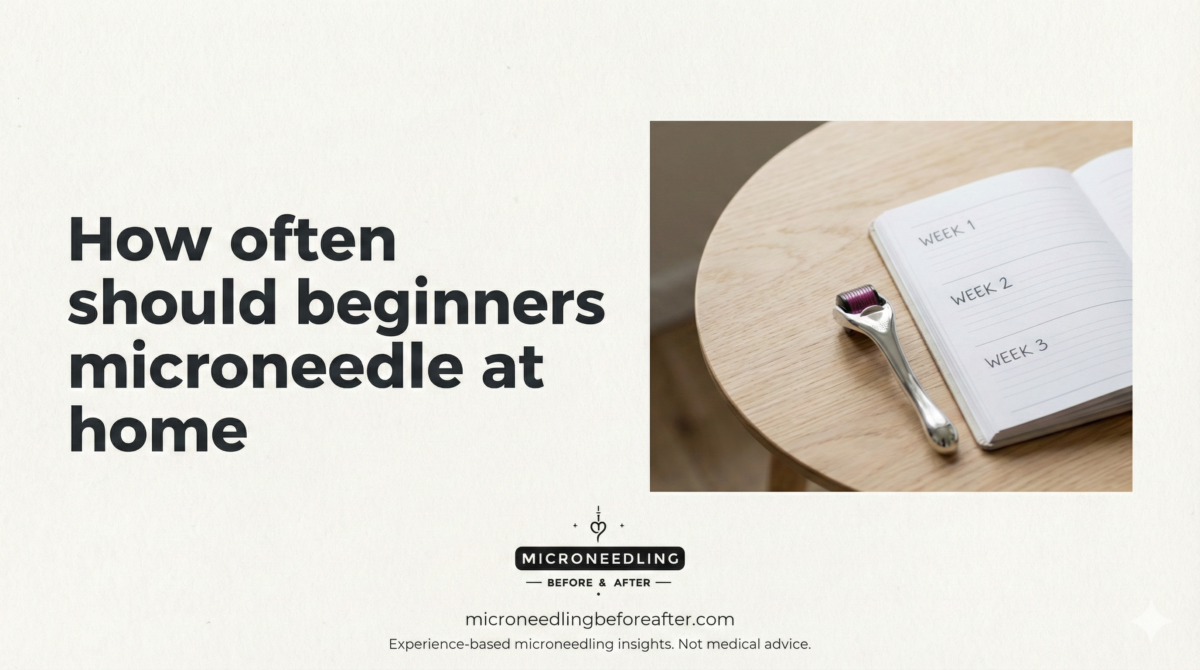
¿Alguna vez te has preguntado con qué frecuencia un principiante debería utilizar microagujas en casa y si es seguro hacerlo por su cuenta?
¿Con qué frecuencia deben los principiantes usar microagujas en casa?
Seré directo: la frecuencia depende principalmente de la longitud de la aguja, el estado de la piel y su respuesta. Con el tiempo, he aprendido que empezar de forma conservadora y aumentar gradualmente es la opción más segura. En este artículo, explicaré los tipos de dispositivos, la longitud de las agujas, los intervalos recomendados, los cuidados posteriores, los riesgos y compararé la microaguja con las inyecciones de refuerzo cutáneo para que puedas tomar una decisión informada.
¿Qué es la microaguja y cómo funciona?
Considero la microaguja como una forma controlada de pedirle a mi piel que se repare y fortalezca. Las agujas diminutas crean microcanales en la piel que desencadenan una respuesta de cicatrización. Esta respuesta incluye la producción de colágeno y elastina, una mejor circulación sanguínea y una mayor penetración de los productos tópicos. Con tratamientos repetidos, he notado mejoras en la textura, las líneas de expresión, el aspecto de los poros y el tono general.
Tipos de dispositivos de microagujas para uso doméstico
Hay algunas herramientas comunes para el hogar que he utilizado o investigado:
- Dermarollers: rodillos con agujas diminutas. Son económicos, pero la presión y el ángulo son más difíciles de controlar.
- Dermapens (plumas de microagujas): dispositivos motorizados que realizan punciones verticales y permiten una profundidad y velocidad más consistentes. Prefiero las plumas para uso doméstico porque son más precisas.
- Cartuchos de un solo uso: para los bolígrafos, son puntas desechables que reducen el riesgo de infección.
Siempre hago hincapié en la higiene: componentes de un solo uso o esterilizables y una limpieza cuidadosa después de cada sesión.
Longitudes de agujas y para qué se utilizan
La longitud de la aguja es el factor más importante para determinar la frecuencia y la seguridad. Las agujas más largas penetran más profundamente y estimulan una mayor remodelación, pero también requieren una mayor recuperación y conllevan un mayor riesgo. A continuación, se muestra una tabla práctica que utilizo para decidir qué hacer en casa.
| Longitud de la aguja | Uso típico (en casa) | Frecuencia para principiantes | Notas |
|---|---|---|---|
| 0,15 – 0,25 mm | Penetración del producto, exfoliación suave. | Cada 2-3 días | Riesgo bajo; ayuda principalmente a la absorción tópica. |
| 0,3 – 0,5 mm | Líneas finas, textura, poros. | Una vez por semana o cada dos semanas | Adecuado para la mayoría de principiantes con un enfoque sensible. |
| 0,75 milímetros | Cicatrices leves de acné, textura más profunda. | Cada 3-4 semanas | Más curación; muévase lentamente y controle la piel. |
| 1,0 milímetros | Cicatrices moderadas, estrías (con precaución) | Cada 4 a 6 semanas | Muchos profesionales desaconsejan usar más de 1,0 mm en casa. |
| >1,0 mm | Profundidades solo para profesionales (1,5–3,0 mm) | No apto para uso doméstico | Mayor riesgo de eventos adversos; busque pro |
Personalmente, evito cualquier medida superior a 1 mm en casa. Incluso 1 mm solo la usaré si tengo experiencia y un plan de tratamiento claro.
¿Con qué frecuencia deberían los principiantes usar microagujas en casa? Recomendaciones prácticas
Baso mis recomendaciones en la seguridad y la recuperación de la piel. Aquí tienes una guía de frecuencia que sigo y recomiendo para principiantes:
- 0,15–0,25 mm: cada 2–3 días: estimulación suave, buena para aumentar la absorción del suero.
- 0,3–0,5 mm: una vez por semana o cada 2 semanas: este es el punto ideal para la mayoría de los principiantes que buscan tratar la textura y las líneas finas.
- 0,75 mm: cada 3 a 4 semanas: úselo solo cuando se sienta cómodo con longitudes más cortas y su piel tolere el tratamiento.
- 1,0 mm: cada 4 a 6 semanas: proceda con precaución; realice una prueba de parche y considere la orientación profesional.
Estos intervalos tienen en cuenta las fases inflamatoria y de remodelación de la cicatrización. Si mi piel sigue enrojecida, inflamada o sensible, espero más tiempo en lugar de apresurarme con otra sesión.
Factores que cambian la frecuencia con la que utilizo microagujas
Ajusto la frecuencia dependiendo de varias variables personales:
- Tipo de piel: La piel seca o sensible necesita una recuperación más prolongada. La piel grasa o resistente puede tolerar sesiones más frecuentes.
- Edad: La piel más vieja generalmente se cura más lentamente; doy más tiempo entre sesiones.
- Afecciones de la piel: el acné activo, la rosácea, el eczema o las infecciones son señales de alerta que deben detenerse.
- Estilo de vida: La exposición al sol y la falta de sueño retardan la curación; aumento el tiempo de recuperación si estos son factores.
- Uso del producto: Si estoy usando activos fuertes (retinoides, ácidos), los pausa antes y después de la microaguja y dejo más tiempo de curación.
Mi rutina de microagujas en casa paso a paso para principiantes
Sigo una rutina predecible para mayor seguridad y constancia. Aquí está el paso a paso que utilizo:
- Limpieza: me lavo la cara minuciosamente con un limpiador suave para eliminar el maquillaje, la grasa y la suciedad.
- Desinfecte las herramientas: Para los bolígrafos, uso cartuchos estériles de un solo uso. Para los rollers, los remojo en alcohol isopropílico 70% durante al menos 10 minutos, luego los enjuago y los dejo secar al aire.
- Adormecer si es necesario: para longitudes ≥1,0 mm puedo usar una crema anestésica tópica, pero para ≤0,5 mm normalmente no la necesito.
- Aplicar un suero tópico fino (ácido hialurónico o solución salina estéril): evito ingredientes activos como la vitamina C o los ácidos inmediatamente antes de la punción.
- Técnica: Utilizo pasadas suaves y uniformes (normalmente de 4 a 6 por zona), moviéndome horizontal, vertical y diagonalmente. Evito presionar demasiado; el bolígrafo o rodillo debe deslizarse.
- Post-tratamiento: Aplico un serum calmante y estéril (ácido hialurónico, crema barrera libre de factores de crecimiento) y evito el maquillaje durante al menos 24 horas.
- Limpieza y almacenamiento: desecho los cartuchos y limpio las piezas reutilizables de forma educada y minuciosa.
Mantengo los tratamientos cortos y controlados: 20 a 30 minutos como máximo para todo el rostro con agujas de longitud corta.
Cuidados posteriores y cronograma de curación
Considero que el cuidado posterior es tan importante como la punción misma. Este es el cronograma que sigo:
- Inmediatamente después: Mi piel está rosada/roja y caliente. Aplico una compresa fría limpia para mayor comodidad, no hielo directamente sobre la piel.
- 24 a 48 horas: el enrojecimiento desaparece; evito el maquillaje pesado, la sudoración y la exposición al sol.
- De 72 horas a 1 semana: Mi piel puede descamarse ligeramente al renovarse. Uso productos hidratantes suaves y evito ingredientes activos (retinoides, AHA, BHA).
- 2 a 4 semanas: Comienza la remodelación del colágeno y se observan mejoras sutiles. Los resultados se acumulan en varias sesiones.
Reglas clave de cuidados posteriores que sigo:
- Evite el sol directo y use protector solar FPS 30+ de amplio espectro diariamente después de la curación.
- Mantenga la piel limpia y utilice productos sencillos e hidratantes.
- Evite los activos tópicos durante al menos 3 a 7 días, dependiendo de la profundidad de la aguja.
- No arranque las escamas ni las costras.
Productos que prefiero inmediatamente después de la microaguja
Durante la primera semana me quedo con productos calmantes, estériles e hidratantes:
- Sueros de ácido hialurónico (estériles)
- Cremas reparadoras de barrera o ceramidas simples
- Humectantes hipoalergénicos y sin fragancia.
- Protector solar mineral una vez curado
Evito la vitamina C, los retinoides, los ácidos exfoliantes y los aceites esenciales durante varios días, porque pueden irritar la piel en proceso de curación.
Riesgos y efectos secundarios, y cómo reducirlos
No pretendo afirmar que la microaguja esté libre de riesgos. Los efectos secundarios comunes son:
- Enrojecimiento e hinchazón (esperados)
- Piel rota y sangrado localizado (esperado a mayores profundidades)
- Infección (prevenible con higiene)
- Hiperpigmentación postinflamatoria (HPI), especialmente en tonos de piel más oscuros
- Cicatrización (poco frecuente, pero posible con una técnica inadecuada o una profundidad excesiva)
Cómo reduzco el riesgo:
- Esterilizo completamente el equipo y mis manos.
- Nunca uso agujas de mayor longitud en casa sin formación profesional.
- Dejo de utilizar microagujas cuando tengo lesiones o infecciones de acné activas.
- Hago una prueba en la parte interna de mi antebrazo antes de tratar mi rostro con una nueva longitud de aguja o dispositivo.
- Evito combinar tratamientos tópicos agresivos y punciones demasiado cercanas en el tiempo.
Contraindicaciones: Cuándo NO debo realizar microagujas en casa
Evito la microaguja en estas condiciones:
- Acné activo con lesiones abiertas
- Brotes de rosácea o eczema no controlado
- Uso de isotretinoína oral en los últimos 6 a 12 meses (mayor riesgo de formación de cicatrices)
- Antecedentes de cicatrices queloides o hipertróficas
- Trastornos de la coagulación sanguínea o medicación anticoagulante sin aprobación médica
- Embarazo (soy precavida)
- Peelings químicos recientes, tratamientos con láser u otros procedimientos invasivos hasta que esté completamente curado
Si tengo alguna duda, consulto con un dermatólogo antes de continuar.
Microagujas vs. inyecciones potenciadoras de la piel
Comparar la microaguja y las inyecciones de refuerzo me ayuda a decidir cuál es la más adecuada para mis objetivos. A continuación, se muestra una comparación que utilizo al elegir un tratamiento.
| Característica | Microagujas (en casa/profesional) | Inyecciones de refuerzo para la piel |
|---|---|---|
| Mecanismo | Microlesiones controladas para estimular el colágeno; mayor absorción tópica | Inyección de rellenos hidratantes (a menudo a base de ácido hialurónico) en la dermis para hidratar y rellenar. |
| Beneficios primarios | Textura, poros, mejora de cicatrices, inducción de colágeno. | Hidratación duradera, relleno, elasticidad y suavidad mejoradas. |
| Falta del tiempo | Mínimo a moderado dependiendo de la profundidad (horas a algunos días) | Hinchazón/moretones leves; generalmente de 1 a 3 días |
| Dolor | Leve a moderado (anestesia tópica para tratamientos más profundos) | Leve-moderado (adormecimiento disponible) |
| Frecuencia | Varias sesiones espaciadas con semanas de diferencia; intervalos más cortos en casa para profundidades bajas | Generalmente cada 3 a 6 meses dependiendo del producto. |
| Costo | Bajo costo en casa; sesiones profesionales moderadas | Mayor por sesión debido al producto y la habilidad del inyector. |
| Riesgo | Infección, PIH, cicatrices si se usa mal | Hematomas, nódulos, infección, reacciones adversas raras. |
| ¿Quién se beneficia más? | Personas que buscan cicatrices, textura y remodelación de colágeno. | Personas que buscan mejorar la hidratación, las líneas finas y la calidad de la piel sin provocar microlesiones. |
Pienso en la microaguja como un estímulo para los mecanismos de reparación de la piel, mientras que los potenciadores de la piel son más bien un medio inyectable que hidrata y sostiene directamente la matriz dérmica.
Cuando elijo uno sobre el otro
Normalmente decido en función de los objetivos y la tolerancia:
- Si quiero mejorar las cicatrices del acné, la textura o estimular el colágeno suavemente a lo largo del tiempo, opto por la microaguja (a menudo comenzando en casa y posiblemente pasando a tratamientos profesionales más adelante).
- Si quiero una hidratación inmediata y notable de la piel, una mayor luminosidad y líneas finas más suaves con sesiones mínimas, considero inyecciones potenciadoras de la piel realizadas por un inyector experimentado.
- A veces combino enfoques: una sesión profesional de microagujas con PRP o una serie separada de inyecciones potenciadoras de la piel, espaciadas adecuadamente.
Combinar microagujas con potenciadores de la piel: ¿es seguro y efectivo?
Combinar tratamientos puede ser efectivo, pero requiere precaución. Separo las inyecciones y la microaguja en plazos seguros:
- La microaguja con aplicación tópica de un producto potenciador de la piel no es lo mismo que la inyección de un potenciador de la piel. Esta última debe ser realizada por un profesional de la salud.
- Algunos profesionales realizan microagujas inmediatamente seguidas de la aplicación tópica de sueros con factores de crecimiento o PRP para mejorar la penetración, pero la técnica estéril y los entornos clínicos son cruciales.
- Cuando mezclo modalidades (por ejemplo, microagujas más potenciadores cutáneos inyectados), normalmente espero al menos 2 a 4 semanas entre procedimientos para no traumatizar demasiado la piel.
Si planeo una combinación, consulto con un dermatólogo o inyector calificado para planificar la secuencia y el momento.
Microagujas profesionales, PRP y tratamientos avanzados
En el ámbito clínico, los profesionales utilizan agujas de mayor profundidad, dispositivos más potentes, PRP (plasma rico en plaquetas) y, en ocasiones, microagujas de radiofrecuencia fraccionada. Estas opciones producen resultados más potentes y rápidos, pero requieren supervisión médica. Prefiero dejar los tratamientos más profundos (>1 mm) y las terapias complementarias en manos de profesionales para reducir las complicaciones.
Resultados esperados y cronograma realista
Gestiono mis expectativas de esta manera:
- Después de 1 sesión: brillo temporal y leve reafirmación de la piel; pequeño cambio estructural.
- Después de 3 sesiones: mejoras notables en la textura, el tamaño de los poros y las líneas finas para muchas personas.
- Después de 6 o más sesiones: mayor remodelación del colágeno y reducción de cicatrices más visible.
Las mejoras son graduales, ya que la formación y remodelación del colágeno tardan semanas o meses. Realizo un seguimiento del progreso mediante fotos tomadas con iluminación constante.
Comparación de costos y presupuestación
Analizo los costos tanto a corto como a largo plazo:
- Dispositivo de microagujas para uso doméstico: $20–$300 según la marca y la calidad. Reemplace los cartuchos regularmente.
- Sesión de microagujas profesional: $150–$800 por sesión según región y clínica.
- Inyecciones potenciadoras de la piel: $300–$1,000+ por sesión según el producto y la cantidad.
Considero el costo de los sueros, los desechables y el protector solar. Si preveo necesitar muchas sesiones profesionales, lo comparo con comprar un dispositivo de alta calidad para uso en casa y presupuestar revisiones profesionales ocasionales.
Cómo evito errores comunes
La gente suele excederse con las sesiones o usar longitudes de aguja inadecuadas. Estos son los errores que evito:
- Usar agujas largas en casa sin formación: No lo hago.
- Microagujas sobre acné activo: lo dejo hasta que se resuelva el brote.
- Saltarse la esterilización: siempre desinfecto las herramientas y mi piel.
- Mezclar principios activos agresivos demasiado pronto después del tratamiento: espero.
- Esperando resultados instantáneos: me recuerdo que la remodelación del colágeno es lenta.
Mi lista de verificación antes de una sesión
Sigo una lista de verificación rápida antes de cualquier sesión en casa:
- Sin acné activo, herpes labial ni infección de la piel.
- No ha usado isotretinoína recientemente en los últimos 6 a 12 meses
- Piel limpia y herramientas limpias
- Control del dolor disponible si es necesario.
- Sueros post-cuidado y protector solar a mano
Preguntas frecuentes que me hacen
P: ¿Puedo usar microagujas a diario para acelerar los resultados? R: No. El exceso de tratamiento aumenta la inflamación y el riesgo de cicatrices. Siga las frecuencias recomendadas según la longitud de la aguja.
P: ¿La microaguja elimina las cicatrices profundas del acné? R: Puede mejorar muchos tipos de cicatrices de acné, pero las cicatrices profundas suelen requerir tratamientos profesionales (punción más profunda, láser, subcisión). La microaguja en casa puede ayudar con las cicatrices leves a moderadas.
P: ¿Puedo usar retinol y ácidos el día después de la microaguja? R: Evito los retinoides y los ácidos exfoliantes durante al menos 3 a 7 días, dependiendo de la profundidad, porque irritan la piel en proceso de curación.
P: ¿Es dolorosa la microaguja? R: Las agujas cortas causan una leve molestia. A mayor profundidad, la anestesia tópica ayuda. La tolerancia al dolor varía.
P: ¿Cuánto tiempo después de la microaguja puedo usar maquillaje? R: Evito usar maquillaje durante al menos 24 horas, y preferiblemente 48 horas, para reducir el riesgo de infección.
P: ¿Existen infecciones por la microaguja en casa? R: Las infecciones se pueden prevenir, pero pueden ocurrir si las herramientas o la técnica no están limpias. Minimizo el riesgo con una higiene estricta y cartuchos de un solo uso.
Mis reflexiones finales y orientación práctica
Soy cuidadosa con la microaguja en casa y te recomiendo que tú también lo seas. Empieza con agujas cortas (0,15-0,5 mm), usa frecuencias moderadas y prioriza la higiene y el cuidado posterior. Si buscas una mejora leve de la textura y una mejor absorción del producto, la microaguja en casa puede ser una opción rentable y segura si se realiza correctamente. Para cicatrices más profundas, laxitud pronunciada o si tienes dudas, siempre recomiendo consultar con un profesional.
Si lo deseas puedo:
- Sugiera un dispositivo para principiantes y una lista de productos según su tipo de piel.
- Cree un programa de tratamiento personalizado (longitud de la aguja, frecuencia y cuidados posteriores).
- Le ayudaremos a preparar preguntas para hacerle a un dermatólogo o proveedor de atención estética si decide buscar atención profesional.
Quiero que te sientas seguro y confiado con cualquier ruta que elijas.
 Spanish
  English