
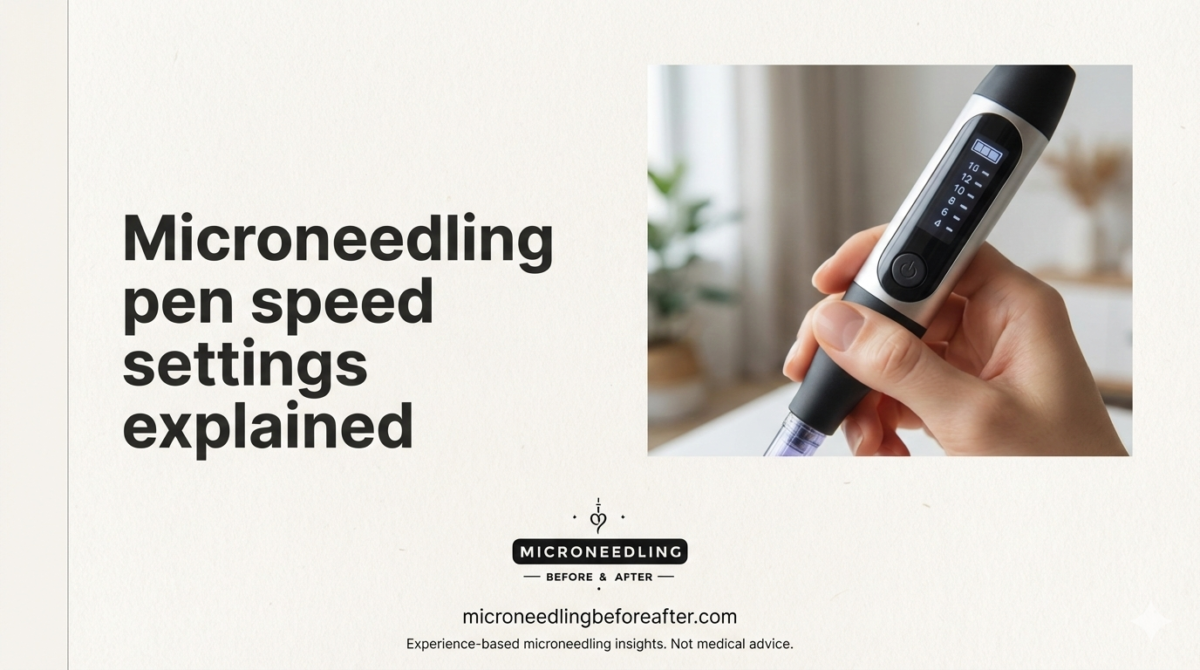
Have you ever wondered how the speed setting on a microneedling pen changes the treatment outcome?
Microneedling Pen Speed Settings Explained
I will explain how microneedling pen speed settings work, why they matter, and how to match speed to treatment goals and skin characteristics. I will present practical guidance for clinicians and informed consumers, highlight safety considerations, and provide step-by-step recommendations so you can make informed choices when planning or performing treatments.
What is a microneedling pen?
I use the term microneedling pen to describe a motorized device that repeatedly drives a cluster of tiny needles into the skin to create controlled microinjuries. The resulting microchannels stimulate wound-healing pathways that lead to collagen and elastin remodeling and improve skin texture and tone. I emphasize that performance characteristics — including needle depth, needle configuration, and motor speed — together determine tissue response and the clinical outcome.
What does “speed” mean on a microneedling pen?
I define speed as the frequency with which the needle cartridge cycles — typically expressed as strokes per minute (SPM) or revolutions per minute (RPM), depending on manufacturer terminology. Speed controls how many micro-injuries are delivered in a given time period and influences mechanical force per impulse, penetration consistency, and patient sensation. I note that manufacturers may label speeds with simple levels (1–12) or with numeric values that represent motor cycles per minute, so it is important to refer to each device’s specifications.
How speeds are measured and labeled
I explain that some devices display an absolute number (e.g., 1,000–18,000 SPM or RPM), while others show incremental levels that correspond to internal motor settings. I recommend checking the device manual for what each level represents because “level 5” on one device may not equal “level 5” on another. I also emphasize that brand-to-brand variability means numerical ranges should be used as general guidance rather than absolute rules.
Typical consumer and professional speed ranges
I point out that consumer-grade pens often have lower maximum speeds and fewer preset levels than professional devices, and that clinical devices are designed for repeated heavy use and finer control. Broadly speaking, I categorize speeds into low, medium, and high ranges for clarity:
- Low: approximately 400–1,500 SPM/RPM — used for deeper needling or sensitive areas.
- Medium: approximately 1,500–6,000 SPM/RPM — appropriate for many resurfacing and scar treatments.
- High: approximately 6,000–18,000 SPM/RPM — used primarily for superficial or cosmetic resurfacing where rapid microchannels are desired.
I caution that these ranges are approximate and depend on device design; always confirm with the device manufacturer and clinical guidelines.
Why speed matters
I explain that speed influences several treatment variables: the number of micro-injuries created per unit time, the character of the tissue insult (micro-tearing versus clean microchannels), patient comfort, and the thermal and mechanical stress imparted to the tissue. Speed interacts with needle depth and technique to determine clinical efficacy and safety. Optimizing speed helps balance efficacy with tolerance and lowers the risk of adverse events.
Tissue response to speed
I discuss how higher speeds create many microchannels rapidly, potentially yielding uniform coverage with less lateral displacement of the skin. Conversely, slower speeds produce fewer impulses per unit time but may generate higher force per pass, which can increase trauma at a given depth. The skin’s wound-healing cascade — including platelet activation, cytokine release, neocollagenesis, and remodeling — is triggered by the nature and extent of microinjury. I emphasize that an appropriate speed encourages productive healing without excessive inflammation.
Speed versus needle depth: how they interact
I clarify that needle depth largely determines which skin layers are targeted (epidermis vs dermis) and that speed modifies the mechanical effect at that depth. For example, deeper depths (e.g., >1.5 mm) require careful, usually slower treatment to avoid tearing and excess bleeding, while superficial depths (e.g., 0.25–0.75 mm) can tolerate higher speeds with rapid, lighter passes. I recommend pairing deeper needling with lower speeds to maintain control and minimize adverse events.
Speed settings by treatment goal
I provide practical guidance for matching speed and depth to common indications. I stress that these are starting points and must be individualized by skin type, scar maturity, device characteristics, and patient tolerance. I always advise a conservative approach during initial treatments with incremental adjustments based on response.
| Indication | Typical Needle Depth (approx.) | Suggested Speed Range | Rationale |
|---|---|---|---|
| Superficial resurfacing, pore refinement | 0.25–0.5 mm | Medium–High (1,500–12,000) | Higher speeds with shallow depth give broad coverage and fast microchannel formation with low risk. |
| Fine lines and superficial wrinkles | 0.5–1.0 mm | Medium (1,500–6,000) | Balanced speed improves collagen stimulation while controlling trauma. |
| Acne scarring (atrophic) | 1.0–2.5 mm (vary by scar depth) | Low–Medium (400–4,000) | Deeper, targeted needling requires lower speeds for precision and to reduce tearing. Multiple passes at controlled speed achieve remodeling. |
| Surgical or hypertrophic scars | 1.5–3.0 mm | Low (400–1,500) | Slow, careful technique reduces risk of further scar trauma; may be combined with other modalities. |
| Hyperpigmentation and melasma | 0.25–0.75 mm | Low–Medium (400–4,000) | Conservative speeds help avoid post-inflammatory hyperpigmentation; shallow depth only. |
| Hair restoration (scalp) | 0.5–1.5 mm | Medium (1,500–6,000) | Moderate speeds with controlled depth promote growth factors; avoid excessive trauma. |
| Stretch marks (striae) | 1.0–2.5 mm | Low–Medium (400–4,000) | Deep pulses at controlled speed encourage dermal remodeling while minimizing bleeding. |
I reiterate that these are generalized ranges and that device-specific calibration and patch testing are essential. I also emphasize that speed alone is not the sole determinant — technique, needle configuration, and number of passes matter equally.
Clinical and safety considerations
I focus on the safety implications of speed selection. Faster speeds may reduce procedure time and patient discomfort for superficial treatments, but they can increase mechanical stress and the chance of petechiae or exaggerated inflammation, especially when combined with deeper needle settings. Slower speeds are preferable when precision and control are required, such as in scar remodeling or when treating delicate anatomic areas.
Contraindications and precautions
I highlight common contraindications to microneedling: active infection or inflammation in the treatment area, isotretinoin use within the past 6–12 months (depending on clinician judgment), certain autoimmune or bleeding disorders, uncontrolled diabetes, keloidal tendency (relative contraindication), pregnancy (relative contraindication for some clinicians), and recent radiation therapy. I stress that high speeds can amplify risks when these contraindications are present, so conservative practice and medical clearance are important.
Skin type and pigmentary risk
I note that Fitzpatrick phototypes IV–VI have increased risk of post-inflammatory hyperpigmentation (PIH). When treating darker skin types, I recommend slower speeds, shallower depths, and a conservative number of passes. I also recommend topical depigmenting agents and sun protection as part of the pre- and post-treatment plan to reduce PIH risk.
Pain control and patient comfort
I explain that speed influences sensation: higher speeds can feel less jarring for very superficial work because impulses are rapid and light, while deeper, slower passes can be perceived as more forceful. I recommend topical anesthetic application (e.g., lidocaine-based creams) for deeper treatments and for anxious patients, and stress that anesthetic application should follow manufacturer and regulatory guidance. I always advise monitoring for anesthetic toxicity and advising patients about possible numbness post-procedure.
Technique specifics: stamping, gliding, and cross-hatching
I describe three commonly used techniques and how speed selection affects each.
Stamping (vertical technique)
I explain that stamping involves perpendicular insertion and rapid withdrawal in discrete spots. I recommend using lower speeds with stamping for deep or focused scar treatments to ensure controlled penetration and minimize lateral tearing. Stamping is well-suited to treating individual acne scars or surgical scars with precise depth control.
Gliding (continuous technique)
I describe gliding as dragging the pen across the skin to create continuous microchannels. For gliding, medium to high speeds at shallow depths are appropriate because rapid cycles produce consistent coverage. I recommend caution to avoid long continuous passes at deep settings, which increase the risk of epidermal injury.
Cross-hatching (multi-directional passes)
I explain that cross-hatching uses multiple passes in perpendicular or diagonal directions to maximize coverage and stimulate remodeling. I suggest reducing speed somewhat for deeper cross-hatch passes to avoid over-traumatizing the tissue, and increasing speed slightly for superficial passes to improve efficiency.
Device selection and calibration
I discuss how device characteristics influence optimal speed selection. Motor torque, needle cartridge stability, and ergonomics all matter. I advise clinicians to choose devices with consistent, adjustable speed control and reliable disposable cartridges to minimize variability. I also urge checking manufacturer guidance for recommended speeds for specific cartridges and for the device’s duty cycle and recommended treatment duration to avoid motor overheating.
Battery, motor, and cartridge considerations
I note that lower-quality pens can exhibit inconsistent needle motion at higher speeds, producing uneven penetration. I recommend using well-reviewed professional pens for clinical use and ensuring cartridges are properly seated and replaced per manufacturer recommendations. I also stress that battery-operated devices should be fully charged to maintain consistent motor performance throughout the procedure.
Protocols for professionals versus at-home devices
I emphasize the difference between in-office medical microneedling and at-home microneedling devices. Professional devices typically allow higher depths, finer control, and are intended for trained practitioners, while at-home devices are usually limited to superficial depths and lower speeds for safety. I recommend patients not attempt deeper treatments at home and advise clinicians to counsel patients accordingly.
At-home device guidance
I recommend that I instruct patients using at-home devices to adhere strictly to manufacturer limits on depth and speed, to sanitize the device and skin before use, and to maintain conservative frequency (e.g., weekly or monthly depending on depth) to avoid cumulative trauma. I also advise that patients discontinue use and seek clinical evaluation if unexpected redness, pain, or scabbing persists.
Maintenance, sterilization, and cartridge management
I describe mandatory hygiene practices. I instruct clinicians and consumers to use sterile, single-use cartridges when possible, to disinfect reusable device surfaces between patients, and to follow manufacturer instructions for sterilization. I point out that needle dullness can alter effective penetration and create more tearing; therefore I recommend replacing cartridges per recommended usage limits.
Signs of cartridge wear and malfunction
I list indicators such as uneven needle travel, increased snagging or pulling sensation, visible bending of needles, and excessive bleeding for the same depth/preset as signs to replace cartridges. I recommend that I and other clinicians stop treatment immediately if mechanical irregularities occur and inspect the cartridge.
Common myths and misconceptions about speed
I address several misconceptions and provide corrective explanations.
- Myth: Higher speed always equals better results. I counter that higher speed improves efficiency for superficial work but can increase mechanical stress and the risk of adverse effects if paired with excessive depth or poor technique.
- Myth: Faster treatments are less painful. I explain that pain perception depends on depth, number of passes, and local anesthesia; speed is only one factor.
- Myth: More passes at high speed produce exponentially better results. I clarify that beyond a certain point, additional trauma yields diminishing returns and greater risk of inflammation and pigmentary change.
I encourage measured, evidence-based practice rather than assuming more speed or more passes will always produce superior outcomes.
Troubleshooting: common problems and solutions
I outline common issues related to speed and their practical fixes.
- Uneven penetration or skipping: often due to low battery, loose cartridge, or debris. I recommend stopping, replacing or re-seating the cartridge, and ensuring full power.
- Excessive bleeding or bruising: may indicate too-deep needling at too-high speed; I advise halting treatment, applying pressure and cooling, and following appropriate wound-care protocols.
- Post-inflammatory hyperpigmentation: reduce depth and speed in subsequent sessions, prescribe topical depigmenting agents when indicated, and enforce strict photoprotection.
- Motor overheating: allow cooling periods between long sessions or use device with higher duty cycle; maintain manufacturer-recommended working intervals.
I recommend documenting any adverse events and modifying subsequent protocols based on patient response.
Evidence and outcomes
I summarize the clinical rationale: microneedling stimulates collagen and elastin production through controlled microinjury. I note that studies support its efficacy for scars, wrinkles, and skin texture, and that outcomes depend on depth, needle configuration, and, to a meaningful extent, speed because speed contributes to the density and uniformity of microchannels. I caution that randomized controlled trial data specifically comparing different speeds remain limited, so much of practice is guided by biomechanical reasoning and clinical experience.
Practical session planning and sample protocols
I provide sample, conservative protocols for a hypothetical clinical session meant for someone beginning treatment. I note that I always tailor these to the individual.
- Initial evaluation and patch test: I check medical history, obtain informed consent, and perform a small-area test at low depth and medium speed to observe tolerance and healing.
- Baseline for superficial resurfacing: 0.25–0.5 mm depth, medium–high speed, 2–4 passes across the entire face, with topical serum application post-procedure.
- Baseline for acne scarring: 1.0–2.0 mm depth depending on scar depth, low–medium speed, 1–3 targeted passes per scar (stamping), avoid aggressive cross-hatching in the same session.
- Post-treatment care: cold compresses immediately, apply sterile barrier serum and sun protection, avoid harsh topical actives (e.g., retinoids, strong acids) for 3–7 days depending on depth.
I advise that I typically space sessions 4–6 weeks apart for deeper treatments to allow remodeling and that shallower, cosmetic sessions can be repeated more frequently at clinician discretion.
Legal and regulatory considerations
I remind clinicians and device users to adhere to local regulations governing device classification and practitioner scope of practice. I stress that certain devices and settings may be restricted to licensed professionals in some jurisdictions. I recommend documenting settings, needle depth, cartridge type, number of passes, and patient responses in the medical record.
Frequently asked questions (FAQs)
I include brief answers to common questions I hear regarding speed settings.
- Will increasing speed reduce treatment time? Yes, higher speeds can reduce time for superficial treatments, but deeper work still requires careful pace and multiple targeted passes.
- Is a higher speed more painful? Not necessarily; sensation depends on depth, area, and anesthesia. Higher speed with superficial depth can feel less intense than deep slow passes.
- Can I use the highest speed my device offers for all treatments? I discourage this because high speed combined with deep depth or aggressive technique can increase adverse events.
- How do I choose needle depth and speed for delicate areas (e.g., under eyes)? Use shallow depths and lower speeds, with fewer passes, to reduce risk of bruising and pigment change.
- Should I adjust speed across the same session? Yes. I often begin superficial passes at higher speeds to achieve coverage, then switch to lower speeds for focused deeper work or delicate zones.
Final recommendations and summary
I summarize practical takeaways: speed is a crucial control parameter that influences the density, uniformity, and nature of microinjuries delivered by a microneedling pen. I advise starting conservatively — lower speeds for deeper and scar-focused work, medium speeds for general resurfacing, and higher speeds for shallow cosmetic coverage — while tailoring choices to device specifications, patient skin type, and treatment objectives. I always recommend a patch test, clear informed consent, and careful documentation. For novice practitioners or patients using at-home devices, I encourage seeking professional training or clinical consultation before attempting deeper or higher-speed treatments.
I offer to assist further by reviewing device specifications, helping create a treatment protocol tailored to a specific device and patient population, or answering case-specific questions based on clinical scenarios.
 English
  Spanish