
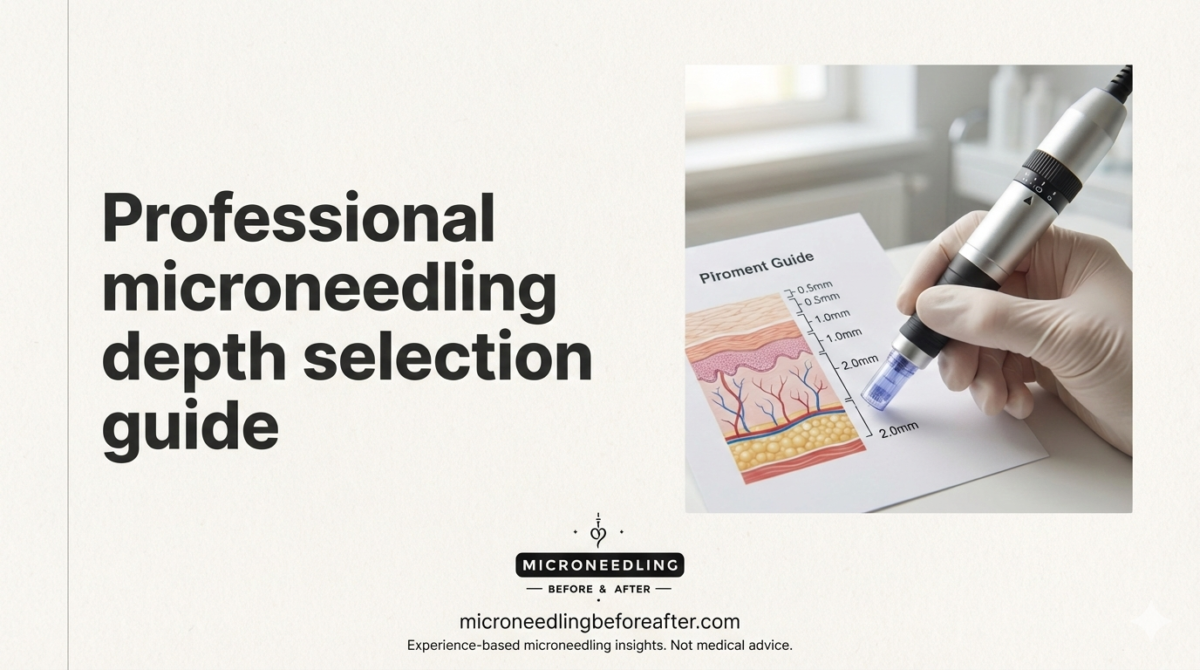
¿Qué profundidad debo seleccionar para la microaguja para lograr el resultado clínico deseado y minimizar el riesgo?
Guía de selección de profundidad de microagujas profesionales
He escrito esta guía para ayudar a los profesionales clínicos y estéticos avanzados a seleccionar la profundidad de la microaguja con claridad y fundamento clínico. Hago hincapié en principios basados en la evidencia, protocolos prácticos y consideraciones de seguridad para poder adaptar los tratamientos a la anatomía e indicaciones individuales de cada paciente.
Introducción
Explicaré la importancia de la profundidad y cómo influye en la respuesta biológica, el efecto clínico y el riesgo de complicaciones. Presento tablas prácticas y protocolos de muestra para facilitar la selección de la profundidad para problemas faciales y corporales comunes.
Principios fundamentales de la microaguja
Considero la microaguja como una microlesión controlada que estimula una cascada de cicatrización que conduce a la remodelación del colágeno, la deposición de elastina y la neocolagénesis. La profundidad de penetración de la aguja determina qué estructuras dérmicas se ven afectadas y, por lo tanto, afecta la remodelación de la cicatriz, la renovación epidérmica y el riesgo de cambios pigmentarios.
Cicatrización de heridas y objetivos tisulares
Considero que la epidermis, la dermis papilar y la dermis reticular son dianas distintas con diferentes respuestas biológicas. Las lesiones superficiales afectan la remodelación epidérmica y las funciones de barrera, mientras que las lesiones más profundas estimulan una producción robusta de colágeno en la dermis reticular.
Modalidades mecánicas versus térmicas
Distingo la microaguja tradicional (mecánica) de la microaguja por radiofrecuencia (RF) (térmica + mecánica). Los principios de selección de la profundidad son similares, pero la RF añade coagulación térmica, lo que puede aumentar la eficacia y el riesgo; ajusto la profundidad y la configuración de energía según corresponda.
Dispositivos, agujas y configuración
Selecciono los dispositivos según la precisión, la esterilidad y los objetivos del tratamiento. Las plumas de microagujas con profundidad ajustable ofrecen un control superior al de los rodillos y dispositivos manuales, y reducen el riesgo de contaminación cruzada.
Calibre, longitud y configuración de la aguja
Presto atención a la longitud de la aguja (que suele indicarse en milímetros), el calibre (grosor) de la aguja, el número de agujas por cartucho y el diseño de la punta. Los calibres más gruesos pueden crear canales más anchos y aumentar el sangrado; las agujas más cortas limitan la variabilidad de la penetración.
Longitud de la aguja hasta el tejido objetivo: cuadro práctico
Utilizo la siguiente tabla como referencia rápida para el objetivo anatómico en varias longitudes de aguja y las indicaciones comunes para esas profundidades.
| Longitud de la aguja (mm) | Objetivo tisular | Indicaciones comunes | Notas clínicas |
|---|---|---|---|
| 0.25 | Estrato córneo + epidermis superficial | Penetración tópica mejorada, mantenimiento, irritación mínima. | Sin daño dérmico significativo; seguro para administración tópica diaria/semanal |
| 0.5 | Epidermis a dermis papilar superficial | Líneas finas, pigmentación superficial, cicatrices superficiales de acné. | Sangrado mínimo; los agentes tópicos se absorben con mayor eficacia |
| 0,75–1,0 | Dermis papilar | Cicatrices superficiales, irregularidades texturales leves, rejuvenecimiento periocular. | Se utiliza a menudo para el área periorbitaria; tiempo de inactividad mínimo |
| 1.25 | Dermis superficial a media | Cicatrices de acné de leves a moderadas, arrugas, piel fotoenvejecida | Puede causar sangrado localizado; utilice anestesia tópica. |
| 1.5 | Dermis media | Cicatrices de acné moderadas, líneas más profundas, inducción de colágeno. | Aumento del eritema y del tiempo de inactividad; precaución cervicofacial |
| 2.0 | Dermis media a profunda | Cicatrices más profundas de rodadura/vagón, con laxitud significativa adjunta | Espere sangrado y formación de costras; considere anestesia local para áreas sensibles |
| 2.5 | Dermis profunda | Remodelación de cicatrices gruesas, cicatrices corporales, modulación de cicatrices hipertróficas | Mayor riesgo de complicaciones; se requiere experiencia del operador |
| 3.0+ | Dermis reticular profunda/subcutis | Cicatrices severas, aplicaciones corporales selectas | Úselo con extrema precaución; potencial para cicatrices y sangrado. |
Utilizo longitudes de aguja conservadoras en el rostro y aumento la profundidad lentamente cuando trato regiones de piel más gruesa o cicatrices corporales.
Selección de profundidad por zona facial
Selecciono la profundidad según el grosor de la piel y la anatomía funcional de cada zona facial. La siguiente tabla muestra un enfoque basado en zonas que utilizo habitualmente.
| Zona facial | Consideraciones típicas sobre el espesor de la piel | Rango de profundidad recomendado (mm) | Notas |
|---|---|---|---|
| Frente | Frente central más gruesa; áreas laterales más delgadas cerca de las sienes | 0,5–1,5 | Utilice profundidades menores cerca de la línea del cabello/sienes para evitar el contacto con el periostio. |
| Glabela | Delgado, alto riesgo de hematomas. | 0,25–0,75 | Evite la presión excesiva; solo pequeños incrementos |
| Periorbitario (párpados superior/inferior) | Piel muy fina, propensa a edemas. | 0,25–0,75 | 0,25–0,5 para patas de gallo laterales; 0,5–0,75 para pliegues infraorbitarios con precaución |
| Mejillas | Piel más gruesa con tejido subcutáneo sustancial | 1.0–2.0 | Buena zona para la inducción de colágeno; profundidades más profundas para cicatrices onduladas. |
| pliegues nasolabiales | Grosor moderado, movimiento repetitivo. | 1.0–1.5 | Evite el trauma excesivo cerca de las fibras del músculo orbicular de la boca. |
| Perioral / labio superior | Delgado, alta movilidad | 0,5–1,5 | Precaución cerca del borde bermellón y la mucosa. |
| Nariz | Piel sebácea más gruesa con potencial oleosidad. | 0,5–1,5 | Generalmente no se trata en profundidad debido a la proximidad de la vasculatura y el cartílago. |
| Barbilla / mandíbula | Grosor variable, a menudo más grueso en los hombres. | 1.0–2.0 | Posible penetración más profunda para remodelar la cicatriz. |
| Cuello / escote | Piel fina y dañada por el sol; mayor riesgo de PIH | 0,5–1,5 | Utilice profundidades conservadoras y menos pases |
| Manos | Piel fina, expuesta al sol y con un acolchado subcutáneo mínimo. | 0,5–1,5 | Tratar de forma conservadora para evitar lesiones tendinosas. |
Siempre evalúo la variabilidad individual y ajusto las profundidades sobre la marcha; documento las configuraciones exactas por zona en cada gráfico.
Selección de profundidad por indicación
Adapto la profundidad a la patología objetivo en lugar de aplicar una profundidad uniforme a todo el rostro. A continuación, resumo las indicaciones comunes con los rangos de profundidad y la justificación del tratamiento.
| Indicación | Rango de profundidad típico (mm) | Razón fundamental |
|---|---|---|
| Líneas finas superficiales | 0,25–0,75 | Se enfoca en la renovación epidérmica y el colágeno superficial; tiempo de inactividad mínimo |
| Arrugas moderadas | 0,75–1,5 | Involucra la dermis papilar y reticular superior para la estimulación del colágeno. |
| Cicatrices atróficas onduladas | 1,5–2,5 | Penetra en la dermis profunda para remodelar los planos dérmicos y estimular una neocolagénesis robusta. |
| Cicatrices de vagón de carga | 1.0–2.0 | Varía según la profundidad; necesita contracción y depósito de colágeno debajo del defecto. |
| Cicatrices de picahielos | La microaguja por sí sola suele ser insuficiente | Recomiendo la combinación con procedimientos focales (TCA CROSS, subcisión) |
| Melasma / pigmentación | 0,25–0,75 (con precaución) | Niveles superficiales para mejorar la penetración de los ingredientes; evitar profundidades agresivas que aumentan el riesgo de PIH |
| Cicatrices hipertróficas/queloides | Uso cauteloso; evitar a menudo >1,5 mm | Considero la microaguja combinada con terapias intralesionales; monitorear la exacerbación |
| Alopecia (androgenética) | 0,5–1,5 | Penetra en la región del folículo folicular; combinado con PRP tópico produce mejores resultados. |
Evito tratar el melasma únicamente con lesiones profundas y repetidas; priorizo las terapias tópicas adyuvantes y las profundidades conservadoras para reducir el riesgo de PIH.
Factores del paciente que influyen en la profundidad
Al seleccionar la profundidad, considero la edad del paciente, el grosor de la piel, el fototipo Fitzpatrick, los procedimientos previos, la medicación y la madurez de la cicatriz. Las pieles más jóvenes con una cicatrización robusta pueden tolerar profundidades mayores, mientras que los fototipos más oscuros requieren enfoques conservadores para minimizar la hiperpigmentación postinflamatoria (HPI).
Consideraciones sobre el tipo de piel de Fitzpatrick
Procedo con cautela con Fitzpatrick IV-VI, utilizando profundidades menores, menos pases y una protección solar intensa después del procedimiento. Informo a los pacientes sobre el riesgo de HIE y considero la posibilidad de aplicar regímenes tópicos estabilizadores profilácticos (p. ej., hidroquinona, ácido azelaico) antes del tratamiento, cuando corresponda.
Edad y tipo de cicatriz
Trato las cicatrices maduras de forma diferente a las inmaduras; las cicatrices más antiguas suelen responder mejor a la remodelación mecánica con una penetración más profunda. Las cicatrices más profundas pueden requerir tratamientos por etapas: primero subcisión y después microagujas.
Anestesia y manejo del dolor
Selecciono anestésicos tópicos para profundidades superficiales a moderadas y combino la anestesia tópica con infiltraciones localizadas o bloqueos nerviosos para tratamientos más profundos. Permito un tiempo de contacto adecuado para los agentes tópicos (generalmente de 30 a 60 minutos) y vigilo la aparición de reacciones alérgicas.
Consideraciones sobre la hemostasia y el sangrado
Asesoro a los pacientes sobre la posibilidad de sangrados puntuales con profundidades ≥1,25 mm y preparo material hemostático. Evito los anticoagulantes siempre que sea posible; si los pacientes deben continuar con ellos, selecciono profundidades menores o pospongo el tratamiento.
Parámetros del tratamiento: pases, velocidad y criterios de valoración clínicos
La profundidad es solo un parámetro; el número de pases, la velocidad, la presión y el punto final influyen significativamente en los resultados. Generalmente realizo de 2 a 4 pases por zona, ajustando la intensidad según la respuesta y el sangrado.
Criterios de valoración clínicos
Utilizo eritema, sangrado puntiforme uniforme y edema transitorio como criterios de valoración. La aparición de sangrado confluente, hematomas o dolor intenso sugiere un tratamiento excesivo y requiere una modificación.
| Punto final observado | Implicación | Acción |
|---|---|---|
| Eritema leve, sin sangrado. | Lesión superficial | Proceder con la aplicación tópica planificada |
| Sangrado puntual (uniforme) | Compromiso dérmico | Considere reducir la presión en la siguiente pasada; deténgase si hay sangrado excesivo |
| Equimosis/moretones | Lesión vascular | Aplicar compresas frías; documentar y asesorar al paciente. |
| Petequias o sangrado no uniforme | Trauma excesivo | Suspender el tratamiento; brindar cuidados de apoyo |
Capacito al personal para reconocer los puntos finales y ajustar el dispositivo para prevenir complicaciones.
Perfil de seguridad y complicaciones
Enfatizo que la microaguja es generalmente segura en manos expertas, pero no está exenta de riesgos. Las complicaciones más comunes incluyen eritema transitorio, edema, infección, cicatrización e hiperplasia prostática benigna (HPI).
Control de infecciones y esterilización
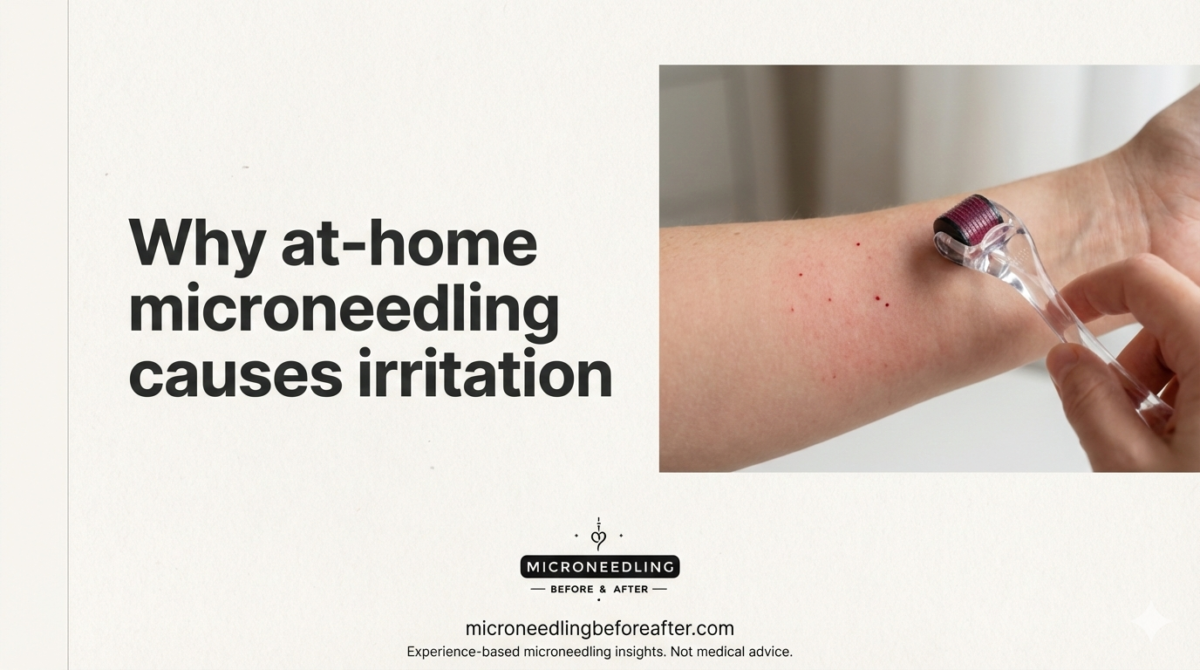
Cumplo estrictamente con la técnica aséptica, utilizo cartuchos estériles de un solo uso y evito usar dispositivos de rodillo, que son más difíciles de esterilizar entre pacientes. Aconsejo a los pacientes que eviten nadar, remojarse o usar maquillaje excesivo durante 24 a 48 horas para reducir el riesgo de infección.
Riesgo pigmentario y cicatrización
Tomo precauciones adicionales en pacientes con piel más oscura y con antecedentes de cicatrices hipertróficas. Si se produce dolor excesivo o retraso en la cicatrización, intervengo de forma temprana y ajusto la profundidad del tratamiento.
Terapias combinadas e interacción profunda
Suelo combinar la microaguja con plasma rico en plaquetas (PRP), factores de crecimiento tópicos, peelings químicos, láseres y rellenos. La profundidad de aplicación influye en la absorción y la sinergia: los canales más profundos aumentan la administración de los tópicos, pero también aumentan el riesgo de infección y de hiperplasia prostática benigna (HPI).
Aumento de PRP y factores de crecimiento
Suelo aplicar PRP inmediatamente después de la microaguja para aprovechar la administración transdérmica a través de microcanales. Para protocolos más profundos (≥1,5 mm), aseguro una técnica estéril y considero limitar el volumen de PRP para evitar el exceso de exudación.
Peelings químicos y láseres
Secuencio las terapias con cuidado: suelo espaciar las exfoliaciones químicas agresivas y los láseres ablativos con las sesiones de microagujas profundas para reducir la acumulación de lesiones. Al combinar láseres no ablativos o dispositivos de luz, puedo reducir la profundidad de la microaguja para minimizar el tiempo de recuperación.
Intervalos de tratamiento y evolución esperada
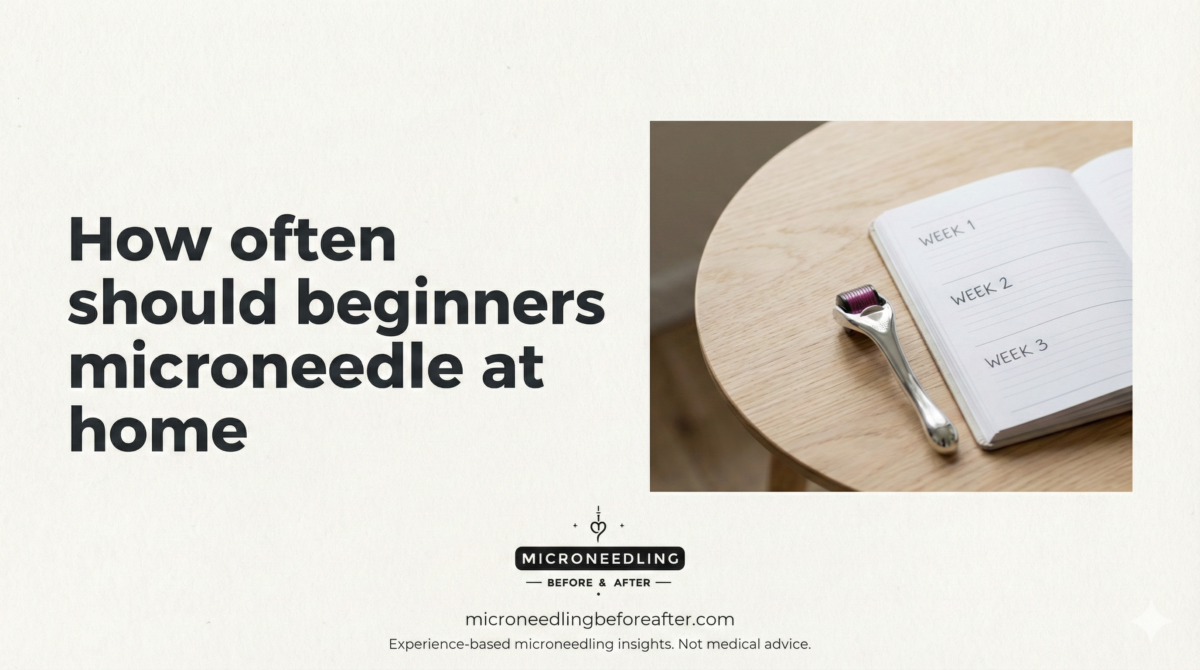
Planifico los intervalos según la profundidad y el tiempo de remodelación biológica. Los tratamientos más profundos requieren intervalos más largos para permitir la maduración del colágeno, mientras que los tratamientos superficiales pueden repetirse con mayor frecuencia.
| Rango de profundidad (mm) | Intervalo típico entre sesiones | Número de sesiones (típico) |
|---|---|---|
| 0,25–0,5 | 2–4 semanas | 4–8 para mantenimiento o administración tópica |
| 0,75–1,25 | 4–6 semanas | 3–6 para arrugas/fotoenvejecimiento |
| 1,5–2,5 | 6–12 semanas | 3–6 para remodelación de cicatrices, hemostasia más prolongada |
| ≥3.0 | 12+ semanas | Depende del caso; menos sesiones, seguimiento cuidadoso |
Individualizo el curso en función de la respuesta y la tolerancia; la fotografía objetiva guía el progreso.
Evaluación y preparación previas al tratamiento
Realizo una historia clínica y dermatológica detallada, evalúo procedimientos previos y reviso la medicación, especialmente los anticoagulantes y la isotretinoína. Recomiendo tratamientos tópicos previos al tratamiento (p. ej., reducción gradual de la dosis de retinoides, profilaxis de infecciones cuando esté indicado) y considero iniciar profilaxis antiviral en pacientes con antecedentes de herpes simple.
Isotretinoína y tiempo de procedimiento
Normalmente pospongo la microaguja de 6 a 12 meses después del tratamiento con isotretinoína, siguiendo pautas quirúrgicas conservadoras para reducir el riesgo de cicatrices. Para profundidades menores, algunos profesionales consideran tiempos de espera más cortos, pero yo prefiero un cronograma más conservador.
Cuidados y protocolos postratamiento
Ofrezco instrucciones claras después del tratamiento para optimizar la cicatrización y prevenir complicaciones. Enfatizo la importancia de una limpieza suave, la hidratación, evitar exfoliantes activos y una fotoprotección estricta.
Cuidados postoperatorios inmediatos
Les indico a los pacientes que eviten los productos tópicos irritantes durante 24 a 72 horas y que usen solución salina estéril o un limpiador suave durante las primeras 24 horas. Recomiendo cremas protectoras emolientes y protector solar simple una vez que la barrera cutánea lo permita.
Regreso a la actividad y recuperación
Recomiendo evitar el ejercicio intenso, la sudoración y la natación durante 24 a 48 horas para reducir el riesgo de infección. Permito el maquillaje mineral después de 24 a 48 horas si no hay sangrado evidente; de lo contrario, recomiendo esperar hasta la reepitelización.
Documentación y consentimiento informado
Documento fotografías de referencia, ajustes exactos de profundidad por zona, número de pases, anestesia utilizada y cualquier evento adverso inmediato. Obtengo el consentimiento informado explícito que detalla los resultados esperados, el tiempo de recuperación y las posibles complicaciones, incluyendo hiperplasia prostática benigna (HPI) e infecciones.
Puntos de asesoramiento que incluyo en el consentimiento
Analizo resultados realistas, la necesidad de múltiples sesiones, tratamientos alternativos y el manejo de complicaciones. Me aseguro de que los pacientes comprendan que los tratamientos más profundos conllevan un mayor tiempo de recuperación y un riesgo mayor, aunque manejable.
Escenarios clínicos especiales
Algunos pacientes presentan necesidades complejas que requieren protocolos adaptados. A continuación, describo escenarios comunes y mi enfoque habitual.
Acné activo o lesiones inflamadas
Evito tratar el acné inflamatorio activo con microagujas hasta que las lesiones estén controladas. En el caso de nódulos o quistes aislados, primero trato el brote subyacente; la microaguja sobre pústulas activas aumenta el riesgo de infección.
Pacientes propensos al melasma
Abordo el melasma de forma conservadora, con tratamientos superficiales y estabilización tópica antes y después del tratamiento. Prefiero las modalidades complementarias y minimizo las lesiones epidérmicas y dérmicas para reducir el riesgo de recurrencia.
Rellenos o implantes recientes
Evito la microaguja directamente sobre rellenos dérmicos recientes durante al menos dos semanas para reducir el riesgo de infección y migración del relleno; en el caso de rellenos profundos, puedo extender este intervalo. Registro el tipo y la ubicación del relleno y adapto la profundidad según corresponda.
Manejo de complicaciones
Cuando se presentan complicaciones, la identificación y el tratamiento tempranos reducen la morbilidad. Mantengo un umbral bajo para la intervención.
Infección
Trato la sospecha de infección bacteriana con prontitud con los antibióticos adecuados, realizo cultivos cuando está indicado y considero el uso de antivirales tópicos u orales para la reactivación del herpes simple. Aconsejo a los pacientes que regresen si el enrojecimiento, el dolor o la supuración empeoran.
Hiperpigmentación postinflamatoria (HPI)
Comienzo con agentes blanqueadores tópicos y fotoprotección estricta para la hiperpigmentación pigmentaria (HPI) y considero añadir exfoliantes químicos una vez reepitelizada. Evito tratamientos agresivos adicionales hasta que la pigmentación se estabilice.
Formación de cicatrices y queloides
Refiero las sospechas de cicatrices hipertróficas o queloides para terapia intralesional y opciones de láser. Evito la aplicación de microagujas adicionales sobre queloides en evolución y considero inyecciones de corticosteroides y terapia de presión/silicona.
Protocolos de muestra que utilizo clínicamente
Proporciono protocolos concisos y prácticos para escenarios comunes para ilustrar cómo combino profundidad, anestesia y seguimiento.
Protocolo: Fotoenvejecimiento superficial y líneas finas
- Profundidad: 0,5–1,0 mm en la cara (0,25–0,5 mm periocular).
- Pases: 2-3 pases a velocidad moderada.
- Anestesia: Anestésico tópico durante 30–45 minutos.
- Intervalo: 4–6 semanas; 4 sesiones.
- Adjuntos: Aplicar inmediatamente suero de factor de crecimiento o tópico rico en péptidos.
Elijo este enfoque conservador para un tiempo de inactividad mínimo y una mejora visible de la textura de la piel.
Protocolo: Cicatrices moderadas de acné (rodantes/de vagón de carga)
- Profundidad: 1,5–2,0 mm en mejillas y zonas cicatrizadas; 1,0 mm en otros lugares.
- Pases: 3 a 4 pases hasta obtener un sangrado uniforme.
- Anestesia: Anestésico tópico más bloqueos nerviosos regionales según sea necesario.
- Intervalo: 6 a 8 semanas; normalmente de 3 a 6 sesiones.
- Complementos: considere la aplicación de PRP después de la punción; planifique primero la subcisión si hay anclaje.
Realizo subcisión y microagujas más profundas para optimizar la liberación y remodelación de la cicatriz.
Protocolo: Rejuvenecimiento periorbitario
- Profundidad: 0,25–0,75 mm en zonas infraorbitaria y cantal lateral.
- Pases: 2 pases con ligera presión.
- Anestesia: Tópica; evitar anestesia fuerte cerca de los ojos.
- Intervalo: 4–6 semanas; 3–6 sesiones.
- Complementos: utilizar péptidos tópicos y protector solar; evitar los irritantes tópicos durante 48 a 72 horas.
Evito la penetración profunda en esta región para prevenir edemas y complicaciones pigmentarias.
Protocolo: Calidad de la piel de manos y escote
- Profundidad: 0,5–1,0 mm para las manos; 0,75–1,5 mm para el escote según el grosor.
- Pases: 2–3 pases.
- Anestesia: Anestésico tópico durante 30–45 minutos.
- Intervalo: 4–8 semanas; 4–6 sesiones.
- Adjuntos: El PRP puede ser beneficioso para las manos y el pecho para mejorar el grosor de la piel.
Aconsejo a los pacientes una mejoría más lenta y hago hincapié en la fotoprotección.
Consejos prácticos y eficiencia en el flujo de trabajo
Estandarizo la configuración, la documentación fotográfica y las plantillas de consentimiento para optimizar el flujo de trabajo. Prelleno la anestesia tópica en los horarios designados y me aseguro de que los cartuchos sean de un solo uso y se desechen correctamente.
Ejemplo de gráfico
Registro: marca/modelo del dispositivo, tamaño del cartucho, profundidad por zona (por ejemplo, mejilla derecha 2,0 mm, mejilla izquierda 2,0 mm, periorbitario 0,5 mm), número de pases, tipo y duración de la anestesia, complementos aplicados y reacción inmediata.
Utilizo esta documentación para comparar resultados e iterar protocolos.
Evidencia y limitaciones
Enfatizo que la literatura sobre microagujas incluye metodologías y tipos de dispositivos variables; las comparaciones directas entre estudios son limitadas. Aplico el razonamiento clínico y los factores específicos del paciente para interpretar la evidencia y guiar la selección de la profundidad.
Calidad de la evidencia
Existen ensayos controlados aleatorizados para ciertas indicaciones (p. ej., cicatrices de acné, cicatrices atróficas), pero la heterogeneidad de los protocolos implica que el criterio clínico sigue siendo importante. Integro datos revisados por pares con experiencia práctica al crear planes de tratamiento.
Consideraciones finales y juicio clínico
Insisto en que la selección de la profundidad es dinámica y debe reflejar la anatomía, la indicación y la tolerancia del paciente. Prefiero un tratamiento conservador en las primeras sesiones, ajustando progresivamente la profundidad y los pases en las visitas posteriores según la tolerancia y los resultados.
Cuándo referir o colaborar
Derivo a pacientes con cicatrices complejas, sospecha de tendencia a queloides o enfermedad dermatológica activa a un dermatólogo o cirujano plástico si preveo un tratamiento de alto riesgo. La atención multidisciplinaria suele mejorar los resultados en casos complejos.
Conclusión
Recomiendo un enfoque metódico y específico para cada zona para la selección de la profundidad, basado en la anatomía, la indicación y los factores del paciente. Al documentar la configuración, monitorear los resultados y aplicar una progresión conservadora, puedo maximizar la eficacia y minimizar las complicaciones para mis pacientes de microagujas.
Si lo desea, puedo proporcionar hojas de referencia imprimibles de profundidad por zona, lenguaje de consentimiento modelado o protocolos paso a paso adaptados al dispositivo de su clínica y la demografía del paciente.
 Spanish
  English