
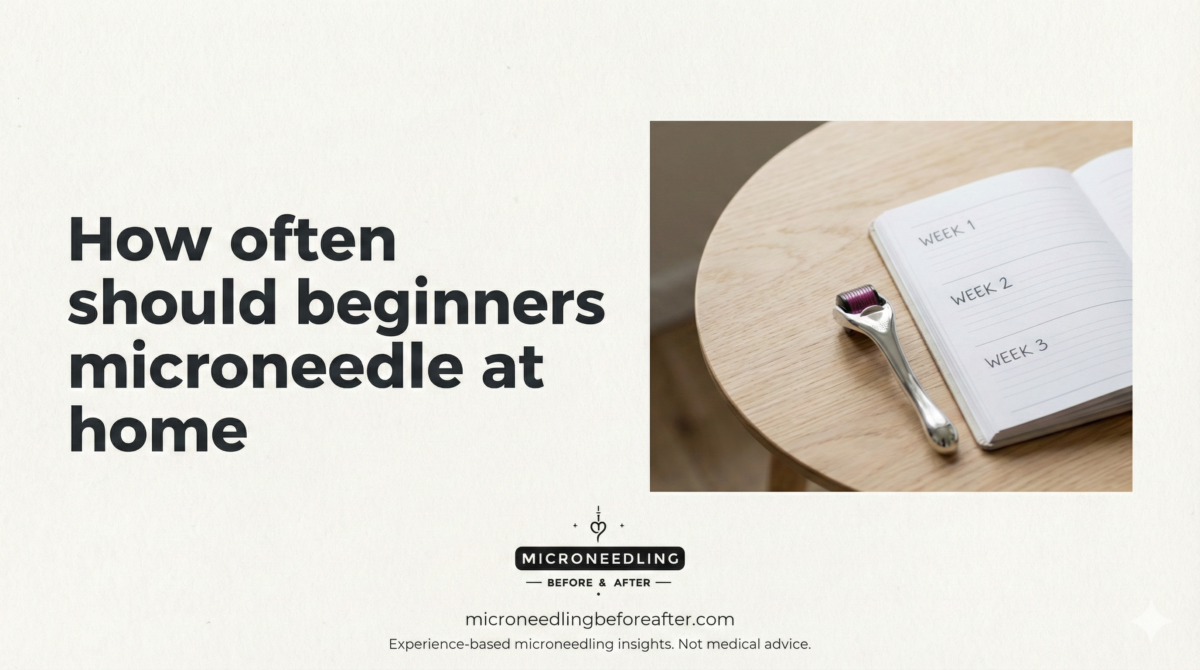
¿Alguna vez os he dicho con qué frecuencia un principiante debe utilizar microagujas en casa?
¿Con qué frecuencia deben los principiantes usar microagujas en casa?
Voy a repasar todo lo que he aprendido y recomendar la frecuencia, la seguridad y los pasos prácticos de la microaguja en casa. Explicaré cómo la longitud de la aguja, el estado de la piel, el tipo de dispositivo y el cuidado posterior influyen en la frecuencia con la que creo que una persona debe tratar su piel. Mi objetivo es ofrecer un plan claro y realista para que un principiante pueda empezar de forma segura y obtener resultados sin causar daños.
Comprender la microaguja y la importancia de la frecuencia
Considero la microaguja como una forma controlada de estimular la autoreparación de la piel mediante la creación de pequeñas microlesiones que estimulan la producción de colágeno y elastina. La frecuencia es importante, ya que la piel necesita tiempo para repararse, reconstruirse y responder al procedimiento. Si utilizo la microaguja con demasiada frecuencia, me arriesgo a sufrir inflamación crónica, daño de la barrera cutánea y resultados deficientes.
Quiero enfatizar que la frecuencia no es una solución universal. Siempre considero la longitud de la aguja, la sensibilidad de la piel, las afecciones existentes y el objetivo del tratamiento antes de recomendar la frecuencia con la que se deben realizar las microagujas.
Cómo funciona la microaguja (en términos sencillos)
Considero que la microaguja envía una señal a corto plazo para una reparación a largo plazo. Las agujas crean microcanales que estimulan la inflamación, luego la remodelación y finalmente el fortalecimiento de la estructura de la piel. Todo este ciclo lleva tiempo, por lo que es fundamental el tiempo entre sesiones.
También considero que diferentes resultados, como la absorción del producto, la inducción de colágeno o el tratamiento de cicatrices, requieren diferentes protocolos óptimos. Adapto la frecuencia a esos objetivos.
Longitud de la aguja, tipo de dispositivo y frecuencia recomendada
Creo que los factores más importantes para la seguridad y la frecuencia son la longitud de la aguja y si el dispositivo es un dermaroller o un microneedling pen (dermapen). Las agujas más cortas causan menos trauma y se pueden usar con más frecuencia; las agujas más largas requieren más tiempo de recuperación y supervisión profesional.
A continuación, presento una tabla práctica que utilizo para decidir la frecuencia. Esta es una guía general y no sustituye el consejo médico.
| Longitud de la aguja (mm) | Dispositivo típico para el hogar | Uso típico/objetivos | Intervalo recomendado para principiantes | Tiempo de inactividad previsto |
|---|---|---|---|---|
| 0,15–0,25 mm | Bolígrafos/rodillos cosméticos | Mejora la absorción del producto, textura ligera. | Cada 2 o 3 días o hasta 2 o 3 veces por semana | Mínimo (un poco de enrojecimiento) |
| 0,3–0,5 mm | Dermaroller / Dermapen | Textura, líneas finas, pigmentación suave. | Cada 1 o 2 semanas (comience cada 2 semanas) | 24–48 horas de enrojecimiento/sensibilidad |
| 0,5–1,0 mm | Dermapen (algunos afirman que se puede usar en casa) | Mejora de la cicatriz, textura más profunda. | Cada 3 a 4 semanas (comience cada 4 semanas) | 2 a 4 días de enrojecimiento, hinchazón leve |
| 1,0–1,5 mm | Dispositivos avanzados (a menudo profesionales) | Cicatrización moderada, estiramiento. | Generalmente uso profesional; si es en casa, >6 semanas | 4–7+ días |
| >1,5 mm | Solo para profesionales | Cicatrices profundas, estrías | Solo para profesionales; con un intervalo de 6 a 12 semanas | 1–2 semanas o más |
Personalmente, recomiendo que los principiantes comiencen en el extremo más corto de este rango, a menudo con 0,25 a 0,5 mm, y opten por una recuperación más prolongada entre sesiones hasta que comprendan la respuesta de su piel.
Por qué recomiendo empezar de forma conservadora
Cuando aconsejo a alguien que se inicia en la microaguja, siempre recomiendo empezar de forma conservadora. Las razones son sencillas: la barrera cutánea es delicada, la inflamación puede persistir y el daño acumulativo es el principal riesgo de excederse. Prefiero que un principiante se tome más tiempo para ver mejoras seguras y constantes que esforzarse demasiado y tener que pausar los tratamientos por irritación o infección.
También encuentro que muchas personas ven beneficios significativos en la absorción del producto y una leve mejora en la textura con las configuraciones más suaves, por lo que hay pocos motivos para comenzar de manera agresiva.
Un programa de microagujas para principiantes que utilizo
Normalmente sugiero el siguiente esquema de inicio para alguien que nunca se ha sometido a microagujas y quiere hacerlo de forma segura en casa:
- Semanas 1 a 4: Use un dispositivo de 0,25 mm cada 5 a 7 días (o 2 o 3 veces durante el primer mes). Esto se hace para evaluar la tolerancia y reducir el riesgo.
- Semanas 5 a 12: si la piel toleró el primer mes sin enrojecimiento ni irritación prolongados, podría aumentar a 0,5 mm una vez cada 2 a 3 semanas durante una o dos sesiones para abordar la textura o las líneas finas.
- Después de 3 meses: Si observo una buena respuesta y efectos secundarios mínimos, continúo con 0,5 mm cada 3 o 4 semanas o considero una sesión profesional para un trabajo más profundo. Evito aplicar 0,5 mm con una frecuencia mayor a cada 2 semanas, a menos que cuente con la supervisión de un profesional.
Siempre recomiendo llevar un registro de cada sesión, incluyendo la longitud de la aguja, el dispositivo, las zonas tratadas y las reacciones. Esto me ayuda a realizar ajustes seguros.
Preparación para la microaguja: Mi lista de verificación previa a la sesión
Me preparo cuidadosamente antes de cada sesión y recomiendo a otros principiantes que hagan lo mismo. Una buena preparación reduce el riesgo de infección y mejora los resultados.
Mi lista de verificación:
- Limpie bien la piel con un limpiador suave para eliminar el maquillaje, el protector solar y los aceites.
- Desinfecte el dispositivo según las instrucciones del fabricante (normalmente con alcohol isopropílico 70% para rodillos y bolígrafos).
- Evitar la microaguja si tengo acné activo, herpes labial, heridas abiertas, quemaduras solares o infección en el área de tratamiento.
- Evite tomar medicamentos anticoagulantes (aspirina, AINE) durante uno o dos días si es médicamente seguro, aunque siempre recomiendo consultar con un proveedor de atención médica.
- Tenga listos los productos para el cuidado posterior: limpiador suave, solución salina estéril o suero hidratante (ácido hialurónico poco irritante) y un protector solar.
También me lavo las manos y trabajo sobre una superficie estéril. Nunca me aplico microagujas después de beber alcohol o cuando estoy muy cansado, ya que mi respuesta inmunitaria puede verse alterada.
Preparación e higiene del dispositivo
Me tomo la esterilización muy en serio. Reemplazo los rodillos o cabezales según el plazo indicado por el fabricante y nunca comparto dispositivos. Para los cartuchos de agujas desechables, uso uno nuevo en cada sesión. Para los rodillos reutilizables, los limpio y los guardo en un estuche limpio.
Tengo cuidado con el almacenamiento: la humedad y el polvo pueden contaminar los dispositivos. Los guardo secos y en un recipiente hermético.
Cómo realizo una sesión sencilla de microagujas en casa
Describiré los pasos básicos que sigo al tratar mi rostro con un dispositivo de 0,25-0,5 mm. Sigo una técnica suave y controlo el tiempo en cada zona para evitar sobrecargar una zona.
- Limpieza: me lavo la cara con un limpiador suave, no exfoliante y la seco con palmaditas.
- Desinfectar el dispositivo: limpio el rodillo o el cabezal del bolígrafo con alcohol isopropílico 70% y lo dejo secar al aire.
- Secciono el rostro: mentalmente divido mi rostro en zonas (frente, mejillas, nariz, mentón) y trato cada zona sistemáticamente.
- Técnica: Aplico el rodillo o estampo en una dirección sobre cada zona de 4 a 6 veces, luego giro la dirección (horizontal/vertical/diagonal) para una cobertura uniforme. Evito presionar con fuerza; basta con una presión ligera y uniforme.
- Tiempo por zona: limito cada zona a 1-2 minutos para 0,25-0,5 mm para evitar un traumatismo excesivo.
- Después de la sesión: Me enjuago el rostro con solución salina estéril o agua fría y aplico un sérum hidratante limpio (normalmente elijo un sérum de ácido hialurónico sencillo, sin fragancias ni irritantes). Evito los ingredientes activos inmediatamente después del tratamiento.
- Limpie el dispositivo nuevamente: desinfecto y seco el dispositivo antes de guardarlo.
Registro los detalles de la sesión en mi registro para poder ajustar la frecuencia y la configuración más tarde.
Cuidados posteriores que sigo (y recomiendo encarecidamente)
El cuidado posterior es tan importante como la microaguja en sí. Dedico mucho tiempo a explicar esto a los principiantes, ya que un cuidado posterior deficiente aumenta el riesgo de irritación o infección.
Mi rutina de cuidados posteriores:
- Durante las primeras 24 a 48 horas evito los ingredientes activos para el cuidado de la piel, como retinoides, vitamina C, AHA, BHA y peróxido de benzoilo.
- Utilizo un humectante suave sin fragancia y un suero de ácido hialurónico simple para favorecer la hidratación.
- Me aplico un protector solar de amplio espectro cada mañana con al menos FPS 30 y evito la exposición directa al sol durante varios días.
- Evito el maquillaje durante al menos 24 horas para reducir la posibilidad de introducir bacterias en los microcanales.
- No hago ejercicio intenso ni nado durante 24 a 48 horas porque el sudor y los químicos de la piscina pueden irritar la piel recién tratada.
También controlo los signos de infección (aumento del calor, enrojecimiento que se extiende, pus) y me comunico con un proveedor si veo algún síntoma preocupante.
¿Cuánto tiempo dura el enrojecimiento?
He observado que con tratamientos de 0,25 a 0,5 mm, el enrojecimiento suele desaparecer en unas pocas horas o en 48 horas. Con tratamientos más profundos, el enrojecimiento puede durar varios días. Si el enrojecimiento persiste más allá del tiempo previsto o se acompaña de dolor o inflamación, suspendo el tratamiento y consulto a un médico.
Productos que uso inmediatamente después de la microaguja (y los que evito)
Prefiero usar productos sencillos, estériles e hidratantes justo después de la microaguja. Evito ingredientes activos o potencialmente irritantes durante al menos 48 a 72 horas.
Productos que uso:
- Solución salina estéril o agua muy limpia para enjuagar.
- Suero de ácido hialurónico (el de bajo peso molecular puede resultar molesto, pero elijo fórmulas que me resulten suaves).
- Hidratante sin fragancia y no comedogénico.
- Protector solar físico de amplio espectro (óxido de zinc) durante el día.
Productos que evito inmediatamente después:
- Retinoides (con receta o de venta libre) durante 72 horas o hasta que la piel esté calmada.
- Sueros de vitamina C (pueden ser irritantes en los microcanales frescos).
- Exfoliantes químicos (AHA/BHA) durante al menos una semana después de tratamientos más profundos.
- Cualquier cosmético o maquillaje potencialmente contaminado.
También evito aplicar antibióticos tópicos a menos que lo recomiende un médico.
Quién NO debe usar microagujas en casa (Mi lista de contraindicaciones)
Creo que es fundamental ser honesto sobre los riesgos. Hay situaciones en las que no utilizaría microagujas en casa, y recomiendo consultar con un profesional o un médico.
Evito la microaguja si:
- Tengo acné activo, quistes o llagas abiertas en el área de tratamiento.
- Tengo una infección activa en la piel (bacteriana, fúngica, viral, como el herpes labial).
- Estoy tomando isotretinoína (Accutane) o la he usado en los últimos 6 a 12 meses sin autorización médica.
- Tengo tendencia a formar cicatrices queloides o hipertróficas.
- Tengo rosácea no controlada o piel muy sensible que se irrita fácilmente.
- Si padezco ciertas enfermedades autoinmunes o estoy tomando medicamentos inmunosupresores, entonces consulto a mi médico.
- Estoy embarazada o amamantando; muchos profesionales recomiendan evitar tratamientos agresivos hasta después.
Consulto mi historial médico y mis medicamentos antes de comenzar cualquier régimen de microagujas.
Errores comunes que veo que cometen los principiantes
He notado patrones que causan más problemas de los que resuelven. Quiero que los principiantes eviten estas trampas en las que he visto caer a mucha gente.
Errores comunes:
- Uso de agujas demasiado largas en casa. Recomiendo usar agujas cortas y dejar que profesionales se encarguen de una terapia más profunda.
- Microagujas con demasiada frecuencia. Más no es mejor; la piel necesita tiempo para regenerarse.
- Utilizar serums activos inmediatamente después de una sesión, puede provocar ardor o irritación.
- No desinfectar ni reutilizar dispositivos una vez superada su vida útil.
- Tratamiento del acné o zonas infectadas y propagación de bacterias.
- No proteger la piel de la exposición solar después del tratamiento.
Considero que ser consciente de estos obstáculos previene contratiempos y mejora los resultados.
Combinando la microaguja con otros tratamientos (mi enfoque práctico)
Personalmente, me gusta combinar la microaguja con un cuidado de la piel sensible, pero el momento oportuno es importante. Compartiré cómo la combino de forma segura con retinoides, peelings químicos, láseres y sesiones profesionales.
- Retinoides: Suspendo los retinoides 48-72 horas antes de una sesión suave en casa y los reintroduzco 5-7 días después, según el enrojecimiento y la tolerancia. Para tratamientos más profundos, puedo hacer una pausa más larga.
- Peelings químicos: No combino peelings y microagujas en la misma semana. Prefiero espaciarlos al menos de 2 a 4 semanas.
- Láseres o inyecciones: Consulto con mi dermatólogo antes de combinar modalidades. Estos tratamientos pueden agravar la inflamación y requieren una sincronización coordinada.
- Microagujas profesional: Considero que los tratamientos en casa son de mantenimiento entre sesiones profesionales. Si planeo una sesión profesional, dejo de usar las microagujas en casa varias semanas antes y sigo las indicaciones del profesional después.
Siempre priorizo la salud de la barrera cutánea y minimizo la irritación superpuesta.
Cronograma de resultados: qué espero y cuándo
Establezco expectativas realistas. Creo que ayuda comprender el cronograma para que el progreso no parezca ni demasiado lento ni demasiado rápido.
- Inmediato: Puede notarse un ligero enrojecimiento y un mayor brillo; noto una mejor absorción del producto de inmediato.
- 1 a 2 semanas: A menudo veo una textura más suave y una inflamación ligeramente disminuida.
- 4 a 8 semanas: comienza la remodelación del colágeno: las líneas finas, las cicatrices leves y la textura pueden comenzar a mostrar mejoras.
- De 3 a 6 meses: En ese momento suelo evaluar los resultados acumulativos de la inducción de colágeno. Las cicatrices persistentes o profundas pueden requerir sesiones profesionales.
- Mantenimiento: Recomiendo sesiones de mantenimiento periódicas según la respuesta de la piel. Para muchas personas, es razonable programar sesiones trimestrales o mensuales con ajustes moderados.
Realizo un seguimiento de los cambios con fotografías tomadas bajo una iluminación constante para evaluar el progreso real.
Señales de que debo dejar la microaguja y buscar ayuda
Dejo de tratarme inmediatamente y busco atención médica si noto:
- Hinchazón cada vez más dolorosa o enrojecimiento que se extiende.
- Pus, costras o áreas que se sienten calientes y sensibles.
- Irritación prolongada más allá del tiempo de curación esperado.
- Signos de hiperpigmentación inusual después de las sesiones.
Considero que la intervención temprana previene complicaciones más graves.
Seguimiento y ajuste: cómo personalizo la frecuencia a lo largo del tiempo
Ajuste la frecuencia según la respuesta de la piel y mis objetivos. Mantengo un registro sencillo con la fecha, la longitud de la aguja, el dispositivo, el nivel de presión, las zonas tratadas, los productos utilizados y las reacciones. Después de tres sesiones, reviso el patrón y decido si aumentar la longitud de la aguja, cambiar el intervalo o suspender.
También pruebo primero una zona pequeña para principiantes (tratando solo el cuadrante de la mejilla) y luego evalúo la reacción antes de tratar todo el rostro.
Consejos prácticos que sigo para que la microaguja sea más fácil y segura
Utilizo algunas rutinas que hacen que la microaguja sea menos estresante y más efectiva.
- Comience con una zona o una prueba de parche antes de hacerlo en todo el rostro.
- Evite el alcohol, los alimentos picantes y las duchas calientes inmediatamente después del tratamiento si soy propenso a sufrir enrojecimiento.
- Use una compresa fría si noto calor excesivo o hinchazón.
- Tenga paciencia: la formación de colágeno es lenta, pero los tratamientos constantes pueden ser transformadores.
- Mantengo las sesiones registradas para no excederme.
Creo que los pequeños hábitos previenen grandes errores.
Preguntas frecuentes que escucho con más frecuencia
Recibo preguntas similares de principiantes. A continuación, respondo las que más escucho.
P: ¿Cuánto tiempo puedo usar maquillaje? R: Normalmente espero al menos 24 horas o más si el enrojecimiento persiste. Si tengo que usar maquillaje, uso maquillaje mineral y una rutina antiséptica, pero prefiero darle un descanso a mi piel.
P: ¿La microaguja eliminará por completo las cicatrices del acné? R: No prometo una eliminación completa. He visto una mejora significativa, especialmente con sesiones más profundas o profesionales, pero muchas cicatrices requieren varias sesiones y, a veces, modalidades combinadas.
P: ¿Puedo usar microagujas de 0,25 mm a diario? R: Soy cauteloso con la microaguja diaria. Incluso las de 0,25 mm se benefician de los días de descanso; recomiendo usarlas varias veces por semana como máximo y prestar atención a la respuesta de la piel.
P: ¿Cómo sé si mi dispositivo sigue siendo seguro? R: Si las agujas están dobladas, descoloridas o sin filo, reemplazo el cabezal. Sigo las instrucciones del fabricante sobre el número de usos y guardo el dispositivo correctamente.
Mitos comunes que quiero aclarar
Me gusta corregir la información errónea para que los principiantes eviten riesgos innecesarios.
- Mito: “La microaguja abre los poros permanentemente”. Estoy seguro de que la microaguja no agranda los poros permanentemente si se aplica correctamente; de hecho, puede mejorar la textura de la piel.
- Mito: “Más agujas o más presión = mejores resultados”. No estoy de acuerdo. La presión excesiva aumenta el trauma sin mejorar los resultados.
- Mito: “Los dispositivos domésticos son tan potentes como los profesionales”. Los dispositivos domésticos son más seguros a menor profundidad; los tratamientos profesionales pueden usar agujas más largas y terapias complementarias de forma segura.
Fomento el pensamiento crítico al leer consejos en línea.
Cuándo recomiendo consultar a un profesional en lugar de hacerlo usted mismo
Siempre les digo a las personas que consulten a un dermatólogo o a un médico autorizado si sus objetivos o problemas de la piel están más allá de lo que los dispositivos domésticos seguros pueden abordar.
Recomiendo un profesional cuando:
- Las cicatrices son profundas o extensas.
- Hay una laxitud significativa de la piel o problemas estructurales más profundos.
- La persona desea terapias combinadas (PRP, peelings de grado profesional o láser).
- Tienen antecedentes de queloides o cicatrización de heridas deficiente.
Un profesional puede utilizar de forma segura agujas y accesorios más largos y, al mismo tiempo, controlar el tiempo de inactividad y los resultados.
La seguridad es lo primero: mi resultado final
Priorizo la seguridad. Creo que quienes empiezan deberían empezar con agujas más cortas, intervalos más largos, una higiene meticulosa y rutinas caseras conservadoras. Creo que este enfoque ofrece el mejor equilibrio entre beneficio y seguridad.
También recomiendo controles regulares con un dermatólogo si alguien está usando microagujas para tratar cicatrices de acné, hiperpigmentación u otros problemas importantes.
Reflexiones finales y un plan de inicio práctico que utilizo
Si tuviera que dar un plan de inicio conciso basado en todo lo anterior, sería:
- Comience con un dispositivo de 0,25 mm y trate una vez cada 5 a 7 días durante el primer mes.
- Después de demostrar una buena tolerancia, cambie a 0,5 mm y trate una vez cada 2 a 4 semanas dependiendo de la recuperación.
- Mantenga las sesiones suaves, priorice la esterilización, evite los activos durante 48 a 72 horas y proteja la piel del sol.
- Registre las reacciones y consulte con un profesional si tiene problemas más profundos o surgen dudas.
He guiado a muchos principiantes en este proceso y he visto excelentes resultados cuando las personas son pacientes y cautelosas. Si sigo estos pasos, confío en que el tratamiento será eficaz y seguro.
 Spanish
  English