
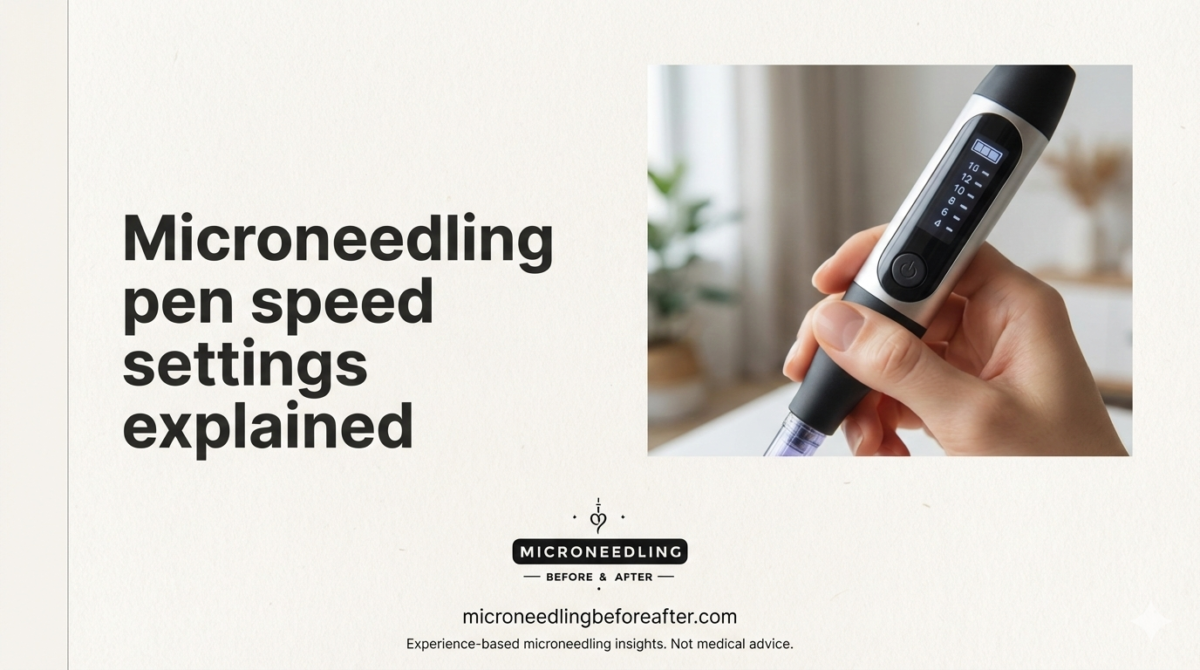
¿Alguna vez te has preguntado cómo la configuración de velocidad de un bolígrafo de microagujas cambia el resultado del tratamiento?
Explicación de los ajustes de velocidad del bolígrafo de microagujas
Explicaré cómo funcionan los ajustes de velocidad del microneedling, su importancia y cómo adaptar la velocidad a los objetivos del tratamiento y las características de la piel. Presentaré consejos prácticos para profesionales clínicos y consumidores informados, destacaré las consideraciones de seguridad y proporcionaré recomendaciones paso a paso para que puedan tomar decisiones informadas al planificar o realizar tratamientos.
¿Qué es un bolígrafo de microagujas?
Utilizo el término "pluma de microagujas" para describir un dispositivo motorizado que introduce repetidamente un conjunto de diminutas agujas en la piel para crear microlesiones controladas. Los microcanales resultantes estimulan las vías de cicatrización de heridas, lo que conduce a la remodelación del colágeno y la elastina, y mejora la textura y el tono de la piel. Destaco que las características de rendimiento, como la profundidad y la configuración de la aguja, y la velocidad del motor, determinan conjuntamente la respuesta del tejido y el resultado clínico.
¿Qué significa “velocidad” en un bolígrafo de microagujas?
Defino la velocidad como la frecuencia con la que el cartucho de aguja cicla, generalmente expresada en golpes por minuto (CPM) o revoluciones por minuto (RPM), según la terminología del fabricante. La velocidad controla la cantidad de microlesiones que se producen en un período determinado e influye en la fuerza mecánica por impulso, la consistencia de la penetración y la sensibilidad del paciente. Cabe destacar que los fabricantes pueden etiquetar las velocidades con niveles simples (1-12) o con valores numéricos que representan ciclos motores por minuto, por lo que es importante consultar las especificaciones de cada dispositivo.
Cómo se miden y etiquetan las velocidades
Explico que algunos dispositivos muestran un número absoluto (p. ej., 1000–18 000 RPM), mientras que otros muestran niveles incrementales que corresponden a la configuración interna del motor. Recomiendo consultar el manual del dispositivo para saber qué representa cada nivel, ya que el "nivel 5" en un dispositivo puede no ser igual al "nivel 5" en otro. También enfatizo que la variabilidad entre marcas significa que los rangos numéricos deben usarse como guía general, no como reglas absolutas.
Rangos de velocidad típicos para consumidores y profesionales
Señalo que las plumas de consumo suelen tener velocidades máximas más bajas y menos niveles preestablecidos que los dispositivos profesionales, y que los dispositivos clínicos están diseñados para un uso intensivo y repetido y un control más preciso. En términos generales, clasifico las velocidades en rangos bajo, medio y alto para mayor claridad:
- Bajo: aproximadamente 400–1500 SPM/RPM: se utiliza para punciones más profundas o áreas sensibles.
- Medio: aproximadamente 1500–6000 SPM/RPM: apropiado para muchos tratamientos de rejuvenecimiento y cicatrices.
- Alto: aproximadamente 6000–18 000 SPM/RPM: se utiliza principalmente para rejuvenecimiento superficial o cosmético donde se desean microcanales rápidos.
Advierto que estos rangos son aproximados y dependen del diseño del dispositivo; siempre confirme con el fabricante del dispositivo y las pautas clínicas.
Por qué importa la velocidad
Explico que la velocidad influye en varias variables del tratamiento: el número de microlesiones creadas por unidad de tiempo, la naturaleza de la agresión tisular (microdesgarros versus microcanales limpios), la comodidad del paciente y la tensión térmica y mecánica que se aplica al tejido. La velocidad interactúa con la profundidad de la aguja y la técnica para determinar la eficacia y la seguridad clínicas. Optimizar la velocidad ayuda a equilibrar la eficacia con la tolerancia y reduce el riesgo de efectos adversos.
Respuesta del tejido a la velocidad
Explico cómo las velocidades más altas crean muchos microcanales rápidamente, lo que potencialmente produce una cobertura uniforme con menor desplazamiento lateral de la piel. Por el contrario, las velocidades más lentas producen menos impulsos por unidad de tiempo, pero pueden generar mayor fuerza por pasada, lo que puede aumentar el traumatismo a una profundidad determinada. La cascada de cicatrización de heridas en la piel —que incluye la activación plaquetaria, la liberación de citocinas, la neocolagénesis y la remodelación— se desencadena por la naturaleza y la extensión de la microlesión. Enfatizo que una velocidad adecuada promueve una cicatrización productiva sin inflamación excesiva.
Velocidad versus profundidad de la aguja: cómo interactúan
Aclaro que la profundidad de la punción determina en gran medida las capas de la piel a las que se aplica (epidermis o dermis) y que la velocidad modifica el efecto mecánico a esa profundidad. Por ejemplo, las punciones más profundas (p. ej., >1,5 mm) requieren un tratamiento cuidadoso y, por lo general, más lento para evitar desgarros y sangrado excesivo, mientras que las punciones superficiales (p. ej., 0,25-0,75 mm) toleran velocidades más altas con pases rápidos y ligeros. Recomiendo combinar la punción más profunda con velocidades más bajas para mantener el control y minimizar los efectos adversos.
Ajustes de velocidad según el objetivo del tratamiento
Ofrezco orientación práctica para adaptar la velocidad y la profundidad a las indicaciones comunes. Insisto en que estos son puntos de partida y deben individualizarse según el tipo de piel, la madurez de la cicatriz, las características del dispositivo y la tolerancia del paciente. Siempre recomiendo un enfoque conservador durante los tratamientos iniciales, con ajustes progresivos según la respuesta.
| Indicación | Profundidad típica de la aguja (aprox.) | Rango de velocidad sugerido | Razón fundamental |
|---|---|---|---|
| Rejuvenecimiento superficial, refinamiento de poros | 0,25–0,5 mm | Medio-alto (1500–12 000) | Las velocidades más altas con poca profundidad brindan una amplia cobertura y una rápida formación de microcanales con bajo riesgo. |
| Líneas finas y arrugas superficiales | 0,5–1,0 mm | Mediano (1.500–6.000) | La velocidad equilibrada mejora la estimulación del colágeno al tiempo que controla el trauma. |
| Cicatrices del acné (atróficas) | 1,0–2,5 mm (varía según la profundidad de la cicatriz) | Bajo-Medio (400–4000) | Una punción más profunda y focalizada requiere velocidades más bajas para lograr precisión y reducir el desgarro. Múltiples pasadas a velocidad controlada logran la remodelación. |
| Cicatrices quirúrgicas o hipertróficas | 1,5–3,0 mm | Bajo (400–1.500) | La técnica lenta y cuidadosa reduce el riesgo de un mayor traumatismo cicatricial; puede combinarse con otras modalidades. |
| Hiperpigmentación y melasma | 0,25–0,75 mm | Bajo-Medio (400–4000) | Las velocidades conservadoras ayudan a evitar la hiperpigmentación postinflamatoria; solo profundidad superficial. |
| Restauración del cabello (cuero cabelludo) | 0,5–1,5 mm | Mediano (1.500–6.000) | Las velocidades moderadas con profundidad controlada promueven los factores de crecimiento; evitan el trauma excesivo. |
| Estrías | 1,0–2,5 mm | Bajo-Medio (400–4000) | Los pulsos profundos a velocidad controlada favorecen la remodelación dérmica minimizando el sangrado. |
Reitero que estos son rangos generalizados y que la calibración y las pruebas de parche específicas para cada dispositivo son esenciales. También enfatizo que la velocidad por sí sola no es el único factor determinante: la técnica, la configuración de la aguja y el número de pasadas son igualmente importantes.
Consideraciones clínicas y de seguridad
Me centro en las implicaciones de seguridad de la selección de la velocidad. Las velocidades más rápidas pueden reducir la duración del procedimiento y la incomodidad del paciente en tratamientos superficiales, pero pueden aumentar la tensión mecánica y la probabilidad de petequias o inflamación exagerada, especialmente al combinarse con ajustes de aguja más profundos. Las velocidades más lentas son preferibles cuando se requiere precisión y control, como en la remodelación de cicatrices o al tratar zonas anatómicas delicadas.
Contraindicaciones y precauciones
Destaco las contraindicaciones comunes para la microaguja: infección o inflamación activa en la zona a tratar, uso de isotretinoína en los últimos 6 a 12 meses (según el criterio del médico), ciertos trastornos autoinmunes o hemorrágicos, diabetes no controlada, tendencia a queloides (contraindicación relativa), embarazo (contraindicación relativa para algunos médicos) y radioterapia reciente. Insisto en que las altas velocidades pueden aumentar los riesgos cuando existen estas contraindicaciones, por lo que es importante una práctica conservadora y la autorización médica.
Tipo de piel y riesgo pigmentario
Observo que los fototipos Fitzpatrick IV-VI presentan un mayor riesgo de hiperpigmentación postinflamatoria (HPI). Al tratar pieles más oscuras, recomiendo velocidades más lentas, profundidades menores y un número moderado de pasadas. También recomiendo agentes despigmentantes tópicos y protección solar como parte del plan pre y postratamiento para reducir el riesgo de HPI.
Control del dolor y comodidad del paciente
Explico que la velocidad influye en la sensibilidad: las velocidades más altas pueden resultar menos discordantes para trabajos muy superficiales, ya que los impulsos son rápidos y ligeros, mientras que los pases más profundos y lentos pueden percibirse como más enérgicos. Recomiendo la aplicación de anestésicos tópicos (p. ej., cremas a base de lidocaína) para tratamientos más profundos y para pacientes ansiosos, y enfatizo que la aplicación de anestésicos debe seguir las instrucciones del fabricante y las normativas. Siempre recomiendo monitorizar la toxicidad de los anestésicos y advertir a los pacientes sobre la posible sensación de entumecimiento después del procedimiento.
Detalles técnicos: estampado, deslizamiento y rayado cruzado
Describo tres técnicas comúnmente utilizadas y cómo la selección de velocidad afecta a cada una.
Estampación (técnica vertical)
Explico que el estampado implica una inserción perpendicular y una retirada rápida en puntos específicos. Recomiendo usar velocidades más bajas con el estampado para tratamientos de cicatrices profundas o localizadas para asegurar una penetración controlada y minimizar el desgarro lateral. El estampado es ideal para tratar cicatrices individuales de acné o cicatrices quirúrgicas con un control preciso de la profundidad.
Deslizamiento (técnica continua)
Describo el deslizamiento como arrastrar el lápiz sobre la piel para crear microcanales continuos. Para el deslizamiento, son adecuadas las velocidades medias a altas a poca profundidad, ya que los ciclos rápidos producen una cobertura uniforme. Recomiendo tener precaución y evitar pasadas largas y continuas en configuraciones profundas, ya que aumentan el riesgo de lesiones epidérmicas.
Rayado cruzado (pases multidireccionales)
Explico que el rayado cruzado utiliza múltiples pasadas en dirección perpendicular o diagonal para maximizar la cobertura y estimular la remodelación. Sugiero reducir ligeramente la velocidad para las pasadas más profundas del rayado cruzado, a fin de evitar traumatizar excesivamente el tejido, y aumentar ligeramente la velocidad para las pasadas superficiales para mejorar la eficiencia.
Selección y calibración de dispositivos
Analizo cómo las características del dispositivo influyen en la selección de la velocidad óptima. El par motor, la estabilidad del cartucho de aguja y la ergonomía son factores importantes. Recomiendo a los profesionales sanitarios elegir dispositivos con un control de velocidad constante y ajustable, y cartuchos desechables fiables para minimizar la variabilidad. También recomiendo consultar las instrucciones del fabricante para conocer las velocidades recomendadas para cartuchos específicos, el ciclo de trabajo del dispositivo y la duración recomendada del tratamiento, a fin de evitar el sobrecalentamiento del motor.
Consideraciones sobre la batería, el motor y el cartucho
Observo que las plumas de menor calidad pueden presentar un movimiento irregular de la aguja a velocidades más altas, lo que produce una penetración desigual. Recomiendo usar plumas profesionales con buenas reseñas para uso clínico y asegurarse de que los cartuchos estén correctamente colocados y reemplazados según las recomendaciones del fabricante. También recalco que los dispositivos que funcionan con batería deben estar completamente cargados para mantener un rendimiento constante del motor durante todo el procedimiento.
Protocolos para profesionales versus dispositivos domésticos
Hago hincapié en la diferencia entre la microaguja médica en la consulta y los dispositivos de microagujas para uso doméstico. Los dispositivos profesionales suelen permitir mayor profundidad, un control más preciso y están diseñados para profesionales cualificados, mientras que los dispositivos para uso doméstico suelen limitarse a profundidades superficiales y velocidades más bajas por seguridad. Recomiendo a los pacientes que no intenten tratamientos más profundos en casa y aconsejo a los profesionales que asesoren a los pacientes en consecuencia.
Guía de dispositivos para el hogar
Recomiendo indicar a los pacientes que usan dispositivos domésticos que respeten estrictamente las limitaciones del fabricante en cuanto a profundidad y velocidad, que desinfecten el dispositivo y la piel antes de usarlos y que mantengan una frecuencia moderada (por ejemplo, semanal o mensual, según la profundidad) para evitar traumatismos acumulativos. También recomiendo que suspendan su uso y acudan a una evaluación clínica si persiste el enrojecimiento, el dolor o la formación de costras inesperados.
Mantenimiento, esterilización y gestión de cartuchos
Describo las prácticas de higiene obligatorias. Instruyo a los profesionales sanitarios y a los consumidores a utilizar cartuchos estériles de un solo uso siempre que sea posible, a desinfectar las superficies reutilizables de los dispositivos entre pacientes y a seguir las instrucciones del fabricante para la esterilización. Indico que el desgaste de las agujas puede afectar la penetración efectiva y provocar más desgarros; por lo tanto, recomiendo reemplazar los cartuchos según los límites de uso recomendados.
Signos de desgaste y mal funcionamiento del cartucho
Indico indicadores como el recorrido irregular de la aguja, mayor sensación de enganche o tirón, agujas visiblemente dobladas y sangrado excesivo para la misma profundidad/preajuste como señales para reemplazar los cartuchos. Recomiendo que tanto yo como otros profesionales sanitarios suspendamos el tratamiento inmediatamente si se producen irregularidades mecánicas e inspeccionemos el cartucho.
Mitos y conceptos erróneos comunes sobre la velocidad
Abordo varios conceptos erróneos y proporciono explicaciones correctivas.
- Mito: Una mayor velocidad siempre equivale a mejores resultados. Sostengo que una mayor velocidad mejora la eficiencia en el trabajo superficial, pero puede aumentar la tensión mecánica y el riesgo de efectos adversos si se combina con una profundidad excesiva o una técnica deficiente.
- Mito: Los tratamientos más rápidos son menos dolorosos. Explico que la percepción del dolor depende de la profundidad, el número de pases y la anestesia local; la velocidad es solo un factor.
- Mito: Más pases a alta velocidad producen resultados exponencialmente mejores. Aclaro que, a partir de cierto punto, un trauma adicional produce resultados decrecientes y un mayor riesgo de inflamación y cambios pigmentarios.
Fomento la práctica mesurada y basada en evidencia en lugar de asumir que más velocidad o más pases siempre producirán resultados superiores.
Solución de problemas: problemas comunes y soluciones
Describo problemas comunes relacionados con la velocidad y sus soluciones prácticas.
- Penetración irregular o saltos: a menudo debido a batería baja, cartucho suelto o residuos. Recomiendo detener el disparo, reemplazar o volver a colocar el cartucho y asegurar la máxima potencia.
- Sangrado o hematomas excesivos: pueden indicar una punción demasiado profunda a una velocidad demasiado alta; recomiendo suspender el tratamiento, aplicar presión y enfriamiento y seguir los protocolos adecuados para el cuidado de las heridas.
- Hiperpigmentación postinflamatoria: reducir la profundidad y la velocidad en las sesiones posteriores, prescribir agentes despigmentantes tópicos cuando esté indicado y aplicar fotoprotección estricta.
- Sobrecalentamiento del motor: permita períodos de enfriamiento entre sesiones largas o utilice un dispositivo con un ciclo de trabajo más alto; mantenga los intervalos de trabajo recomendados por el fabricante.
Recomiendo documentar cualquier evento adverso y modificar los protocolos posteriores en función de la respuesta del paciente.
Evidencia y resultados
Resumo la justificación clínica: la microaguja estimula la producción de colágeno y elastina mediante microlesiones controladas. Observo que los estudios respaldan su eficacia en cicatrices, arrugas y textura de la piel, y que los resultados dependen de la profundidad, la configuración de la aguja y, en gran medida, de la velocidad, ya que esta contribuye a la densidad y uniformidad de los microcanales. Advierto que los datos de ensayos controlados aleatorizados que comparan específicamente diferentes velocidades siguen siendo limitados, por lo que gran parte de la práctica se basa en el razonamiento biomecánico y la experiencia clínica.
Planificación de sesiones prácticas y protocolos de muestra
Ofrezco ejemplos de protocolos conservadores para una sesión clínica hipotética dirigida a una persona que inicia un tratamiento. Siempre los adapto a cada caso.
- Evaluación inicial y prueba de parche: Reviso el historial médico, obtengo el consentimiento informado y realizo una prueba de área pequeña a baja profundidad y velocidad media para observar la tolerancia y la curación.
- Línea de base para rejuvenecimiento superficial: 0,25–0,5 mm de profundidad, velocidad media-alta, 2–4 pasadas por todo el rostro, con aplicación de suero tópico después del procedimiento.
- Línea de base para cicatrices de acné: 1,0–2,0 mm de profundidad dependiendo de la profundidad de la cicatriz, velocidad baja a media, 1–3 pasadas específicas por cicatriz (estampado), evitar el rayado agresivo en la misma sesión.
- Cuidados post-tratamiento: aplicar compresas frías inmediatamente, suero barrera estéril y protección solar, evitar activos tópicos agresivos (por ejemplo, retinoides, ácidos fuertes) durante 3 a 7 días dependiendo de la profundidad.
Recomiendo que normalmente espacie las sesiones con 4 a 6 semanas de diferencia para tratamientos más profundos que permitan la remodelación y que las sesiones cosméticas más superficiales se puedan repetir con mayor frecuencia a criterio del médico.
Consideraciones legales y regulatorias
Les recuerdo a los médicos y usuarios de dispositivos que cumplan con las normativas locales que rigen la clasificación de dispositivos y el ámbito de práctica del profesional. Insisto en que ciertos dispositivos y configuraciones pueden estar restringidos a profesionales con licencia en algunas jurisdicciones. Recomiendo documentar la configuración, la profundidad de la aguja, el tipo de cartucho, el número de pases y las respuestas del paciente en la historia clínica.
Preguntas frecuentes (FAQ)
Incluyo respuestas breves a preguntas comunes que escucho sobre la configuración de velocidad.
- ¿Aumentar la velocidad reducirá el tiempo de tratamiento? Sí, velocidades más altas pueden reducir el tiempo para tratamientos superficiales, pero los trabajos más profundos aún requieren un ritmo cuidadoso y múltiples pasadas bien dirigidas.
- ¿Es más dolorosa una velocidad más alta? No necesariamente; la sensibilidad depende de la profundidad, la zona y la anestesia. Una velocidad más alta con una profundidad superficial puede resultar menos intensa que los pases lentos y profundos.
- ¿Puedo usar la velocidad máxima que ofrece mi dispositivo para todos los tratamientos? No lo recomiendo, ya que la alta velocidad combinada con una técnica profunda o agresiva puede aumentar los efectos adversos.
- ¿Cómo elijo la profundidad y la velocidad de la aguja para zonas delicadas (p. ej., debajo de los ojos)? Use profundidades menores y velocidades más bajas, con menos pasadas, para reducir el riesgo de hematomas y cambios de pigmentación.
- ¿Debo ajustar la velocidad durante la misma sesión? Sí. Suelo empezar con pases superficiales a mayor velocidad para lograr cobertura y luego cambio a velocidades más bajas para un trabajo más profundo y concentrado o zonas delicadas.
Recomendaciones finales y resumen
Resumo las conclusiones prácticas: la velocidad es un parámetro de control crucial que influye en la densidad, uniformidad y naturaleza de las microlesiones producidas por un dispositivo de microagujas. Recomiendo comenzar de forma conservadora: velocidades bajas para tratamientos más profundos y centrados en las cicatrices, velocidades medias para el rejuvenecimiento general y velocidades altas para una cobertura cosmética superficial, adaptando las opciones a las especificaciones del dispositivo, el tipo de piel del paciente y los objetivos del tratamiento. Siempre recomiendo una prueba de parche, un consentimiento informado claro y una documentación minuciosa. Para profesionales principiantes o pacientes que utilizan dispositivos en casa, recomiendo buscar formación profesional o consulta clínica antes de intentar tratamientos más profundos o de mayor velocidad.
Ofrezco ayudar más revisando las especificaciones del dispositivo, ayudando a crear un protocolo de tratamiento adaptado a un dispositivo específico y a una población de pacientes, o respondiendo preguntas específicas del caso en función de escenarios clínicos.
 Spanish
  English