
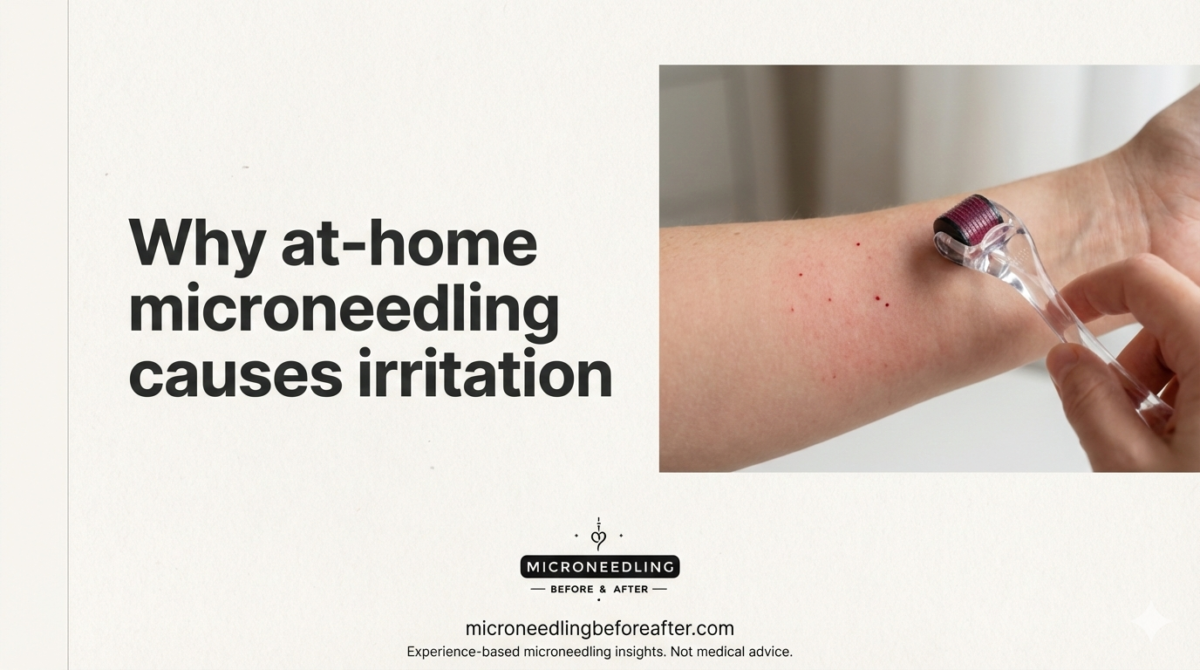
¿Alguna vez he utilizado una herramienta de microagujas en casa y me he preguntado por qué mi piel reaccionó tan fuertemente después?
¿Por qué la microaguja en casa causa irritación?
Quiero explicar claramente por qué la microaguja en casa suele causar irritación, ya que he visto y escuchado muchas historias de personas que esperaban una recuperación tranquila y, en cambio, sufrieron enrojecimiento, escozor o algo peor. Explicaré la mecánica, los errores comunes y las formas realistas que utilizo (o recomiendo) para reducir el riesgo de problemas.
Mi perspectiva y por qué esto es importante
He investigado sobre la microaguja y he seguido las recomendaciones clínicas, y también he hablado con personas que han probado los dermarollers y los dermapens en casa. Me interesa que los lectores comprendan tanto los beneficios como los riesgos, para que puedan tomar decisiones más seguras.
¿Qué es la microaguja?
La microaguja crea intencionalmente pequeñas lesiones controladas en la piel mediante agujas finas para estimular el colágeno, la elastina y la cicatrización de heridas. Me parece útil considerarla un restablecimiento controlado de los mecanismos de reparación de la piel que puede mejorar la textura, la cicatrización y la absorción del producto.
En qué se diferencian los dispositivos domésticos de los tratamientos profesionales
La microaguja profesional es realizada por profesionales clínicos capacitados que utilizan agujas de grado médico, una técnica estéril y longitudes de aguja adecuadas para el tratamiento. Cabe destacar que los dispositivos domésticos suelen tener agujas más cortas y un control de calidad inferior, además de carecer del criterio clínico necesario para prevenir el sobretratamiento o el uso inseguro.
Tipos comunes de dispositivos domésticos
Con frecuencia veo tres categorías principales de dispositivos que la gente usa en casa: dermarollers (dispositivos manuales para enrollar), microagujas a batería y rodillos desechables o herramientas tipo sello. Cada uno conlleva diferentes riesgos en cuanto al control de la presión, la esterilidad y la consistencia del tratamiento.
Cómo afecta la microaguja a la piel
Cuando se pincha la piel con agujas, los queratinocitos y fibroblastos responden liberando factores de crecimiento y citocinas que promueven la remodelación y reparación del colágeno. Cabe destacar que este proceso es beneficioso en entornos controlados, pero si la lesión es excesiva o está contaminada, se convierte en una vía de irritación, inflamación prolongada o infección.
Principales razones por las que la microaguja en casa causa irritación
Enumeraré y explicaré las razones más comunes que veo para la irritación después del uso en casa, y describiré cómo cada factor contribuye al problema de forma práctica. Quiero que puedas identificar qué factores se aplican a tu situación.
Longitud de aguja inadecuada para uso doméstico
Sé que la gente suele pensar que las agujas más largas dan mejores resultados, pero aumentan la profundidad de la lesión y el riesgo de irritación, sangrado y cicatrización. Recomiendo una selección cuidadosa y tener en cuenta que, en muchos casos, las agujas más cortas (0,25-0,5 mm) son adecuadas para mejorar la absorción y la textura del producto sin causar un trauma excesivo.
Frecuencia excesiva de tratamiento
He visto a personas que se aplican microagujas a diario o varias veces por semana, creyendo que con más sesiones se obtendrán resultados más rápidos. La piel necesita tiempo para sanar, y el exceso de tratamientos provoca inflamación acumulada, deterioro de la barrera cutánea y enrojecimiento persistente.
Dispositivos de mala calidad y herramientas no esterilizadas
Las agujas de baja calidad, romas o irregulares, pueden desgarrar la piel en lugar de realizar punciones precisas, y los rodillos reutilizados sin esterilizar se convierten en un caldo de cultivo para las bacterias. Siempre digo: la calidad y la limpieza del dispositivo son fundamentales; una herramienta barata o sucia puede causar irritación o infección.
Higiene inadecuada y riesgo de contaminación
Si no limpio mi herramienta correctamente o la uso sobre piel húmeda o sucia, aumento la probabilidad de introducir microbios en los microcanales. He observado reactivaciones de hongos, bacterias y herpes después de la microaguja porque la barrera se rompió mientras los patógenos estaban presentes.
Presión incorrecta y mala técnica
Aplicar demasiada presión o arrastrar el dispositivo de forma desigual causa un trauma excesivo en zonas específicas. Cuando presiono con fuerza o hago movimientos irregulares, observo sangrado localizado e inflamación prolongada, ambas causas comunes de irritación prolongada.
Tratamiento del acné activo, la rosácea o problemas inflamatorios de la piel.
Si aplico microagujas a través de una lesión inflamatoria activa, como acné o un brote de rosácea, corro el riesgo de propagar bacterias y aumentar la inflamación. Evito aplicar microagujas a través de una enfermedad activa porque provoca un empeoramiento de la afección y mayor irritación.
Combinar incorrectamente la microaguja con ingredientes tópicos activos
Algunos ingredientes como los retinoides, los AHA y la vitamina C en alta concentración, utilizados inmediatamente antes o después de la microaguja, intensifican la irritación. Me aseguro de pausar la aplicación de activos fuertes antes del tratamiento y posponer su reintroducción hasta que se restablezca la barrera cutánea, ya que, de lo contrario, aumentan el escozor y la sensibilidad.
Sensibilidad o alergia subyacente a los productos utilizados después del procedimiento.
He visto productos comercializados como "calmantes" que contienen fragancias, alcohol o extractos botánicos que provocan reacciones alérgicas o irritantes en la piel recién perforada. Recomiendo usar productos de cuidado posterior mínimos y bien tolerados, ya que la piel afectada es más reactiva.
Falta de conocimiento sobre anatomía y contraindicaciones.
He observado que, sin comprender áreas como la piel periorbitaria fina o las lesiones propensas a la cicatrización, las personas pueden tratar las zonas de riesgo de forma inapropiada. Considero que la educación sobre las zonas seguras y las contraindicaciones es fundamental para evitar irritaciones permanentes o cambios en la pigmentación.
Exposición al sol antes y después del tratamiento.
Si expongo mi piel tratada a la radiación UV poco después de la microaguja, aumento el riesgo de hiperpigmentación e inflamación prolongada. Siempre planifico los tratamientos teniendo en cuenta la protección solar y evito la exposición al aire libre durante varios días.
Compartir dispositivos y reutilizar herramientas de un solo uso
Usar el dispositivo de otra persona o reutilizar herramientas desechables aumenta drásticamente el riesgo de infección. Soy claro: las herramientas de microagujas son personales y, en el caso de muchos dispositivos, no deben reutilizarse sin una esterilización profesional.
Longitud de la aguja, uso previsto y riesgo de irritación
Presentaré una tabla que resume las longitudes típicas de las agujas usadas en casa y en el uso profesional, sus aplicaciones comunes y la irritación y el riesgo de seguridad que asocio con cada opción. Considero que los resúmenes visuales son útiles a la hora de elegir un dispositivo.
| Longitud de la aguja | Uso doméstico/profesional típico | Resultados comunes | Irritación/riesgo relativo |
|---|---|---|---|
| 0,15–0,25 mm | Uso en casa para la absorción del producto. | Lesión mínima, enrojecimiento transitorio. | Bajo |
| 0,3–0,5 mm | Dispositivos para uso doméstico; mejoran la textura y la penetración del sérum | Microlesión leve, recuperación corta | Bajo-Moderado |
| 0,6–1,0 mm | Dispositivos domésticos avanzados o tratamientos superficiales profesionales | Mayor estimulación del colágeno, mayor potencial de sangrado. | Moderado-alto |
| 1,0–2,5 mm | Solo para profesionales para cicatrices profundas y arrugas. | Lesión tisular importante, requiere anestesia. | Alto; no para casa |
Creé esta tabla para ayudarme a recomendar que la mayoría de las personas se queden con el extremo inferior del rango de uso en el hogar, porque el perfil riesgo-beneficio se vuelve desfavorable a medida que aumenta la longitud de la aguja.
Signos y síntomas de irritación y cuándo me preocupo
Quiero que reconozcas la diferencia entre el enrojecimiento transitorio esperado y los signos que requieren suspender el tratamiento o consultar con un médico. Enumeraré los síntomas y la urgencia para que puedas tomar decisiones informadas sobre tu tratamiento.
Efectos inmediatos comunes y esperados
Normalmente, después de una sesión adecuada en casa, se presenta eritema leve (enrojecimiento), ligera hinchazón y tirantez durante uno o dos días. Estos síntomas deberían mejorar gradualmente y responder a un tratamiento calmante suave.
Síntomas preocupantes o graves
Si observo un aumento del dolor, enrojecimiento que se extiende, pus, fiebre, decoloración oscura o ampollas, considero estas señales de alerta que sugieren una infección, una reactivación herpética o una reacción grave. Busco atención médica de inmediato ante la aparición de estos signos.
Tabla: Síntomas y acciones a tomar
| Síntoma | Causa probable | Lo que yo haría |
|---|---|---|
| Enrojecimiento leve, calor, ligera hinchazón. | Respuesta inflamatoria normal | Continúe con el cuidado suave; observe |
| Enrojecimiento persistente >72 horas | Inflamación prolongada o reacción irritante | Suspender los tratamientos; utilizar un régimen calmante; consultar si no mejora. |
| Dolor creciente, pústulas, fiebre. | Infección | Suspender los tratamientos; consultar urgentemente con un médico. |
| Ampollas, hiperpigmentación oscura | Reacción grave o cambio postinflamatorio | Suspender los tratamientos; consultar al dermatólogo. |
| Picazón intensa con sarpullido | Dermatitis alérgica de contacto | Suspenda el uso de estos productos; considere tomar antihistamínicos; consulte a un médico si la situación es grave. |
He preparado esta tabla para que yo (y usted) podamos decidir rápidamente si una reacción es rutinaria o requiere ayuda profesional.
Cómo la selección y el momento de compra del producto contribuyen a la irritación
Elegir los productos adecuados para después del procedimiento y el momento de su uso es algo que me tomo muy en serio, ya que influye en la cicatrización y el riesgo de irritación. Explicaré qué ingredientes evito y cuáles considero seguros.
Ingredientes que se deben evitar inmediatamente después de la microaguja
Evito usar retinoides, AHA/BHA de alta concentración, fórmulas con vitamina C fuerte, tónicos con alcohol y fragancias inmediatamente después de la punción, ya que empeoran el escozor y alteran la barrera cutánea. Recomiendo esperar entre varios días y una semana, dependiendo de la longitud de la aguja y del aspecto de la piel.
Ingredientes que suelo recomendar para calmar y curar
Suelo seleccionar ingredientes sencillos: solución salina estéril, ácido hialurónico (baja concentración), ceramidas reparadoras de la barrera cutánea, pantenol (provitamina B5) y protector solar mineral sin perfume tras la recuperación inicial. He comprobado que estos ingredientes promueven la hidratación y la reparación de la barrera cutánea sin provocar irritación.
Momento: cuándo reintroduzco los activos
Generalmente reintroduzco activos suaves como la vitamina C de baja potencia o el ácido azelaico después de 3 a 7 días si la piel se ve sana, pero pospongo el uso de retinoides y ácidos fuertes durante al menos 7 a 14 días, o hasta que mi médico lo indique. También recomiendo hacer una prueba en una zona sana antes de retomar la rutina facial completa.
Prevención: cómo reduzco la posibilidad de irritación
Describiré un protocolo práctico que sigo o recomiendo para minimizar la irritación al usar la microaguja en casa. Prefiero pasos claros que las personas puedan implementar de forma realista.
Selección de dispositivos y control de calidad
Elijo una marca reconocida, preferiblemente con cartuchos de agujas desechables para plumas o rollers esterilizables de un solo uso, fabricados con acero inoxidable de grado médico. Compruebo que las agujas sean finas, afiladas y de buena calidad; en mi opinión, no acepto agujas romas o dobladas.
Preparación de la piel antes del tratamiento que utilizo
Me aseguro de que mi piel esté limpia, libre de infecciones activas y sin haber estado expuesta recientemente a exfoliantes o retinoides fuertes. La limpio con un limpiador suave y no irritante, la seco con palmaditas y evito los activos tópicos durante varios días antes de la sesión.
Practico técnica y control de presión
Utilizo una presión suave y uniforme, y nunca fuerzo el dispositivo en la piel. Trabajo sección por sección y me detengo si noto un sangrado puntual, ya que el sangrado indica que he penetrado demasiado o he presionado demasiado.
Rutina de higiene y esterilización que sigo
Esterilizo las herramientas con alcohol isopropílico según las instrucciones del fabricante y no reutilizo los rodillos desechables. También me lavo las manos, uso toallas limpias y guardo los dispositivos en un estuche limpio para reducir el riesgo de contaminación.
Frecuencia y expectativas realistas que establezco
Programo sesiones de microagujas con un intervalo adecuado a la longitud de la aguja: sesiones de 0,25-0,5 mm cada 2-4 semanas como método conservador, y intervalos más largos si se utilizan agujas más profundas. Modero las expectativas, teniendo en cuenta que las mejoras acumuladas tardan meses, y los tratamientos más frecuentes no aceleran el progreso de forma segura.
Cuidados posteriores: una rutina paso a paso que recomiendo
Proporcionaré una rutina de cuidados posteriores paso a paso que considero efectiva en la mayoría de los casos para minimizar la irritación y promover una cicatrización saludable. La constancia es más importante que los productos sofisticados.
Atención inmediata (primeras 24 horas)
Inmediatamente después del tratamiento, aplico solución salina estéril o un suero hidratante no sensibilizante y evito el maquillaje, los activos tópicos fuertes y el agua caliente. También evito sudar y hacer ejercicio intenso para reducir el riesgo de infección.
Atención a corto plazo (24 a 72 horas)
Durante los días 1 a 3, mantengo mi rutina simple: limpieza suave, una crema hidratante sencilla con ceramidas y pantenol, y protector solar si tengo que salir. Evito exfoliantes, retinoides y productos con alcohol durante este periodo.
Atención a medio plazo (3 a 7 días)
Entre el día 3 y el 7, reintroduzco gradualmente productos suaves y evito la exfoliación física o química hasta que la piel se sienta normal. Si persisten los signos de irritación, prolongo la fase calmante y pospongo la aplicación de los ingredientes activos.
Atención a largo plazo (>7 días)
Después de una semana o más, dependiendo del aspecto de la piel, reintroduzco gradualmente mi rutina completa, empezando con el activo menos irritante y vigilando la reacción. Mantengo la protección solar diaria para prevenir la hiperpigmentación postinflamatoria.
Tabla: Lista de verificación rápida de cuidados posteriores
| Periodo de tiempo | Hacer | No |
|---|---|---|
| 0–24 horas | Solución salina estéril, hidratación suave, sin maquillaje. | Evite los activos, el maquillaje y la sudoración. |
| 24–72 horas | Limpieza suave, cremas reparadoras de barrera, protector solar si es necesario. | Sin retinoides, AHA/BHA ni alcohol. |
| 3–7 días | Reintroducir activos suaves si la lesión ha sanado. | Sin exfoliación agresiva |
| >7 días | Regrese a la rutina normal gradualmente | Evite procedimientos bruscos hasta que se recupere completamente |
Utilizo esta lista de verificación para mantener el cuidado posterior al tratamiento simple y consistente para una recuperación más segura.
Poblaciones específicas y consideraciones especiales que tengo en cuenta
No todos los tipos de piel toleran la microaguja de la misma manera, y presto atención a las diferencias individuales que modifican el perfil de riesgo. Describiré a las personas que, en general, deberían evitar la microaguja en casa o tomar precauciones adicionales.
Piel sensible y rosácea
Si tengo piel sensible o rosácea activa, evito la microaguja en casa porque el procedimiento puede provocar enrojecimiento prolongado, inflamación y empeoramiento de los síntomas. Suelo derivar a las personas con estas afecciones a un dermatólogo para que les aplique tratamientos personalizados y más suaves en la consulta.
Tonos de piel más oscuros (riesgo de hiperpigmentación)
Para pieles más oscuras, soy precavida, ya que cualquier inflamación aumenta el riesgo de hiperpigmentación postinflamatoria (HPI). Recomiendo agujas de longitud moderada, excelente protección solar y la orientación de un dermatólogo antes del tratamiento.
Piel propensa al acné o infectada
Cuando tengo acné activo o lesiones abiertas, evito la microaguja porque la punción a través de pústulas inflamadas propaga bacterias y agrava la infección. Primero trato el acné subyacente y solo reconsidero la microaguja cuando la inflamación está controlada.
Historia de queloides o cicatrices hipertróficas
Si sé que soy propenso a queloides o cicatrices hipertróficas, generalmente evito la microaguja en casa porque los traumatismos pueden provocar cicatrices anormales. Antes de proceder, consulto a un especialista para evaluar su seguridad.
Uso durante el embarazo o la lactancia
Tengo precaución durante el embarazo y la lactancia porque los cambios hormonales pueden afectar la sensibilidad y la cicatrización de la piel, y porque es necesario evitar muchos principios activos tópicos. Suelo recomendar posponer los procedimientos electivos en casa durante estos periodos.
Qué hacer si se desarrolla irritación a pesar de las precauciones
Daré pasos prácticos que sigo o recomiendo si surge irritación, ya que una respuesta temprana y adecuada puede prevenir una escalada. Mi objetivo es proporcionar un plan de escalada sencillo.
Medidas inmediatas que tomo
Dejo de usar la microaguja inmediatamente y dejo de usar productos potencialmente irritantes. Cambio a un tratamiento calmante sencillo: limpiador suave, solución salina estéril y una crema hidratante suave con ceramidas y pantenol.
Cuándo utilizar antibióticos o antivirales
Si observo signos de infección bacteriana (dolor creciente, pus, fiebre), busco evaluación médica, ya que podrían ser necesarios antibióticos tópicos u orales. Si tengo antecedentes de herpes labial y noto vesículas agrupadas, me comunico con mi médico para un posible tratamiento antiviral de inmediato.
Cuándo utilizar tratamientos antiinflamatorios
Para la inflamación persistente, el médico puede recomendar corticosteroides tópicos por un período corto u otras terapias antiinflamatorias. Sigo las indicaciones médicas, ya que el uso incorrecto de esteroides conlleva riesgos. Personalmente, evito automedicarme esteroides potentes en pieles con problemas sin consejo profesional.
Cuándo esperar una recuperación gradual
Espero que la mayoría de las irritaciones leves se resuelvan en unos días con un tratamiento conservador, pero dejo pasar hasta dos semanas para una resolución completa, dependiendo de la profundidad de la punción y la respuesta de la piel. Si los síntomas empeoran o no mejoran, no dudo en consultar con un dermatólogo.
Alternativas a la microaguja en casa que a veces recomiendo
Cuando me preocupan los riesgos o si alguien tiene una condición que hace que la punción en el hogar no sea aconsejable, sugiero alternativas seguras que ofrecen muchos beneficios sin el mismo nivel de riesgo.
Microagujas profesionales (ámbito médico)
A menudo recomiendo la microaguja profesional porque los profesionales pueden usar agujas más largas, técnicas estériles y terapias complementarias de forma segura, además de poder controlar las complicaciones. Un entorno profesional reduce muchos de los riesgos clave asociados a los tratamientos sin supervisión.
Opciones sin punción para la estimulación del colágeno
Sugiero opciones como radiofrecuencia fraccionada, peelings químicos (con supervisión médica) o programas de retinoides tópicos para quienes buscan una mejora gradual sin perforar la piel. Considero que estas alternativas pueden ser efectivas si se adaptan al tipo de piel y su tolerancia.
Tratamientos caseros superficiales que favorecen la textura y la absorción.
Para el mantenimiento diario, recomiendo exfoliantes suaves, aplicados correctamente, sérums de vitamina C de baja concentración y humectantes a base de niacinamida que ayudan a texturizar y tonificar la piel con menor alteración de la barrera cutánea. Priorizo la constancia sobre los procedimientos caseros agresivos.
Lista de verificación práctica que utilizo antes de intentar la microaguja en casa
Ofrezco una lista de verificación concisa que sigo antes de cada sesión para asegurarme de minimizar los riesgos. Tener una lista de verificación previene tratamientos impulsivos o inseguros.
- Confirme que la piel esté libre de infecciones activas, lesiones abiertas o brotes de acné.
- Verifique que el dispositivo sea de grado médico, que las agujas estén intactas y que el almacenamiento esté limpio.
- Evite los retinoides y los ácidos fuertes durante al menos 3 a 7 días antes.
- Limpie completamente y trabaje en un área limpia y con baja contaminación.
- Utilice una longitud de aguja conservadora y una presión suave.
- Prepare un kit sencillo de cuidados posteriores: solución salina estéril, crema hidratante suave y protector solar.
- Planifique su rutina para evitar la exposición al sol y la actividad extenuante durante varios días.
Utilizo esta lista de verificación para mantener los tratamientos seguros y reproducibles.
Mitos comunes que desminto desde mi experiencia
Quiero corregir algunas creencias generalizadas que causan problemas durante la microaguja en casa, ya que la desinformación aumenta el riesgo. Aclararé los hechos en los que me baso.
Mito: Las agujas más largas siempre dan mejores resultados
No estoy de acuerdo con esto: las agujas más largas aumentan los riesgos y deberían reservarse para los profesionales sanitarios. Priorizo las mejoras seguras y graduales con mínimas complicaciones sobre el autotratamiento agresivo.
Mito: Los tratamientos más frecuentes aceleran los resultados
Considero que el tratamiento excesivo dificulta la cicatrización y contrarresta la formación de colágeno. Recomiendo intervalos razonables que respeten el tiempo de cicatrización de la piel.
Mito: Desinfectar con pulverizaciones rápidas es suficiente
Insisto en protocolos de esterilización adecuados; las pulverizaciones superficiales rápidas podrían no eliminar todos los organismos. Sigo los pasos de esterilización del fabricante y descarto los dispositivos de un solo uso.
Cuándo recomiendo dejar por completo la microaguja en casa
Enumeraré situaciones claras en las que dejo de recomendar la microaguja en casa y recomiendo consultar con profesionales. La seguridad es lo primero en mi guía.
- Irritación cutánea persistente o que empeora a pesar del tratamiento conservador.
- Historial de formación de cicatrices o queloides graves.
- Enfermedad inflamatoria activa de la piel (acné severo, rosácea no controlada, brotes de eczema).
- Embarazo con sensibilidad cutánea inestable o consejo del médico de evitar procedimientos electivos.
- Infecciones recurrentes o mala cicatrización de heridas. Prefiero supervisión médica cuando se presenta cualquiera de estos factores.
Reflexiones finales y conclusiones prácticas
Espero que esta guía detallada te ayude a comprender por qué la microaguja en casa suele causar irritación y cómo trabajo para reducir esos riesgos. Recomiendo la elección cuidadosa del dispositivo, una técnica conservadora, una higiene excelente y una rutina sencilla de cuidados posteriores, y no dudo en recomendar atención profesional cuando sea necesario.
Resumen rápido que tengo en mente
Empieza con agujas cortas, espacia los tratamientos con prudencia, evita sustancias activas durante la sesión, mantén todo impecablemente limpio y detente si aparecen síntomas inusuales. Creo que, con las precauciones adecuadas, la microagujas en casa puede usarse de forma segura, pero no está exenta de riesgos y requiere respeto por el proceso de curación de la piel.


 Spanish
  English