
google.com, pub-2032008856654686, DIRECTO, f08c47fec0942fa0

Microagujas vs. productos tópicos de colágeno

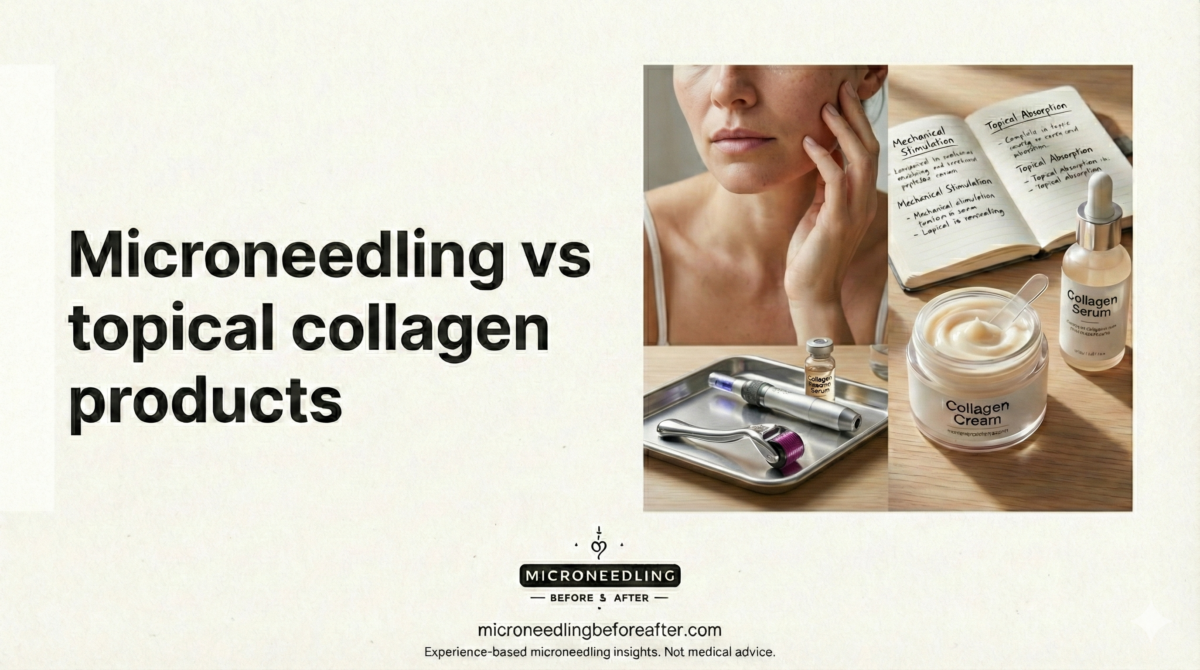
Microagujas vs colágeno tópico: comprenda la ciencia, los beneficios, los riesgos, los costos y cuándo elegir o combinar tratamientos para la hidratación de la textura y el cuidado de las cicatrices.

¿Cuál hará que mi piel luzca y se sienta mejor: la microaguja o la aplicación de un producto tópico de colágeno?

Microagujas vs. productos tópicos de colágeno

Me hacen esta pregunta con frecuencia y quiero explicarles la ciencia, las diferencias prácticas y cómo elegir según sus objetivos reales. Compartiré lo que he aprendido de la investigación, la experiencia clínica y consideraciones prácticas para que puedan tomar una decisión informada.

¿Qué son los productos tópicos de colágeno y microagujas?

Me gusta empezar con definiciones básicas para que estemos en sintonía. La microaguja es un procedimiento que utiliza agujas diminutas para crear microlesiones en la piel, lo que desencadena una respuesta de cicatrización que estimula la producción de colágeno y elastina. Los productos tópicos de colágeno son cremas, sérums o mascarillas que contienen moléculas de colágeno (o ingredientes destinados a estimular el colágeno) y se aplican sobre la piel para proporcionar hidratación, mejorar la textura o un refuerzo de colágeno.“

Microagujas: definición y mecanismo

Describo la microaguja como una forma controlada de indicarle a la piel que se repare a sí misma. Al crear microcanales, el procedimiento activa las vías inflamatorias y reparadoras, aumenta la liberación de factores de crecimiento y puede mejorar el grosor y la textura de la piel con el tiempo.

Productos tópicos de colágeno: definición y mecanismo

Cuando hablo de colágeno tópico, me refiero a fórmulas que contienen colágeno (nativo o hidrolizado), péptidos o ingredientes que lo refuerzan. Estos productos actúan principalmente en la superficie: hidratan, rellenan temporalmente las líneas de expresión y pueden proporcionar péptidos tópicos que indican a las células que mantengan o sinteticen colágeno. Sin embargo, las moléculas de colágeno intactas suelen ser demasiado grandes para penetrar profundamente en la piel intacta.

Cómo funcionan: biología y respuesta de la piel

Considero que la diferencia en el mecanismo es el concepto más importante que hay que comprender. La microaguja aprovecha los mecanismos de reparación de la piel para estimular la producción interna de nuevo colágeno, mientras que los productos tópicos de colágeno actúan principalmente de forma externa y brindan apoyo.

Microagujas: cicatrización de heridas e inducción de colágeno

Considero la microaguja como un estímulo que recluta plaquetas, macrófagos y fibroblastos, liberando factores de crecimiento como el TGF-β, el PDGF y el VEGF. Estas señales estimulan a los fibroblastos a producir nuevo colágeno tipo I y III y a remodelar la matriz extracelular, mejorando el tono de la piel, las cicatrices y la elasticidad tras tratamientos repetidos.

Colágeno tópico: absorción y limitaciones

Siempre explico que las moléculas de colágeno intactas son grandes; se encuentran principalmente en la superficie de la piel y actúan como humectantes y oclusivos. El colágeno hidrolizado y ciertos péptidos son más pequeños y pueden actuar como señales o proporcionar aminoácidos, pero no suelen reconstruir la matriz de colágeno dérmica más profunda como lo hace una respuesta inducida de cicatrización.

Evidencia y eficacia

Me gusta separar la evidencia clínica de cada opción para que los lectores sepan qué está respaldado por estudios y qué por anécdotas. La microaguja cuenta con una base de evidencia clínica más sólida para mejorar cicatrices, líneas de expresión y la textura de la piel que la mayoría de los productos tópicos de colágeno.

Estudios clínicos sobre microagujas

He revisado ensayos controlados aleatorios y estudios observacionales y he observado mejoras consistentes en las cicatrices del acné, las líneas de expresión y el grosor de la piel tras múltiples sesiones de microagujas. Observo que los resultados mejoran con el número de sesiones y los parámetros adecuados del dispositivo, y que los estudios histológicos muestran un aumento en la deposición de colágeno tras el tratamiento.

Estudios clínicos sobre colágeno tópico

Reconozco que los productos tópicos de colágeno han demostrado beneficios en cuanto a hidratación, suavidad superficial y volumen transitorio en estudios controlados. También señalo que la evidencia de cambios estructurales profundos en el colágeno dérmico con el colágeno tópico solo es limitada, y muchas afirmaciones sobre los productos exageran sus efectos penetrantes.

Investigación cara a cara

No veo muchos ensayos clínicos de alta calidad que comparen directamente la microaguja con productos tópicos de colágeno, ya que son intervenciones fundamentalmente diferentes. En los estudios combinados, la microaguja más agentes tópicos suele superar a los agentes tópicos solos, especialmente en la remodelación de cicatrices y la mejora visible de la textura.

Beneficios y limitaciones

Suelo enumerar los beneficios y las limitaciones en paralelo para que los lectores puedan sopesar las ventajas y desventajas. Ambos enfoques desempeñan un papel importante según el objetivo, el cronograma, el presupuesto y la tolerancia al riesgo.

Beneficios de la microaguja

He observado que la microaguja produce mejoras apreciables en cicatrices de acné, cicatrices quirúrgicas, flacidez y líneas de expresión al estimular la producción de colágeno del propio cuerpo. También valoro su versatilidad: puede combinarse con PRP (plasma rico en plaquetas), factores de crecimiento tópicos o aplicarse a diferentes profundidades de punción para obtener resultados personalizados.

Limitaciones de la microaguja

Quiero que la gente recuerde que no es una solución única: la microaguja requiere una serie de tratamientos y un tiempo de recuperación, con enrojecimiento y sensibilidad previsibles durante unos días. También advierto que los resultados varían según la calidad del dispositivo, la habilidad del profesional y la capacidad de curación individual, y que pueden presentarse complicaciones como infecciones o hiperpigmentación si se realiza de forma incorrecta.

Beneficios de los productos tópicos de colágeno

Valoro que los productos tópicos de colágeno sean de bajo riesgo y fáciles de usar a diario; mejoran la hidratación, reducen la rugosidad superficial y pueden reforzar la función de barrera cutánea. También observo que pueden mejorar la comodidad y la apariencia de la piel rápidamente, con un costo mínimo y sin tiempo de recuperación.

Limitaciones de los productos tópicos de colágeno

Siempre modero mis expectativas: la mayoría de los productos tópicos no reconstruyen el colágeno dérmico de forma clínicamente significativa, y las afirmaciones sobre los productos pueden ser exageradas. También recalco que la formulación, la concentración y los ingredientes complementarios del producto determinan su valor, y las fórmulas más económicas a menudo ofrecen poco más que una hidratación básica.

Consideraciones de seguridad

Priorizo la seguridad, ya que ambas opciones interactúan con la piel de forma distinta y conllevan distintos perfiles de riesgo. Comprender los efectos secundarios, las contraindicaciones y las mejores prácticas reduce el riesgo de daños.

Riesgos de la microaguja

Advierto que la microaguja puede causar sangrado, hematomas, infección, cicatrices e hiperpigmentación postinflamatoria si no se realiza correctamente. Recomiendo usar equipo estéril, evitar infecciones activas y el uso de isotretinoína, y consultar con profesionales capacitados para realizar microagujas más profundas.

Riesgos de los productos tópicos de colágeno

Explico que los productos tópicos de colágeno generalmente presentan bajo riesgo, aunque pueden causar irritación, reacciones alérgicas o brotes de acné en algunas personas, dependiendo de la fórmula. Recomiendo realizar pruebas parciales con las nuevas fórmulas y evitar productos con fragancias irritantes o bases comedogénicas si se es sensible.

¿Quién debería evitar cada enfoque?

Les recomiendo a quienes tienen acné activo, heridas abiertas, tendencia a queloides o han usado isotretinoína recientemente que eviten la microaguja profesional hasta que un médico lo autorice. En cuanto al colágeno tópico, recomiendo precaución a quienes tengan sensibilidad conocida al colágeno marino o bovino y, si tienen alergias, lean atentamente la lista de ingredientes.

Procedimiento, cuidados posteriores y recuperación

Me gusta explicar a los lectores cómo es una cita y qué hacer después, porque las expectativas realistas son importantes para la satisfacción.

Qué esperar durante una sesión de microagujas

Explico que una sesión típica dura entre 30 y 60 minutos y puede incluir la aplicación de crema anestésica antes del tratamiento, seguida de la aplicación del dispositivo en las zonas a tratar. Les comento que sentirán cosquilleo, presión o breves pinchazos, y que el nivel de molestia depende de la profundidad de la aguja y del tipo de dispositivo.

Cuidados posteriores a la microaguja

Siempre enfatizo el cuidado delicado: evitar la exposición al sol, usar protector solar de amplio espectro, evitar los retinoides y ácidos activos durante varios días y usar productos suaves e hidratantes mientras la piel se reepiteliza. También recomiendo seguir las instrucciones específicas del profesional en cuanto a la limpieza, los antibióticos tópicos (si se recetan) y los signos de complicaciones a los que hay que prestar atención.

Uso eficaz del colágeno tópico

Recomiendo aplicar productos tópicos de colágeno sobre la piel limpia como parte de una rutina que incluya protector solar e ingredientes de apoyo como ácido hialurónico y antioxidantes. Recomiendo su uso diario constante para obtener beneficios de mantenimiento y elegir fórmulas que complementen tu tipo de piel y otros ingredientes activos.

Costo y accesibilidad

Sé que el costo y la conveniencia suelen influir en las decisiones tanto como la eficacia, así que lo explico claramente. Los costos varían significativamente según se elija microagujas profesionales, dermarollers caseros o formulaciones tópicas de alta gama.

Factores de costo de la microaguja

Explico que los tratamientos profesionales de microagujas pueden variar ampliamente, desde opciones modestas asistidas por radiofrecuencia en la consulta hasta sesiones más costosas realizadas por un médico, y que a menudo se requieren precios fijos para lograr resultados. También señalo que los costos aumentan con complementos como el PRP, los factores de crecimiento tópicos o los dispositivos avanzados.

Factores de costo del colágeno tópico

Observo que los productos tópicos de colágeno varían desde cremas económicas de farmacia hasta sueros premium con péptidos añadidos y miméticos de factores de crecimiento. Les recuerdo a los lectores que un precio más alto no siempre implica una mayor eficacia, y que es importante evaluar las listas de ingredientes y las formulaciones, no solo el precio.

Dispositivos domésticos vs tratamientos profesionales

Advierto que existen rodillos derma y dispositivos motorizados para uso doméstico, pero generalmente usan agujas más cortas y producen resultados más moderados que las herramientas profesionales. Recomiendo tener cuidado con la microaguja casera debido a problemas de esterilización y técnica; si probara la microaguja casera, sería conservador y me centraría en dispositivos superficiales.

Elegir la opción adecuada para usted

Animo a los lectores a adaptar la intervención a sus objetivos, presupuesto y tolerancia al riesgo. No existe una única solución correcta para todos, y a veces un enfoque combinado es la mejor opción.

Evaluación de los objetivos y la condición de su piel

Les recomiendo que se pregunten si buscan hidratación y una ligera suavización (en cuyo caso los tratamientos tópicos pueden ayudar) o una mejora estructural de las cicatrices y la flacidez (en cuyo caso la microaguja es más efectiva). También recomiendo considerar el tono de piel, la susceptibilidad a la hiperpigmentación y el historial médico al elegir.

Cuándo combinar ambos enfoques

Suelo recomendar combinar la microaguja con tratamientos tópicos específicos para obtener mejores resultados: la microaguja puede aumentar la absorción tópica inmediatamente después del tratamiento, pero solo bajo supervisión profesional para evitar la irritación. Además, considero que el cuidado tópico continuo de la piel mantiene y aumenta los beneficios de las intervenciones.

Consultar a un profesional

Recalco que es recomendable consultar con un dermatólogo o un esteticista colegiado, especialmente para problemas moderados o graves, pieles oscuras o antecedentes de queloides. Prefiero consultar con varios profesionales antes que intentar tratamientos caseros agresivos que pueden ser perjudiciales.

Tabla comparativa: microagujas vs. colágeno tópico

Creé una tabla para visualizar rápidamente las diferencias y que los lectores puedan consultar las variables más importantes. Esta tabla destaca el mecanismo, la evidencia, el tiempo de inactividad y los casos de uso ideales.

Característica Microagujas Productos tópicos de colágeno
Mecanismo Crea microlesiones para estimular la producción de colágeno dérmico. Aplica colágeno o ingredientes que lo apoyan a la superficie de la piel.
Evidencia de remodelación profunda Evidencia clínica más sólida sobre cicatrización, textura y grosor. Limitado para remodelación profunda; bueno para hidratación/superficie
Inicio de resultados visibles Semanas a meses; mejora con múltiples sesiones Aumento temporal inmediato; beneficios de mantenimiento a largo plazo
Falta del tiempo Leve a moderado (enrojecimiento, sensibilidad durante días) Mínimo o ninguno
Perfil de riesgo Más alto: posible infección, hiperpigmentación, cicatrices. Bajo — posible irritación o alergia
Costo Más alto por sesión; a menudo se requieren múltiples sesiones Varía; a menudo tiene un costo más bajo y se basa en suscripción.
Mejor para Cicatrices, textura, líneas finas, flacidez de la piel. Hidratación, soporte de barrera, alisado temporal.
Apto para uso doméstico Recomendado por profesionales para punción más profunda. Fácil de usar en casa a diario.

Selección de productos e ingredientes a buscar

Quiero que los lectores sepan qué ingredientes son realmente importantes en los productos tópicos y cómo podrían contribuir o no a la salud del colágeno. Una formulación adecuada y los ingredientes activos complementarios suelen ser más importantes que la presencia de "colágeno" en la etiqueta.

Qué buscar en los productos tópicos de colágeno

Recomiendo comprobar si el producto contiene colágeno hidrolizado (péptidos más pequeños), péptidos de soporte y humectantes adecuados como glicerina o ácido hialurónico. También recomiendo buscar un envase estable, sistemas de conservación adecuados y bases no irritantes si tienes piel sensible.

Ingredientes complementarios que potencian los resultados

Suelo preferir productos con vitamina C (para la síntesis de colágeno), niacinamida (para la reparación de la barrera cutánea y el control de la pigmentación), péptidos (para la señalización de los fibroblastos) y ácido hialurónico (para la hidratación). Recomiendo tener precaución al combinar activos fuertes inmediatamente después de los procedimientos y consultar con su médico para saber el momento óptimo de su uso.

Mis recomendaciones personales y consejos prácticos

Intento ofrecer consejos prácticos para diferentes situaciones, ya que el conocimiento teórico no sirve sin pasos prácticos. A continuación, comparto lo que haría en situaciones comunes de la piel y un ejemplo de régimen a considerar.

Si tuviera que elegir

Si mi problema principal fueran las cicatrices del acné o la textura de la piel, priorizaría la microaguja profesional realizada por un profesional cualificado y planificaría una serie de tratamientos. Si mis objetivos principales fueran la hidratación y una ligera suavización de la superficie sin tiempo de recuperación, me comprometería con un tratamiento tópico de alta calidad que contuviera péptidos, ácido hialurónico y vitamina C.

Ejemplo de rutina

Si combinara enfoques, me sometería a microagujas en la clínica cada 4 a 8 semanas durante varias sesiones, y mantendría el cuidado tópico diario en casa con protector solar, antioxidantes por la mañana y péptidos reparadores e hidratantes por la noche. También evitaría los exfoliantes fuertes durante al menos una semana después de la microaguja y usaría productos calmantes que favorezcan la barrera cutánea.

Cómo evitar las trampas

Les recomiendo a las personas que eviten las punciones caseras excesivamente ávidas con agujas largas y que desconfíen del marketing que promete una remodelación drástica del colágeno con solo un frasco. También recomiendo el uso constante de protector solar; la exposición a los rayos UV perjudica tanto la producción de colágeno como los resultados de los procedimientos.

Preguntas frecuentes (FAQ)

Incluyo preguntas frecuentes porque las personas suelen tener las mismas inquietudes prácticas y malentendidos. Cada respuesta es concisa y se basa en el conocimiento actual.

¿El colágeno tópico reemplazará a la microaguja?

No creo que el colágeno tópico sustituya a la microaguja para mejorar la estructura. Los tópicos ayudan a hidratar y fortalecer la piel, pero la microaguja estimula la producción de nuevo colágeno en la dermis.

¿Puede la microaguja hacer que los productos de colágeno funcionen mejor?

Creo que la microaguja puede aumentar la penetración de los tratamientos tópicos aplicados inmediatamente después, pero esto debe hacerse bajo supervisión profesional para evitar irritaciones e infecciones. El uso de sueros con factores de crecimiento o PRP junto con la microaguja es una estrategia común en entornos clínicos.

¿Cuántos tratamientos de microagujas necesito?

Normalmente recomiendo una serie de 3 a 6 tratamientos con un intervalo de 4 a 8 semanas para una mejora óptima, aunque la respuesta individual varía. Las sesiones de mantenimiento con un intervalo de 6 a 12 meses pueden ayudar a preservar los resultados.

¿Son seguros los dispositivos de microagujas para uso doméstico?

Creo que los dispositivos domésticos con agujas muy cortas (0,25-0,5 mm) pueden ser seguros para mejorar la absorción tópica y estimular una exfoliación suave, pero la punción más profunda debe dejarse en manos de profesionales. La esterilidad, la técnica y unas expectativas realistas son clave para el uso doméstico.

¿El colágeno tópico puede causar alergias?

Sí, he visto reacciones alérgicas en personas sensibles al colágeno marino o bovino, o a las fragancias y conservantes presentes en las fórmulas. Recomiendo realizar pruebas de parche en productos nuevos.

¿Qué tan pronto veré resultados?

Con el colágeno tópico, espero mejoras inmediatas en la hidratación y la apariencia de la superficie, con beneficios acumulativos a lo largo de las semanas. Con la microaguja, las mejoras visibles suelen aparecer en cuestión de semanas o meses, a medida que se produce la remodelación del colágeno.

Escenarios clínicos y vías de decisión

Ofrezco árboles de decisión prácticos para inquietudes comunes, de modo que los lectores puedan relacionar su condición con la mejor opción probable. Estas vías reflejan lo que trataría en una consulta.

Deshidratación leve y líneas finas superficiales.

Priorizaría las formulaciones tópicas de colágeno con humectantes, ácido hialurónico, antioxidantes y péptidos. Si los resultados se estancan, consideraría un rejuvenecimiento facial profesional suave o microagujas.

Cicatrices de acné e irregularidad en la textura

Recomendaría la microaguja profesional (posiblemente combinada con PRP o láser en ciertos casos) como modalidad principal. Tras una serie inicial, el mantenimiento tópico continuo con péptidos y protector solar ayuda a mantener las mejoras.

Flacidez de la piel y envejecimiento prematuro

Evaluaría si la microaguja por sí sola es suficiente o si se necesitan microagujas asistidas por radiofrecuencia u otros dispositivos de energía para lograr una reafirmación más significativa. El soporte tópico sigue siendo importante para la salud de la piel, pero es poco probable que sustituya el estiramiento con procedimientos cuando la laxitud es moderada.

Mis pensamientos finales

Quiero que tenga la clara impresión de que tanto la microaguja como los productos tópicos de colágeno cumplen funciones, pero no son intercambiables. La microaguja es un procedimiento que induce la producción de nuevo colágeno a través de vías biológicas y puede mejorar cicatrices y problemas estructurales más profundos, mientras que los productos tópicos de colágeno hidratan y mejoran principalmente la apariencia superficial, con una capacidad limitada para una remodelación profunda.

Resumen

Recomiendo un enfoque pragmático: defina sus objetivos, evalúe su tolerancia al riesgo y su presupuesto, consulte con un profesional cualificado para los procedimientos y utilice productos tópicos con respaldo científico para mantener y potenciar los resultados. Si necesita ayuda para analizar un caso específico o recomendarle preguntas para un profesional clínico, con gusto le ayudaré.
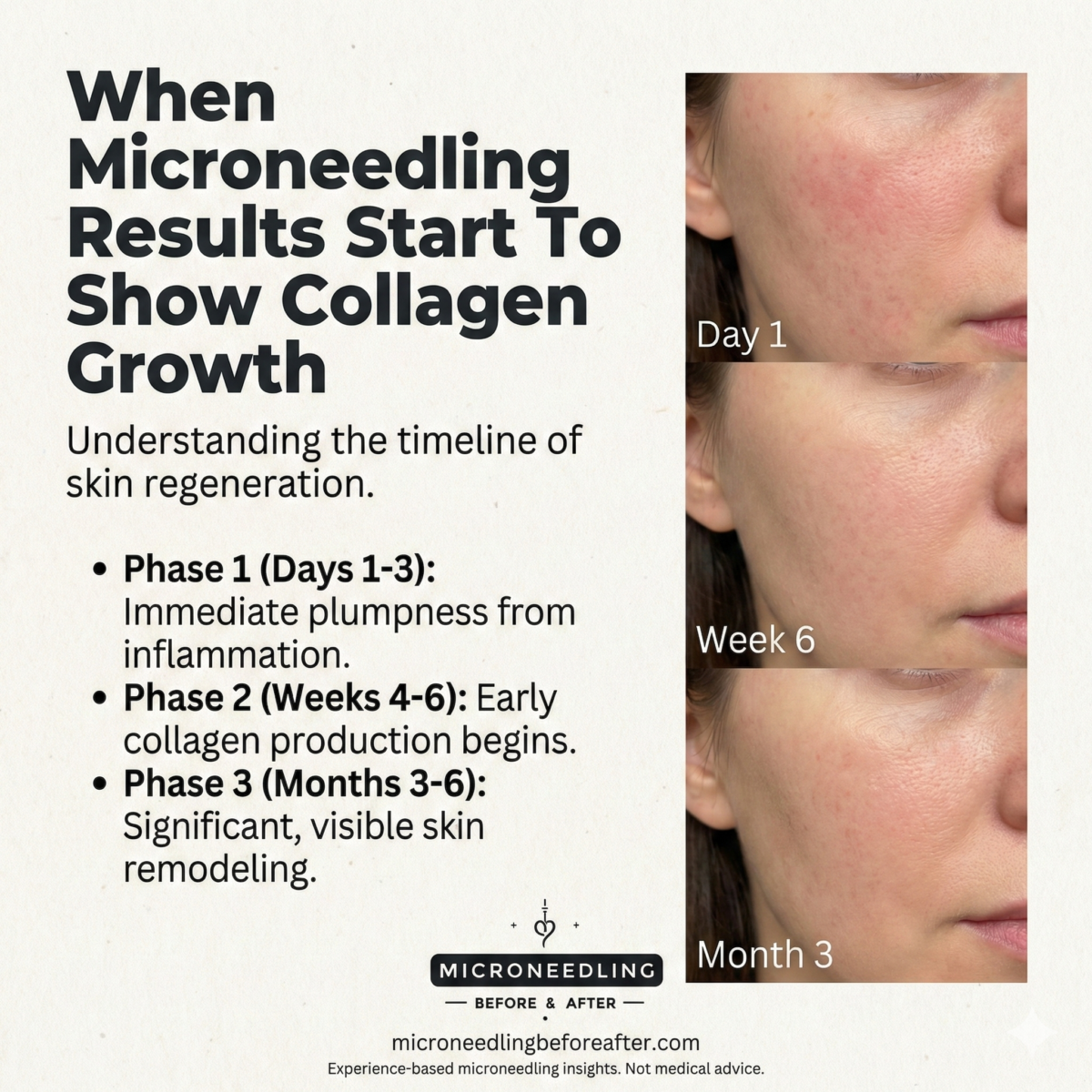
Cuando los resultados de la microaguja comienzan a mostrar crecimiento de colágeno

Learn when microneedling stimulates collagen, from early signs to 3-6 month gains with timelines, factors affecting results, monitoring tips, and aftercare & FAQs.

When will I start to see collagen growth after microneedling?

Cuando los resultados de la microaguja comienzan a mostrar crecimiento de colágeno

I wrote this article to clarify the timeline and mechanisms by which microneedling triggers collagen growth. I will explain what to expect, why results vary, and how to monitor and support the process for the best clinical outcome.

What this article covers

I will outline the biological response to microneedling, provide an evidence-based timeline for collagen synthesis and visible results, and identify the variables that meaningfully alter outcomes. I will also describe monitoring techniques, appropriate aftercare, and practical recommendations to optimize collagen production safely.

How microneedling stimulates collagen production

I consider microneedling a controlled dermal injury that intentionally activates wound-healing pathways. By creating multiple microchannels in the skin, the procedure initiates an inflammatory cascade and growth factor release that ultimately stimulates fibroblasts to synthesize new collagen and extracellular matrix.

The three phases of wound healing relevant to microneedling

The wound-healing process occurs in overlapping phases: inflammation, proliferation, and remodeling. I will summarize each phase and its role in collagen synthesis so you can understand why visible changes take weeks to months.

  • Inflammation: Immediately after treatment, platelets release growth factors and immune cells clear debris. I emphasize that this phase sets the stage for fibroblast activation but does not produce significant visible collagen.
  • Proliferation: Fibroblasts proliferate and begin depositing type III collagen and glycosaminoglycans. I note that this phase typically spans days to weeks and is when early extracellular matrix changes occur.
  • Remodeling: Type III collagen is gradually replaced with stronger type I collagen and the collagen fibers reorganize. I point out that remodeling can continue for months, which is why patients often notice progressive improvement over time.

Immediate skin response and what it means

Right after microneedling I expect erythema, mild swelling, and pinpoint bleeding in some cases. These signs indicate vascular and inflammatory activation, but they are not direct evidence of new collagen formation at that moment.

The significance of erythema and microinjuries

Erythema reflects increased blood flow and inflammatory mediator release, which are necessary for healing. I emphasize that this acute response is a prerequisite for collagen synthesis but is separate from the structural collagen changes that occur later.

How early biochemical signals predict later collagen formation

Growth factors such as TGF-β, PDGF, and VEGF are upregulated within hours to days after injury. I describe that these signaling molecules recruit and activate fibroblasts, providing the biochemical environment for collagen deposition over the ensuing weeks.

Typical timeline for collagen growth after microneedling

I will present a practical timeline that clinicians and patients can use to set expectations. This timeline blends cellular biology with clinical observations from trials and practice.

Week 0–1: Immediate reaction and early signaling

During the first week, I expect acute inflammation and re-epithelialization of the epidermis. I clarify that while growth factors surge during this interval, appreciable collagen deposition has not yet occurred in amounts visible clinically.

Weeks 1–4: Early fibroblast activity and initial matrix deposition

Between one and four weeks, fibroblasts begin synthesizing collagen, primarily type III collagen, and new extracellular matrix components appear. I note that microscopic changes are underway, and some patients may notice subtle improvements in skin texture or reduced fine lines at this stage.

Weeks 4–8: Increasing collagen synthesis and early remodeling

At one to two months, I expect collagen deposition to increase and the initial remodeling of collagen fibers to start. I explain that clinical improvement becomes more noticeable for many patients during this window.

Weeks 8–12: Continued remodeling and visible aesthetic gains

From two to three months, I commonly observe measurable improvements in firmness, fine lines, and skin tone uniformity. I stress that type III collagen is transitioning to the stronger type I collagen, and the architecture of the dermal matrix becomes more organized.

3–6 months and beyond: Long-term remodeling and maximal results

I tell patients that the most durable improvements usually appear between three and six months and may continue to accrue up to a year after treatment. I emphasize that final collagen remodeling and strengthening of the dermal scaffold can take several months, which is why patience is necessary.

Timeline table: expected collagen activity and clinical signs

I include a concise table to summarize the timeline so that readers can quickly reference expected cellular events and clinical observations.

Periodo de tiempo Cellular events Clinical signs I might observe
Immediate (0–7 days) Hemostasis, platelet activation, growth factor release Erythema, swelling, crusting, minimal visible collagen
Early (1–4 weeks) Fibroblast recruitment, type III collagen deposition begins Subtle texture improvement, decreased superficial roughness
Intermediate (4–8 weeks) Increased collagen production, early remodeling Noticeable improvement in fine lines, skin firmness starts
Late (8–12 weeks) Transition from type III to type I collagen, fiber reorganization Continued tightening, improved elasticity and tone
Long-term (3–12 months) Ongoing remodeling and maturation of collagen Maximal clinical benefit, sustained structural change

Factors that affect how quickly collagen grows

I recognize that the timeline varies significantly among patients because of intrinsic and extrinsic factors. I will list and explain the most influential variables so you can assess realistic expectations.

Patient age and intrinsic regenerative capacity

Younger skin generally regenerates faster and produces collagen more efficiently. I explain that aging reduces fibroblast activity and stem cell responsiveness, which often lengthens the time to visible collagen-related improvements.

Skin type, ethnicity, and baseline photodamage

Different skin phototypes and degrees of photoaging influence healing and collagen response. I note that heavily photoaged skin may require more treatments and a longer remodeling period to achieve similar results to less-damaged skin.

Treatment depth and needle length

Needle depth plays a key role in the degree of dermal injury and the resulting collagen stimulus. I provide more detail in the table below because needle depth should be matched to the indication and safety profile.

Needle depth (approx.) Typical indication Expected collagen response
0,25–0,5 mm Epidermal issues, product absorption Minimal dermal collagen stimulation; enhanced topical penetration
0,5–1,0 mm Fine lines, superficial scarring Moderate fibroblast activation and collagen deposition
1,0–2,5 mm Deep acne scars, laxity Robust dermal injury with stronger collagen stimulation; more downtime
>2.5 mm (rare) Specialist procedures Higher risk; significant collagen induction but needs expertise

I advise that increasing depth typically yields stronger collagen stimulus but also increases risk and recovery time. I stress that professional judgment must guide depth selection.

Number of passes, device type, and technique

The total energy delivered—combination of needle depth, number of passes, and cadence—affects the collagen response. I indicate that consistent, controlled techniques performed by trained providers produce more reproducible outcomes than aggressive, uncontrolled treatments.

Treatment frequency and cumulative sessions

Collagen synthesis is cumulative; multiple treatments spaced appropriately often yield superior outcomes. I usually recommend a series of three to six treatments at 4–6 week intervals for many indications, while tailoring the plan to the individual’s response.

Adjunctive therapies and combination treatments

Using growth factors, platelet-rich plasma (PRP), topical vitamin C, or lasers in concert with microneedling can amplify collagen production. I caution that combination strategies must be evidence-based and timed correctly to avoid overstimulation or increased risk of adverse effects.

Lifestyle and systemic health

Nutrition, smoking status, sun exposure, sleep, and systemic conditions (e.g., diabetes, autoimmune disease) influence wound healing and collagen synthesis. I consistently counsel patients that optimizing systemic health improves outcomes and shortens recovery.

Clinical evidence: what trials show about timing of collagen changes

I will summarize key findings from published studies so readers can see how controlled research aligns with clinical experience. I emphasize both histologic and clinical endpoints.

Histologic findings from representative studies

Several histologic studies demonstrate increased collagen deposition as early as 4 weeks post-treatment, with more pronounced and mature collagen forms by 12 weeks. I note that biopsies commonly show increased collagen content, fibroblast proliferation, and neovascularization at these time points.

Clinical outcomes and patient-reported timelines

Clinical studies frequently report noticeable improvements in texture and scarring within 1–3 months, with continued improvements up to 6 months. I point out that patient satisfaction typically correlates with the cumulative number of sessions and realistic preoperative counseling.

Monitoring collagen growth: objective and subjective measures

I recommend a combination of objective measurements and patient-reported outcomes to evaluate progress. I explain practical methods that clinicians and patients can use to track changes.

Imaging and biophysical tools

High-frequency ultrasound, optical coherence tomography (OCT), and cutometer measurements can quantify increases in dermal thickness and elasticity. I advise that while these tools are useful in research and specialty clinics, they may not be readily available in all practices.

Standardized photography and clinical grading scales

Standardized photography under consistent lighting, angles, and positioning is a reliable way to document visible improvements. I often use validated scar and wrinkle grading scales to provide objective comparisons across timepoints.

Patient-reported outcomes and tactile assessment

Patient perception of texture, tightness, and confidence are important outcomes that sometimes precede measurable structural changes. I include tactile assessment of skin firmness and palpation as practical office-based assessments that supplement imaging.

At-home microneedling devices vs professional treatments

I will contrast the stimulation and safety profiles of at-home dermal rollers and pens with in-office professional procedures. I recommend evidence-based practices to achieve results without unnecessary risk.

Comparative depth and collagen stimulation

At-home devices typically use short needles (0.2–0.5 mm) that primarily enhance topical absorption and produce minimal dermal collagen induction. I point out that professional treatments with deeper needles (1.0 mm and above) create controlled dermal injury and a stronger stimulus for collagen synthesis.

Safety, sterility, and complication risk

Professional treatments reduce infection risk and ensure appropriate technique and depth selection. I caution that improper home device use can cause infection, post-inflammatory hyperpigmentation, or scarring in susceptible individuals.

Optimizing microneedling to maximize collagen growth

I will recommend practical steps before, during, and after treatment that enhance collagen output while minimizing complications. I emphasize that adherence to protocol and individualized planning matter most.

Pre-treatment optimization

I recommend stopping retinoids and certain exfoliants as advised by the provider, and managing active acne or infections prior to procedure. I also advise that smoking cessation and improving nutrition in the weeks leading up to treatment can improve healing.

In-procedure considerations

I stress the importance of appropriate anesthesia, depth selection, and technique to ensure consistent microchannel creation without overtraumatizing tissue. I also recommend using sterile technique and high-quality devices to minimize complications.

Post-treatment care to support collagen formation

Post-procedure, I advise gentle cleansing, sun protection, and appropriate topical support such as growth-factor serums or hyaluronic acid. I usually delay introduction of retinoids and aggressive actives until the epidermis has re-epithelialized to avoid irritation and interference with wound healing.

Topical agents and injectables that enhance collagen response

I will cover adjuncts with evidence for synergistic action and provide timing considerations to maximize benefit.

Plasma rico en plaquetas (PRP)

PRP contains concentrated growth factors that, when applied during or immediately after microneedling, can augment fibroblast activity. I note that randomized studies show improved clinical outcomes when PRP is combined with microneedling compared to microneedling alone.

Growth factor serums and peptides

Topical peptides and growth factor-containing serums can support matrix production during the proliferative phase. I caution that penetration depends on the timing relative to microchannel closure and the molecular size of the active ingredients.

Vitamin C and topical antioxidants

Ascorbic acid is a cofactor for collagen cross-linking and can support collagen maturation. I recommend introducing vitamin C serums after the epidermis has healed to minimize irritation and to maximize antioxidant protection.

Retinoids and timing

Retinoids are potent stimulators of dermal remodeling but can be irritating if applied too soon. I advise waiting until re-epithelialization is complete—often 7–14 days—before resuming retinoid therapy, with gradual reintroduction.

Safety, side effects, and how they affect collagen outcomes

I prioritize safety and will describe common side effects, risk mitigation, and how complications can delay or impair collagen formation.

Common side effects and expected healing

Temporary redness, swelling, and minor crusting are expected and do not indicate poor outcomes. I explain that these reactions are part of normal healing and should resolve without intervention in most cases.

Infection, hyperpigmentation, and scarring

In rare instances, infection, post-inflammatory hyperpigmentation (PIH), or hypertrophic scarring can occur and may impair collagen architecture. I emphasize early recognition and treatment—topical antibiotics, pigment control, or referral for scar management—to preserve long-term results.

Autoimmune concerns and contraindications

Patients with certain autoimmune disorders, active skin infections, or a tendency for keloids require careful evaluation. I routinely screen for contraindications and adjust or avoid microneedling when the risk outweighs the benefit.

Managing expectations and treatment planning

I will provide guidance on realistic goals and how to design a treatment plan that aligns with desired outcomes and timelines.

Setting realistic timelines

I clearly communicate that meaningful collagen-driven improvements usually appear within 1–3 months and peak at around 3–6 months. I always discuss that multiple sessions are often needed and that final remodeling continues over many months.

Individualized treatment plans

Treatment frequency, needle depth, and adjunctive therapies should be tailored to the individual’s anatomy, goals, and tolerance. I prefer to set incremental goals and reassess after each session to refine the plan.

Practical patient checklist: before and after treatment

I provide a brief checklist that I give patients to maximize safety and outcomes. This list is meant to be a practical, at-a-glance guide.

  • Pre-treatment: Stop retinoids 3–7 days before (depending on strength), control active acne, avoid sunburn, maintain hydration, and discuss medications.
  • Day of treatment: Arrange transportation if sedation is used, expect redness and swelling, and plan minimal social activities for 24–48 hours.
  • Post-treatment: Use gentle cleanser, avoid makeup for 24 hours or as directed, apply sunscreen diligently, and delay potent actives until cleared by your provider.
  • Long-term: Follow the recommended treatment series, avoid smoking, maintain sun protection, and schedule follow-ups.

Frequently asked questions (FAQ)

I will answer common patient queries succinctly to reduce uncertainty and facilitate informed consent.

When will I personally notice a difference?

Most patients I treat report subtle improvements within 4–8 weeks and more marked changes by 3 months. Final results often continue to improve up to six months after the last treatment.

Is more aggressive treatment always better for collagen growth?

No. I caution that more aggressive depth or excessive passes increase risk without guaranteeing proportionally better outcomes. The optimal treatment balances efficacy with safety and is individualized.

Can I combine microneedling with other cosmetic procedures?

Yes, combining with PRP, lasers, or fillers can be effective when sequenced properly. I recommend spacing procedures appropriately and discussing an integrated plan with your provider.

How many sessions will I need?

A typical starter series is three treatments spaced 4–6 weeks apart, but the total number depends on the indication and response. I personally reassess after each session and adapt the plan based on observed progress.

Case examples: practical timelines from my clinical practice

I will describe representative cases to illustrate realistic timelines and outcomes that reflect what I see in practice.

Case 1: Mild photoaging, 45-year-old woman

I treated a 45-year-old patient with three sessions at 4-week intervals using 1.0 mm depth for cheeks. She reported subtle texture improvement at 6 weeks and substantial tightening and reduced fine lines at 3 months, with continued improvement through month 6.

Case 2: Atrophic acne scarring, 30-year-old man

I used 1.5–2.0 mm depths for targeted scar remodeling over five sessions spaced 6 weeks apart. Early collagen deposition was apparent clinically at 8–12 weeks, with notable scar softening and volume restoration at 4–6 months.

Final recommendations for clinicians and patients

I will summarize practical, evidence-based recommendations so you can apply them confidently.

  • Counsel patients that collagen growth is a biological process that takes time; expect progressive improvement rather than instant change.
  • Tailor needle depth, session frequency, and adjunctive therapies to the clinical indication and patient factors.
  • Use objective monitoring when possible, and combine with standardized photography for documentation.
  • Prioritize safety: sterile technique, appropriate patient selection, and conservative escalation of treatment intensity.

Conclusión

I hope this detailed overview clarifies when microneedling results begin to show collagen growth and how the process evolves over time. I encourage patients and clinicians to set realistic timelines, to monitor progress methodically, and to use evidence-based adjuncts to maximize outcomes while maintaining safety.

Explicación de los ajustes de velocidad del bolígrafo de microagujas

Learn how microneedling pen speed affects results, safety, and technique-match speed to depth, treatment goals, and skin type with clinician guidance. Pro tips.

Have you ever wondered how the speed setting on a microneedling pen changes the treatment outcome?

Explicación de los ajustes de velocidad del bolígrafo de microagujas

I will explain how microneedling pen speed settings work, why they matter, and how to match speed to treatment goals and skin characteristics. I will present practical guidance for clinicians and informed consumers, highlight safety considerations, and provide step-by-step recommendations so you can make informed choices when planning or performing treatments.

What is a microneedling pen?

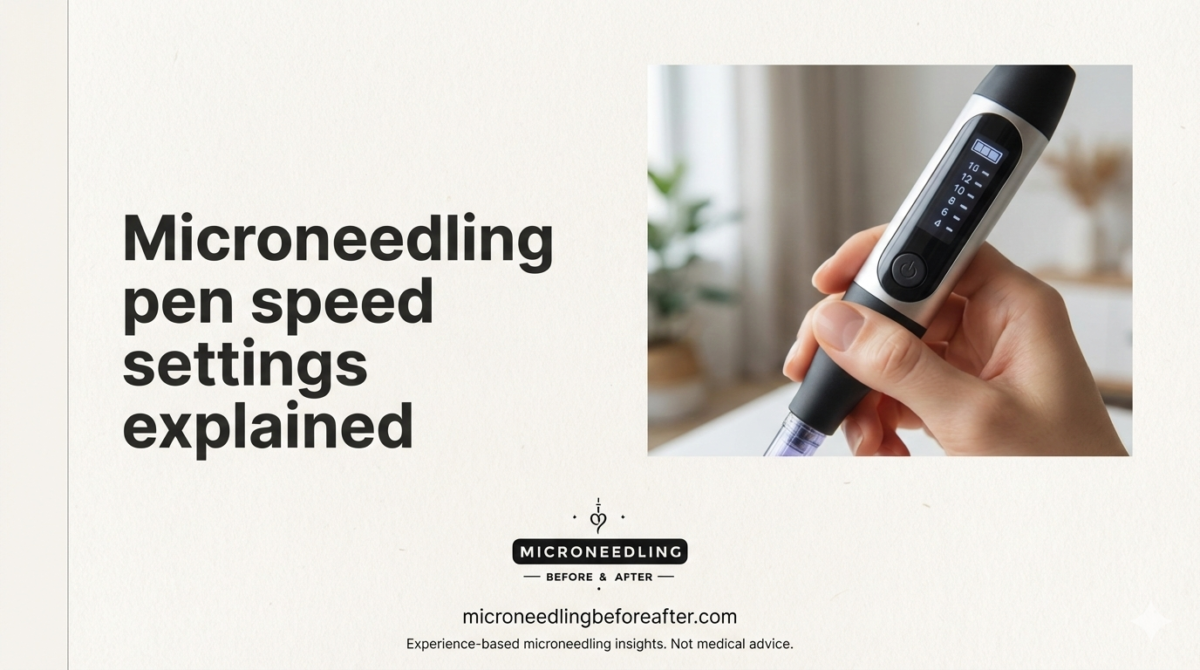
I use the term microneedling pen to describe a motorized device that repeatedly drives a cluster of tiny needles into the skin to create controlled microinjuries. The resulting microchannels stimulate wound-healing pathways that lead to collagen and elastin remodeling and improve skin texture and tone. I emphasize that performance characteristics — including needle depth, needle configuration, and motor speed — together determine tissue response and the clinical outcome.

What does “speed” mean on a microneedling pen?

I define speed as the frequency with which the needle cartridge cycles — typically expressed as strokes per minute (SPM) or revolutions per minute (RPM), depending on manufacturer terminology. Speed controls how many micro-injuries are delivered in a given time period and influences mechanical force per impulse, penetration consistency, and patient sensation. I note that manufacturers may label speeds with simple levels (1–12) or with numeric values that represent motor cycles per minute, so it is important to refer to each device’s specifications.

How speeds are measured and labeled

I explain that some devices display an absolute number (e.g., 1,000–18,000 SPM or RPM), while others show incremental levels that correspond to internal motor settings. I recommend checking the device manual for what each level represents because “level 5” on one device may not equal “level 5” on another. I also emphasize that brand-to-brand variability means numerical ranges should be used as general guidance rather than absolute rules.

Typical consumer and professional speed ranges

I point out that consumer-grade pens often have lower maximum speeds and fewer preset levels than professional devices, and that clinical devices are designed for repeated heavy use and finer control. Broadly speaking, I categorize speeds into low, medium, and high ranges for clarity:

  • Low: approximately 400–1,500 SPM/RPM — used for deeper needling or sensitive areas.
  • Medium: approximately 1,500–6,000 SPM/RPM — appropriate for many resurfacing and scar treatments.
  • High: approximately 6,000–18,000 SPM/RPM — used primarily for superficial or cosmetic resurfacing where rapid microchannels are desired.

I caution that these ranges are approximate and depend on device design; always confirm with the device manufacturer and clinical guidelines.

Why speed matters

I explain that speed influences several treatment variables: the number of micro-injuries created per unit time, the character of the tissue insult (micro-tearing versus clean microchannels), patient comfort, and the thermal and mechanical stress imparted to the tissue. Speed interacts with needle depth and technique to determine clinical efficacy and safety. Optimizing speed helps balance efficacy with tolerance and lowers the risk of adverse events.

Tissue response to speed

I discuss how higher speeds create many microchannels rapidly, potentially yielding uniform coverage with less lateral displacement of the skin. Conversely, slower speeds produce fewer impulses per unit time but may generate higher force per pass, which can increase trauma at a given depth. The skin’s wound-healing cascade — including platelet activation, cytokine release, neocollagenesis, and remodeling — is triggered by the nature and extent of microinjury. I emphasize that an appropriate speed encourages productive healing without excessive inflammation.

Speed versus needle depth: how they interact

I clarify that needle depth largely determines which skin layers are targeted (epidermis vs dermis) and that speed modifies the mechanical effect at that depth. For example, deeper depths (e.g., >1.5 mm) require careful, usually slower treatment to avoid tearing and excess bleeding, while superficial depths (e.g., 0.25–0.75 mm) can tolerate higher speeds with rapid, lighter passes. I recommend pairing deeper needling with lower speeds to maintain control and minimize adverse events.

Speed settings by treatment goal

I provide practical guidance for matching speed and depth to common indications. I stress that these are starting points and must be individualized by skin type, scar maturity, device characteristics, and patient tolerance. I always advise a conservative approach during initial treatments with incremental adjustments based on response.

Indication Typical Needle Depth (approx.) Suggested Speed Range Rationale
Superficial resurfacing, pore refinement 0,25–0,5 mm Medium–High (1,500–12,000) Higher speeds with shallow depth give broad coverage and fast microchannel formation with low risk.
Fine lines and superficial wrinkles 0,5–1,0 mm Medium (1,500–6,000) Balanced speed improves collagen stimulation while controlling trauma.
Acne scarring (atrophic) 1.0–2.5 mm (vary by scar depth) Low–Medium (400–4,000) Deeper, targeted needling requires lower speeds for precision and to reduce tearing. Multiple passes at controlled speed achieve remodeling.
Surgical or hypertrophic scars 1.5–3.0 mm Low (400–1,500) Slow, careful technique reduces risk of further scar trauma; may be combined with other modalities.
Hyperpigmentation and melasma 0.25–0.75 mm Low–Medium (400–4,000) Conservative speeds help avoid post-inflammatory hyperpigmentation; shallow depth only.
Hair restoration (scalp) 0,5–1,5 mm Medium (1,500–6,000) Moderate speeds with controlled depth promote growth factors; avoid excessive trauma.
Stretch marks (striae) 1,0–2,5 mm Low–Medium (400–4,000) Deep pulses at controlled speed encourage dermal remodeling while minimizing bleeding.

I reiterate that these are generalized ranges and that device-specific calibration and patch testing are essential. I also emphasize that speed alone is not the sole determinant — technique, needle configuration, and number of passes matter equally.

Clinical and safety considerations

I focus on the safety implications of speed selection. Faster speeds may reduce procedure time and patient discomfort for superficial treatments, but they can increase mechanical stress and the chance of petechiae or exaggerated inflammation, especially when combined with deeper needle settings. Slower speeds are preferable when precision and control are required, such as in scar remodeling or when treating delicate anatomic areas.

Contraindications and precautions

I highlight common contraindications to microneedling: active infection or inflammation in the treatment area, isotretinoin use within the past 6–12 months (depending on clinician judgment), certain autoimmune or bleeding disorders, uncontrolled diabetes, keloidal tendency (relative contraindication), pregnancy (relative contraindication for some clinicians), and recent radiation therapy. I stress that high speeds can amplify risks when these contraindications are present, so conservative practice and medical clearance are important.

Skin type and pigmentary risk

I note that Fitzpatrick phototypes IV–VI have increased risk of post-inflammatory hyperpigmentation (PIH). When treating darker skin types, I recommend slower speeds, shallower depths, and a conservative number of passes. I also recommend topical depigmenting agents and sun protection as part of the pre- and post-treatment plan to reduce PIH risk.

Pain control and patient comfort

I explain that speed influences sensation: higher speeds can feel less jarring for very superficial work because impulses are rapid and light, while deeper, slower passes can be perceived as more forceful. I recommend topical anesthetic application (e.g., lidocaine-based creams) for deeper treatments and for anxious patients, and stress that anesthetic application should follow manufacturer and regulatory guidance. I always advise monitoring for anesthetic toxicity and advising patients about possible numbness post-procedure.

Technique specifics: stamping, gliding, and cross-hatching

I describe three commonly used techniques and how speed selection affects each.

Stamping (vertical technique)

I explain that stamping involves perpendicular insertion and rapid withdrawal in discrete spots. I recommend using lower speeds with stamping for deep or focused scar treatments to ensure controlled penetration and minimize lateral tearing. Stamping is well-suited to treating individual acne scars or surgical scars with precise depth control.

Gliding (continuous technique)

I describe gliding as dragging the pen across the skin to create continuous microchannels. For gliding, medium to high speeds at shallow depths are appropriate because rapid cycles produce consistent coverage. I recommend caution to avoid long continuous passes at deep settings, which increase the risk of epidermal injury.

Cross-hatching (multi-directional passes)

I explain that cross-hatching uses multiple passes in perpendicular or diagonal directions to maximize coverage and stimulate remodeling. I suggest reducing speed somewhat for deeper cross-hatch passes to avoid over-traumatizing the tissue, and increasing speed slightly for superficial passes to improve efficiency.

Device selection and calibration

I discuss how device characteristics influence optimal speed selection. Motor torque, needle cartridge stability, and ergonomics all matter. I advise clinicians to choose devices with consistent, adjustable speed control and reliable disposable cartridges to minimize variability. I also urge checking manufacturer guidance for recommended speeds for specific cartridges and for the device’s duty cycle and recommended treatment duration to avoid motor overheating.

Battery, motor, and cartridge considerations

I note that lower-quality pens can exhibit inconsistent needle motion at higher speeds, producing uneven penetration. I recommend using well-reviewed professional pens for clinical use and ensuring cartridges are properly seated and replaced per manufacturer recommendations. I also stress that battery-operated devices should be fully charged to maintain consistent motor performance throughout the procedure.

Protocols for professionals versus at-home devices

I emphasize the difference between in-office medical microneedling and at-home microneedling devices. Professional devices typically allow higher depths, finer control, and are intended for trained practitioners, while at-home devices are usually limited to superficial depths and lower speeds for safety. I recommend patients not attempt deeper treatments at home and advise clinicians to counsel patients accordingly.

At-home device guidance

I recommend that I instruct patients using at-home devices to adhere strictly to manufacturer limits on depth and speed, to sanitize the device and skin before use, and to maintain conservative frequency (e.g., weekly or monthly depending on depth) to avoid cumulative trauma. I also advise that patients discontinue use and seek clinical evaluation if unexpected redness, pain, or scabbing persists.

Maintenance, sterilization, and cartridge management

I describe mandatory hygiene practices. I instruct clinicians and consumers to use sterile, single-use cartridges when possible, to disinfect reusable device surfaces between patients, and to follow manufacturer instructions for sterilization. I point out that needle dullness can alter effective penetration and create more tearing; therefore I recommend replacing cartridges per recommended usage limits.

Signs of cartridge wear and malfunction

I list indicators such as uneven needle travel, increased snagging or pulling sensation, visible bending of needles, and excessive bleeding for the same depth/preset as signs to replace cartridges. I recommend that I and other clinicians stop treatment immediately if mechanical irregularities occur and inspect the cartridge.

Common myths and misconceptions about speed

I address several misconceptions and provide corrective explanations.

  • Myth: Higher speed always equals better results. I counter that higher speed improves efficiency for superficial work but can increase mechanical stress and the risk of adverse effects if paired with excessive depth or poor technique.
  • Myth: Faster treatments are less painful. I explain that pain perception depends on depth, number of passes, and local anesthesia; speed is only one factor.
  • Myth: More passes at high speed produce exponentially better results. I clarify that beyond a certain point, additional trauma yields diminishing returns and greater risk of inflammation and pigmentary change.

I encourage measured, evidence-based practice rather than assuming more speed or more passes will always produce superior outcomes.

Troubleshooting: common problems and solutions

I outline common issues related to speed and their practical fixes.

  • Uneven penetration or skipping: often due to low battery, loose cartridge, or debris. I recommend stopping, replacing or re-seating the cartridge, and ensuring full power.
  • Excessive bleeding or bruising: may indicate too-deep needling at too-high speed; I advise halting treatment, applying pressure and cooling, and following appropriate wound-care protocols.
  • Post-inflammatory hyperpigmentation: reduce depth and speed in subsequent sessions, prescribe topical depigmenting agents when indicated, and enforce strict photoprotection.
  • Motor overheating: allow cooling periods between long sessions or use device with higher duty cycle; maintain manufacturer-recommended working intervals.

I recommend documenting any adverse events and modifying subsequent protocols based on patient response.

Evidence and outcomes

I summarize the clinical rationale: microneedling stimulates collagen and elastin production through controlled microinjury. I note that studies support its efficacy for scars, wrinkles, and skin texture, and that outcomes depend on depth, needle configuration, and, to a meaningful extent, speed because speed contributes to the density and uniformity of microchannels. I caution that randomized controlled trial data specifically comparing different speeds remain limited, so much of practice is guided by biomechanical reasoning and clinical experience.

Practical session planning and sample protocols

I provide sample, conservative protocols for a hypothetical clinical session meant for someone beginning treatment. I note that I always tailor these to the individual.

  • Initial evaluation and patch test: I check medical history, obtain informed consent, and perform a small-area test at low depth and medium speed to observe tolerance and healing.
  • Baseline for superficial resurfacing: 0.25–0.5 mm depth, medium–high speed, 2–4 passes across the entire face, with topical serum application post-procedure.
  • Baseline for acne scarring: 1.0–2.0 mm depth depending on scar depth, low–medium speed, 1–3 targeted passes per scar (stamping), avoid aggressive cross-hatching in the same session.
  • Post-treatment care: cold compresses immediately, apply sterile barrier serum and sun protection, avoid harsh topical actives (e.g., retinoids, strong acids) for 3–7 days depending on depth.

I advise that I typically space sessions 4–6 weeks apart for deeper treatments to allow remodeling and that shallower, cosmetic sessions can be repeated more frequently at clinician discretion.

Legal and regulatory considerations

I remind clinicians and device users to adhere to local regulations governing device classification and practitioner scope of practice. I stress that certain devices and settings may be restricted to licensed professionals in some jurisdictions. I recommend documenting settings, needle depth, cartridge type, number of passes, and patient responses in the medical record.

Preguntas frecuentes (FAQ)

I include brief answers to common questions I hear regarding speed settings.

  • Will increasing speed reduce treatment time? Yes, higher speeds can reduce time for superficial treatments, but deeper work still requires careful pace and multiple targeted passes.
  • Is a higher speed more painful? Not necessarily; sensation depends on depth, area, and anesthesia. Higher speed with superficial depth can feel less intense than deep slow passes.
  • Can I use the highest speed my device offers for all treatments? I discourage this because high speed combined with deep depth or aggressive technique can increase adverse events.
  • How do I choose needle depth and speed for delicate areas (e.g., under eyes)? Use shallow depths and lower speeds, with fewer passes, to reduce risk of bruising and pigment change.
  • Should I adjust speed across the same session? Yes. I often begin superficial passes at higher speeds to achieve coverage, then switch to lower speeds for focused deeper work or delicate zones.

Final recommendations and summary

I summarize practical takeaways: speed is a crucial control parameter that influences the density, uniformity, and nature of microinjuries delivered by a microneedling pen. I advise starting conservatively — lower speeds for deeper and scar-focused work, medium speeds for general resurfacing, and higher speeds for shallow cosmetic coverage — while tailoring choices to device specifications, patient skin type, and treatment objectives. I always recommend a patch test, clear informed consent, and careful documentation. For novice practitioners or patients using at-home devices, I encourage seeking professional training or clinical consultation before attempting deeper or higher-speed treatments.

I offer to assist further by reviewing device specifications, helping create a treatment protocol tailored to a specific device and patient population, or answering case-specific questions based on clinical scenarios.

es_MXSpanish