
google.com, pub-2032008856654686, DIRECT, f08c47fec0942fa0

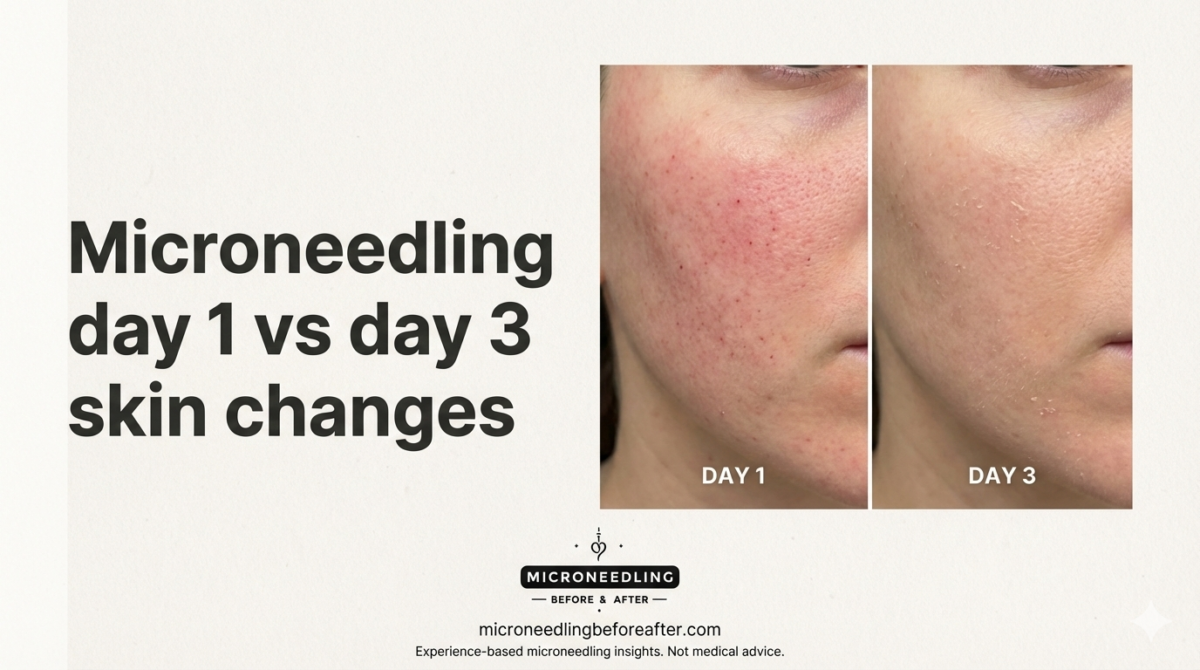
Microneedling Day 1 Vs Day 3 Skin Changes

Microneedling Day 1 vs Day 3: expected redness, swelling, flaking, care tips, recovery timeline, and when to call your provider.

Have you noticed a big difference in how your skin looks and feels between the first and third day after microneedling?

Microneedling Day 1 Vs Day 3 Skin Changes

I’m going to walk you through what I see and feel on day 1 compared with day 3 after microneedling. I’ll explain why those changes happen, what’s normal, and what should prompt me to call a professional.

What microneedling is and how it works

I think of microneedling as a controlled injury to the skin that triggers repair. Tiny needles create microchannels in the epidermis and superficial dermis, which starts a cascade of inflammation, collagen production, and remodeling.

I understand that this process is intentionally disruptive because the body’s repair mechanisms create new collagen, elastin, and improved skin texture over time. The short-term effects are part of that healing sequence.

The basic timeline I expect after microneedling

I like to divide the early timeline into immediate (within hours), day 1, day 2, day 3, and the first week. Each phase has predictable signs and sensations as the skin moves from acute injury toward regeneration.

I’ll focus mainly on the contrast between day 1 and day 3, but I’ll also describe the immediate aftermath and what follows during the first week so the differences make more sense.

Immediate Aftermath (0–6 hours)

I usually notice redness and pinpoint bleeding right after the procedure. There can be a warm, tight feeling and sometimes a prickling or stinging sensation as the microchannels are fresh.

I often see some serous fluid (clear plasma) on the surface as the skin reacts, and practitioners commonly apply calming serums or sterile saline right away. Immediate sterility and gentle care are essential to reduce contamination risk.

How my skin looks and feels in the first few hours

My skin typically looks sunburned and feels warm to the touch. If there was any bleeding, it’s usually minimal and stops quickly.

I expect cosmetic redness to be prominent; swelling is possible but usually mild. I avoid applying makeup and keep the area protected and hydrated.

Day 1: Acute Inflammatory Phase

On day 1 I expect significant erythema (redness), sensitivity, and a warm tight sensation. The skin barrier is compromised, so I feel more prone to stinging from water, skincare, or temperature changes.

I might notice tiny scabs where more intense micro-injury occurred, and sometimes minimal pinpoint bleeding or residual serum. For my part, I keep care minimal and gentle—cleanse with lukewarm water, apply a bland moisturizing serum, and avoid irritants.

Typical symptoms I see on day 1

I usually experience:

  • Bright red or pink skin similar to a moderate sunburn.
  • Tightness and mild swelling, especially around eyes or thin areas.
  • Mild to moderate tenderness, but not severe pain.
  • Possible pinpoint bleeding or oozing that clears within hours.

I find it important to avoid makeup, heavy creams, or any active ingredients on day 1 to prevent irritation and infection.

What’s happening under my skin on day 1

Biologically, I know the body is launching an inflammatory response. Immune cells rush to the micro-injuries, blood flow increases, and cytokines are released to start cleanup and signaling.

This inflammation is necessary to attract fibroblasts and kickstart collagen-producing pathways. The microchannels are still open, making the skin more permeable and vulnerable.

Day 2: Early Healing and Increased Sensitivity

By day 2, redness often remains but may start to spread or become a duller pink. I sometimes notice more pronounced swelling as fluids accumulate, and some small scabs or flakes can appear as the epidermis begins to shed damaged cells.

I take extra care to avoid rubbing or picking at scabs. I also continue to protect my skin from sunlight and avoid strenuous exercise that increases blood flow and swelling.

How day 2 feels different from day 1

On day 2 my skin can feel tighter and more dry because the barrier is losing water. I sometimes see slight peeling, and makeup still feels risky and may accentuate texture issues.

I usually still avoid topical actives, and I keep skincare to a gentle cleanser, hydrating serum (e.g., hyaluronic acid), and a very mild moisturizer.

Day 3: Transition into Repair Phase

Day 3 is a turning point for me. Redness typically begins to lessen, although it can persist depending on depth of treatment and individual factors. I may notice more dryness, flaking, and a sandpaper-like texture as the superficial epidermis sheds.

I also start to feel less tenderness and more tightness as new skin begins to form. Microchannels often close or are much reduced by day 3, and I can start to consider reintroducing very mild, supportive skincare if my provider gave the OK.

Common signs I see on day 3

I frequently observe:

  • Reduced but still present redness, often pink rather than bright red.
  • Dryness, peeling, or mild flaking as dead epidermal cells slough off.
  • Less pain and fewer open microchannels.
  • Slight itchiness as healing progresses, which I try not to scratch.

I find that this is the time I can return to light makeup or tinted mineral sunscreen if necessary, but I proceed cautiously and only with non-irritating formulas.

Direct Comparison: Day 1 vs Day 3

I put together a clear comparison so I can quickly see what to expect and how to adapt my care.

Feature Day 1 Day 3
Redness Bright, intense, sunburn-like Diminished, pinker, patchy
Swelling Often present, mild-moderate Usually reduced, localized
Pain/Tenderness Moderate, acute discomfort Lower, more like tightness/itch
Bleeding Possible immediate pinpoint bleeding Rare; channels mostly closed
Oozing/Weeping Possible in first hours Uncommon; dry or slightly flaky
Skin texture Smooth but inflamed Tight, dry, flaky, sandpaper-like
Microchannels Open and highly permeable Mostly closed or resealing
Makeup tolerance Not recommended May be tolerated (mineral/tinted)
Activity restrictions Strict (no sweating, sun) Still need caution but more flexibility

I rely on this table as a quick reference when I decide how carefully to treat my skin across these days.

Why the change from day 1 to day 3 happens

I understand that the initial inflammatory response is responsible for the immediate redness and sensitivity. Over 48–72 hours, inflammation reduces and re-epithelialization begins—the epidermal cells proliferate to reseal the barrier.

I also know that the immune system clears debris and that collagen-producing fibroblasts begin working within days. Those early structural repairs reduce redness and pain but often produce tightness and flaking as the top layer normalizes.

How treatment variables affect day 1–3 changes

I’m aware several factors change the severity and speed of recovery:

  • Needle depth and treatment intensity: Deeper treatments yield more redness and slower recovery.
  • Device type: Automated pen devices and professional systems often produce different injury profiles than at-home rollers.
  • Skin type and Fitzpatrick classification: Darker skin tones have a higher risk of post-inflammatory hyperpigmentation and may have a different visible timeline.
  • Pre-existing conditions: Active acne, rosacea, or eczema can complicate healing.
  • Medications: Recent isotretinoin, blood thinners, or immunosuppressants affect outcomes.

I always disclose my medical history to my provider so they can adjust needle depth and pre/post-care accordingly.

Recommended Day-by-Day Aftercare I Follow

I keep a conservative and sensible routine that protects barrier function and encourages healing.

Immediate post-procedure (hours 0–6)

I gently pat the area with sterile gauze if needed and use only the product the clinician provided—often a sterile hydrating gel or saline. I avoid touching my face with unwashed hands and sit in a clean environment.

I try to keep my head elevated and avoid anything that increases facial blood flow. I don’t apply ice directly over the treated skin unless directed, and if I do use cold, I keep it wrapped and brief.

Day 1 routine

I cleanse with a gentle, non-foaming cleanser and lukewarm water. I apply a bland hydrating serum (often hyaluronic acid or a prescribed healing serum) and a lightweight, hypoallergenic moisturizer.

I stay out of direct sun and avoid vigorous exercise, sauna, hot baths, and alcohol that can increase blood flow. I sleep with my head elevated if swelling is present.

Day 2 routine

I continue the gentle cleanse and hydration. If instructed, I may add a sterile growth factor or platelet-rich plasma (PRP) product if used in the clinic, but only if applied by a professional or proven sterile home product.

I still avoid active ingredients like acids and retinoids. I keep sun protection and physical barriers in place when outdoors.

Day 3 routine

If redness has started to subside and my practitioner has approved, I carefully reintroduce minimal makeup (mineral or non-comedogenic) and my physical sunscreen. I keep to mild products and avoid exfoliants.

I continue hydration to reduce flakiness and avoid picking or peeling skin. If there is persistent warmth, worsening redness, or discharge, I contact my practitioner immediately.

What I avoid during days 1–3

I make a strict list of prohibited activities and products during the first three days:

  • No chemical peels, exfoliation, retinoids, or acids.
  • No hot showers, saunas, or steam rooms.
  • No intense exercise that causes heavy sweating.
  • No swimming in pools, hot tubs, or open water due to infection risk.
  • No aggressive facial manipulation (scrubbing, massaging).

I find that following these restrictions reduces complications and speeds comfortable healing.

Products I use and why

I prefer simple, clinically proven ingredients that promote hydration and barrier repair without irritants.

  • Gentle cleanser (non-foaming, fragrance-free): Cleans without stripping.
  • Hyaluronic acid serum: Rehydrates the dermis and epidermis without irritation.
  • Lightweight ceramide or peptide-based moisturizer: Supports barrier repair.
  • Physical sunscreen (zinc oxide): Protects healing skin from UV-driven pigment changes.

I avoid vitamin C, AHAs/BHAs, and retinoids for at least a week or longer if my skin is still inflamed.

Use of growth factors, PRP, and serums

If my clinician used PRP during the session, I follow their timeline for returning to normal products. PRP and growth-factor serums can enhance healing but must be sterile and clinically administered.

I only introduce professional serums as directed. Over-the-counter growth-factor products are variable in quality, and I rely on my practitioner’s guidance.

When to resume actives and more aggressive treatments

I generally wait at least 3–7 days before reintroducing mild actives, and 2–4 weeks before using retinoids or stronger chemical exfoliants, depending on depth. My clinician’s instructions are my primary guide.

For deeper microneedling, I might wait 4–6 weeks to resume full-strength actives. I monitor my skin’s appearance and sensitivity and reintroduce one product at a time.

Potential complications I watch for

I am vigilant for signs that healing isn’t following a normal course and I’ll contact my provider for these:

  • Increasing redness, warmth, swelling after day 3.
  • Yellow or green discharge, crusting with malodor—possible infection.
  • Fever, chills, or generalized unwellness.
  • Severe pain not controlled by OTC analgesics.
  • New blistering or spreading rash.

I understand that early treatment of infection or other complications reduces scarring and adverse outcomes.

Post-inflammatory hyperpigmentation (PIH) risk

I pay close attention to sun protection because UV exposure during healing increases PIH risk. For darker skin tones, the risk of PIH is higher, so I use strict sun avoidance and physical sunscreens.

If I notice dark patches developing in the weeks after treatment, I consult my provider about topical lightening agents or procedures that are safe post-microneedling.

When to call my clinician versus managing at home

I call my clinician if:

  • Symptoms worsen after day 3.
  • I see pus, spreading redness, or hard painful nodules.
  • I have systemic symptoms like fever.

I manage mild redness, dryness, and peeling at home with conservative care—hydration, sunscreen, and patience—but I won’t hesitate to seek help for anything unusual.

How needle depth and treatment intensity affect day 1–3 differences

I find that treatments using longer needles (e.g., >1.0 mm) produce more dramatic day 1 redness and longer-lasting visible effects through day 3 and beyond. Superficial microneedling (0.25–0.5 mm) often produces milder symptoms that resolve faster.

I also consider the treated area: eyelids and neck are thinner and can swell more; thicker areas like the cheeks tolerate deeper passes with different healing.

Table: Typical recovery expectations by needle depth

Needle Depth (mm) Typical Day 1 Typical Day 3 Recovery Window
0.25–0.5 Mild redness Minimal pink, quick resolution 1–3 days
0.5–1.0 Moderate redness, some swelling Reduced redness, flaking begins 3–7 days
>1.0 Pronounced redness, swelling, possible pinpoint bleeding Pinkness persists, scabbing possible 1–2+ weeks

I use this table to set my expectations and plan aftercare.

Special considerations for different skin types

If I have oily or acne-prone skin, I avoid microneedling during active cystic outbreaks as it can spread bacteria. For sensitive or rosacea-prone skin, I choose conservative settings and anticipate longer redness.

I’m especially cautious with Fitzpatrick IV–VI skin tones, where PIH risk is higher. I consult a board-certified provider experienced with darker skin to minimize pigmentary complications.

Combining microneedling with other treatments

I’m often asked if microneedling can be combined with PRP, vitamin C, or topical medications. Combining with PRP is a common clinic practice and may enhance results when done sterilely.

I avoid applying active topical ingredients immediately after microneedling at home, because microchannels increase absorption and can cause irritation or systemic exposure. If combining treatments, I defer to the practitioner’s protocol.

How to handle itching and flaking on day 3

When itchiness starts around day 3, I resist scratching and instead use a cool compress and increased hydration. I apply a bland, fragrance-free moisturizer frequently to reduce flaking and soothe the skin.

If itching is severe, I contact my clinician; they may recommend an oral antihistamine or a topical steroid for short-term relief.

Makeup and sunscreen use by day 3

I usually wait at least 48–72 hours before applying any makeup. By day 3, if my skin looks calmer, I choose mineral makeup (zinc/titanium dioxide) to reduce irritation and avoid occlusive, heavy formulations.

Sunscreen is essential—physical sunscreens are preferred until the barrier fully recovers. I make it a habit to reapply every two hours outdoors.

Nutrition, sleep, and lifestyle to support healing

I know that good sleep, hydration, a balanced diet, and avoiding smoking help my skin repair faster. I prioritize protein and vitamin C in my diet, which support collagen synthesis and healing.

I reduce alcohol intake and avoid NSAIDs right after treatment only if my clinician advises, because some practitioners prefer to avoid NSAIDs for the first 24–48 hours to not blunt the inflammatory phase that stimulates collagen production. I follow my clinician’s guidance here.

My realistic expectations for the first 3 days

I remind myself that the first three days are about healing, not results. I don’t expect smoother skin immediately; instead, I expect temporary redness, tightness, and some flaking.

Visible improvements in texture and tone typically emerge in weeks to months as collagen remodeling progresses. Patience and consistent aftercare give me the best outcome.

Frequently asked questions I get asked

Can I shower on day 1 or day 3?

I usually shower with lukewarm water and avoid high pressure directly to the face. By day 3 showers are more comfortable, but I still avoid hot water and steam.

I don’t use bath products with perfumes or exfoliating beads while my skin is healing.

Is it normal to have scabs or bleeding?

Pinpoint bleeding during or immediately after treatment can be normal, especially with deeper needling. Scabs may form but I don’t pick them; picking raises the risk of scarring and hyperpigmentation.

If scabbing is extensive or accompanied by pus, I contact my provider.

When can I exercise again?

I typically wait 48–72 hours before returning to strenuous exercise. By day 3 light activities are usually okay, but I avoid heavy sweating that could irritate the skin.

I listen to my body—if my face is still warm and puffy, I postpone intense workouts.

Final thoughts and practical checklist I follow for days 1–3

I keep a simple checklist to ensure I don’t compromise healing:

  • Cleanse gently twice daily with lukewarm water.
  • Hydrate with hyaluronic acid and a bland moisturizer.
  • Use physical sunscreen and avoid sun exposure.
  • No makeup for at least 48–72 hours; use mineral if necessary afterward.
  • Avoid actives, steam, and heavy exercise for 3+ days.
  • Watch for signs of infection and contact my clinician if they arise.

I find that following these guidelines helps me move from the acute inflammatory phase on day 1 to a calmer, reparative state by day 3, setting the stage for long-term improvement.

If you want, I can outline a specific product list suitable for sensitive post-microneedling care or a tailored timeline based on needle depth and skin type.
Can You Use PDRN Immediately After Microneedling

Learn whether sterile PDRN can be used immediately after microneedling – benefits, risks, protocols, and when to wait for safe, optimal results.

Can I apply PDRN right after microneedling, or should I wait?

Can You Use PDRN Immediately After Microneedling

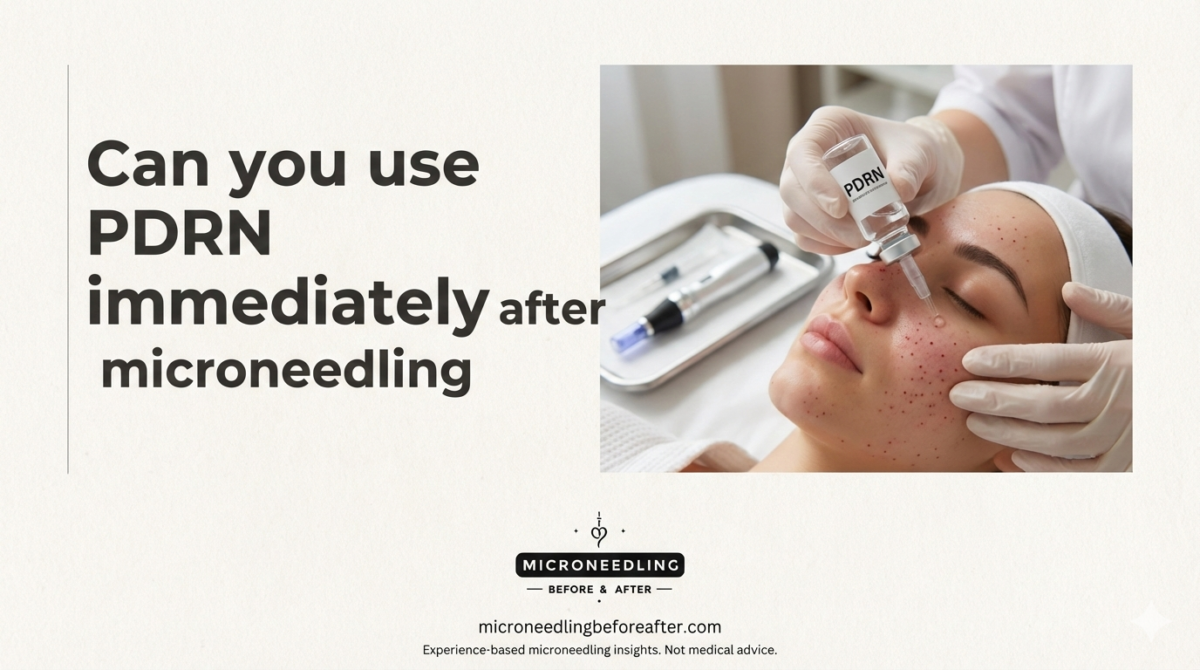
I often get asked whether PDRN (polydeoxyribonucleotide) can be used immediately after microneedling. In this article I’ll walk through the science, the practical protocols, the benefits and the risks, and what I would personally do if I were getting a microneedling treatment and wanted to add PDRN.

What I mean by PDRN and why it matters

I’ll start with a plain explanation: PDRN is a preparation of DNA fragments derived from fish (commonly salmon) that’s used in aesthetic and regenerative medicine to promote tissue repair. It’s thought to work through several mechanisms including stimulation of fibroblasts, angiogenesis (new vessel growth), and modulation of inflammation. Because microneedling creates controlled micro-injuries that trigger repair pathways, combining it with regenerative agents like PDRN seems logical, but there are practical and safety considerations.

How microneedling works and why topicals matter

I want to make sure the basics are clear. Microneedling creates microchannels in the skin, which do three things: stimulate a wound-healing response, increase collagen and elastin production, and temporarily increase skin permeability so topical products can penetrate more deeply.

I often explain to patients that the skin barrier becomes more permissive for a short window after needling. That window can improve absorption of beneficial substances—if the product is appropriate and sterile.

The window of enhanced absorption

The microchannels created by microneedling typically remain open for minutes to hours, with some increased permeability lasting up to 24–48 hours depending on needle depth, device, and individual healing. I emphasize that this window is a double-edged sword: it can help deliver active ingredients but can also let in contaminants or cause excessive systemic absorption of inappropriate formulations.

Why clinicians consider combining PDRN with microneedling

I’ll be candid: combining PDRN with microneedling has become a common practice in many clinics because the conditions are favorable for delivery. Microneedling’s microchannels allow PDRN to reach deeper layers where it can influence fibroblasts and vascular endothelial cells.

From my perspective, the major reasons clinicians add PDRN are:

  • Enhanced delivery: more PDRN reaches the dermis than with intact skin.
  • Synergy: microneedling itself stimulates collagen; PDRN may amplify regeneration and reduce downtime.
  • Anti-inflammatory and angiogenic effects: PDRN may speed recovery and improve tissue quality.

Evidence base: what the literature and clinical reports say

I want to be transparent: while there are promising preclinical and clinical reports supporting PDRN’s regenerative effect and its use with microneedling, the quantity of high-quality randomized controlled trials specific to immediate post-needling application is limited. Many trials show PDRN promotes wound healing, improves skin texture, and reduces inflammation when used in injections or as topical mesotherapy. Case series and pilot studies often report improved outcomes when PDRN is applied with microneedling, but more rigorous comparative trials would strengthen the recommendations.

What clinicians commonly report

In my experience and according to many practitioners’ reports, immediate application of sterile PDRN (either as injectable solution administered intradermally or as a sterile topical serum applied onto needled skin) often results in reduced erythema, faster recovery, and better clinical improvement than microneedling alone. However, these observations are usually within clinical practice settings rather than large randomized trials.

Is it safe to use PDRN immediately after microneedling?

Safety is my top concern when combining treatments. The short answer is: yes—if certain conditions are met. I will only recommend immediate application if the product is medical-grade, sterile, and intended for transdermal or intradermal use. I would avoid any non-sterile cosmetic serums, essential oils, or unknown compounds immediately after needling.

Key safety conditions I insist on

  • Sterility: PDRN must be sterile. Injectable PDRN or medical-grade sterile topical formulations are the only options I’ll consider.
  • Intended route: Use formulations labeled for injection or post-procedure topical use. Don’t use oral supplements or household skincare products for this purpose.
  • Clean technique: The procedure area must be appropriately prepped and the clinic should follow aseptic technique.
  • Patient screening: I screen for active infection, recent isotretinoin use, bleeding disorders, pregnancy, and severe autoimmune disease before combining therapies.

Pros and cons of immediate PDRN application

I like to weigh benefits against risks so patients can make an informed choice.

Pros (Immediate Application) Cons (Immediate Application)
Improved dermal delivery through microchannels Increased risk if product is non-sterile or improperly handled
Potentially faster healing and reduced redness Possible hypersensitivity or unexpected irritation (rare)
Possible enhancement of collagen and angiogenesis Cost and need for clinical-grade product/skill
Can be applied by injection or sterile topical means Unclear long-term comparative superiority vs delayed application

I use this table when deciding with patients whether to proceed immediately or stage treatments.

Immediate application vs delayed application: practical considerations

I usually consider two main approaches: immediate application (during the same appointment, directly after microneedling) or delayed application (waiting hours to days). Each approach has logic.

Why I might apply PDRN immediately

I apply PDRN immediately when:

  • The PDRN is an intended part of the treatment protocol and sterile.
  • I want maximum dermal delivery during the period of highest permeability.
  • The patient has no contraindications and understands the risks and benefits.

In such cases I may administer PDRN intradermally by mesotherapy needles or apply a sterile topical PDRN serum and use needling to enhance deeper penetration.

Why I might delay PDRN application

I might delay application when:

  • The product is not certified for immediate post-procedure use.
  • The patient has a history of sensitive skin, allergic reactions, or uncertain fish allergies.
  • I want to avoid any risk of irritation from combining treatments immediately.
  • The clinic lacks sterile PDRN or proper aseptic protocols.

Delaying by 24–72 hours can still allow good outcomes while minimizing certain risks, particularly with less-studied formulations.

Practical protocols I use (step-by-step)

I’ll share practical protocols in first-person so you can see how I’d do this in clinic. Always follow local regulations and product instructions.

Pre-procedure

I ask patients to:

  • Avoid topical retinoids and exfoliants for 3–7 days.
  • Avoid NSAIDs or supplements that increase bleeding (unless medically required).
  • Report any active cold sores, infections, recent isotretinoin use, or pregnancy.
  • Patch test the PDRN product if there’s a history of allergies or uncertain source material.

I cleanse and disinfect the area thoroughly, use topical anesthetic if appropriate, and set up sterile supplies.

During microneedling

I select needle depth based on area and condition—shallower for superficial texture, deeper for scars. I perform microneedling under sterile conditions.

If I plan to apply PDRN immediately:

  • Option 1: Topical sterile PDRN applied over the area and allowed to be absorbed via open microchannels.
  • Option 2: Intradermal microinjections (mesotherapy) of PDRN into the dermis either immediately after or during the session, depending on protocol.

I make sure the PDRN formulation is indicated for dermal application, is from a reputable source, and stored/handled aseptically.

Post-procedure

I instruct patients to:

  • Keep the area clean and avoid makeup for 24 hours if possible.
  • Use gentle cleansers and avoid active agents for several days.
  • Expect redness, mild swelling, and pinpoint bleeding immediately—these are typical.
  • Use sunscreen once the skin begins to re-epithelialize.

I often recommend continuing topical sterile PDRN products for several days to weeks after the procedure to support regeneration.

Delivery methods: injection versus topical application

I find it helpful to compare delivery options in a table so patients understand choices.

Delivery Method How I use it Pros Cons
Intradermal injections (mesotherapy) Small-volume injections into the dermis right after needling or in a separate pass Direct delivery to target layers; controlled dosing Requires injection skills; more invasive; potential for bruising
Sterile topical serum applied immediately Apply sterile PDRN serum onto needled skin, occlude briefly if needed Non-invasive; easy to apply; good dermal penetration via channels Dependent on molecular size/formulation; must be sterile
Combination (topical + injection) Inject where needed (scars) and topically apply elsewhere Customized approach; maximal coverage More complex; cost and time

In my practice I choose based on the patient’s goals, tolerance, and cost considerations.

Contraindications and precautions I never ignore

I take contraindications seriously. I won’t use PDRN immediately after microneedling in patients with:

  • Active skin infection at the treatment site (bacterial, viral, or fungal)
  • Recent systemic isotretinoin (depending on timing per specialist guidance)
  • Known hypersensitivity to any component of the PDRN product or fish allergy concerns (I use caution if fish allergy is true)
  • Uncontrolled autoimmune disease or immunosuppression without specialist clearance
  • Pregnancy or breastfeeding unless product safety is established and discussed with the patient

I always document informed consent and explain that while PDRN is generally well tolerated, no treatment is risk-free.

Side effects and how I manage them

I’m honest with patients: the most common side effects are mild and transient—redness, swelling, tenderness, or tiny crusts. Serious complications are rare but can include infection or a hypersensitivity reaction.

If infection is suspected I start appropriate antibiotics and work with dermatology or infectious disease as needed. For persistent or unusual reactions I stop PDRN and investigate the cause.

Cost and practical considerations

I’m mindful that adding PDRN increases cost. Injectable PDRN mesotherapy and medical-grade topical PDRN are typically more expensive than standard serums. I outline expected costs and benefits so patients can decide whether the potential faster recovery or improved outcomes justifies the expense.

I also check regulatory status in my country and use products approved or widely used in the clinical community.

My recommended timeline for someone considering PDRN with microneedling

Below I outline a practical timeline I often recommend to patients.

Timing What I do/advise
Day -7 to -3 Discontinue retinoids and exfoliants; evaluate medications and allergies
Day 0 (procedure) Microneedling under aseptic conditions; apply sterile PDRN immediately if using this approach or inject intradermally as indicated
Day 1–3 Continue sterile topical PDRN formulations if prescribed; gentle care; avoid makeup and irritants
Day 4–14 Monitor healing; introduce gentle moisturizer and sun protection; consider follow-up PDRN applications or additional mesotherapy sessions per protocol
Weeks 4–12 Expect progressive improvement in collagen remodeling; repeat microneedling + PDRN sessions typically spaced 4–6 weeks if indicated

I tailor this plan to each patient and product instructions.

Combining PDRN with other adjunctive treatments

I’m often asked if PDRN can be combined with PRP, growth factors, or hyaluronic acid. My answer: yes, but carefully.

  • PRP: Using PRP plus PDRN is an option many clinicians use; the two agents have complementary mechanisms. If combining, I follow strict sterile technique and consider staged or simultaneous delivery.
  • Growth factors/peptides: These can be synergistic but I avoid mixing products in the same syringe unless the manufacturer permits it.
  • Hyaluronic acid: Injectable HA fillers should not be placed into acutely needled or infected skin. I sequence treatments to minimize overlapping downtime and infection risk.

I emphasize that combining multiple agents increases complexity and potential interactions, so I only proceed when I can confirm product compatibility and safety.

My guidance on product selection and storage

I only use PDRN products that are medical-grade, come with sterility assurance, and are recommended for injection or post-procedure topical use. I store them per manufacturer instructions—typically refrigerated—and avoid using any vial or bottle past its recommended in-use time once opened.

If I receive a new PDRN product, I check the lot number, expiration date, and storage conditions. I refuse to use any product that looks cloudy or contaminated.

Frequently asked questions I address with patients

Will PDRN reduce redness immediately after microneedling?

I tell patients that PDRN can help modulate inflammation and some report reduced erythema and faster tissue calming. It’s not an instant magic fix, but it can shorten visible downtime in many cases.

Can PDRN cause allergic reactions?

I explain that significant allergic reactions are uncommon because PDRN molecules are small fragments and typically low-immunogenic. However, if someone has a severe fish allergy, I proceed with caution and consider patch testing or avoiding fish-derived products altogether.

How many sessions will I need?

I frame this as individualized: most treatment plans involve multiple sessions spaced 4–6 weeks apart for cumulative collagen remodeling. Many people see improvement after 1–3 sessions, with refinement over months.

Can I self-administer topical PDRN at home after in-office microneedling?

I discourage home microneedling and unsupervised use of non-sterile products. If a clinician prescribes a sterile topical PDRN for home use, I instruct careful hygiene, refrigeration if required, and clear application steps.

Is PDRN appropriate for scarring and pigmentation?

I say yes—PDRN can support dermal remodeling, which may improve acne scars, surgical scars, and skin texture. For pigmentation, results depend on the pigment etiology; PDRN helps healing but may need to be combined with other targeted therapies for best pigment outcomes.

Practical checklist I use before applying PDRN immediately

I give patients a short checklist so they know I’ll only proceed when all points are met:

  • Product: Sterile, medical-grade PDRN intended for dermal/intradermal use
  • Asepsis: Clinic and staff follow sterile technique
  • Screening: No active infection, recent isotretinoin, pregnancy, or serious immune compromise
  • Consent: Patient informed about risks, benefits, costs, and alternatives
  • Emergency plan: Clinic prepared to manage rare adverse reactions

I won’t compromise on any item on that list.

My final recommendations

I believe immediate application of PDRN after microneedling can be beneficial when done correctly. If I were to undergo microneedling myself and wanted the potential advantages of PDRN, I would:

  • Use a reputable clinic with strict aseptic technique.
  • Choose medical-grade, sterile PDRN formulated for dermal use.
  • Discuss my medical history, allergies, and expectations with the clinician.
  • Consider intradermal injections for targeted scar treatment or a sterile topical application for broader coverage.
  • Continue topical PDRN and sun protection during the first week to support healing.

I’m cautious but optimistic about the combination. The available mechanistic data and clinical experience support it, but I also stress individualized care and appropriate safety measures.

Summary table: Quick decision guide I use in clinic

Question My decision point
Is the PDRN sterile and indicated for dermal/intradermal use? If no → don’t use immediately; if yes → consider immediate application
Does the patient have active infection or contraindication? If yes → delay or cancel; if no → proceed with caution
Does the clinic follow aseptic protocols and proper storage? If no → do not proceed; if yes → proceed
Is the goal rapid recovery and enhanced dermal remodeling? If yes → immediate PDRN may be beneficial
Does the patient prefer non-invasive vs injection? If non-invasive → sterile topical PDRN; if aggressive scar treatment → consider intradermal injection

I use this guide to structure discussions and set realistic expectations.

Closing thoughts and what I’d ask you next

If you’re considering PDRN with microneedling I’d ask about your skincare history, any allergies, medications, and your primary goals (texture, scars, pigmentation, overall rejuvenation). That information helps me tailor the approach—immediate application, delayed application, injection, or topical—and set a safe, effective plan.

If you want, tell me what your primary concern is and whether you plan to have the procedure in a clinic or at home. I can give more tailored advice about timing, product types, and what to look for in a provider.

Peptide Serums Safe To Use After Microneedling

Discover when and which peptide serums are safe after microneedling – timing, gentlest peptide picks, copper peptide caution, ingredients to avoid and care tips

Can I use peptide serums after microneedling, and which ones are genuinely safe for my skin?

Introduction

I’ve had my fair share of microneedling sessions, and I know the questions that pop up afterward: what can I put on my skin, when can I go back to my usual routine, and are peptide serums safe? I’ll walk through the science, practical timing, product choices, and safety tips so I can make an informed choice and protect my skin while maximizing results.

What microneedling does to your skin

Microneedling creates controlled micro-injuries in the epidermis and sometimes the dermis, depending on needle depth. I think of it as a signal to my skin to repair itself: the microchannels trigger inflammation, collagen and elastin production, and increased permeability for topical products.

Why post-procedure skincare matters

What you apply after microneedling matters because those microchannels temporarily boost absorption and because the skin is in a vulnerable inflammatory state. If I use the wrong ingredients too soon, I can intensify irritation, cause contact reactions, or slow healing. If I use the right ingredients at the right time, I can support repair and enhance results.

What peptides are and how they work

Peptides are short chains of amino acids that act as signaling molecules for skin cells. I think of them as tiny messengers that tell my skin to build collagen, calm inflammation, or improve barrier function. They’re generally gentle and targeted, which is why many people reach for peptide serums after procedures—provided they’re used carefully.

Are peptide serums safe to use after microneedling?

Short answer: many peptide serums can be safe and beneficial after microneedling, but timing and the specific peptide matter. I usually avoid immediately slapping on every active I own. Some peptides are soothing and hydrating, while others (particularly copper peptides) come with debate about immediate post-procedure use. I’ll break down what’s generally safe, what to avoid, and why.

Timeline: when to use peptides after microneedling

How soon I introduce peptides depends on the needle depth and whether the microneedling was professional or at-home.

  • 0–24 hours: Skin is very reactive. I stick to sterile saline or a simple, fragrance-free hydrating product like pure hyaluronic acid and avoid most actives.
  • 24–72 hours: The inflammation usually starts settling. I may start gentle peptide serums if they’re non-irritating.
  • 72+ hours: I generally reintroduce stronger actives and more varied peptides, assuming healing is progressing normally.

Below is a simple table comparing needle depth and suggested timing for peptides and actives.

Needle depth Typical downtime Peptides — safe to use? Strong actives (retinoids, high-dose vitamin C)
≤ 0.25–0.5 mm (home micro-needling) Minimal (few hours) Often safe after 24 hours if no irritation Wait 48–72 hours; patch test
0.5–1.0 mm 24–48 hours Start gentle peptides after 24–48 hours Wait 72+ hours, depending on healing
1.0–2.5 mm (professional) Several days to 1 week Use caution; introduce peptides after 48–72 hours or per clinician guidance Avoid for 5–7+ days; follow professional advice
> 2.5 mm (medical procedures) Longer, clinician-monitored Follow clinician’s protocol — may be delayed Only under clinician supervision

I pay attention to how my skin actually looks and feels rather than rigidly following a clock. If there’s redness, open areas, or crusting, I wait longer.

Which peptides are generally safe and why

I separate peptides into categories based on their typical use and safety profiles after microneedling.

Soothing and reparative peptides (usually safe early)

  • Palmitoyl tripeptide-1 and Palmitoyl tetrapeptide-7 (Matrixyl family): I find these supportive for collagen and skin repair and usually tolerate them well. They’re small signal peptides aimed at stimulating ECM (extracellular matrix) and reducing inflammation.
  • Oligopeptide-1 (often referred to as EGF): This growth factor-like peptide can aid in repair. I’m cautious but many practitioners use EGF-type products after microneedling to support healing; timing depends on depth and clinician preference.
  • Pentapeptides and oligopeptides that claim barrier support: These are typically mild and useful for restoring skin function.

Cosmetic performance peptides (tolerated with caution)

  • Acetyl Hexapeptide-8 (Argireline): I use this for expression-line concerns; it’s generally gentle and may be introduced early if my skin isn’t overly inflamed.
  • Palmitoyl Tripeptide-5 / Tripeptide complexes: These aim to mimic growth factors and support collagen. I introduce them once the worst of the inflammation subsides.

Copper peptides (GHK-Cu, copper tripeptide)

  • Copper peptides are controversial in the immediate post-procedure window. Some studies and practitioners suggest copper peptides can support wound healing and regeneration; others caution that copper can alter metalloproteinase activity and might interfere with growth factor-driven repair in the immediate inflammatory phase. Personally, I avoid copper peptides for the first 24–72 hours after microneedling and discuss timing with my clinician for deeper treatments. If I plan to use copper peptides, I introduce them only after visible healing is underway.

Growth factors vs peptides

  • Growth factors (EGF, PDGF) are not classic peptides but protein signals. Some clinicians use them after microneedling to accelerate repair, but they can be potent. I follow clinician guidance for these and generally wait until the initial re-epithelialization phase has started.

Table: Common peptides, their benefits, and recommended wait time after microneedling

Peptide / Type Main benefits Typical wait time after microneedling (general guidance)
Palmitoyl Tripeptide-1 (Matrixyl) Stimulates collagen, reduces wrinkles 24–48 hours if minimal irritation
Palmitoyl Tetrapeptide-7 Anti-inflammatory, collagen support 24–48 hours
Acetyl Hexapeptide-8 (Argireline) Minimizes expression-related lines 24–48 hours
Tripeptide-1 / Tripeptide complexes Repair and collagen synthesis 24–72 hours depending on irritation
Oligopeptide-1 (EGF) Cell proliferation, repair 24–72 hours; clinician preference for deeper needling
GHK-Cu (copper peptide) Promotes repair, but debated Delay 48–72+ hours or follow clinician advice
Synthetic small peptides (cosmetic blends) Various anti-aging effects 24–72 hours, introduce slowly

I use these as guidelines, not hard rules. My observation of how my skin responds determines the final timing.

Formulation features I prefer after microneedling

When I look for a peptide serum to use after a session, I focus less on marketing and more on the formula:

  • Fragrance-free and alcohol-free: These minimize irritation.
  • Low to moderate peptide concentrations rather than extremely high doses that could be irritant.
  • Hydrating base (hyaluronic acid, glycerin) helps soothe and maintain moisture.
  • Minimal additional actives: I avoid formulas heavy with acids, retinoids, or strong vitamin C right away.
  • pH close to skin-neutral: Extremely low pH formulas can sting.

I especially like serums that combine gentle peptides and humectants without added essential oils or exfoliating acids.

Ingredients to avoid immediately after microneedling

Some ingredients can inflame or sensitize microneedled skin if applied too soon. I avoid:

  • Retinoids (retinol, tretinoin) for at least 72 hours, often longer for deeper treatments.
  • Strong or high-concentration vitamin C (L-ascorbic acid) right away — it can sting and provoke redness.
  • AHAs/BHAs (glycolic, lactic, salicylic acids) — these chemical exfoliants can overstrip delicate post-procedure skin.
  • Benzoyl peroxide — too harsh and drying.
  • High concentrations of alcohol or denatured alcohol — they worsen barrier disruption.
  • Fragrances and essential oils — risk of contact sensitization.
  • Physical scrubs and manual exfoliation — obviously avoid.

Below is a quick reference table.

Ingredient type Use after microneedling? Why
Hyaluronic acid Yes (immediately) Hydration, soothing
Gentle peptides (non-copper) Yes (24–48 hours) Repair signalers, low irritation
Copper peptides Use cautiously (48–72+ hours) Controversial effect on immediate healing
Retinoids No (wait 72+ hours) Irritation, delayed healing
Strong vitamin C No (wait 48–72 hours) Stinging and irritation
AHAs/BHAs No (wait 72+ hours) Further compromise barrier
Fragrances/essential oils Avoid Risk of allergic reaction

I find the safest early strategy is to favor hydration and controlled peptides rather than aggressive actives.

Practical, step-by-step post-microneedling routine I follow

Below I lay out a routine I use as a template; I adapt it to needle depth and clinician instructions.

Immediate care (first 0–6 hours)

  • I cleanse gently with sterile saline or a very mild, fragrance-free cleanser.
  • I apply a sterile, hydrating hyaluronic acid serum or a clinician-recommended post-procedure product.
  • I avoid makeup, exfoliants, and rugs.

First 24 hours

  • I continue gentle hydration and avoid active serums.
  • I use cool compresses for discomfort and keep the skin protected from sun and heat.
  • If my clinician provided a specific post-procedure product (often barrier-repair creams or growth-factor formulations), I follow that plan.

24–72 hours

  • If the skin looks calm, I may introduce a gentle peptide serum that’s fragrance-free and low in other actives.
  • If redness persists or if there’s heavy scabbing, I delay peptides until healing is more advanced.
  • For deeper professional needling, I often wait longer and consult the clinician.

After 72 hours and ongoing

  • Provided there’s normal healing, I reintroduce more targeted peptide blends and, eventually, other actives in a phased manner.
  • I prioritize sun protection and moisturizing barrier repair as I bring back retinoids and vitamin C under guidance.

I listen to my skin. If anything stings, it goes into the “stop” pile immediately.

How I introduce a new peptide serum safely

When I try a new peptide serum after microneedling, I do these steps:

  1. Patch test on an area of healed skin before applying to the entire treated area.
  2. Start with a small amount and use every other day to monitor for reactions.
  3. Observe for 48–72 hours for redness, bumps, or irritation.
  4. If tolerated, gradually increase frequency and then concentration.

Patience is key. Faster reintroduction isn’t always better.

Home microneedling vs professional microneedling — what I change

I use different rules depending on the device and depth:

  • Home dermarollers or devices that use ≤ 0.5 mm needles: I’m more comfortable starting gentle peptides after 24 hours, assuming no irritation.
  • Professional microneedling (1.0 mm and above): I’m more conservative and rely on clinician instructions. I often wait 48–72+ hours for peptides and longer for stronger actives.
  • Microneedling with PRP or growth factors: I follow the provider’s protocol exactly since those procedures are designed with compatible topicals in mind.

I treat professional procedures with more caution because they penetrate deeper and have higher absorption.

Special situations and skin types

Sensitive skin and rosacea

I’m extra cautious. I tend to wait longer and choose the gentlest formulations — mainly humectants and low-irritant peptides — and I consult my dermatologist.

Acne-prone skin

If I have active acne lesions in the treated area, I avoid microneedling until controlled. Post-procedure, I avoid benzoyl peroxide and other drying agents until the skin is intact.

Darker skin tones

I watch for post-inflammatory hyperpigmentation (PIH). I avoid aggressive actives early and use soothing peptides and sun protection to reduce PIH risk. I also follow professional advice for timing.

Keloid scarring or history of poor wound healing

I consult a dermatologist or plastic surgeon; microneedling may not be appropriate, and peptide timing will be clinician-directed.

Why I’m cautious about copper peptides right after microneedling

Copper peptides (GHK-Cu) are known to promote repair and collagen production, but I’m careful with them early on for several reasons:

  • Copper ions can modulate matrix metalloproteinases (MMPs) and other enzymes involved in remodeling; timing may influence whether they help or hinder the initial inflammatory-to-repair transition.
  • Some clinicians report better results when copper peptides are used after the early inflammatory period or as part of a staged protocol.
  • Evidence isn’t definitive, so I prefer waiting 48–72 hours after minor microneedling or longer after deeper procedures.

If I decide to use copper peptides, I introduce them only once the skin shows signs of re-epithelialization and no open areas.

Combining peptides with other actives later on

Once the skin has settled (often 72+ hours or per clinician guidance), I reintroduce actives in a layered, cautious manner:

  • Vitamin C (L-ascorbic acid): I start at lower concentrations and observe; I usually wait a week for professional microneedling.
  • Retinoids: I bring them back later, often after 1–2 weeks, starting at a lower frequency.
  • AHAs/BHAs: I reintroduce slowly once the barrier is stable.

When I combine peptides with other actives, I favor alternating nights or layering with a hydrator in between to minimize irritation.

Practical tips I follow to reduce risk

  • I only microneedle skin that’s clean and free of active infection.
  • I avoid aggressive ingredients for several days after microneedling.
  • I use SPF religiously once I’m out in the sun again—sunscreen is non-negotiable.
  • I keep tools sterile for home microneedling and replace rollers/disposable heads per manufacturer guidance.
  • I consult a dermatologist if I have underlying skin conditions or if a reaction occurs.

Signs I should stop a peptide serum and seek help

I stop using the serum immediately if I notice:

  • Increasing or spreading redness after initial improvement
  • New pustules or signs of infection
  • Severe burning or stinging beyond the first 24 hours
  • Intense swelling or systemic symptoms

If concerning signs appear, I contact my clinician or dermatologist promptly.

Examples of peptide-friendly product attributes (what I look for)

When scanning labels, I look for:

  • “Fragrance-free”, “alcohol-free”
  • Short ingredient list with humectants (hyaluronic acid, glycerin)
  • Peptide names I recognize (palmitoyl tripeptide, palmitoyl tetrapeptide, oligopeptide)
  • No listed retinol, high-dose vitamin C, or alpha hydroxy acids
  • pH around 5–7 (skin-neutral)

I prefer simplicity after a procedure.

FAQ — common questions I answer from experience

Can I use any peptide serum immediately after microneedling?

Not any. I avoid potentially irritating formulations immediately and steer clear of copper peptides for 24–72 hours as a precaution. Gentle, hydrating peptide serums can be introduced after monitoring skin reaction.

Will peptides get deeper into the skin because of microneedling?

Yes, microneedling increases absorption. That’s beneficial if the peptide is safe and intended to promote repair, but it also means more caution is needed to prevent irritation from aggressive actives.

Can peptides cause inflammation after microneedling?

They can if the formulation has irritants or if the peptide itself elicits a reaction. Most cosmetic peptides are well tolerated, but individual sensitivity varies.

Are growth factors the same as peptides, and are they safe?

Growth factors are protein signals that can support repair. They are not classic short peptides and can be more potent. I follow clinician advice for growth factor use after microneedling.

How long before I can use retinoids again?

I typically wait at least 72 hours after mild microneedling and longer after deeper procedures. I reintroduce retinoids gradually and monitor for irritation.

How I choose between professional advice and anecdotal tips

I use my clinician’s guidance as the primary source because they know my specific treatment depth and skin condition. I supplement that with peer-reviewed literature and cautious personal experimentation. If a product claim sounds too good to be true (e.g., immediate dramatic tightening combined with deep penetration), I treat it skeptically.

Realistic expectations I set for results

Microneedling plus careful post-procedure care, including peptides introduced appropriately, can improve texture, firmness, and tone over time. I don’t expect overnight miracles. I expect gradual improvement over weeks to months, and I track progress with photos and notes.

Final checklist I use after microneedling when considering peptides

  • Did I consult the clinician who performed the procedure? If yes, follow their recommendations.
  • Is the skin showing significant open wounds or heavy crusting? If yes, wait.
  • Is the peptide serum fragrance-free, alcohol-free, and low in other actives? If yes, consider a cautious introduction after 24–72 hours.
  • Does the product contain copper peptides? If yes, consider waiting 48–72 hours or longer and consult my provider.
  • Have I patch-tested the product on healed skin? If no, patch-test first.

Conclusion

I find that peptide serums can be a helpful component of post-microneedling care when chosen and timed correctly. My approach is conservative: immediate hydration, avoidance of harsh actives, gradual reintroduction of gentle peptides, and clinician consultation for deeper or medical treatments. By listening to my skin and following these principles, I support healing while working toward the anti-aging and skin-repair benefits I want.

If you’d like, I can suggest an example 14-day post-microneedling routine tailored to a specific device depth or recommend ingredient combinations to look for in a peptide serum based on your skin type.

en_USEnglish