
google.com, pub-2032008856654686, DIRECT, f08c47fec0942fa0

Professional Microneedling Depth Selection Guide

Clinician’s evidence-based guide to selecting microneedling depths by anatomy, indication and safety – practical protocols. To optimize outcomes and reduce risk.

? What depth should I select for microneedling to achieve the clinical outcome I want while minimizing risk?

Professional Microneedling Depth Selection Guide

I have written this guide to help clinicians and advanced aesthetic practitioners select microneedling depths with clarity and clinical rationale. I emphasize evidence-based principles, practical protocols, and safety considerations so that I can tailor treatments to individual patient anatomy and indications.

Introduction

I will explain why depth matters and how it influences biological response, clinical effect, and complication risk. I present practical tables and sample protocols to make depth selection straightforward for common facial and body concerns.

Fundamental principles of microneedling

I view microneedling as a controlled microinjury that stimulates a wound-healing cascade leading to collagen remodeling, elastin deposition, and neocollagenesis. The depth of needle penetration determines which dermal structures are engaged and therefore affects scar remodeling, epidermal turnover, and risk of pigmentary changes.

Wound healing and tissue targets

I consider the epidermis, papillary dermis, and reticular dermis distinct targets with different biologic responses. Superficial injuries affect epidermal remodeling and barrier functions, while deeper injuries stimulate robust collagen production in the reticular dermis.

Mechanical versus thermal modalities

I distinguish traditional microneedling (mechanical) from radiofrequency (RF) microneedling (thermal + mechanical). Depth selection principles are similar, but RF adds thermal coagulation that can increase efficacy and risk; I adjust depths and energy settings accordingly.

Devices, needles, and configuration

I select devices based on precision, sterility, and treatment goals. Microneedling pens with adjustable depths provide superior control over rollers and manual devices and reduce cross-contamination risk.

Needle gauge, length, and configuration

I pay attention to needle length (frequently reported in millimeters), needle gauge (thickness), number of needles per cartridge, and tip design. Thicker gauges may create wider channels and increase bleeding; shorter needles limit penetration variability.

Needle length to tissue target — practical chart

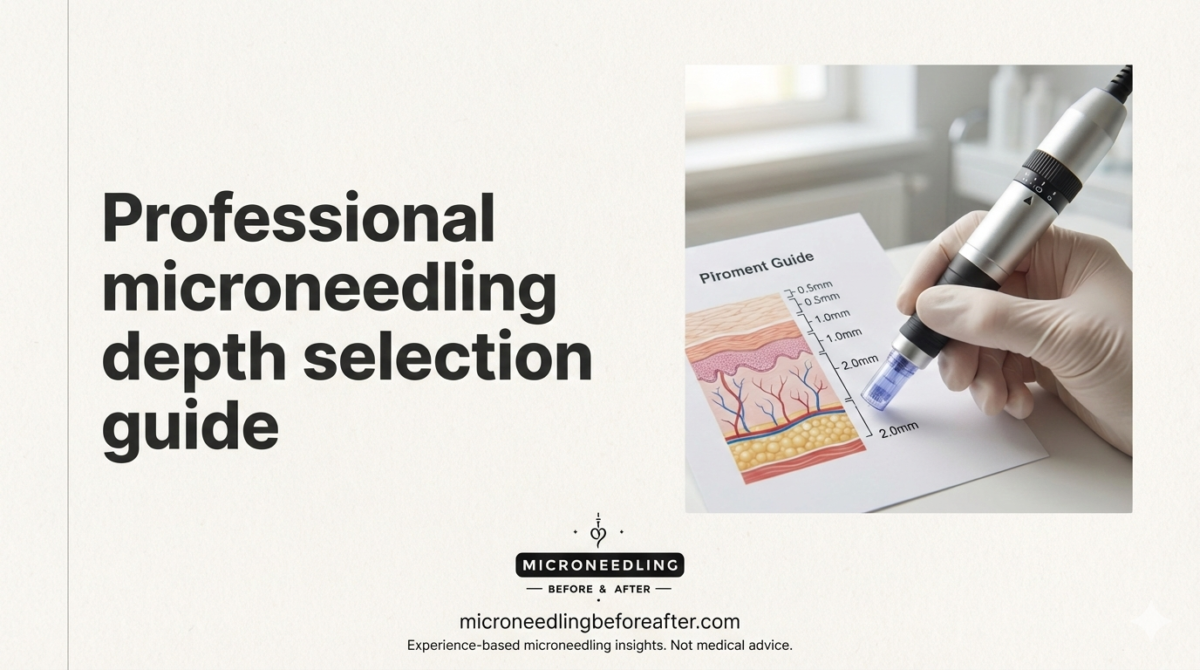
I use the following table as a quick reference for the anatomical target at various needle lengths and the common indications for those depths.

Needle length (mm) Tissue target Common indications Clinical notes
0.25 Stratum corneum + superficial epidermis Enhanced topical penetration, maintenance, minimal irritation No significant dermal injury; safe for daily/weekly topical delivery
0.5 Epidermis to superficial papillary dermis Fine lines, superficial pigment, superficial acne scars Minimal bleeding; topical agents absorb more effectively
0.75–1.0 Papillary dermis Superficial scarring, mild textural irregularities, periocular rejuvenation Often used for periorbital area; minimal downtime
1.25 Superficial to mid dermis Mild-to-moderate acne scarring, rhytids, photoaged skin May cause pinpoint bleeding; use topical anesthetic
1.5 Mid dermis Moderate acne scars, deeper lines, collagen induction Increased erythema and downtime; cervicofacial caution
2.0 Mid to deep dermis Deeper rolling/boxcar scars, significant laxity adjunct Expect bleeding and crusting; consider local anesthesia for sensitive areas
2.5 Deep dermis Thick scar remodeling, body scars, hypertrophic scar modulation Higher complication risk; operator experience required
3.0+ Deep reticular dermis/subcutis Severe scars, select body applications Use with extreme caution; potential for scarring and bleeding

I use needle lengths conservatively on the face and increase depth slowly when treating thicker-skinned regions or body scars.

Depth selection by facial zone

I select depth according to skin thickness and functional anatomy of each facial zone. The following table provides a zone-based approach I use routinely.

Facial zone Typical skin thickness considerations Recommended depth range (mm) Notes
Forehead Thicker central forehead; thinner lateral areas near temples 0.5–1.5 Use lower depths near hairline/temples to avoid periosteal contact
Glabella Thin, high risk of bruising 0.25–0.75 Avoid excessive pressure; small increments only
Periorbital (upper/lower eyelids) Very thin skin, prone to edema 0.25–0.75 0.25–0.5 for lateral crow’s feet; 0.5–0.75 for infraorbital folds with caution
Cheeks Thicker skin with substantial subcutaneous tissue 1.0–2.0 Good area for collagen induction; deeper depths for rolling scars
Nasolabial folds Moderate thickness, repetitive motion 1.0–1.5 Avoid excessive trauma near orbicularis oris fibers
Perioral / upper lip Thin, high mobility 0.5–1.5 Caution near vermilion border and mucosa
Nose Thicker sebaceous skin with potential oiliness 0.5–1.5 Not typically treated deeply due to vasculature and cartilage proximity
Chin / jawline Variable thickness, often thicker in men 1.0–2.0 Possible deeper penetration for scar remodeling
Neck / décolletage Thin, sun-damaged skin; higher risk of PIH 0.5–1.5 Use conservative depths and fewer passes
Hands Thin, sun-exposed skin with minimal subcutaneous padding 0.5–1.5 Treat conservatively to avoid tendinous injury

I always assess individual variability and adjust depths on the fly; I document exact settings per zone in each chart.

Depth selection by indication

I tailor depth to the target pathology rather than applying one uniform depth to the entire face. Below I summarize common indications with depth ranges and treatment rationale.

Indication Typical depth range (mm) Rationale
Superficial fine lines 0.25–0.75 Targets epidermal turnover and superficial collagen; minimal downtime
Moderate rhytids 0.75–1.5 Engages papillary and upper reticular dermis for collagen stimulation
Atrophic rolling scars 1.5–2.5 Penetrates deep dermis to remodel dermal planes and stimulate robust neocollagenesis
Boxcar scars 1.0–2.0 Varies by depth; need contraction and collagen deposition beneath defect
Icepick scars Microneedling alone often inadequate I recommend combination with focal procedures (TCA CROSS, subcision)
Melasma / pigmentation 0.25–0.75 (with caution) Superficial levels to enhance ingredient penetration; avoid aggressive depths that increase PIH risk
Hypertrophic scars/keloids Cautious use; often avoid >1.5 mm I consider microneedling combined with intralesional therapies; monitor for exacerbation
Alopecia (androgenetic) 0.5–1.5 Penetrates to follicular bulge region; combined with topical/PRP yields better outcomes

I avoid treating melasma with deep, repeated injury alone; I prioritize adjuvant topical therapies and conservative depths to reduce PIH risk.

Patient factors that influence depth

I incorporate patient age, skin thickness, Fitzpatrick phototype, prior procedures, medications, and scar maturity when selecting depth. Younger skin with robust healing may tolerate deeper depths, while darker phototypes require conservative approaches to minimize post-inflammatory hyperpigmentation (PIH).

Fitzpatrick skin type considerations

I proceed cautiously with Fitzpatrick IV–VI, using shallower depths, fewer passes, and strong post-procedure sun protection. I inform patients of PIH risk and consider prophylactic stabilizing topical regimens (e.g., hydroquinone, azelaic acid) before treatment when appropriate.

Scar age and type

I treat mature scars differently than immature scars; older scars typically respond better to mechanical remodeling with deeper penetration. Iier scars may require staged approaches—subcision first, then microneedling later.

Anesthesia and pain management

I select topical anesthetics for superficial to moderate depths and combine topical anesthetic with localized infiltration or nerve blocks for deeper treatments. I allow adequate contact time for topical agents (usually 30–60 minutes) and monitor for allergic reactions.

Hemostasis and bleeding considerations

I counsel patients about expected pinpoint bleeding with depths ≥1.25 mm and prepare hemostatic supplies. I avoid anticoagulants when possible; if patients must continue them, I select shallower depths or delay treatment.

Treatment parameters: passes, speed, and clinical endpoints

Depth is only one parameter; the number of passes, speed, pressure, and endpoint significantly influence outcomes. I generally perform 2–4 passes per zone, adjusting based on response and bleeding.

Clinical endpoints

I use erythema, uniform punctate bleeding, and transient edema as endpoints. The appearance of confluent bleeding, bruising, or severe pain suggests overtreatment and prompts modification.

Endpoint observed Implication Action
Mild erythema, no bleeding Superficial injury Proceed with planned topical application
Pinpoint bleeding (uniform) Dermal engagement Consider reducing pressure on next pass; stop if excessive bleeding
Ecchymosis/bruising Vascular injury Apply cold compression; document and counsel patient
Petechiae or non-uniform bleeding Excessive trauma Halt treatment; provide supportive care

I train staff to recognize endpoints and adjust the device to prevent complications.

Safety profile and complications

I emphasize that microneedling is generally safe in skilled hands but not without risks. The most common complications include transient erythema, edema, infection, scarring, and PIH.

Infection control and sterilization

I adhere to strict aseptic technique, use sterile single-use cartridges, and avoid rolling devices that are harder to sterilize between patients. I counsel patients to avoid swimming, soaking, or heavy makeup for 24–48 hours to reduce infection risk.

Pigmentary risk and scarring

I take additional precautions in patients with darker skin types and those with a history of hypertrophic scarring. If excessive pain or delayed healing occurs, I intervene early and adjust future treatment depth.

Combination therapies and depth interaction

I commonly combine microneedling with platelet-rich plasma (PRP), topical growth factors, chemical peels, lasers, and fillers. Depth selection influences absorption and synergy: deeper channels increase delivery of topicals but also raise infection and PIH risk.

PRP and growth factor augmentation

I often apply PRP immediately after microneedling to exploit transdermal delivery through microchannels. For deeper protocols (≥1.5 mm), I ensure sterile technique and consider limiting PRP volume to avoid excess oozing.

Chemical peels and lasers

I sequence therapies carefully: I typically space aggressive chemical peels and ablative lasers apart from deep microneedling sessions to reduce cumulative injury. When combining nonablative lasers or light-based devices, I may reduce microneedling depth to limit downtime.

Treatment intervals and expected course

I plan intervals based on depth and biologic remodeling timelines. Deeper treatments require longer intervals to allow collagen maturation, while superficial treatments can be repeated more frequently.

Depth range (mm) Typical interval between sessions Number of sessions (typical)
0.25–0.5 2–4 weeks 4–8 for maintenance or topical delivery
0.75–1.25 4–6 weeks 3–6 for rhytids/photoaging
1.5–2.5 6–12 weeks 3–6 for scar remodeling, longer hemostasis
≥3.0 12+ weeks Case-dependent; fewer sessions, careful monitoring

I individualize the course based on response and tolerance; objective photography guides progress.

Pre-treatment assessment and preparation

I perform a detailed medical and dermatologic history, assess prior procedures, and review medications, especially anticoagulants and isotretinoin. I recommend pre-treatment topical regimens (e.g., retinoid tapering, infection prophylaxis when indicated) and consider starting antiviral prophylaxis for patients with a history of herpes simplex.

Isotretinoin and procedural timing

I typically defer microneedling for 6–12 months after isotretinoin therapy, following conservative surgical guidelines to reduce scarring risk. For lower depths, some clinicians consider shorter waits, but I prefer the more conservative timeline.

Post-treatment care and protocols

I provide clear post-treatment instructions to optimize healing and prevent complications. I emphasize gentle cleansing, moisture, avoidance of active exfoliants, and strict photoprotection.

Immediate post-care

I instruct patients to avoid irritating topicals for 24–72 hours and to use sterile saline or gentle cleanser for the first 24 hours. I recommend emollient barrier creams and plain sunscreen once the barrier permits application.

Return-to-activity and makeup

I advise avoiding strenuous exercise, sweating, and swimming for 24–48 hours to reduce infection risk. I allow mineral makeup after 24–48 hours if there is no open bleeding; otherwise I recommend waiting until re-epithelialization.

Documentation and informed consent

I document baseline photographs, exact depth settings by zone, number of passes, anesthesia used, and any immediate adverse events. I obtain explicit informed consent that details expected outcomes, downtime, and potential complications including PIH and infection.

Counseling points I include in consent

I discuss realistic outcomes, the need for multiple sessions, alternative treatments, and management of complications. I ensure patients understand that deeper treatments carry longer downtime and higher, albeit manageable, risk.

Special clinical scenarios

Some patients present with complex needs that require adapted protocols. I outline common scenarios and my typical approach.

Active acne or inflamed lesions

I avoid treating active inflammatory acne with microneedling until lesions are controlled. For isolated nodules or cysts, I treat underlying acne flare first; microneedling over active pustules increases infection risk.

Melasma-prone patients

I approach melasma conservatively with shallow depths and pre- and post-treatment topical stabilization. I favor adjunctive modalities and minimize epidermal/dermal injury to reduce recurrence risk.

Recent fillers or implants

I avoid microneedling directly over recent dermal fillers for at least 2 weeks to reduce infection and filler migration risk; for deep fillers I may extend that interval. I record filler type and location and tailor depth accordingly.

Managing complications

When complications occur, early identification and management reduce morbidity. I maintain low threshold for intervention.

Infection

I treat suspected bacterial infection promptly with appropriate antibiotics, culture when indicated, and consider topical or oral antivirals for herpes simplex reactivation. I counsel patients to return if worsening redness, pain, or drainage occurs.

Post-inflammatory hyperpigmentation (PIH)

I begin topical bleaching agents and strict photoprotection for PIH and consider adding chemical exfoliants once re-epithelialized. I avoid further aggressive treatments until pigment stabilizes.

Scarring and keloid formation

I refer suspected hypertrophic scarring or keloids for intralesional therapy and laser options. I avoid further microneedling over evolving keloids and consider corticosteroid injections and pressure/ silicone therapy.

Sample protocols I use clinically

I provide concise, actionable protocols for common scenarios to illustrate how I combine depth, anesthesia, and follow-up.

Protocol: Superficial photoaging and fine lines

  • Depth: 0.5–1.0 mm across face (0.25–0.5 mm periocular).
  • Passes: 2–3 passes at moderate speed.
  • Anesthesia: Topical anesthetic for 30–45 minutes.
  • Interval: 4–6 weeks; 4 sessions.
  • Adjuncts: Apply growth factor serum or peptide-rich topical immediately.

I choose this conservative approach for minimal downtime and visible skin texture improvement.

Protocol: Moderate acne scarring (rolling/boxcar)

  • Depth: 1.5–2.0 mm on cheeks and scarred zones; 1.0 mm elsewhere.
  • Passes: 3–4 passes until uniform pinpoint bleeding.
  • Anesthesia: Topical anesthetic plus regional nerve blocks as needed.
  • Interval: 6–8 weeks; typically 3–6 sessions.
  • Adjuncts: Consider PRP application post-needling; plan for subcision first if tethering is present.

I stage subcision and deeper microneedling to optimize scar release and remodeling.

Protocol: Periorbital rejuvenation

  • Depth: 0.25–0.75 mm in infraorbital and lateral canthal zones.
  • Passes: 2 passes with light pressure.
  • Anesthesia: Topical; avoid heavy anesthetic near eyes.
  • Interval: 4–6 weeks; 3–6 sessions.
  • Adjuncts: Use topical peptides and sunscreen; avoid topical irritants for 48–72 hours.

I avoid deep penetration in this region to prevent edema and pigmentary complications.

Protocol: Hands and décolletage skin quality

  • Depth: 0.5–1.0 mm for hands; 0.75–1.5 mm for décolletage depending on thickness.
  • Passes: 2–3 passes.
  • Anesthesia: Topical anesthetic for 30–45 minutes.
  • Interval: 4–8 weeks; 4–6 sessions.
  • Adjuncts: PRP can be beneficial for hands and chest to improve skin thickness.

I counsel patients about slower improvement and emphasize photoprotection.

Practical tips and workflow efficiencies

I standardize settings, photo documentation, and consent templates to streamline workflow. I pre-fill topical anesthetic in designated timeslots and ensure cartridges are single-use and disposed properly.

Charting example

I record: device make/model, cartridge size, depth per zone (e.g., R cheek 2.0 mm, L cheek 2.0 mm, periorbital 0.5 mm), number of passes, anesthesia type and duration, adjuncts applied, and immediate reaction.

I use this documentation to compare outcomes and iterate protocols.

Evidence and limitations

I emphasize that microneedling literature includes variable methodologies and device types; direct comparisons across studies are limited. I apply clinical reasoning and patient-specific factors to interpret the evidence and guide depth selection.

Quality of evidence

Randomized controlled trials exist for certain indications (e.g., acne scars, atrophic scars), but heterogeneity in protocols means that clinician judgment remains important. I integrate peer-reviewed data with practical experience when creating treatment plans.

Final considerations and clinical judgment

I stress that depth selection is dynamic and must reflect patient anatomy, indication, and tolerance. I err on the side of conservative treatment for first sessions, progressively titrating depth and passes in subsequent visits as tolerated and as results dictate.

When to refer or collaborate

I refer patients with complex scarring, suspected keloid tendency, or active dermatologic disease to a dermatologist or plastic surgeon if I anticipate high-risk management. Multidisciplinary care often improves outcomes for challenging cases.

Conclusion

I recommend a methodical, zone-specific approach to depth selection rooted in anatomy, indication, and patient factors. By documenting settings, monitoring endpoints, and applying conservative progression, I can maximize efficacy while minimizing complications for my microneedling patients.

If you would like, I can provide printable depth-per-zone cheat sheets, templated consent language, or stepwise protocols adapted to your clinic’s device and patient demographics.
Why At-home Microneedling Causes Irritation

Learn why at-home microneedling often causes redness, stinging, or infection—common mistakes, needle and hygiene risks, plus aftercare to reduce irritation now.

Have I ever used an at-home microneedling tool and wondered why my skin reacted so strongly afterward?

Why At-home Microneedling Causes Irritation

I want to explain clearly why at-home microneedling often leads to irritation, because I’ve seen and heard many stories from people who expected calm recovery and instead got redness, stinging, or worse. I’ll break down the mechanics, the common mistakes, and realistic ways I use (or recommend) to reduce the risk of problems.

My perspective and why this matters

I’ve researched microneedling and followed clinical guidance, and I’ve also talked with people who tried derma rollers and pens at home. I care that readers understand both the benefits and the hazards, so they can make safer decisions.

What microneedling is

Microneedling intentionally creates tiny controlled injuries in the skin using fine needles to stimulate collagen, elastin, and wound-healing responses. I find it helpful to think of it as a controlled reset for the skin’s repair mechanisms that can improve texture, scarring, and product absorption.

How at-home devices differ from professional treatments

Professional microneedling is performed by trained clinicians using medical-grade pens, sterile technique, and appropriate needle lengths tailored to the treatment. I want to stress that at-home devices are typically shorter in needle length and lower in quality control, and they lack the clinical judgment that prevents over-treatment or unsafe use.

Common types of at-home devices

I often see three main categories of devices people use at home: derma rollers (manual rolling devices), battery-powered microneedle pens, and disposable single-use rollers or stamp-style tools. Each one carries different risks in terms of pressure control, sterility, and consistency of treatment.

How microneedling affects the skin

When the skin is punctured by needles, keratinocytes and fibroblasts respond by releasing growth factors and cytokines that promote collagen remodeling and repair. I emphasize that this process is beneficial in controlled settings, but if the injury is excessive or contaminated, it becomes a pathway to irritation, prolonged inflammation, or infection.

Major reasons at-home microneedling causes irritation

I’ll list and explain the most common reasons I see for irritation after at-home use, and I’ll describe how each factor contributes to the problem in a practical way. I want you to be able to identify which factors apply to your situation.

Improper needle length for home use

I know people often think longer needles equal better results, but longer needles increase the depth of injury and the risk of irritation, bleeding, and scarring. I recommend cautious selection and understanding that in many cases, shorter needles (0.25–0.5 mm) are appropriate for improving product absorption and texture without excessive trauma.

Excessive treatment frequency

I’ve seen people microneedle daily or several times a week, believing quicker results will come from more treatments. The skin needs time to heal, and over-treating causes cumulative inflammation, barrier breakdown, and persistent redness.

Poor device quality and non-sterile tools

Low-quality needles that are blunt or uneven can tear the skin rather than create precise punctures, and reused rollers that aren’t sterilized become a breeding ground for bacteria. I always say: the device’s quality and cleanliness are fundamental; a cheap or dirty tool is likely to cause irritation or infection.

Inadequate hygiene and contamination risk

If I don’t clean my tool properly or if I use it on wet or unclean skin, I increase the chance of introducing microbes into microchannels. I’ve seen fungal, bacterial, and herpetic reactivations after microneedling because the barrier was breached while pathogens were present.

Incorrect pressure and poor technique

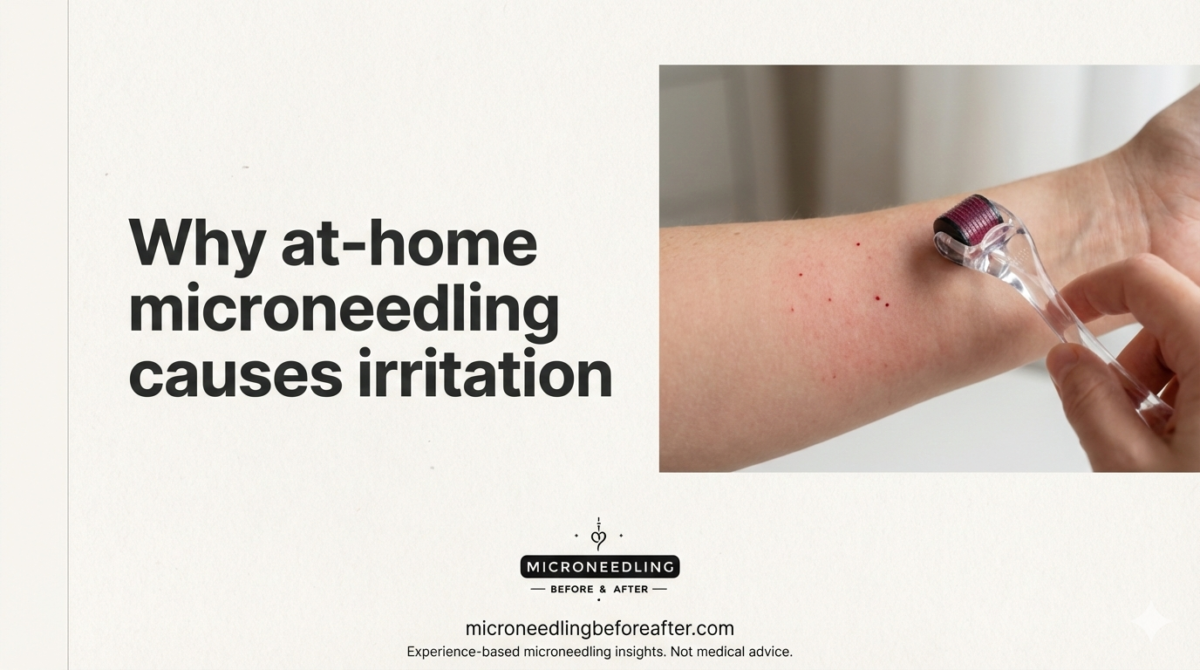
Applying too much pressure or dragging the device unevenly causes excessive trauma in focal areas. When I press hard or use inconsistent strokes, I see pinpoint bleeding and prolonged inflammation—both of which are common causes of longer-lasting irritation.

Treating active acne, rosacea, or inflammatory skin issues

If I microneedle through an active inflammatory lesion such as acne or a rosacea flare, I risk spreading bacteria and increasing inflammation. I avoid needling through active disease because it provokes worsening of the condition and more irritation.

Combining microneedling with active topical ingredients incorrectly

Some ingredients like retinoids, AHAs, and high-concentration vitamin C used immediately before or after microneedling amplify irritation. I make sure to pause strong actives before treatment and postpone introducing them again until the barrier is restored, because otherwise they increase stinging and sensitivity.

Underlying sensitivity or allergy to products used post-procedure

I’ve seen products marketed as “soothing” that contain fragrances, alcohol, or botanical extracts that trigger allergic or irritant reactions on freshly punctured skin. I recommend using minimal, well-tolerated post-care products because the compromised skin is more reactive.

Lack of knowledge about anatomy and contraindications

I’ve noticed that without understanding areas like thin periorbital skin or lesions prone to scarring, people may treat risky zones inappropriately. I argue that education about safe zones and contraindications is critical to avoid permanent irritation or pigment changes.

Sun exposure before and after treatment

If I expose my treated skin to UV radiation soon after microneedling, I increase the risk of hyperpigmentation and prolonged inflammation. I always plan treatments around sun protection and avoid outdoor exposure for several days.

Sharing devices and reusing single-use tools

Using someone else’s device or reusing single-use tools dramatically raises infection risk. I’m clear: microneedling tools are personal and, for many devices, should not be reused without professional-level sterilization.

Needle length, intended use, and irritation risk

I’ll present a table that summarizes typical needle lengths used at home versus professional use, their common applications, and the relative irritation and safety risk I associate with each option. I find visual summaries help when choosing a device.

Needle length Typical home/professional use Common results Relative irritation/risk
0.15–0.25 mm At-home use for product absorption Minimal injury, transient redness Low
0.3–0.5 mm At-home devices; improve texture and serum penetration Mild micro-injury, short recovery Low–Moderate
0.6–1.0 mm Advanced home devices or professional superficial treatments More collagen stimulation, higher potential for bleeding Moderate–High
1.0–2.5 mm Professional-only for deep scars, wrinkles Significant tissue injury, requires anesthesia High; not for home

I created this table to help me recommend that most people stick to the lower end of the at-home range, because the risk-benefit profile becomes unfavorable as needle length increases.

Signs and symptoms of irritation and when I get concerned

I want you to recognize the difference between expected transient redness and signs that require stopping treatment or seeing a clinician. I’ll list symptoms and urgency so you can make informed decisions about care.

Common, expected immediate effects

I typically expect mild erythema (redness), slight swelling, and tightness for a day or two after an appropriate at-home session. These symptoms should gradually improve and respond to gentle soothing care.

Concerning or severe symptoms

If I see increasing pain, spreading redness, pus, fever, dark discoloration, or blisters, I consider these red flags that suggest infection, herpetic reactivation, or a severe reaction. I seek medical evaluation promptly whenever those signs appear.

Table: Symptoms and action to take

Symptom Likely cause What I would do
Mild redness, warmth, slight swelling Normal inflammatory response Continue gentle care; observe
Persistent redness >72 hours Prolonged inflammation or irritant reaction Pause treatments; use soothing regimen; consult if not improving
Increasing pain, pustules, fever Infection Stop treatments; see medical provider urgently
Blistering, dark hyperpigmentation Severe reaction or post-inflammatory change Stop treatments; see dermatologist
Intense itching with rash Allergic contact dermatitis Discontinue products; consider antihistamine; see clinician if severe

I put this table together so I—and you—can quickly decide whether a reaction is routine or requires professional help.

How product selection and timing contribute to irritation

Choosing the right post-procedure products and timing their use is something I take seriously because it impacts healing and irritation risk. I’ll explain which ingredients I avoid and which I find safe.

Ingredients to avoid immediately after microneedling

I avoid retinoids, high-concentration AHAs/BHAs, strong vitamin C formulations, alcohol-based toners, and fragrances directly after needling because they worsen stinging and barrier disruption. I recommend waiting several days to a week, depending on the needle length and how the skin looks.

Ingredients I typically recommend for soothing and healing

I usually select simple ingredients: sterile saline, hyaluronic acid (low concentration), barrier-repair ceramides, panthenol (pro-vitamin B5), and non-fragranced mineral sunscreen after initial recovery. I find these promote hydration and barrier repair without provoking irritation.

Timing: when I reintroduce actives

I generally reintroduce gentle actives like low-strength vitamin C or azelaic acid after 3–7 days if the skin looks healed, but I delay retinoids and strong acids for at least 7–14 days, or until my clinician advises. I also recommend doing a patch test on an uninjured area before returning to a full-face routine.

Prevention: how I reduce the chance of irritation

I’ll outline a practical protocol I follow or recommend to minimize irritation when using at-home microneedling. I prefer clear steps that people can realistically implement.

Device selection and quality check

I choose a reputable brand, preferably with disposable needle cartridges for pens or sterilizable single-use rollers that are confirmed medical-grade stainless steel. I check that needles are thin, sharp, and consistent; blunt or bent needles are unacceptable in my view.

Pre-treatment skin prep I use

I make sure my skin is clean, free of active infections, and not recently exposed to strong exfoliants or retinoids. I cleanse with a gentle, non-irritating cleanser, pat dry, and avoid topical actives for several days leading up to the session.

Technique and pressure control I practice

I use gentle, even pressure, and I never force the device into the skin. I work section by section and stop if I note pinpoint bleeding, because bleeding indicates I’ve gone too deep or pressed too hard.

Hygiene and sterilization routine I follow

I sterilize tools with isopropyl alcohol according to manufacturer guidance, and I do not reuse disposable rollers. I also clean my hands, use fresh towels, and store devices in a clean case to reduce contamination risk.

Frequency and realistic expectations I set

I schedule microneedling sessions at an interval appropriate for the needle length—0.25–0.5 mm sessions every 2–4 weeks as a conservative approach, and longer intervals if using deeper needles. I temper expectations by noting that cumulative improvements take months, and more frequent treatments do not accelerate safe progress.

Aftercare: a step-by-step routine I recommend

I’ll provide a stepwise aftercare routine that I find effective in most cases to minimize irritation and promote healthy healing. Consistency matters more than fancy products.

Immediate (first 24 hours) care

Immediately after treatment I apply sterile saline or a non-sensitizing hydrating serum and avoid makeup, strong topical actives, and hot water. I also avoid sweating and strenuous exercise to reduce infection risk.

Short-term (24–72 hours) care

During days 1–3 I keep my routine simple: gentle cleansing, a simple hydrating cream with ceramides and panthenol, and sunscreen if I must go outside. I avoid exfoliants, retinoids, and alcohol-containing products during this period.

Mid-term (3–7 days) care

Between days 3 and 7 I slowly reintroduce mild products and avoid physical or chemical exfoliation until the skin feels normal. If any signs of irritation persist, I extend the soothing phase and delay active ingredients.

Long-term (>7 days) care

After a week or more—depending on how the skin looks—I gradually reintroduce my full routine, starting with the least irritating active and monitoring for reaction. I maintain daily sun protection to prevent post-inflammatory hyperpigmentation.

Table: Quick aftercare checklist

Timeframe Do Don’t
0–24 hrs Sterile saline, gentle hydration, no makeup Avoid actives, makeup, sweating
24–72 hrs Gentle cleansing, barrier repair creams, sunscreen if needed No retinoids, AHAs/BHAs, or alcohol
3–7 days Reintroduce gentle actives if healed No aggressive exfoliation
>7 days Return to normal routine gradually Avoid harsh procedures until fully recovered

I use this checklist to keep post-treatment care simple and consistent for safer recovery.

Specific populations and special considerations I watch for

Not every skin type tolerates microneedling the same way, and I pay attention to individual differences that change the risk profile. I’ll describe people who should generally avoid at-home microneedling or take extra precautions.

Sensitive skin and rosacea

If I have sensitive skin or active rosacea, I avoid microneedling at home because the procedure can trigger prolonged flushing, inflammation, and worsening symptoms. I usually refer people with these conditions to a dermatologist for tailored, gentler in-office approaches.

Darker skin tones (risk of hyperpigmentation)

For darker skin tones, I’m cautious because any inflammation increases the risk of post-inflammatory hyperpigmentation (PIH). I recommend conservative needle lengths, excellent sun protection, and pre-treatment guidance from a dermatologist.

Acne-prone or infected skin

When I have active acne or open lesions, I skip microneedling because needling through inflamed pustules spreads bacteria and worsens infection. I treat the underlying acne first and reconsider microneedling only when inflammation is controlled.

History of keloids or hypertrophic scarring

If I know I’m prone to keloids or hypertrophic scars, I generally avoid microneedling at home because trauma can provoke abnormal scarring. I involve a specialist to assess safety before proceeding.

Use during pregnancy or breastfeeding

I exercise caution during pregnancy and breastfeeding because the hormonal changes can affect skin sensitivity and healing, and because many topical actives need to be avoided. I often recommend postponing elective at-home procedures during these times.

What to do if irritation develops despite precautions

I’ll give practical steps I follow or advise if irritation happens, because early and appropriate response can prevent escalation. I aim to provide a simple escalation plan.

Immediate steps I take

I stop microneedling immediately and halt potentially irritating products. I switch to a simple soothing regimen: gentle cleanser, sterile saline, and a bland moisturizer with ceramides and panthenol.

When to use antibiotics or antivirals

If I see signs of bacterial infection (increasing pain, pus, fever), I seek medical evaluation because topical or oral antibiotics may be necessary. If I have a history of cold sores and I notice grouped vesicles, I contact my clinician for possible antiviral therapy promptly.

When to use anti-inflammatory treatments

For persistent inflammation, a clinician may recommend topical corticosteroids for a short period or other anti-inflammatory therapies; I follow medical guidance because steroids have risks if used incorrectly. I personally avoid self-prescribing potent steroids on compromised skin without professional advice.

When to expect gradual recovery

I expect most mild irritations to settle over several days with conservative care, but I allow up to 2 weeks for full resolution depending on needle depth and skin response. If symptoms worsen or do not improve, I don’t hesitate to seek dermatologic evaluation.

Alternatives to at-home microneedling I sometimes recommend

When I’m concerned about risks or if someone has a condition that makes at-home needling inadvisable, I suggest safe alternatives that offer many benefits without the same level of risk.

Professional microneedling (medical setting)

I often recommend professional microneedling because clinicians can safely use longer needles, sterile technique, and adjunctive therapies, and they can manage complications. A professional setting reduces many of the key risks associated with unsupervised treatments.

Non-needling options for collagen stimulation

I suggest options like fractional radiofrequency, chemical peels (with clinician oversight), or topical retinoid programs for people who want gradual improvement without puncturing the skin. I find these alternatives can be effective when matched to skin type and tolerance.

Superficial home treatments that aid texture and absorption

For daily maintenance, I recommend gentle exfoliants used correctly, low-concentration vitamin C serums, and niacinamide-based moisturizers that help texture and tone with less barrier disruption. I emphasize consistency over aggressive home procedures.

Practical checklist I use before attempting at-home microneedling

I provide a concise checklist that I follow before each session to make sure I’m minimizing risk. Having a checklist prevents impulsive or unsafe treatments.

  • Confirm skin is free of active infection, open lesions, or acne flares.
  • Verify the device is medical-grade, needles are intact, and storage is clean.
  • Avoid retinoids and strong acids for at least 3–7 days prior.
  • Cleanse thoroughly and work in a clean, low-contamination area.
  • Use conservative needle length and gentle pressure.
  • Prepare a simple post-care kit: sterile saline, bland moisturizer, sunscreen.
  • Plan schedule to avoid sun exposure and strenuous activity for several days.

I use this checklist to keep treatments safe and reproducible.

Common myths I dispel from my experience

I want to correct a few widespread beliefs that lead to problems during at-home microneedling, because misinformation increases risk. I’ll clarify the facts I rely on.

Myth: Longer needles always give better results

I disagree with this—longer needles increase risks and should be reserved for clinicians. I prioritize safe, gradual improvements with minimal complications over aggressive self-treatment.

Myth: More frequent treatments speed results

I find that over-treatment impairs healing and counteracts collagen formation. I recommend reasonable intervals that respect the skin’s healing timeline.

Myth: Disinfecting with quick sprays is enough

I insist on proper sterilization protocols; quick surface sprays may not eliminate all organisms. I follow manufacturer sterilization steps and discard single-use devices.

When I recommend stopping at-home microneedling altogether

I’ll list clear situations where I stop recommending at-home microneedling and direct people to see professionals instead. Safety comes first in my guidance.

  • Persistent or worsening skin irritation despite conservative care.
  • History of severe scarring or keloid formation.
  • Active inflammatory skin disease (severe acne, uncontrolled rosacea, eczema flares).
  • Pregnancy with unstable skin sensitivity or clinician advice to avoid elective procedures.
  • Recurrent infections or poor wound healing. I prefer medical oversight when any of these factors are present.

Final thoughts and practical takeaways

I hope this detailed guide helps you understand why at-home microneedling often causes irritation and how I work to reduce those risks. I encourage careful device selection, conservative technique, excellent hygiene, and a simple post-care routine—and I don’t hesitate to recommend professional care when needed.

Quick summary I keep in mind

Start with short needles, space treatments sensibly, avoid active actives around the session, keep everything immaculately clean, and stop if unusual symptoms arise. I believe that with the right precautions, at-home microneedling can be used safely by some, but it’s not risk-free and demands respect for the skin’s healing process.

How Often Should Beginners Microneedle At Home

Beginner’s guide to at-home microneedling: safe frequencies, needle lengths, aftercare, and schedules to get results without damaging your skin. Start safely.!!

Have I ever told you how often a beginner should microneedle at home?

How Often Should Beginners Microneedle At Home

I’m going to walk through everything I’ve learned and recommend about at-home microneedling frequency, safety, and practical steps. I’ll explain how needle length, skin condition, device type, and aftercare all affect how often I think someone should treat their skin. My goal is to give a clear, realistic plan so a beginner can start safely and get results without causing harm.

Understanding Microneedling and Why Frequency Matters

I see microneedling as a controlled way of encouraging the skin to repair itself by creating tiny micro-injuries that trigger collagen and elastin production. The frequency matters because the skin needs time to repair, rebuild, and respond to the procedure. If I microneedle too often, I risk chronic inflammation, barrier damage, and impaired results.

I want to emphasize that frequency isn’t a one-size-fits-all answer. I always consider needle length, skin sensitivity, existing conditions, and the goal of treatment before recommending how often to microneedle.

How microneedling works (in plain terms)

I think of microneedling as sending a short-term signal for long-term repair. The needles create microchannels that prompt inflammation, then remodeling, then strengthening of the skin’s structure. That whole cycle takes time, which is why timing between sessions is critical.

I also consider that different results—like product absorption, collagen induction, or treating scars—have different optimal protocols. I tailor frequency to those goals.

Needle Length, Device Type, and Recommended Frequency

I believe the most important determinants of safety and frequency are needle length and whether the device is a dermaroller or a microneedling pen (dermapen). Shorter needles cause less trauma and can be used more often; longer needles require more recovery time and professional oversight.

Below I provide a practical table I use when deciding on frequency. This is a general guide and not a substitute for medical advice.

Needle length (mm) Typical at-home device Typical use / goals Recommended interval for beginners Expected downtime
0.15–0.25 mm Cosmetic rollers/pens Improve product absorption, light texture Every 2–3 days or up to 2–3 times per week Minimal (a little redness)
0.3–0.5 mm Dermaroller / dermapen Texture, fine lines, mild pigmentation Every 1–2 weeks (start every 2 weeks) 24–48 hours redness/sensitivity
0.5–1.0 mm Dermapen (some claim at-home use) Scar improvement, deeper texture Every 3–4 weeks (start every 4 weeks) 2–4 days of redness, mild swelling
1.0–1.5 mm Advanced devices (often professional) Moderate scarring, stretching Usually professional use; if at home, >6 weeks 4–7+ days
>1.5 mm Professional only Deep scarring, stretch marks Professional only; spaced 6–12 weeks 1–2 weeks or more

I personally recommend beginners start at the shorter end of this range, often with 0.25–0.5 mm, and err on the side of longer recovery between sessions until they understand their skin’s response.

Why I Recommend Starting Conservatively

When I coach someone new to microneedling, I always recommend starting conservatively. The reasons I do this are simple: the skin barrier is delicate, inflammation can linger, and cumulative damage is the main risk of overdoing it. I’d rather a beginner take more time to see safe, steady improvements than push too hard and need to pause treatments because of irritation or infection.

I also find that many people see meaningful product-absorption benefits and mild texture improvement from the gentlest settings, so there’s little reason to start aggressive.

A Beginner’s Microneedling Schedule I Use

I typically suggest the following starter schedule for someone who’s never microneedled and wants to do it safely at home:

  • Weeks 1–4: Use a 0.25 mm device once every 5–7 days (or 2–3 times in the first month). I do this to assess tolerance and reduce risk.
  • Weeks 5–12: If skin tolerated the first month with no prolonged redness or irritation, I might step up to 0.5 mm once every 2–3 weeks for one or two sessions to address texture or fine lines.
  • After 3 months: If I see good response and minimal side effects, I either continue 0.5 mm every 3–4 weeks or consider a professional session for deeper work. I avoid doing 0.5 mm more frequently than every 2 weeks unless supervised by a professional.

I always advise keeping a log of each session, including needle length, device, areas treated, and reactions. That helps me make safe adjustments.

Preparing to Microneedle: My Pre-Session Checklist

I prepare carefully before every session, and I recommend other beginners do the same. Good preparation reduces infection risk and improves outcomes.

My checklist:

  • Clean skin thoroughly with a gentle cleanser to remove makeup, sunscreen, and oils.
  • Disinfect the device per manufacturer instructions (typically with 70% isopropyl alcohol for rollers and pens).
  • Avoid microneedling if I have active acne, cold sores, open wounds, sunburn, or infection on the treatment area.
  • Avoid blood-thinning medications (aspirin, NSAIDs) within a day or two if medically safe—though I always advise checking with a healthcare provider.
  • Have post-care products ready: gentle cleanser, sterile saline or hydrating serum (low-irritant hyaluronic acid), and a sunscreen.

I also clean my hands and work on a sterile surface. I never microneedle after drinking alcohol or when very tired, because my immune response can be altered.

Device preparation and hygiene

I take sterilization seriously. I replace rollers or heads according to the manufacturer’s timeline and never share devices. For disposable needle cartridges I use a fresh one each session. For reusable rollers, I clean and store them in a clean case.

I’m careful about storage—humidity and dust can contaminate devices. I keep mine dry and in a sealed container.

How I Perform a Simple At-Home Microneedling Session

I’ll describe the basic steps I use when treating my face with a 0.25–0.5 mm device. I follow a gentle technique and track the time on each zone to avoid overworking one area.

  1. Cleanse: I wash my face with a mild, non-exfoliating cleanser and pat dry.
  2. Disinfect device: I wipe the roller or pen head with 70% isopropyl alcohol and let it air dry.
  3. Section the face: I mentally divide my face into zones—forehead, cheeks, nose, chin—and treat each zone systematically.
  4. Technique: I roll or stamp in one direction over each zone 4–6 times, then rotate direction (horizontal/vertical/diagonal) for even coverage. I avoid pressing hard; a light, even pressure is enough.
  5. Time per zone: I limit each zone to 1–2 minutes for 0.25–0.5 mm to prevent excess trauma.
  6. Post-session: I rinse the face with sterile saline or cool water and apply a clean hydrating serum (I typically choose a simple hyaluronic acid serum without fragrances or irritation potential). I avoid active ingredients immediately after treatment.
  7. Clean device again: I disinfect and dry the device before storage.

I record the session details in my log so I can adjust frequency and settings later.

Aftercare I Follow (and Strongly Recommend)

Aftercare is as important as the microneedling itself. I spend a lot of time explaining this to beginners because poor aftercare raises the risk of irritation or infection.

My aftercare routine:

  • For the first 24–48 hours I avoid active skincare ingredients like retinoids, vitamin C, AHAs, BHAs, and benzoyl peroxide.
  • I use a gentle, fragrance-free moisturizer and a simple hyaluronic acid serum to support hydration.
  • I apply a broad-spectrum sunscreen each morning with at least SPF 30 and avoid direct sun exposure for several days.
  • I avoid makeup for at least 24 hours to reduce the chance of introducing bacteria to the microchannels.
  • I don’t exercise intensely or swim for 24–48 hours because sweat and pool chemicals can irritate freshly treated skin.

I also monitor for signs of infection (increasing warmth, spreading redness, pus) and contact a provider if I see any concerning symptoms.

How long does redness last?

I find that with 0.25–0.5 mm treatments, redness typically fades within a few hours to 48 hours. With deeper settings, redness can last several days. If redness persists beyond the expected window or is accompanied by pain or swelling, I stop treating and seek medical advice.

Products I Use Immediately After Microneedling (and Those I Avoid)

I prefer simple, sterile, and hydrating products right after microneedling. I avoid active or potentially irritating ingredients for at least 48–72 hours.

Products I use:

  • Sterile saline or very clean water to rinse.
  • Hyaluronic acid serum (low molecular weight might sting; I choose formulations that have been gentle for me).
  • Fragrance-free, non-comedogenic moisturizer.
  • Broad-spectrum physical sunscreen (zinc oxide) during the day.

Products I avoid immediately after:

  • Retinoids (prescription or OTC) for 72 hours or until skin is calm.
  • Vitamin C serums (can be irritating on fresh microchannels).
  • Chemical exfoliants (AHA/BHA) for at least a week after deeper treatments.
  • Any potentially contaminated cosmetic or makeup.

I also avoid applying topical antibiotics unless advised by a physician.

Who Should NOT Microneedle at Home (My Contraindications List)

I think it’s essential to be honest about risks. There are situations where I would not microneedle at home at all, and I advise seeking a professional or medical input.

I avoid microneedling if:

  • I have active acne, cysts, or open sores on the treatment area.
  • I have an active skin infection (bacterial, fungal, viral—like cold sores).
  • I’m on isotretinoin (Accutane) or have used it within the past 6–12 months without medical clearance.
  • I have keloid or hypertrophic scarring tendencies.
  • I have uncontrolled rosacea or very sensitive skin that flares easily.
  • I have certain autoimmune conditions or are on immunosuppressive medications—then I consult my doctor.
  • I’m pregnant or breastfeeding—many professionals recommend avoiding aggressive treatments until after.

I check my medical history and medications before starting any microneedling regimen.

Common Mistakes I See Beginners Make

I’ve noticed patterns that cause more problems than they solve. I want beginners to avoid these traps I’ve seen many people fall into.

Common mistakes:

  • Using too-long needles at home. I advise keeping home needles short and letting professionals handle deeper therapy.
  • Microneedling too frequently. More isn’t better; the skin needs time to rebuild.
  • Using active serums immediately after a session, which can cause burning or irritation.
  • Not disinfecting or reusing devices past their usable life.
  • Treating acne or infected areas and spreading bacteria.
  • Not protecting skin from sun exposure after treatment.

I find that awareness of these pitfalls prevents setbacks and improves outcomes.

Combining Microneedling with Other Treatments (My Practical Approach)

I personally like to blend microneedling with sensible skincare, but timing matters. I’ll share how I combine it safely with retinoids, chemical peels, lasers, and professional sessions.

  • Retinoids: I stop retinoids 48–72 hours before a gentle at-home session and reintroduce them 5–7 days after, depending on redness and tolerance. For deeper treatments, I may pause longer.
  • Chemical peels: I don’t combine peels and microneedling in the same week. I prefer to space them at least 2–4 weeks apart.
  • Lasers or injections: I consult with my dermatologist before combining modalities. These treatments can compound inflammation and require coordinated timing.
  • Professional microneedling: I consider at-home treatments maintenance between professional treatments. If I plan a professional session, I stop at-home needling for several weeks beforehand and follow the pro’s guidance after.

I always prioritize skin barrier health and minimize overlapping irritation.

Results Timeline: What I Expect and When

I set realistic expectations. I think it helps to understand the timeline so progress doesn’t feel too slow or too fast.

  • Immediate: Slight redness and increased glow may be visible; I notice improved product absorption right away.
  • 1–2 weeks: I often see smoother texture and slightly diminished inflammation.
  • 4–8 weeks: Collagen remodeling begins—fine lines, mild scarring, and texture can start showing improvement.
  • 3–6 months: That’s when I typically evaluate cumulative results for collagen induction. Persistent or deep scarring may require professional sessions.
  • Maintenance: I recommend periodic maintenance sessions depending on how the skin responds. For many people, quarterly or monthly schedules using conservative settings are reasonable.

I track changes with photos taken under consistent lighting to assess real progress.

Signs I Stop Microneedling and Seek Help

I stop treating immediately and seek medical advice if I notice:

  • Increasingly painful swelling or spreading redness.
  • Pus, crusting, or areas that feel warm and tender.
  • Prolonged irritation beyond the expected healing time.
  • Signs of unusual hyperpigmentation after sessions.

I find early intervention prevents more serious complications.

Tracking and Adjusting: How I Personalize Frequency Over Time

I adjust frequency based on the skin’s response and my goals. I keep a simple log with date, needle length, device, pressure level, areas treated, products used, and reactions. After three sessions, I review the pattern and decide whether to increase needle length, change interval, or stop.

I also test one small area first for beginners—treating a cheek quadrant only—and then evaluate reaction before treating the full face.

Practical Tips I Follow to Make Microneedling Easier and Safer

I use a few routines that make microneedling less stressful and more effective.

  • Start with one zone or a patch test before doing the whole face.
  • Avoid alcohol, spicy foods, and hot showers immediately after treatment if I’m prone to flushing.
  • Use a cold compress if I notice excessive warmth or swelling.
  • Be patient—collagen-building is slow, but steady treatments can be transformative.
  • Keep sessions logged so I don’t overdo it.

I believe small habits prevent big mistakes.

Frequently Asked Questions I Hear Most Often

I get similar questions from beginners. Below I answer the ones I hear the most.

Q: How long before I can wear makeup? A: I usually wait at least 24 hours and longer if redness persists. If I must wear makeup, I use mineral makeup and an antiseptic routine, but I prefer to give skin a break.

Q: Will microneedling remove acne scars completely? A: I don’t promise complete removal. I’ve seen meaningful improvement, especially with deeper or professional sessions, but many scars require multiple sessions and sometimes combined modalities.

Q: Can I microneedle daily with 0.25 mm? A: I’m cautious about daily microneedling. Even 0.25 mm benefits from rest days; I recommend a few times per week at most and listening to skin response.

Q: How do I know if my device is still safe to use? A: If needles are bent, discolored, or feel dull, I replace the head. I follow manufacturer guidance for the number of uses and store the device properly.

Common Myths I Want to Clear Up

I like to correct misinformation so beginners avoid unnecessary risks.

  • Myth: “Microneedling permanently opens pores.” I’m confident that microneedling does not permanently enlarge pores when done properly; it can actually improve skin texture.
  • Myth: “More needles or pressure = better results.” I disagree. Excessive pressure increases trauma without improving outcomes.
  • Myth: “Home devices are just as powerful as professional ones.” Home devices are safer at lower depths; professional treatments can safely use longer needles and adjunct therapies.

I encourage critical thinking when reading advice online.

When I Recommend Seeing a Professional Instead of DIY

I always tell people to see a dermatologist or licensed practitioner if their goals or skin concerns are beyond what safe at-home devices can address.

I recommend a professional when:

  • Scars are deep or extensive.
  • There’s significant skin laxity or deeper structural concerns.
  • The person wants combined therapies (PRP, professional-grade peels, or lasers).
  • They have a history of keloids or impaired wound healing.

A pro can safely use longer needles and adjuncts while managing downtime and results.

Safety First: My Bottom Line

I put safety first. I believe beginners should start with shorter needles, longer intervals, meticulous hygiene, and conservative home routines. I think that approach offers the best balance of benefit and safety.

I also recommend regular check-ins with a dermatologist if someone is using microneedling to treat acne scars, hyperpigmentation, or other significant concerns.

Final Thoughts and a Practical Starter Plan I Use

If I had to give a concise starter plan based on everything above, it would be:

  • Start with a 0.25 mm device and treat once every 5–7 days for the first month.
  • After demonstrating good tolerance, switch to 0.5 mm and treat once every 2–4 weeks depending on recovery.
  • Keep sessions gentle, prioritize sterilization, avoid actives for 48–72 hours, and protect the skin from sun.
  • Log reactions and consult a professional for deeper issues or if doubt arises.

I’ve guided many beginners through this process and seen great results when people are patient and cautious. If I follow these steps myself, I feel confident the treatment will be effective and safe.

en_USEnglish