
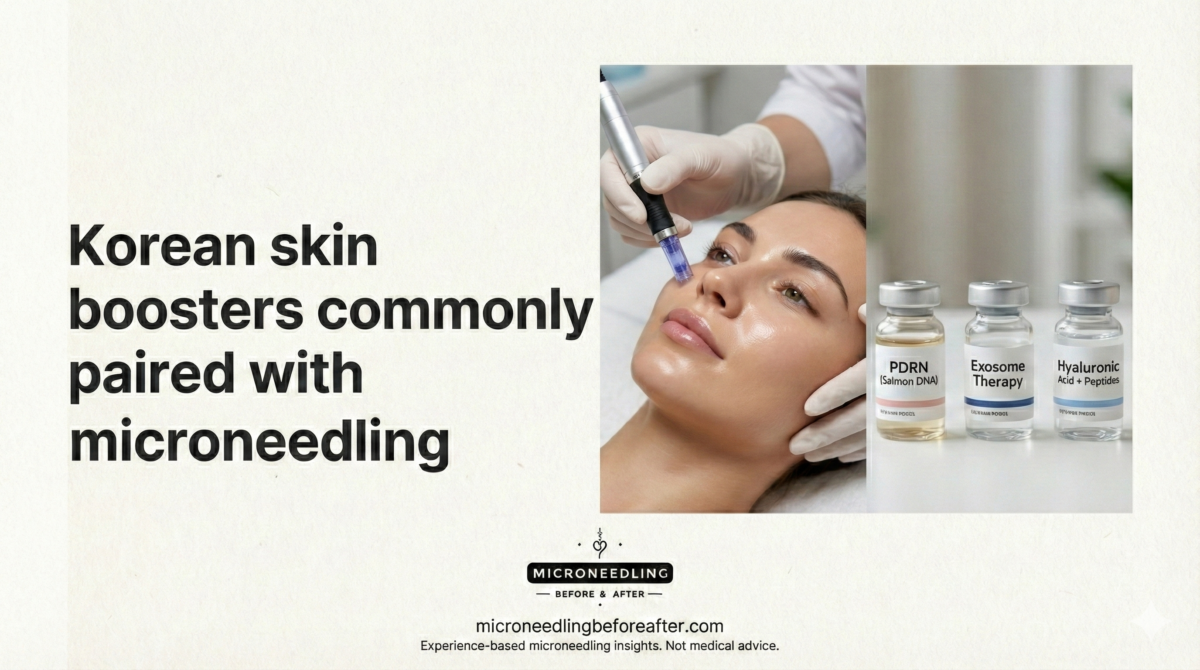
Which Korean skin boosters do I commonly pair with microneedling to improve patient outcomes and accelerate skin restoration?
Korean Skin Boosters Commonly Paired With Microneedling
I will explain which Korean skin boosters I pair with microneedling, why I choose them, and how I use them safely and effectively. I combine clinical rationale, product-type guidance, and practical protocols so clinicians and advanced aesthetic practitioners can implement these pairings with confidence.
What I mean by “skin boosters” and how microneedling works
By “skin boosters” I refer to concentrated topical formulations—ampoules, serums, and single-use concentrates—containing active hydrating, regenerative, or brightening ingredients intended to augment skin function. Microneedling creates controlled micro-injuries in the epidermis and superficial dermis that stimulate collagen and elastin formation and transiently increase transdermal permeability. I use microneedling not only for structural remodeling (scars, texture, laxity) but also as a vehicle to improve the penetration and clinical effect of topical actives when indicated.
Why Korean boosters are commonly chosen
Korean cosmeceuticals are known for high-potency ampoules, advanced vehicles, and formulations designed for rapid absorption and minimal irritation. I appreciate that many Korean boosters come in ampoule formats that allow for single-session use and targeted actives such as hyaluronic acid variants, peptide complexes, stabilized vitamin C derivatives, and tranexamic acid. These qualities make them attractive for pairing with microneedling when sterility and compatibility are managed appropriately.
Key Ingredients in Korean Skin Boosters and Their Roles
I will describe each major ingredient group, explain the role it plays after microneedling, and provide clinical notes on use and safety.
Hyaluronic Acid (HA)
Hyaluronic acid is a glycosaminoglycan that provides immediate hydration and tissue turgor. I use HA post-needling to reduce transepidermal water loss, improve patient comfort, and provide a scaffold that supports early dermal remodeling.
Polyglutamic Acid (PGA)
Polyglutamic acid is a film-forming, humectant peptide-like polymer that enhances hydration and boosts the skin’s water retention beyond HA. I favor PGA as an adjunct when prolonged surface hydration is desired and the patient has sensitive skin prone to dehydration.
Peptides and Growth Factors (EGF, Copper Peptides)
Peptides and recombinant growth factors signal fibroblast activity and collagen synthesis. I integrate EGF or copper peptide-containing boosters post-needling to amplify collagen and elastin remodeling, particularly for atrophic scars and photoaged skin.
Tranexamic Acid (TXA)
Tranexamic acid is an antifibrinolytic agent with proven benefit in reducing hyperpigmentation and melasma. I pair stable TXA serums with superficial microneedling to enhance penetration into the epidermis and superficial dermis for pigment modulation while minimizing irritation.
Vitamin C Derivatives (MAP, 3-O-Ethyl Ascorbic Acid, Ascorbyl Glucoside)
Stabilized vitamin C derivatives provide antioxidant protection and inhibit tyrosinase, offering brightening effects with less irritation than L-ascorbic acid. I prefer MAP or ethylated derivatives immediately post-needling because they are gentler and less likely to provoke stinging on disrupted skin.
Niacinamide
Niacinamide reduces pigment transfer, strengthens the epidermal barrier, and offers anti-inflammatory benefits. I use niacinamide-rich boosters after microneedling for patients with rosacea-prone or sensitive skin to support barrier repair and decrease post-procedure inflammation.
Snail Mucin and Placental Extracts
Snail mucin and placenta-derived ingredients are regenerative and hydrating, with bioactive components that may support wound-healing. I occasionally use snail mucin-containing ampoules for repair-focused sessions, as they tend to be soothing and promote re-epithelialization.
Centella Asiatica (Cica), Panthenol, and Beta-Glucan
These calming and reparative actives reduce inflammation and accelerate healing. For reactive or sensitive skin types, I select boosters rich in Cica, panthenol, or beta-glucan immediately after needling to reduce prolonged erythema and discomfort.
Glutathione and Skin Brightening Antioxidants
Glutathione is an intracellular antioxidant used for depigmentation effects. I sometimes use glutathione-containing ampoules after cautious microneedling sessions, but I ensure formulations are appropriate for post-procedure application and avoid aggressive penetration when the epidermis is highly compromised.
Ceramides and Lipid-Replenishing Complexes
Ceramide-containing boosters restore barrier lipids and minimize TEWL during the early healing period. I apply these as part of post-care in patients with barrier dysfunction or atopic tendencies.
Summary Table: Common Ingredients, Roles, and Post-Needling Notes
| Ingredient / Class | Primary Role | Why I Use It Post-Needling | Clinical Notes |
|---|---|---|---|
| Hyaluronic Acid (various MW) | Hydration, turgor | Immediate comfort and hydration | Prefer sterile ampoules; avoid contaminated multi-use jars |
| Polyglutamic Acid (PGA) | Prolonged hydration | Enhances water retention beyond HA | Good for dehydrated and sensitive skin |
| EGF / Growth Factors / Peptides | Regenerative signaling | Stimulates collagen/elastin synthesis | Use in scar remodeling and photoaging; ensure sterile single-use |
| Tranexamic Acid (TXA) | Anti-pigment | Enhances epidermal/dermal delivery for pigment control | Use stabilized form; patch test for irritation |
| Vitamin C derivatives (MAP, ethyl) | Antioxidant & brightening | Antioxidant protection and tyrosinase inhibition | Prefer derivatives for lower irritation post-needling |
| Niacinamide | Barrier support, anti-inflammatory | Soothes, reduces PIH risk | Well tolerated; helps barrier repair |
| Snail mucin / Placenta | Repair and hydration | Promotes re-epithelialization | Choose reputable formulations, monitor for sensitivity |
| Centella / Panthenol / Beta-glucan | Calming, repair | Reduces erythema and speeds healing | Ideal for reactive skin after needling |
| Glutathione | Antioxidant, brightening | Antioxidant supplementation | Use cautiously; efficacy data variable |
| Ceramides | Barrier lipid restoration | Restores lipid matrix to reduce TEWL | Important in maintenance phase |
Common Korean Booster Product Types I Recommend
I categorize product choices rather than focusing exclusively on brand names, because product formulations change and availability varies. I emphasize sterile single-use ampoules whenever possible.
Ampoules and Single-Use Concentrates
Ampoules deliver a high concentration of actives in a single-use container that reduces contamination risk. I prefer ampoules for in-office post-needling application because they are often more sterile and specifically formulated for treatment sessions.
Lightweight Serums and Essence-Style Boosters
Essences and lightweight serums with low irritation potential work well when I want rapid absorption without heavy occlusion. When I use these after needling, I choose derivatives of key actives (e.g., vitamin C derivatives) rather than raw, unstable L-ascorbic acid.
Peptide Complex Serums
Peptide complexes are frequently packaged as booster vials that target regeneration. I use these in a course for scar remodeling or anti-aging when combined with deeper needling protocols.
Hydration-Focused Sheets and Soothing Masks (Adjunct)
While not applied directly with the needling device, single-use sterile sheet masks or cooling pads infused with hydrating or calming agents can be applied immediately post-needling to augment comfort. I make sure the product is sterile and suitable for application to compromised skin.
Protocols: How I Combine Korean Boosters With Microneedling
I follow evidence-informed steps to ensure safety and maximize outcomes. Below I outline a typical clinical workflow with practical points.
Pre-Treatment Assessment and Planning
I assess patient history, skin type, medications (especially isotretinoin), history of keloids or PIH, and current topical regimen. I perform a patch test when a novel booster is planned and obtain informed consent discussing risks and expected recovery.
Skin Preparation and Antisepsis
I remove makeup and cleanse thoroughly, then apply a broad antiseptic (e.g., chlorhexidine or povidone-iodine depending on tolerance) to the treatment area. I avoid aggressive alcohol wipes that can overly dry the skin immediately prior to needling.
Anesthesia and Pain Management
Topical anesthetics may be used for patient comfort depending on the depth and area. I allow sufficient contact time for anesthesia, then remove or neutralize the agent completely before needling to reduce risk of contamination and to ensure consistent needle penetration.
Microneedling Parameters and Technique
I tailor needle depth to the indication: superficial textural concerns 0.25–0.5 mm, pigment or mild scarring 0.5–1.5 mm, deeper acne scarring 1.5–3.0 mm. I use controlled passes with medical-grade devices and avoid excessive overlapping to minimize prolonged inflammation. I document settings and number of passes for each area.
Immediate Post-Needling Application of Booster
Once bleeding is minimal and hemostasis is adequate, I apply the chosen booster under sterile technique. I prefer single-use ampoules or sterile vials to reduce infection risk. I gently massage the booster into the microchannels, often using a sterile gloved finger or single-use sterile applicator.
Occlusion and Adjuncts
For certain boosters (e.g., peptides, growth factors), I may apply a sterile occlusive dressing for a short period to enhance absorption, but I avoid long occlusion if the product contains preservatives that could trap bacteria. For hydrating boosters, short-term occlusion can improve hydration without increasing infection risk when done correctly.
Post-Procedure Instructions and Products
I give written post-care that emphasizes gentle cleansing, regular application of a barrier-repair moisturizer, strict photoprotection with physical SPF, and avoidance of active exfoliants or retinoids for 3–7 days depending on depth. I advise patients to contact me for signs of infection or prolonged adverse effects.
Table: Needle Depth, Indications, and Booster Preferences
| Needle Depth | Typical Indication | Booster Types I Prefer | Frequency (Typical) |
|---|---|---|---|
| 0.25–0.5 mm | Surface texture, superficial lines, glow | HA (low MW), PGA, vitamin C derivatives, niacinamide | Every 2–4 weeks for 3–6 sessions |
| 0.5–1.5 mm | Superficial scars, pigment modulation | TXA (stabilized), peptides, HA, MAP | Every 4–6 weeks for 3–6 sessions |
| 1.5–2.5 mm | Moderate acne scarring, remodeling | EGF, peptide complexes, PRP (if used) | Every 6–8 weeks for 3–6 sessions |
| >2.5 mm | Deep scars (rare) | Physician-only protocols; consider PRP, growth factors | Rare; individualized |
Safety, Risks, and Contraindications
I treat microneedling combined with topical boosters as a medical procedure that requires attention to sterility, ingredient compatibility, and patient selection.
Infection Risk and Sterility Considerations
Applying non-sterile cosmetics into open microchannels increases infection risk. I mitigate this by using sterile single-use ampoules, sterile applicators, and ensuring skin antisepsis pre-needling. I avoid multi-use jars and contaminated products on freshly needled skin.
Sensitization and Allergic Reactions
Needling enhances penetration, which can increase antigen exposure and risk of contact dermatitis. I always review ingredients for known allergens and perform a patch test if any suspicion exists, particularly for botanical extracts or novel complexes.
Contraindications
I avoid microneedling in patients on isotretinoin within the prior 6–12 months (or per current guideline), those with active infections (herpetic lesions, bacterial infections), uncontrolled acne with nodulocystic lesions, active skin cancer in the area, or a history of hypertrophic scarring/keloids. I also exercise caution in pregnant patients with respect to certain actives.
Specific Ingredient Cautions Post-Needling
I advise against immediate use of raw L-ascorbic acid at high concentrations due to stinging and potential irritation. Strong acids, aggressive retinoids, and concentrated AHAs/BHAs should be deferred until the epidermis has re-epithelialized. I prefer stabilized derivatives and lower-irritation actives in the first 72 hours.
Managing Complications
If infection occurs (persistent pain, purulent discharge, systemic signs), I prescribe appropriate antibiotics and consider culture. For PIH, I use conservative pigment-targeting protocols with tranexamic acid, low-strength topicals, and strict photoprotection. For prolonged erythema or hypersensitivity, I recommend topical steroids only when appropriate and short-course oral anti-inflammatories if needed.
Evidence and Clinical Rationale
Research supports that microneedling increases transdermal drug delivery and stimulates collagen remodeling. I base my practice on the premise that microneedling creates microchannels allowing enhanced penetration of active molecules that otherwise have limited dermal access. Clinical studies of hyaluronic acid, peptides, and growth factors combined with microneedling have shown improved hydration, reduced scar depth, and enhanced skin quality—though study designs vary. I remain critical and choose boosters with plausible mechanisms and acceptable safety profiles.
Patient Selection and Counseling
I select patients with realistic expectations who understand that improvements are incremental and often require a series of treatments. I counsel about downtime (erythema, mild edema, crusting), the timeline for collagen remodeling (visible changes often occur weeks to months), and maintenance options. I also discuss costs and alternative options including laser, subcision, PRP, or injectable skin boosters.
My Recommended Combinations and Sample Protocols
I provide sample pairings I use in practice, with details on needle depth, booster type, frequency, and clinical notes.
Hydration and Immediate Comfort (Quick Rejuvenation)
- Needle depth: 0.25–0.5 mm (face)
- Booster: Sterile low-molecular-weight HA ampoule ± PGA
- Frequency: Every 2–4 weeks, 3–6 sessions
- Notes: Ideal for “red carpet” hydrative sessions and patients seeking luminosity with minimal downtime. I avoid occlusion beyond 1–2 hours unless single-use sterile masks are employed.
Brightening and PIH Prevention (Superficial Pigment)
- Needle depth: 0.5–1.0 mm
- Booster: Stabilized tranexamic acid serum or MAP (vitamin C derivative) plus niacinamide
- Frequency: Every 4–6 weeks, 4–6 sessions
- Notes: I emphasize photoprotection and often combine with topical nighttime regimens after re-epithelialization to maintain results.
Acne Scar Remodeling (Moderate Atrophic Scars)
- Needle depth: 1.5–2.5 mm (area-dependent)
- Booster: EGF or peptide complex; consider PRP if available and appropriate
- Frequency: Every 6–8 weeks, 3–6 sessions
- Notes: I use deeper passes with caution, adjust for thickness of skin and scar maturity, and counsel that full remodeling may take 3–6 months.
Sensitive or Reactive Skin (Soothing and Repair)
- Needle depth: 0.25–0.75 mm
- Booster: Centella/asiatica, panthenol, beta-glucan serum or snail mucin ampoule
- Frequency: Every 3–4 weeks, 3–6 sessions
- Notes: I prioritize barrier repair and avoid aggressive actives. These sessions aim to strengthen the barrier rather than aggressive rejuvenation.
Photoaging and Fine Lines (Structural Improvement)
- Needle depth: 1.0–1.5 mm
- Booster: Peptide complex with HA and antioxidant derivatives
- Frequency: Every 4–6 weeks, 4–6 sessions
- Notes: I combine with homecare retinoids after a suitable healing interval and maintain a strong Sunscreen regimen.
Aftercare and Homecare Protocols I Recommend
I emphasize simple, evidence-based aftercare to promote healing and reduce complications.
Immediate 0–72 Hours
- Use gentle, pH-balanced cleanser and water; avoid scrubbing. Apply sterile booster as directed in-office and transition to a repair cream with ceramides and panthenol.
- Avoid makeup for at least 24 hours and avoid vigorous exercise or sweating for 48 hours where possible to reduce infection risk.
3–7 Days
- Avoid retinoids and chemical exfoliants for at least 3–7 days depending on needle depth and re-epithelialization.
- Continue barrier repair moisturizers and apply broad-spectrum SPF 30+ (physical sunscreens are preferred during early healing).
Long-Term Maintenance
- Continue a home regimen of antioxidant serums, retinoids as tolerated after re-epithelialization, and sunscreen. I recommend maintenance microneedling sessions every 3–6 months depending on goals.
Practical Product Selection Tips I Use
I look for these practical qualities when choosing a Korean booster to pair with microneedling:
- Single-use ampoules or sterile packaging to reduce contamination risk.
- Stabilized active forms (e.g., derivatives of vitamin C) that minimize post-procedure irritation.
- Minimal fragrances and fewer allergenic botanical extracts in the immediate post-needling formulation.
- Clear active concentrations and ingredient transparency so I can anticipate efficacy and risk.
- Clinical or manufacturing quality controls (e.g., GMP manufacturing, sterility statements for single-use vials).
Cost, Accessibility, and Patient Acceptance
I discuss costs and set expectations regarding the investment in a course of treatments. Korean ampoules vary widely in price; I prioritize products that combine safety and efficacy even if slightly higher in cost because patient safety and outcomes justify the expense. I also counsel patients on at-home ampoule use versus in-clinic sterile application—there are important differences in sterility and contamination risk.
Final Thoughts
I integrate Korean skin boosters into microneedling protocols when the product selection is appropriate for the patient’s indication and when sterility and ingredient compatibility are assured. When used thoughtfully, these boosters can enhance hydration, accelerate repair, and target pigment and texture concerns more effectively than needling alone. I emphasize individualized planning, conservative initial parameters, and careful monitoring to achieve safe and reproducible results.
If you would like sample product lists, printable protocols for clinic use, or a decision tree to match boosters to specific patient presentations, I can prepare those resources tailored to your practice setting.


 English
  Spanish