google.com, pub-2032008856654686, DIRECT, f08c47fec0942fa0

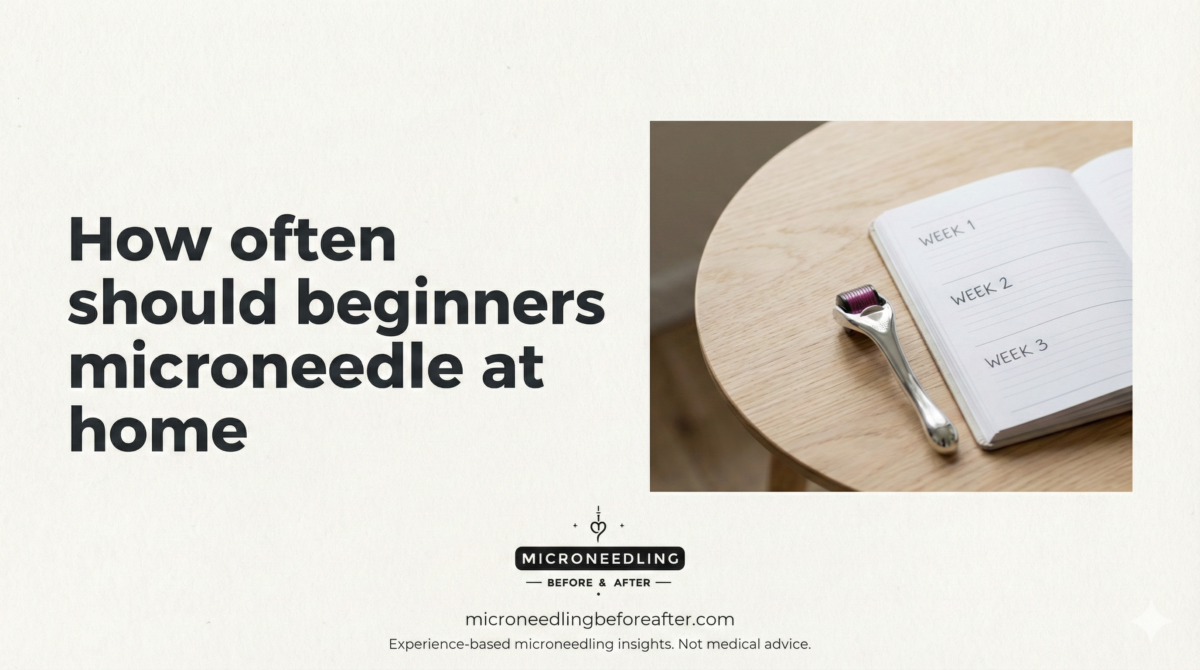
How Often Should Beginners Microneedle At Home

Beginners’ guide to at-home microneedling: learn safe needle lengths, recommended intervals, aftercare, risks, and when to seek professional treatment. Find out

Have you ever wondered how often a beginner should microneedle at home and whether it’s safe to do so on your own?

How Often Should Beginners Microneedle At Home

I’ll be direct: frequency depends mostly on needle length, skin condition, and how your skin responds. I’ve learned over time that starting conservatively and building up is the safest route. In this article I’ll explain device types, needle lengths, recommended intervals, aftercare, risks, and how microneedling compares to skin booster injections so you can make an informed decision.

What is microneedling and how does it work?

I think of microneedling as a controlled way to ask my skin to repair and strengthen itself. Tiny needles create microchannels in the skin that trigger a wound-healing response. That response includes collagen and elastin production, improved blood flow, and enhanced penetration of topical products. Over repeated treatments I’ve seen improvements in texture, fine lines, pore appearance, and overall tone.

Types of at-home microneedling devices

There are a few common at-home tools I’ve used or researched:

  • Dermarollers: a roller studded with tiny needles. They’re inexpensive but harder to control pressure and angle.
  • Dermapens (microneedling pens): motorized devices that create vertical punctures and allow for more consistent depth and speed. I prefer pens for at-home use because they’re more precise.
  • Single-use cartridges: for pens, these are disposable tips that reduce infection risk.

I always emphasize hygiene: single-use or sterilizable components, and careful cleaning after each session.

Needle lengths and what they’re used for

Needle length is the most important factor in deciding frequency and safety. Longer needles penetrate deeper and stimulate more remodeling but also require more recovery and carry higher risk. Below is a practical table I use to decide what to do at home.

Needle length Typical use (at home) Beginner frequency Notes
0.15 – 0.25 mm Product penetration, gentle exfoliation Every 2–3 days Low risk; mainly helps topical absorption
0.3 – 0.5 mm Fine lines, texture, pores Once weekly to every 2 weeks Suitable for most beginners with sensitive approach
0.75 mm Mild acne scarring, deeper texture Every 3–4 weeks More healing; move slowly and monitor skin
1.0 mm Moderate scarring, stretch marks (cautious) Every 4–6 weeks Many professionals discourage >1.0 mm at home
>1.0 mm Professional-only depths (1.5–3.0 mm) Not for home use Higher risk of adverse events; seek pro

I personally avoid anything above 1.0 mm at home. Even 1.0 mm I’ll use only if I have experience and a clear treatment plan.

How often should beginners microneedle at home? Practical recommendations

I base my recommendations on safety and skin recovery. Here’s a frequency guide I follow and recommend for beginners:

  • 0.15–0.25 mm: every 2–3 days — gentle stimulation, good for boosting serum absorption.
  • 0.3–0.5 mm: once weekly to every 2 weeks — this is the sweet spot for most beginners targeting texture and fine lines.
  • 0.75 mm: every 3–4 weeks — use only when you’re comfortable with shorter lengths and your skin tolerates treatment.
  • 1.0 mm: every 4–6 weeks — proceed cautiously; patch test and consider professional guidance.

These intervals factor in the inflammatory and remodeling phases of healing. If my skin is still red, swollen, or sensitive, I wait longer rather than rushing another session.

Factors that change how often I microneedle

I adjust frequency depending on several personal variables:

  • Skin type: Dry or sensitive skin needs longer recovery. Oily or resilient skin may tolerate more frequent sessions.
  • Age: Older skin typically heals more slowly; I give more time between sessions.
  • Skin conditions: Active acne, rosacea, eczema, or infections are red flags to stop.
  • Lifestyle: Sun exposure and poor sleep slow healing; I increase recovery time if these are factors.
  • Product use: If I’m using strong actives (retinoids, acids), I pause them before and after microneedling and allow more healing time.

My step-by-step at-home microneedling routine for beginners

I follow a predictable routine for safety and consistency. Here’s the step-by-step I use:

  1. Cleanse: I wash my face thoroughly with a gentle cleanser to remove makeup, oil, and dirt.
  2. Disinfect tools: For pens, I use single-use sterile cartridges. For rollers, I soak them in 70% isopropyl alcohol for at least 10 minutes, then rinse and air-dry.
  3. Numb if needed: For lengths ≥1.0 mm I may use a topical numbing cream, but for ≤0.5 mm I don’t usually need it.
  4. Apply a thin topical serum (hyaluronic acid or sterile saline): I avoid active ingredients like vitamin C or acids immediately before needling.
  5. Technique: I use gentle, even passes—typically 4–6 passes per area—moving horizontally, vertically, and diagonally. I avoid excessive pressure; the pen or roller should glide.
  6. Post-treatment: I apply a calming, sterile serum (hyaluronic acid, growth-factor-free barrier cream) and avoid makeup for at least 24 hours.
  7. Clean and store: I dispose of cartridges and clean any reusable parts politely and thoroughly.

I keep treatments short and controlled—20–30 minutes max for the whole face with short needle lengths.

Aftercare and healing timeline

I treat aftercare as important as the needling itself. Here’s the timeline I follow:

  • Immediately after: My skin is pink/red and warm. I cool with a clean cool compress for comfort, not ice directly on the skin.
  • 24–48 hours: Redness fades; I avoid heavy makeup, sweating, and sun exposure.
  • 72 hours to 1 week: My skin may flake lightly as it renews. I use gentle hydrating products and avoid active ingredients (retinoids, AHAs, BHAs).
  • 2–4 weeks: Collagen remodeling starts and subtle improvements appear. Gains are cumulative over multiple sessions.

Key aftercare rules I follow:

  • Avoid direct sun and use broad-spectrum SPF 30+ daily after healing.
  • Keep skin clean and use simple, hydrating products.
  • Avoid topical actives for at least 3–7 days depending on needle depth.
  • Don’t pick at flaking or scabbing.

Products I prefer immediately after microneedling

I stick to calm, sterile, hydrating products for the first week:

  • Hyaluronic acid serums (sterile)
  • Simple ceramide or barrier repair creams
  • Fragrance-free, hypoallergenic moisturizers
  • Mineral sunscreen once healed

I avoid vitamin C, retinoids, exfoliating acids, and essential oils for several days, because they can irritate healing skin.

Risks and side effects, and how I reduce them

I won’t pretend microneedling is risk-free. The common side effects are:

  • Redness and swelling (expected)
  • Broken skin and pinpoint bleeding (expected at longer depths)
  • Infection (preventable with hygiene)
  • Post-inflammatory hyperpigmentation (PIH), especially in darker skin tones
  • Scarring (rare but possible with improper technique or excessive depth)

How I reduce risk:

  • I sterilize equipment and my hands thoroughly.
  • I never use longer needle lengths at home without professional training.
  • I stop microneedling when I have active acne lesions or infections.
  • I do a patch test on my inner forearm before treating my face with a new needle length or device.
  • I avoid combining aggressive topical treatments and needling too closely in time.

Contraindications: When I should NOT microneedle at home

I avoid microneedling under these conditions:

  • Active acne with open lesions
  • Rosacea flare-ups or uncontrolled eczema
  • Oral isotretinoin use within the past 6–12 months (increased scarring risk)
  • Keloid or hypertrophic scarring history
  • Blood clotting disorders or anticoagulant medication without medical approval
  • Pregnancy (I err on the side of caution)
  • Recent chemical peels, laser treatments, or other invasive procedures until fully healed

If I have any uncertainty, I consult a dermatologist before proceeding.

Microneedling vs skin booster injections

Comparing microneedling and skin booster injections helps me decide which is appropriate for my goals. Below is a side-by-side comparison I use when choosing a treatment.

Feature Microneedling (at home/pro) Skin booster injections
Mechanism Controlled micro-injuries to stimulate collagen; increased topical absorption Injection of hydrating fillers (often hyaluronic acid-based) into the dermis to hydrate and plump
Primary benefits Texture, pores, scar improvement, collagen induction Long-lasting hydration, plumping, improved elasticity and smoothness
Downtime Minimal to moderate depending on depth (hours to a few days) Mild swelling/bruising; usually 1–3 days
Pain Mild to moderate (topical numbing for deeper treatments) Mild-moderate (numbing available)
Frequency Multiple sessions spaced weeks apart; at-home shorter intervals for low depths Typically every 3–6 months depending on product
Cost Low at-home cost; professional sessions moderate Higher per session due to product and injector skill
Risk Infection, PIH, scarring if misused Bruising, nodules, infection, rare adverse reactions
Who benefits most People targeting scarring, texture and collagen remodeling People seeking improvement in hydration, fine lines, and skin quality without inducing micro-injury

I think of microneedling as a stimulus for the skin’s repair mechanisms, while skin boosters are more of an injectable medium that directly hydrates and supports the dermal matrix.

When I choose one over the other

I usually decide based on goals and tolerance:

  • If I want to improve acne scarring, texture, or stimulate collagen gently over time, I opt for microneedling (often starting at home and possibly moving to professional treatments later).
  • If I want immediate, noticeable skin hydration, improved luminosity, and smoother fine lines with minimal sessions, I consider skin booster injections performed by an experienced injector.
  • Sometimes I combine approaches: a professional microneedling session with PRP or a separate skin-booster injection series, spaced appropriately.

Combining microneedling with skin boosters: is it safe and effective?

Combining treatments can be effective but requires caution. I separate injections and microneedling into safe timelines:

  • Microneedling with topical application of a skin booster product is not the same as injecting a skin booster. The latter should be done by a healthcare professional.
  • Some professionals perform microneedling immediately followed by topical application of growth-factor serums or PRP to enhance penetration, but sterile technique and clinical environments are crucial.
  • When mixing modalities (e.g., microneedling plus injected skin boosters), I typically wait at least 2–4 weeks between procedures so the skin isn’t over-traumatized.

If I plan a combination, I consult a qualified dermatologist or injector to plan the sequence and timing.

Professional microneedling, PRP and advanced treatments

In clinical settings, professionals use longer needle depths, stronger devices, PRP (platelet-rich plasma), and sometimes fractional radiofrequency microneedling. These options produce stronger, faster results but require medical supervision. I prefer to leave deeper treatments (>1.0 mm) and adjunctive therapies to professionals to reduce complications.

Expected results and realistic timeline

I manage my expectations this way:

  • After 1 session: temporary glow and minor skin tightening; little structural change.
  • After 3 sessions: noticeable improvements in texture, pore size, and fine lines for many people.
  • After 6 or more sessions: greater collagen remodeling and more visible scar reduction.

Improvements are gradual because collagen formation and remodeling take weeks to months. I track progress with photos taken under consistent lighting.

Cost comparison and budgeting

I look at both short-term and long-term costs:

  • At-home microneedling device: $20–$300 depending on brand and quality. Replace cartridges regularly.
  • Professional microneedling session: $150–$800 per session depending on region and clinic.
  • Skin booster injections: $300–$1,000+ per session depending on product and amount.

I factor in the cost of serums, disposables, and sunscreen. If I expect to need many professional sessions, I compare that to buying a high-quality at-home device and budgeting for occasional professional check-ins.

How I avoid common mistakes

People often overdo sessions or use inappropriate needle lengths. Here are mistakes I avoid:

  • Using long needles at home without training: I don’t do it.
  • Microneedling over active acne: I stop until the flare resolves.
  • Skipping sterilization: I always disinfect tools and my skin.
  • Mixing aggressive actives too soon after treatment: I wait.
  • Expecting instant results: I remind myself that collagen remodeling is slow.

My checklist before a session

I follow a quick checklist before any at-home session:

  • No active acne, cold sores, or skin infection
  • No recent isotretinoin use in past 6–12 months
  • Clean skin and clean tools
  • Pain control available if needed
  • Post-care serums and sunscreen at hand

Frequently asked questions I get asked

Q: Can I microneedle daily to speed results? A: No. Over-treating increases inflammation and risk of scarring. Stick to recommended frequencies by needle length.

Q: Will microneedling remove deep acne scars? A: It can improve many types of acne scarring, but deep scars often require professional treatments (deeper needling, lasers, subcision). At-home needling can help mild to moderate scarring.

Q: Can I use retinol and acids the day after microneedling? A: I avoid retinoids and exfoliating acids for at least 3–7 days depending on depth because they irritate healing skin.

Q: Is microneedling painful? A: Short needle lengths cause mild discomfort. At longer depths, topical numbing helps. Pain tolerance varies.

Q: How soon can I wear makeup after microneedling? A: I avoid makeup for at least 24 hours, and preferably 48 hours, to reduce infection risk.

Q: Are there infections from at-home microneedling? A: Infections are preventable but possible if tools or technique are unclean. I minimize risk with strict hygiene and single-use cartridges.

My final thoughts and practical guidance

I’m careful with at-home microneedling, and I recommend you be too. Start with short needle lengths (0.15–0.5 mm), follow conservative frequencies, and prioritize hygiene and aftercare. If your goals are modest texture improvement and enhanced product absorption, at-home microneedling can be a cost-effective, safe option when done properly. For deeper scars, pronounced laxity, or if you’re uncertain, I’ll always recommend professional consultation.

If you’d like, I can:

  • Suggest a beginner device and product list based on your skin type.
  • Create a personalized treatment schedule (needle length, frequency, and aftercare).
  • Help you prepare questions to ask a dermatologist or aesthetic provider if you decide to seek professional care.

I want you to feel confident and safe with whatever route you choose.
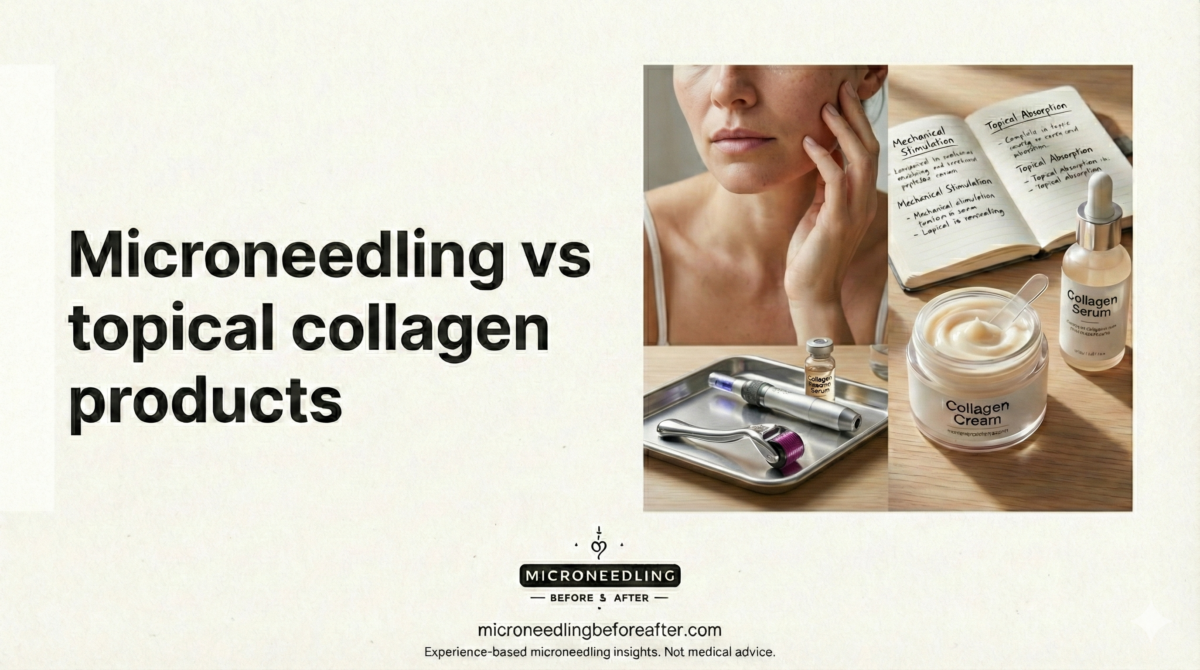
Microneedling Vs Topical Collagen Products

Microneedling vs topical collagen: understand the science, benefits, risks, costs, and when to choose or combine treatments for texture hydration and scar care.

?Which one will actually make my skin look and feel better: microneedling or slathering on a topical collagen product?

Microneedling Vs Topical Collagen Products

I get asked this question a lot, and I want to walk through the science, the practical differences, and how to choose based on real goals. I’ll share what I’ve learned from research, clinical experience, and practical considerations so you can make an informed choice.

What are microneedling and topical collagen products?

I like to start with basic definitions so we’re on the same page. Microneedling is a procedure that uses tiny needles to create micro-injuries in the skin, triggering a wound-healing response that stimulates collagen and elastin production. Topical collagen products are creams, serums, or masks that contain collagen molecules (or ingredients aimed at supporting collagen) and are applied to the skin to provide hydration, texture improvements, or a collagen “boost.”

Microneedling: definition and mechanism

I describe microneedling as a controlled way to tell the skin to repair itself. By creating microchannels, the procedure activates inflammatory and repair pathways, increases growth factor release, and can improve skin thickness and texture over time.

Topical collagen products: definition and mechanism

When I talk about topical collagen, I refer to formulations containing collagen (native or hydrolyzed), peptides, or collagen-supporting ingredients. These products primarily act on the surface — they hydrate, temporarily fill fine lines, and may provide topical peptides that signal cells to maintain or synthesize collagen, but intact collagen molecules are typically too large to deeply penetrate intact skin.

How they work: biology and skin response

I find the difference in mechanism is the most important concept to understand. Microneedling leverages the skin’s repair mechanisms to stimulate new collagen internally, whereas topical collagen products largely act externally and signal support.

Microneedling: wound healing and collagen induction

I think of microneedling as a stimulus that recruits platelets, macrophages, and fibroblasts, releasing growth factors like TGF-β, PDGF, and VEGF. These signals encourage fibroblasts to lay down new collagen types I and III and remodel the extracellular matrix, improving skin tone, scars, and elasticity over repeated treatments.

Topical collagen: absorption and limitations

I always explain that intact collagen molecules are large; they mostly sit on the skin surface and act as humectants and occlusives. Hydrolyzed collagen and certain peptides are smaller, and they can act as signals or provide amino acids, but they typically do not rebuild the deeper dermal collagen matrix the way an induced wound-healing response can.

Evidence and effectiveness

I like to separate clinical evidence for each option so readers know what’s backed by studies vs anecdote. Microneedling has a stronger clinical evidence base for improving scars, fine lines, and skin texture than most topical collagen products.

Clinical studies on microneedling

I review randomized controlled trials and observational studies and see consistent improvements in acne scarring, fine lines, and skin thickness after multiple sessions of microneedling. I note that outcomes improve with session number and proper device parameters, and that histologic studies show increased collagen deposition after treatment.

Clinical studies on topical collagen

I acknowledge that topical collagen products have shown benefits for hydration, surface smoothness, and transient plumping in controlled studies. I also point out that evidence for deep structural changes in dermal collagen from topical collagen alone is limited, and many product claims overstate penetrative effects.

Head-to-head research

I don’t see many high-quality head-to-head trials comparing microneedling directly with topical collagen products, because they’re fundamentally different interventions. Where combination studies exist, microneedling plus topical agents often outperforms topical agents alone, particularly for scar remodeling and visible texture improvements.

Benefits and limitations

I usually list benefits and limitations side by side so readers can weigh trade-offs. Both approaches have meaningful roles depending on the goal, timeline, budget, and risk tolerance.

Benefits of microneedling

I see microneedling deliver measurable improvements in acne scars, surgical scars, laxity, and fine lines by stimulating the body’s own collagen production. I also value its versatility — it can be combined with PRP (platelet-rich plasma), topical growth factors, or performed at different needle depths for tailored outcomes.

Limitations of microneedling

I want people to remember it’s not a one-and-done fix: microneedling requires a series of treatments and some downtime, with redness and sensitivity expected for a few days. I also caution that results vary by device quality, practitioner skill, and individual healing capacity, and complications like infection or hyperpigmentation can occur if performed improperly.

Benefits of topical collagen products

I appreciate that topical collagen products are low-risk and easy to use daily; they improve hydration, reduce surface roughness, and can support skin barrier function. I also note they can boost skin comfort and appearance quickly with minimal cost and no downtime.

Limitations of topical collagen products

I always temper expectations: most topicals don’t rebuild dermal collagen in a clinically meaningful way, and product claims can be inflated. I also underline that product formulation, concentration, and adjunct ingredients determine value, and cheaper formulas often deliver little beyond basic moisturization.

Safety considerations

I emphasize safety first, because both options interact with the skin differently and carry different risk profiles. Understanding side effects, contraindications, and best practices reduces chance of harm.

Risks of microneedling

I warn that microneedling can cause bleeding, bruising, infection, scarring, and post-inflammatory hyperpigmentation if not done correctly. I recommend using sterile equipment, avoiding active infections and isotretinoin usage windows, and consulting trained professionals for deeper needling.

Risks of topical collagen products

I explain that topical collagen products are generally low risk, though they can cause irritation, allergic reactions, or acne flare in some people depending on formulation. I advise patch testing new formulas and avoiding products with irritating fragrances or comedogenic bases if you are sensitive.

Who should avoid each approach

I tell people who have active acne, open wounds, keloid tendency, or recent isotretinoin use to avoid professional microneedling until cleared by a clinician. For topical collagen, I advise caution for those with known sensitivities to marine or bovine collagen sources and suggest reading ingredient lists carefully if you have allergies.

Procedure, aftercare, and recovery

I like to walk readers through what an appointment looks like and what to do afterward, because realistic expectations matter for satisfaction.

What to expect during a microneedling session

I describe that a typical session takes 30–60 minutes and may include numbing cream before treatment, followed by device passes across treatment areas. I tell people they’ll feel tickling, pressure, or brief pricks, and that the level of discomfort depends on needle depth and device type.

Aftercare following microneedling

I always emphasize gentle care: avoid sun exposure, use broad-spectrum sunscreen, steer clear of retinoids and active acids for several days, and rely on gentle, hydrating products while the skin re-epithelializes. I also recommend following practitioner-specific instructions for cleansing, topical antibiotics if prescribed, and signs of complications to watch for.

Using topical collagen effectively

I advise applying topical collagen products to clean skin as part of a routine that includes sunscreen and supportive ingredients like hyaluronic acid and antioxidants. I recommend consistent daily use for maintenance benefits and choosing formulations that complement your skin type and other actives.

Cost and accessibility

I know cost and convenience often drive decisions as much as efficacy, so I break this down clearly. Costs vary significantly depending on whether you choose professional microneedling, at-home derma rollers, or high-end topical formulations.

Microneedling cost factors

I explain that professional microneedling treatments can range widely — from modest in-office radiofrequency-assisted options to pricier physician-performed sessions — with series pricing often needed to achieve results. I also point out that costs increase with adjuncts like PRP, topical growth factors, or advanced devices.

Topical collagen cost factors

I note that topical collagen products range from budget drugstore creams to premium serums with added peptides and growth-factor mimetics. I remind readers that higher price doesn’t always equal higher efficacy and to evaluate ingredient lists and formulations rather than price alone.

Home devices vs professional treatments

I caution that home derma rollers and motorized devices exist, but they generally use shorter needles and produce more modest results than professional tools. I advise caution with DIY deeper needling due to sterilization and technique issues; if I were to try home microneedling, I’d stay conservative and focus on surface-level devices.

Choosing the right option for you

I encourage readers to match the intervention to their goals, budget, and risk tolerance. There’s no single right answer for everyone, and sometimes a combined approach is best.

Assessing your skin goals and condition

I tell people to ask themselves whether they want hydration and minor smoothing (where topicals can help) or structural improvement for scars and laxity (where microneedling is more effective). I also recommend considering skin tone, susceptibility to hyperpigmentation, and medical history when choosing.

When to combine both approaches

I often recommend combining microneedling with targeted topicals for enhanced outcomes: microneedling can increase topical absorption immediately after treatment, but only under professional guidance to avoid irritation. I also find that ongoing topical skincare maintains and augments the benefits of procedural interventions.

Consulting a professional

I stress that consulting a dermatologist or licensed aesthetician is wise, especially for moderate-to-severe concerns, darker skin tones, or a history of keloids. I’d rather someone get a few professional opinions than attempt aggressive DIY regimens that risk harm.

Comparison table: microneedling vs topical collagen

I created a table to help visualize the differences quickly so readers can reference the most important variables. This table highlights mechanism, evidence, downtime, and ideal use cases.

Feature Microneedling Topical Collagen Products
Mechanism Creates micro-injuries to stimulate dermal collagen production Applies collagen or collagen-supporting ingredients to skin surface
Evidence for deep remodeling Stronger clinical evidence for scarring, texture, thickness Limited for deep remodeling; good for hydration/surface
Onset of visible results Weeks to months; improves with multiple sessions Immediate temporary plumping; longer-term maintenance benefits
Downtime Mild to moderate (redness, sensitivity for days) Minimal to none
Risk profile Higher — possible infection, hyperpigmentation, scarring Low — irritation or allergy possible
Cost Higher per session; multiple sessions often required Varies; often lower cost and subscription-based
Best for Scars, texture, fine lines, skin laxity Hydration, barrier support, temporary smoothing
Suitability for home use Professional recommended for deeper needling Easily used at home daily

Product selection and ingredients to look for

I want readers to know which ingredients actually matter in topical products and how they might support or fail to support collagen health. Proper formulation and complementary actives are often more important than the presence of “collagen” on a label.

What to look for in topical collagen products

I recommend checking whether the product contains hydrolyzed collagen (smaller peptides), supportive peptides, and adequate humectants like glycerin or hyaluronic acid. I also suggest looking for stable packaging, proper preservative systems, and non-irritating bases if you have sensitive skin.

Complementary ingredients that enhance results

I often favor products with vitamin C (for collagen synthesis), niacinamide (for barrier repair and pigmentation control), peptides (to signal fibroblasts), and hyaluronic acid (for hydration). I advise caution pairing strong actives immediately after procedures and consulting your clinician for optimal timing.

My personal recommendations and practical tips

I try to give actionable guidance for different scenarios, because theoretical knowledge isn’t helpful without practical steps. Below I share what I would do in common skin situations and a sample regimen to consider.

If I had to choose

If my main problem were acne scars or skin texture, I would prioritize professional microneedling performed by a trained provider and plan a series of treatments. If my primary goals were hydration and minor surface smoothing with no downtime, I’d commit to a high-quality topical regimen containing peptides, hyaluronic acid, and vitamin C.

Routine example

If I were combining approaches, I’d receive microneedling in the clinic every 4–8 weeks for several sessions, and maintain daily topical care at home with sunscreen, antioxidants in the morning, and reparative peptides and hydrators at night. I would also avoid strong exfoliants for at least a week after microneedling and use calming, barrier-supportive products.

Avoiding pitfalls

I tell people to avoid overzealous DIY needling with long needles and to be skeptical of marketing that promises dramatic collagen remodeling from a jar. I also advise consistent sunscreen use; UV exposure undermines both collagen production and results from procedures.

Frequently asked questions (FAQs)

I include FAQs because people commonly have the same practical concerns and misconceptions. Each answer is concise and rooted in current understanding.

Will topical collagen replace microneedling?

I don’t think topical collagen replaces microneedling for structural improvements. Topicals help hydrate and support the skin, but microneedling stimulates new collagen production deeper in the dermis.

Can microneedling make collagen products work better?

I believe microneedling can increase the penetration of topicals applied immediately afterwards, but this must be done under professional guidance to avoid irritation and infection. Using growth-factor serums or PRP in conjunction with microneedling is a common strategy in clinical settings.

How many microneedling treatments do I need?

I usually recommend a series of 3–6 treatments spaced 4–8 weeks apart for optimal improvement, though individual responses vary. Maintenance sessions spaced 6–12 months apart can help preserve gains.

Are at-home microneedling devices safe?

I think home devices with very short needles (0.25–0.5 mm) can be safe for enhancing topical absorption and stimulating mild exfoliation, but deeper needling should be left to professionals. Sterility, technique, and realistic expectations are key for home use.

Can topical collagen cause allergies?

Yes, I’ve seen allergic reactions in people sensitive to marine or bovine collagen sources or to fragrance and preservatives in formulations. Patch testing new products is a simple precaution I recommend.

How soon will I see results?

For topical collagen, I expect immediate improvements in hydration and surface appearance, with cumulative benefits over weeks. For microneedling, visible improvements usually appear over weeks to months as collagen remodeling occurs.

Clinical scenarios and decision pathways

I offer practical decision trees for common concerns so readers can map their condition to the likely best option. These pathways reflect what I would discuss in a consultation.

Mild dehydration and fine surface lines

I’d prioritize topical collagen formulations with humectants, hyaluronic acid, antioxidants, and peptides. If results plateau, I’d consider gentle professional resurfacing or microneedling.

Acne scarring and texture irregularity

I’d recommend professional microneedling (possibly combined with PRP or laser in certain cases) as the primary modality. After an initial series, ongoing topical maintenance with peptides and sunscreen helps sustain improvements.

Skin laxity and early aging

I’d evaluate whether microneedling alone is enough or whether radiofrequency-assisted microneedling or other energy-based devices are needed for more significant tightening. Topical support remains important for skin health but is unlikely to substitute for procedural tightening when laxity is moderate.

My final thoughts

I want you to come away with a clear sense that both microneedling and topical collagen products have roles, but they are not interchangeable. Microneedling is a procedure that induces new collagen via biologic pathways and can improve scars and deeper structural issues, while topical collagen products primarily hydrate and support surface appearance with limited capacity for deep remodeling.

Summary

I encourage a pragmatic approach: define your goals, assess your risk tolerance and budget, consult a qualified professional for procedures, and use evidence-backed topical products to maintain and augment results. If I can help you think through a specific case or recommend questions to ask a clinician, I’m happy to help.

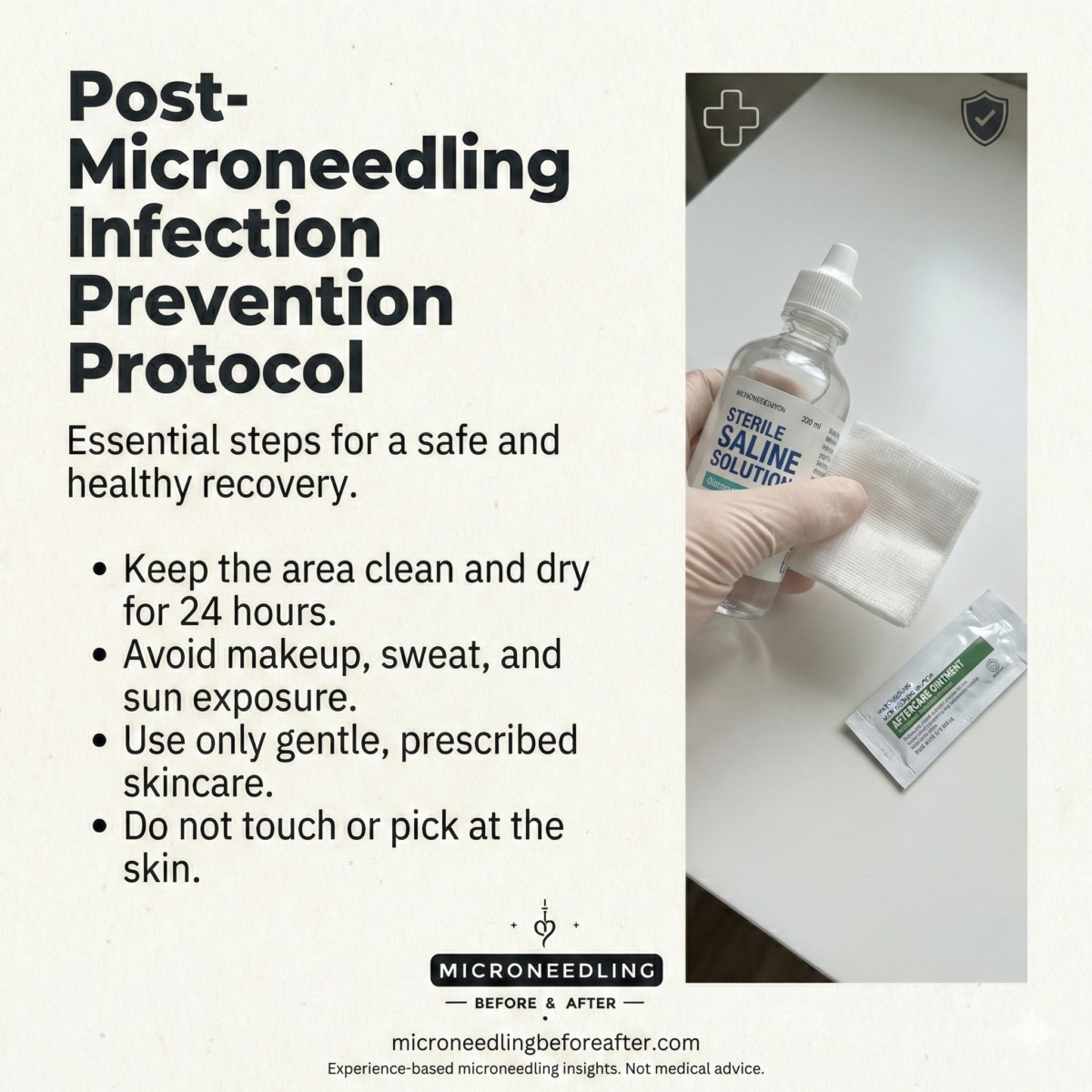
Post-microneedling Infection Prevention Protocol

Post-microneedling infection-prevention protocol for clinicians: screening, sterile technique, antiviral prophylaxis, focused post-care. Patient education & FAQ

? How can I systematically prevent infections after microneedling and keep my patients safe while optimizing outcomes?

Introduction

I present a comprehensive infection prevention protocol for post-microneedling care that synthesizes clinical best practices, practical workflow steps, and patient education strategies. I wrote this protocol to be actionable for clinicians who perform microneedling or for clinical managers who are responsible for infection-control policies. My goal is to reduce infectious complications, improve wound-healing outcomes, and make post-procedure instructions clear and reproducible.

Why infection prevention matters after microneedling

I understand that microneedling intentionally creates controlled micro-injuries in the skin to stimulate remodeling. Those microchannels transiently bypass the epidermal barrier, which increases the theoretical and real risk of bacterial, viral, and fungal invasion. Preventing infection is essential not only to avoid acute complications but also to prevent scarring, pigmentary changes, and treatment interruptions.

Brief review of microneedling physiology and infection risk

I utilize microneedling to stimulate collagen by creating microchannels that typically close within hours to days depending on needle depth. The depth of injury, skin condition, and adjunctive topical or biologic applications (PRP, serums) influence susceptibility to pathogens. Common organisms implicated post-procedure include Staphylococcus aureus, Streptococcal species, herpes simplex virus (HSV-1), and occasionally atypical mycobacteria following contaminated devices or solutions.

Scope and audience

I wrote this protocol for licensed clinicians (dermatologists, plastic surgeons, aesthetic physicians, nurse practitioners, physician assistants) and clinic staff responsible for peri-procedural care. Sections addressing patient-facing language are written so I can adapt them as printed discharge instructions.

Pre-procedure risk assessment

I begin by assessing patient-specific infection risk factors, procedural factors, and environmental factors.

Patient history and medical screening

I collect a focused history that includes:

  • Prior or recurrent HSV infections (cold sores).
  • Active skin infections (impetigo, folliculitis, cellulitis) in the treatment area.
  • Recent or current use of systemic immunosuppressants, biologics, or high-dose systemic corticosteroids.
  • Recent isotretinoin use (within previous 6–12 months) and the timing of past courses.
  • Diabetes, uncontrolled glucose, or other comorbidities that impair wound healing.
  • Bleeding disorders or anticoagulant therapy that could complicate post-procedure care.

I document these findings and discuss increased risk with the patient when relevant.

Physical exam and skin assessment

I inspect the treatment area for active infections, acneiform lesions, dermatitis, or fresh tattoos. I postpone microneedling over active infection or broken skin. For extensive acne, I consider deferring or treating acne first to minimize bacterial load.

Pre-procedure testing and prophylaxis considerations

I individualize testing and prophylaxis:

  • For patients with recurrent HSV, I prescribe antiviral prophylaxis (e.g., acyclovir or valacyclovir) beginning 24 hours before and continuing for 5–7 days after treatment, following local protocols.
  • For immunocompromised patients or those with a history of atypical infections, I consult with or refer to a specialist.
  • I do not routinely prescribe systemic antibiotics prophylactically for all patients, as evidence does not support universal prophylaxis and overuse promotes resistance. I reserve systemic antibiotics for specific clinical indications or early signs of infection.

Clinic environment and device handling

I maintain a clean, controlled environment and strict device-handling procedures to minimize contamination.

Device and needle management

I use single-use sterile needle cartridges or disposable needle stacks whenever possible. If I use reusable instruments, I ensure validated sterilization via autoclave per manufacturer and local regulatory guidance. I store devices in their sterile packaging until immediately prior to use.

Surface and hand hygiene

I enforce hand hygiene for all staff and use gloves during patient contact. I disinfect procedure surfaces between patients with EPA-registered hospital-grade disinfectants. I minimize clutter and potential fomites in the procedure room.

Aseptic technique for adjunct materials

I treat PRP, growth factors, or serums as potential vectors. I prepare biologic adjuncts in a clean area, use sterile technique, and apply them immediately after preparation. I avoid pooling products or using multi-dose vials without proper aseptic withdrawal.

Procedure technique to minimize infection

I employ procedural steps that reduce contamination and tissue trauma.

Skin preparation

I cleanse the skin thoroughly. I use either chlorhexidine gluconate or povidone-iodine as the pre-procedure antiseptic, allowing the solution to dry fully before needling. I avoid alcohol-based cleansers that may transiently denature epidermal proteins but I do use them judiciously if required by practice standards.

Local anesthesia and topical agents

I use topical anesthetics in single-use tubes or sterile packaging. After anesthetic removal, I re-cleanse the area with an antiseptic prior to needling. I avoid applying non-sterile emollients or makeup prior to the procedure.

Needle depth, passes, and pressure

I select needle depth appropriate for the indication and skin thickness. I avoid overly aggressive settings that create extensive tissue damage beyond therapeutic intent. I control the number of passes and maintain consistent technique to prevent excessive trauma that can predispose to infection.

Adjuncts (PRP, serums)

When applying PRP or other biological adjuncts, I confirm sterility. I apply adjuncts with sterile instruments and avoid contact between stocked product and non-sterile surfaces.

Immediate post-procedure care (first 0–24 hours)

I give precise verbal and written instructions, and I summarize key points verbally at discharge.

Immediate cleaning and dressing

I wipe the treated area with sterile normal saline or sterile saline-soaked gauze. I may apply a thin layer of a sterile, non-comedogenic emollient or a physician-recommended post-procedure balm in a single-use tube to reduce transepidermal water loss and provide a temporary barrier. I avoid ointments that can trap bacteria unless specifically indicated.

I advise patients to avoid occlusive dressings unless instructed, because occlusion can increase humidity and bacterial growth. If I use an occlusive dressing (rarely), I provide clear removal instructions and a timeline.

Activity and exposure restrictions

I advise patients to:

  • Avoid touching their face with unwashed hands.
  • Not apply makeup for at least 24 hours (or per product-specific guidance).
  • Avoid hot baths, saunas, pools, and hot tubs for 72 hours to reduce exposure to waterborne pathogens.
  • Avoid heavy exercise for 24–48 hours to limit perspiration and bacterial transfer.

Pain control

I recommend acetaminophen or short-duration NSAIDs unless contraindicated. I avoid recommending aspirin for patients at bleeding risk unless indicated.

Post-procedure timeline and detailed care instructions

The following timeline breaks down care into clear phases so patients know what to expect and when to seek help.

0–24 hours: initial epithelial response

The treated skin is typically erythematous and may be edematous. I instruct gentle cleansing with sterile saline or a mild non-irritating cleanser twice daily. I recommend applying the prescribed post-procedure balm or a sterile, fragrance-free moisturizer as directed. I discourage exfoliants, retinoids, or alcohol-based toners.

24–72 hours: barrier recovery and re-epithelialization

Microchannels begin to close during this period. I encourage continued gentle hygiene, avoidance of makeup until clinically appropriate, and ongoing avoidance of pools, hot tubs, and heavy sweating. I reinforce antiviral prophylaxis adherence if indicated.

3–7 days: continued healing and possible mild peeling

I expect gradual reduction in erythema and occasional mild scaling. I recommend broad-spectrum sunscreen (SPF 30 or greater) when outdoors and physical blockers if skin is sensitive. I advise avoiding topical active agents (retinoids, chemical exfoliants, strong vitamin C) until full re-epithelialization.

>7 days: resumption of normal skincare

I allow reintroduction of active skincare ingredients once the epidermis has fully healed and there is no crusting or open areas. If combining with other procedures (e.g., laser), I ensure a safe interval based on tissue recovery and risk.

Table: Clear post-procedure patient instructions (concise handout)

Timeframe Action I instruct Products to use Activities to avoid
Immediately (0–24h) Rinse gently with sterile saline/cleanser; apply thin layer of prescribed balm 2–3x/day Sterile saline; single-use balm tube (physician-recommended) Makeup, touching face, hot showers, pools, saunas
24–72h Continue gentle cleansing and moisturizing; monitor for increased pain/redness Fragrance-free moisturizer; antiviral (if prescribed) Heavy exercise, prolonged sun exposure, swimming
3–7 days Expect peeling; begin gentle sunscreen application when outdoors Physical sunscreen (zinc oxide), gentle cleanser Retinoids, chemical peels, aggressive exfoliation
>7 days Resume normal skincare if fully healed; contact clinic if delayed healing Resume chosen products after clinician approval Proceed with other procedures only after clinician clearance

Recognizing infection: signs, differential diagnosis, and early action

I emphasize early recognition to enable prompt treatment.

Clinical signs of infection

I teach patients to seek immediate care for:

  • Increasing localized pain beyond expected discomfort.
  • Increasing erythema that spreads rather than fades.
  • New purulent drainage or yellow-green crusting.
  • Fever, chills, or systemic symptoms.
  • Development of vesicles or grouped lesions suggestive of HSV.

Common mimics and differentiators

I differentiate between normal inflammatory responses and infection:

  • Post-procedure erythema typically peaks early and then improves.
  • Sterile pustules or transient papules from occlusion or product reaction can mimic infection but are usually non-tender and non-progressive.
  • HSV presents early with grouped vesicles and may be associated with prodrome (tingling, burning).

When in doubt, I perform clinical assessment and, if necessary, culture drainage or swab lesions for bacterial or viral PCR testing.

Management of suspected infection

I individualize treatment based on presentation, organism likelihood, and patient factors.

Mild localized bacterial infection

I may start an empiric oral antibiotic targeting common skin pathogens (e.g., dicloxacillin, cephalexin) while awaiting culture results, adjusting therapy per sensitivity. I consider topical antibiotics (e.g., mupirocin) for focal superficial infections in combination with oral therapy if indicated.

Severe or spreading infection

I arrange urgent evaluation and may start broad-spectrum antibiotics, arrange wound care, and consider hospitalization if systemic involvement or rapid progression occurs.

Herpetic infections

I initiate antiviral therapy (e.g., valacyclovir) promptly when HSV is suspected. I counsel regarding potential scarring and the need for therapy even if the patient had no prior diagnosed herpes history, because microneedling can trigger primary or recurrent episodes.

Atypical mycobacterial or fungal infections

I suspect atypical mycobacteria or fungal pathogens with delayed presentations (weeks), nodular or draining lesions, or lack of response to standard antibiotics. I obtain cultures, perform acid-fast bacilli tests, and refer to infectious disease as appropriate.

Antibiotic stewardship and documentation

I avoid reflexive empiric antibiotics without clinical indication. I document clinical findings, decision rationale, cultures obtained, and patient education in the medical record. I follow local antibiogram patterns when selecting empiric therapy.

Special situations

Combined procedures (PRP, platelet-rich fibrin, lasers)

When combining microneedling with PRP or lasers, I increase vigilance for sterility and may modify post-procedure instructions, including longer avoidance of water immersion and stricter wound care. I ensure that the interval between microneedling and other resurfacing procedures is safe and evidence-based.

Immunocompromised patients

I approach immunocompromised patients with heightened caution. I consider consultation and may defer elective microneedling. If proceeding, I use strict asepsis, consider prophylactic antivirals if indicated, and provide closer follow-up.

Pregnant or breastfeeding patients

I evaluate the risk-benefit profile. I may defer aesthetic microneedling in pregnancy unless clinically indicated. If treatment proceeds, I avoid products with contraindicated agents and document informed consent.

Home microneedling and consumer devices

I discourage or set strict limitations on at-home microneedling for devices that breach the dermal barrier (needle lengths >0.25 mm). I educate patients on the higher infection risks from non-sterile at-home use and advise professional treatments as safer alternatives. If a patient will use a home device, I provide detailed cleaning and single-user instructions.

Patient education and written consent

I obtain informed consent that includes explicit discussion of infection risk, expected course, signs of complications, and contact information for urgent concerns. I provide a printed or electronic discharge sheet summarizing key dos and don’ts and when to call.

Table: Clinic checklist for infection prevention (for clinician use)

Task Performed (Y/N) Notes
Pre-procedure infection screen documented
Antiviral prophylaxis given when indicated
Single-use sterile needle cartridge prepared
Skin antiseptic applied and dried
PRP/serum prepared aseptically
Post-procedure instructions provided and documented
Follow-up appointment scheduled (or patient advised when)

Follow-up plan and escalation pathway

I schedule follow-up contact within 48–72 hours (phone or telemedicine) for higher-risk patients or those who received deep treatments or biologic adjuncts. I advise in-person assessment for any concerning symptoms. I maintain low threshold for culture, blood tests, and specialty referral if an atypical course develops.

Quality improvement and morbidity tracking

I track adverse events, infection rates, and procedural complications. I review cases in morbidity and mortality or quality improvement meetings to refine protocols. I audit sterilization logs, device handling, and staff training regularly.

Legal, regulatory, and billing considerations

I align my protocols with local regulatory guidance regarding device sterilization, product labeling, and practice scope. I document informed consent and clinical indications to support medico-legal defensibility. I code and bill appropriately for time and services associated with complications or post-procedure care.

Practical examples and scenarios

I include a few clinical scenarios to illustrate how I apply the protocol.

Scenario 1: Patient with history of recurrent cold sores

I prescribe valacyclovir 500 mg orally twice daily, starting 24 hours before treatment and continuing for 5 days after. I document counseling and verify adherence at follow-up.

Scenario 2: Early localized cellulitis 4 days post-procedure

I assess the area, obtain a wound swab for culture, and start an empiric oral antibiotic covering Staphylococcus and Streptococcus while awaiting results. I arrange in-person follow-up within 48 hours.

Scenario 3: Delayed nodular lesions after combined microneedling and PRP

I suspect atypical mycobacterial infection, obtain tissue biopsy and cultures including AFB, and refer to infectious disease for prolonged combination therapy based on sensitivity testing.

Recommendations for product selection

I recommend products with clear sterility and single-use packaging. Below is a concise table of product guidance.

Table: Products I recommend and those I advise to avoid

Recommended Avoid or use with caution
Single-use sterile needle cartridges Multi-use cartridge reuse without sterilization
Single-use anesthetic tubes or sterile packaging Community jars or unsealed tubes
Sterile saline for immediate cleansing Tap water irrigation for initial wound care
EPA-registered surface disinfectants Inadequate disinfectants or unverified home remedies
Physician-grade, sterile PRP prepared aseptically Unknown-source serums or multi-dose vials opened in non-sterile environment

Training and staff competence

I ensure staff receive competency-based training in aseptic technique, device setup, patient screening, recognition of complications, and post-procedure instruction delivery. I maintain training records and perform periodic competency reassessments.

Documentation templates and sample patient handout

I use concise templates to standardize documentation: pre-procedure risk assessment, informed consent with infection-risk language, sterile device lot numbers, and discharge instructions. A sample patient handout includes the short timeline and clear red flags, and I give a copy at discharge.

Limitations and clinical judgment

I acknowledge that recommendations must be adapted to local epidemiology, regulatory constraints, individual patient factors, and evolving evidence. I base decisions on current best practices while being ready to modify the protocol as new data emerge.

Summary and key takeaways

I summarize the core principles:

  • Screen patients for infection risk and defer treatment when indicated.
  • Use single-use sterile needles or validated sterilization for reusable devices.
  • Employ antiseptic skin prep and aseptic technique for products and adjuncts.
  • Provide clear, written post-procedure instructions with a timeline.
  • Recognize early signs of infection and act promptly with appropriate cultures and targeted therapy.
  • Maintain thorough documentation, staff training, and quality monitoring.

I consider infection prevention after microneedling a combination of procedure planning, meticulous technique, patient education, and timely management of complications. Implementing a structured protocol reduces infection rates, improves patient satisfaction, and protects both patients and clinicians.

Disclaimer

I provide this protocol as an informational resource and not a substitute for individualized medical judgment. I advise clinicians to apply local regulations and consult infectious disease or dermatology colleagues for complicated cases. If you want, I can draft printable patient discharge instructions, a clinic poster for staff steps, or an editable checklist tailored to your practice.

en_USEnglish