
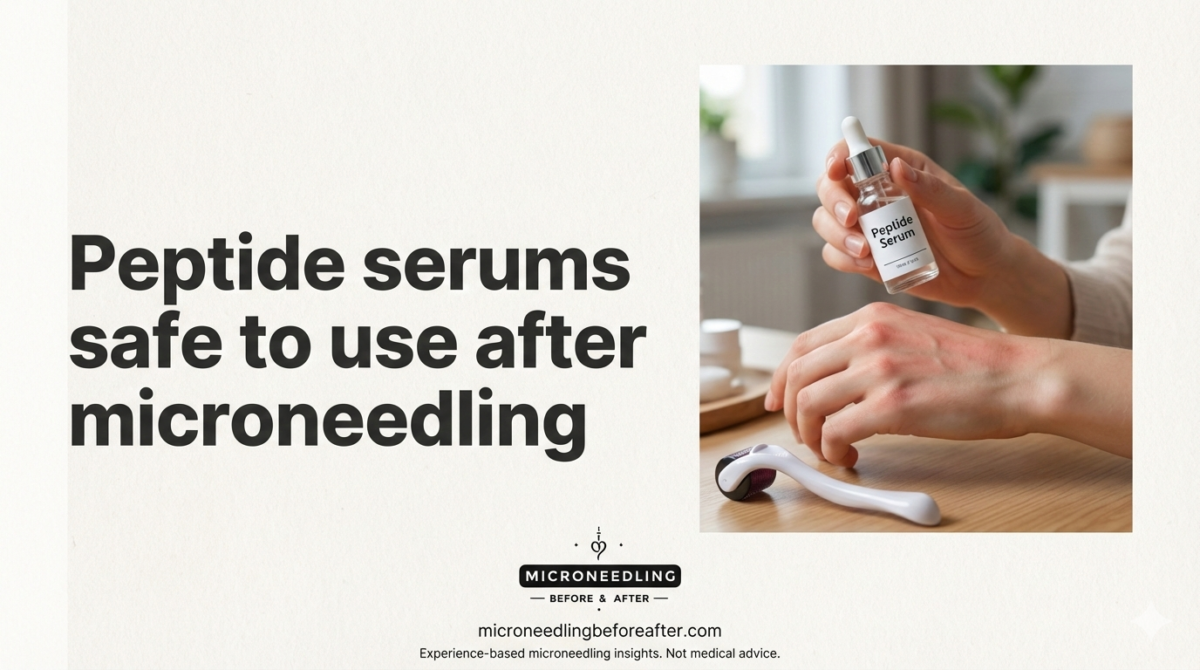
Can I use peptide serums after microneedling, and which ones are genuinely safe for my skin?
Introduction
I’ve had my fair share of microneedling sessions, and I know the questions that pop up afterward: what can I put on my skin, when can I go back to my usual routine, and are peptide serums safe? I’ll walk through the science, practical timing, product choices, and safety tips so I can make an informed choice and protect my skin while maximizing results.
What microneedling does to your skin
Microneedling creates controlled micro-injuries in the epidermis and sometimes the dermis, depending on needle depth. I think of it as a signal to my skin to repair itself: the microchannels trigger inflammation, collagen and elastin production, and increased permeability for topical products.
Why post-procedure skincare matters
What you apply after microneedling matters because those microchannels temporarily boost absorption and because the skin is in a vulnerable inflammatory state. If I use the wrong ingredients too soon, I can intensify irritation, cause contact reactions, or slow healing. If I use the right ingredients at the right time, I can support repair and enhance results.
What peptides are and how they work
Peptides are short chains of amino acids that act as signaling molecules for skin cells. I think of them as tiny messengers that tell my skin to build collagen, calm inflammation, or improve barrier function. They’re generally gentle and targeted, which is why many people reach for peptide serums after procedures—provided they’re used carefully.
Are peptide serums safe to use after microneedling?
Short answer: many peptide serums can be safe and beneficial after microneedling, but timing and the specific peptide matter. I usually avoid immediately slapping on every active I own. Some peptides are soothing and hydrating, while others (particularly copper peptides) come with debate about immediate post-procedure use. I’ll break down what’s generally safe, what to avoid, and why.
Timeline: when to use peptides after microneedling
How soon I introduce peptides depends on the needle depth and whether the microneedling was professional or at-home.
- 0–24 hours: Skin is very reactive. I stick to sterile saline or a simple, fragrance-free hydrating product like pure hyaluronic acid and avoid most actives.
- 24–72 hours: The inflammation usually starts settling. I may start gentle peptide serums if they’re non-irritating.
- 72+ hours: I generally reintroduce stronger actives and more varied peptides, assuming healing is progressing normally.
Below is a simple table comparing needle depth and suggested timing for peptides and actives.
| Needle depth | Typical downtime | Peptides — safe to use? | Strong actives (retinoids, high-dose vitamin C) |
|---|---|---|---|
| ≤ 0.25–0.5 mm (home micro-needling) | Minimal (few hours) | Often safe after 24 hours if no irritation | Wait 48–72 hours; patch test |
| 0.5–1.0 mm | 24–48 hours | Start gentle peptides after 24–48 hours | Wait 72+ hours, depending on healing |
| 1.0–2.5 mm (professional) | Several days to 1 week | Use caution; introduce peptides after 48–72 hours or per clinician guidance | Avoid for 5–7+ days; follow professional advice |
| > 2.5 mm (medical procedures) | Longer, clinician-monitored | Follow clinician’s protocol — may be delayed | Only under clinician supervision |
I pay attention to how my skin actually looks and feels rather than rigidly following a clock. If there’s redness, open areas, or crusting, I wait longer.
Which peptides are generally safe and why
I separate peptides into categories based on their typical use and safety profiles after microneedling.
Soothing and reparative peptides (usually safe early)
- Palmitoyl tripeptide-1 and Palmitoyl tetrapeptide-7 (Matrixyl family): I find these supportive for collagen and skin repair and usually tolerate them well. They’re small signal peptides aimed at stimulating ECM (extracellular matrix) and reducing inflammation.
- Oligopeptide-1 (often referred to as EGF): This growth factor-like peptide can aid in repair. I’m cautious but many practitioners use EGF-type products after microneedling to support healing; timing depends on depth and clinician preference.
- Pentapeptides and oligopeptides that claim barrier support: These are typically mild and useful for restoring skin function.
Cosmetic performance peptides (tolerated with caution)
- Acetyl Hexapeptide-8 (Argireline): I use this for expression-line concerns; it’s generally gentle and may be introduced early if my skin isn’t overly inflamed.
- Palmitoyl Tripeptide-5 / Tripeptide complexes: These aim to mimic growth factors and support collagen. I introduce them once the worst of the inflammation subsides.
Copper peptides (GHK-Cu, copper tripeptide)
- Copper peptides are controversial in the immediate post-procedure window. Some studies and practitioners suggest copper peptides can support wound healing and regeneration; others caution that copper can alter metalloproteinase activity and might interfere with growth factor-driven repair in the immediate inflammatory phase. Personally, I avoid copper peptides for the first 24–72 hours after microneedling and discuss timing with my clinician for deeper treatments. If I plan to use copper peptides, I introduce them only after visible healing is underway.
Growth factors vs peptides
- Growth factors (EGF, PDGF) are not classic peptides but protein signals. Some clinicians use them after microneedling to accelerate repair, but they can be potent. I follow clinician guidance for these and generally wait until the initial re-epithelialization phase has started.
Table: Common peptides, their benefits, and recommended wait time after microneedling
| Peptide / Type | Main benefits | Typical wait time after microneedling (general guidance) |
|---|---|---|
| Palmitoyl Tripeptide-1 (Matrixyl) | Stimulates collagen, reduces wrinkles | 24–48 hours if minimal irritation |
| Palmitoyl Tetrapeptide-7 | Anti-inflammatory, collagen support | 24–48 hours |
| Acetyl Hexapeptide-8 (Argireline) | Minimizes expression-related lines | 24–48 hours |
| Tripeptide-1 / Tripeptide complexes | Repair and collagen synthesis | 24–72 hours depending on irritation |
| Oligopeptide-1 (EGF) | Cell proliferation, repair | 24–72 hours; clinician preference for deeper needling |
| GHK-Cu (copper peptide) | Promotes repair, but debated | Delay 48–72+ hours or follow clinician advice |
| Synthetic small peptides (cosmetic blends) | Various anti-aging effects | 24–72 hours, introduce slowly |
I use these as guidelines, not hard rules. My observation of how my skin responds determines the final timing.
Formulation features I prefer after microneedling
When I look for a peptide serum to use after a session, I focus less on marketing and more on the formula:
- Fragrance-free and alcohol-free: These minimize irritation.
- Low to moderate peptide concentrations rather than extremely high doses that could be irritant.
- Hydrating base (hyaluronic acid, glycerin) helps soothe and maintain moisture.
- Minimal additional actives: I avoid formulas heavy with acids, retinoids, or strong vitamin C right away.
- pH close to skin-neutral: Extremely low pH formulas can sting.
I especially like serums that combine gentle peptides and humectants without added essential oils or exfoliating acids.
Ingredients to avoid immediately after microneedling
Some ingredients can inflame or sensitize microneedled skin if applied too soon. I avoid:
- Retinoids (retinol, tretinoin) for at least 72 hours, often longer for deeper treatments.
- Strong or high-concentration vitamin C (L-ascorbic acid) right away — it can sting and provoke redness.
- AHAs/BHAs (glycolic, lactic, salicylic acids) — these chemical exfoliants can overstrip delicate post-procedure skin.
- Benzoyl peroxide — too harsh and drying.
- High concentrations of alcohol or denatured alcohol — they worsen barrier disruption.
- Fragrances and essential oils — risk of contact sensitization.
- Physical scrubs and manual exfoliation — obviously avoid.
Below is a quick reference table.
| Ingredient type | Use after microneedling? | Why |
|---|---|---|
| Hyaluronic acid | Yes (immediately) | Hydration, soothing |
| Gentle peptides (non-copper) | Yes (24–48 hours) | Repair signalers, low irritation |
| Copper peptides | Use cautiously (48–72+ hours) | Controversial effect on immediate healing |
| Retinoids | No (wait 72+ hours) | Irritation, delayed healing |
| Strong vitamin C | No (wait 48–72 hours) | Stinging and irritation |
| AHAs/BHAs | No (wait 72+ hours) | Further compromise barrier |
| Fragrances/essential oils | Avoid | Risk of allergic reaction |
I find the safest early strategy is to favor hydration and controlled peptides rather than aggressive actives.
Practical, step-by-step post-microneedling routine I follow
Below I lay out a routine I use as a template; I adapt it to needle depth and clinician instructions.
Immediate care (first 0–6 hours)
- I cleanse gently with sterile saline or a very mild, fragrance-free cleanser.
- I apply a sterile, hydrating hyaluronic acid serum or a clinician-recommended post-procedure product.
- I avoid makeup, exfoliants, and rugs.
First 24 hours
- I continue gentle hydration and avoid active serums.
- I use cool compresses for discomfort and keep the skin protected from sun and heat.
- If my clinician provided a specific post-procedure product (often barrier-repair creams or growth-factor formulations), I follow that plan.
24–72 hours
- If the skin looks calm, I may introduce a gentle peptide serum that’s fragrance-free and low in other actives.
- If redness persists or if there’s heavy scabbing, I delay peptides until healing is more advanced.
- For deeper professional needling, I often wait longer and consult the clinician.
After 72 hours and ongoing
- Provided there’s normal healing, I reintroduce more targeted peptide blends and, eventually, other actives in a phased manner.
- I prioritize sun protection and moisturizing barrier repair as I bring back retinoids and vitamin C under guidance.
I listen to my skin. If anything stings, it goes into the “stop” pile immediately.
How I introduce a new peptide serum safely
When I try a new peptide serum after microneedling, I do these steps:
- Patch test on an area of healed skin before applying to the entire treated area.
- Start with a small amount and use every other day to monitor for reactions.
- Observe for 48–72 hours for redness, bumps, or irritation.
- If tolerated, gradually increase frequency and then concentration.
Patience is key. Faster reintroduction isn’t always better.
Home microneedling vs professional microneedling — what I change
I use different rules depending on the device and depth:
- Home dermarollers or devices that use ≤ 0.5 mm needles: I’m more comfortable starting gentle peptides after 24 hours, assuming no irritation.
- Professional microneedling (1.0 mm and above): I’m more conservative and rely on clinician instructions. I often wait 48–72+ hours for peptides and longer for stronger actives.
- Microneedling with PRP or growth factors: I follow the provider’s protocol exactly since those procedures are designed with compatible topicals in mind.
I treat professional procedures with more caution because they penetrate deeper and have higher absorption.
Special situations and skin types
Sensitive skin and rosacea
I’m extra cautious. I tend to wait longer and choose the gentlest formulations — mainly humectants and low-irritant peptides — and I consult my dermatologist.
Acne-prone skin
If I have active acne lesions in the treated area, I avoid microneedling until controlled. Post-procedure, I avoid benzoyl peroxide and other drying agents until the skin is intact.
Darker skin tones
I watch for post-inflammatory hyperpigmentation (PIH). I avoid aggressive actives early and use soothing peptides and sun protection to reduce PIH risk. I also follow professional advice for timing.
Keloid scarring or history of poor wound healing
I consult a dermatologist or plastic surgeon; microneedling may not be appropriate, and peptide timing will be clinician-directed.
Why I’m cautious about copper peptides right after microneedling
Copper peptides (GHK-Cu) are known to promote repair and collagen production, but I’m careful with them early on for several reasons:
- Copper ions can modulate matrix metalloproteinases (MMPs) and other enzymes involved in remodeling; timing may influence whether they help or hinder the initial inflammatory-to-repair transition.
- Some clinicians report better results when copper peptides are used after the early inflammatory period or as part of a staged protocol.
- Evidence isn’t definitive, so I prefer waiting 48–72 hours after minor microneedling or longer after deeper procedures.
If I decide to use copper peptides, I introduce them only once the skin shows signs of re-epithelialization and no open areas.
Combining peptides with other actives later on
Once the skin has settled (often 72+ hours or per clinician guidance), I reintroduce actives in a layered, cautious manner:
- Vitamin C (L-ascorbic acid): I start at lower concentrations and observe; I usually wait a week for professional microneedling.
- Retinoids: I bring them back later, often after 1–2 weeks, starting at a lower frequency.
- AHAs/BHAs: I reintroduce slowly once the barrier is stable.
When I combine peptides with other actives, I favor alternating nights or layering with a hydrator in between to minimize irritation.
Practical tips I follow to reduce risk
- I only microneedle skin that’s clean and free of active infection.
- I avoid aggressive ingredients for several days after microneedling.
- I use SPF religiously once I’m out in the sun again—sunscreen is non-negotiable.
- I keep tools sterile for home microneedling and replace rollers/disposable heads per manufacturer guidance.
- I consult a dermatologist if I have underlying skin conditions or if a reaction occurs.
Signs I should stop a peptide serum and seek help
I stop using the serum immediately if I notice:
- Increasing or spreading redness after initial improvement
- New pustules or signs of infection
- Severe burning or stinging beyond the first 24 hours
- Intense swelling or systemic symptoms
If concerning signs appear, I contact my clinician or dermatologist promptly.
Examples of peptide-friendly product attributes (what I look for)
When scanning labels, I look for:
- “Fragrance-free”, “alcohol-free”
- Short ingredient list with humectants (hyaluronic acid, glycerin)
- Peptide names I recognize (palmitoyl tripeptide, palmitoyl tetrapeptide, oligopeptide)
- No listed retinol, high-dose vitamin C, or alpha hydroxy acids
- pH around 5–7 (skin-neutral)
I prefer simplicity after a procedure.
FAQ — common questions I answer from experience
Can I use any peptide serum immediately after microneedling?
Not any. I avoid potentially irritating formulations immediately and steer clear of copper peptides for 24–72 hours as a precaution. Gentle, hydrating peptide serums can be introduced after monitoring skin reaction.
Will peptides get deeper into the skin because of microneedling?
Yes, microneedling increases absorption. That’s beneficial if the peptide is safe and intended to promote repair, but it also means more caution is needed to prevent irritation from aggressive actives.
Can peptides cause inflammation after microneedling?
They can if the formulation has irritants or if the peptide itself elicits a reaction. Most cosmetic peptides are well tolerated, but individual sensitivity varies.
Are growth factors the same as peptides, and are they safe?
Growth factors are protein signals that can support repair. They are not classic short peptides and can be more potent. I follow clinician advice for growth factor use after microneedling.
How long before I can use retinoids again?
I typically wait at least 72 hours after mild microneedling and longer after deeper procedures. I reintroduce retinoids gradually and monitor for irritation.
How I choose between professional advice and anecdotal tips
I use my clinician’s guidance as the primary source because they know my specific treatment depth and skin condition. I supplement that with peer-reviewed literature and cautious personal experimentation. If a product claim sounds too good to be true (e.g., immediate dramatic tightening combined with deep penetration), I treat it skeptically.
Realistic expectations I set for results
Microneedling plus careful post-procedure care, including peptides introduced appropriately, can improve texture, firmness, and tone over time. I don’t expect overnight miracles. I expect gradual improvement over weeks to months, and I track progress with photos and notes.
Final checklist I use after microneedling when considering peptides
- Did I consult the clinician who performed the procedure? If yes, follow their recommendations.
- Is the skin showing significant open wounds or heavy crusting? If yes, wait.
- Is the peptide serum fragrance-free, alcohol-free, and low in other actives? If yes, consider a cautious introduction after 24–72 hours.
- Does the product contain copper peptides? If yes, consider waiting 48–72 hours or longer and consult my provider.
- Have I patch-tested the product on healed skin? If no, patch-test first.
Conclusion
I find that peptide serums can be a helpful component of post-microneedling care when chosen and timed correctly. My approach is conservative: immediate hydration, avoidance of harsh actives, gradual reintroduction of gentle peptides, and clinician consultation for deeper or medical treatments. By listening to my skin and following these principles, I support healing while working toward the anti-aging and skin-repair benefits I want.
If you’d like, I can suggest an example 14-day post-microneedling routine tailored to a specific device depth or recommend ingredient combinations to look for in a peptide serum based on your skin type.




 English
  Spanish