
google.com, pub-2032008856654686, DIRECT, f08c47fec0942fa0

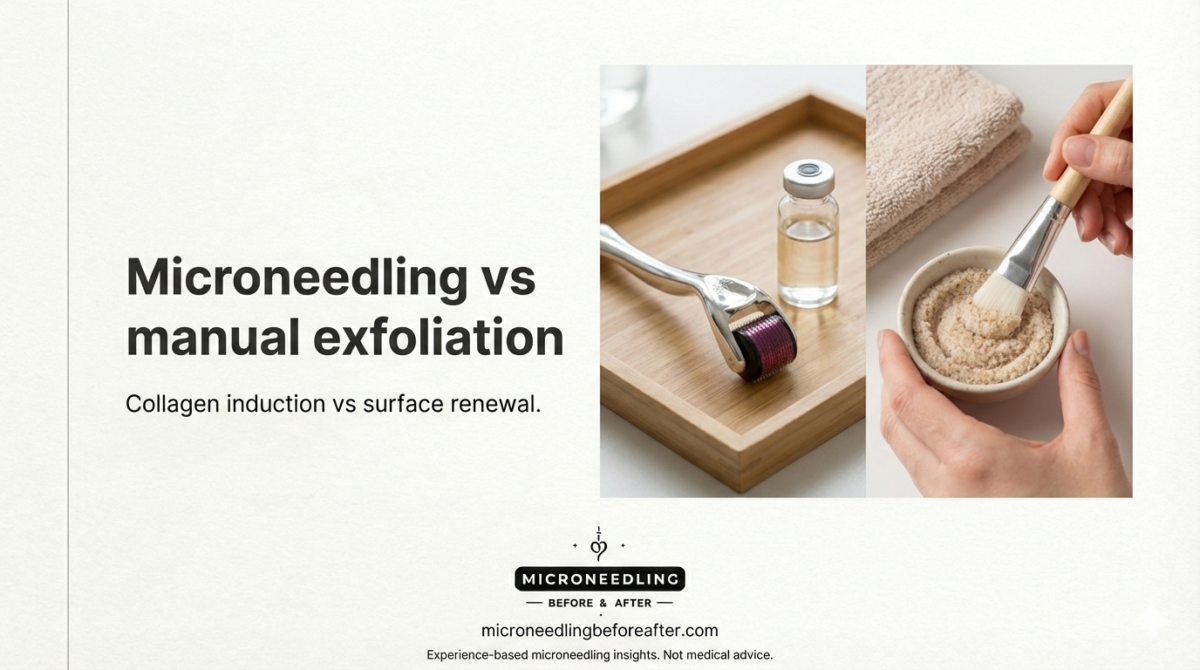
Microneedling Vs Manual Exfoliation

Microneedling vs manual exfoliation: clear, practical guide on how they work, benefits, risks, costs, who they’re best for, and safe ways to combine them. Tips!

? Have you been trying to decide whether microneedling or manual exfoliation is the better route for my skin concerns, budget, and schedule?

Microneedling Vs Manual Exfoliation

I want to walk you through both approaches in a straightforward, practical way. I’ll explain how they work, what benefits and risks I’ve learned about, when I would choose one over the other, and how to combine them safely if that makes sense for your goals.

What is microneedling?

Microneedling is a procedure that uses tiny needles to create controlled micro-injuries in the skin. I find it helpful to think of microneedling as a way to trigger the skin’s natural repair processes — primarily collagen and elastin production — which can improve texture, scars, and signs of aging over time.

What is manual exfoliation?

Manual exfoliation refers to physically removing dead skin cells with tools or products that rub the surface of the skin. When I reach for manual exfoliation, I’m usually talking about scrubs, face cloths, facial brushes, or textured pads that mechanically slough off the outermost layer of cells to reveal fresher skin underneath.

How microneedling works

I like to keep the science simple: tiny needles puncture the epidermis and, depending on needle length, slightly into the dermis. These controlled injuries stimulate a wound-healing cascade — increased blood flow, growth factor release, and new collagen formation — which can improve scars, fine lines, and skin laxity over a series of treatments.

How manual exfoliation works

Manual exfoliation works by physically abrading the stratum corneum (the top layer of dead skin cells). That immediate physical removal brightens skin, smooths texture, and allows topical products to penetrate more effectively. The effects are usually short-term and depend heavily on frequency and technique.

Types of microneedling

There are several approaches I’d consider:

  • Professional microneedling (in-office): performed by a dermatologist or aesthetician using medical-grade devices.
  • At-home derma rollers and pens: lower needle depth and less consistent results.
  • Radiofrequency microneedling: adds thermal energy to tighten tissue in addition to mechanical stimulation.

I always emphasize that in-office treatments have more predictable results and better safety controls than at-home devices.

Types of manual exfoliation

Manual exfoliation comes in several forms I use:

  • Physical scrubs (sugar, salt, synthetic beads): granular particles in a cream or gel.
  • Exfoliating tools (washcloths, konjac sponges, facial brushes): mechanical friction.
  • Exfoliating pads (textured pads, nylon mesh): gentle to moderate abrasion.

I avoid harsh, jagged particles and overuse, because they can micro-tear the skin.

Immediate and long-term benefits of microneedling

In my experience, microneedling offers:

  • Long-term collagen remodeling: results develop over weeks to months.
  • Improvement in acne scarring and texture: repeated treatments can soften scars.
  • Even skin tone and reduced hyperpigmentation when combined with appropriate topical agents.

I don’t expect overnight miracles; microneedling is a gradual process that requires patience and a planned series of sessions for best outcomes.

Immediate and long-term benefits of manual exfoliation

When I use manual exfoliation correctly, I notice:

  • Instant brighter, smoother skin: by removing the dull outer layer.
  • Better product absorption: serums and moisturizers penetrate more easily.
  • Temporary improvement in skin texture and radiance.

However, the benefits are often immediate but short-lived compared to microneedling.

Risks and side effects of microneedling

I’m careful to respect the risks, which include:

  • Redness and swelling: common post-procedure reactions that usually resolve in days.
  • Infection and scarring: rare but possible, especially with improper technique or unsterile instruments.
  • Post-inflammatory hyperpigmentation (PIH): more likely in darker skin tones if not managed properly.

This is why I recommend professional treatment for deeper needling and to follow strict aftercare.

Risks and side effects of manual exfoliation

With manual exfoliation I watch for:

  • Microtears and irritation: overly aggressive scrubs or tools can damage the skin barrier.
  • Increased sensitivity and redness: frequent use can strip natural oils.
  • Exacerbation of inflammatory conditions: scrubbing can worsen acne or rosacea flare-ups.

Gentle technique and appropriate product choice make a big difference in my experience.

Who benefits most from microneedling?

I suggest microneedling for:

  • People with atrophic acne scars.
  • Those concerned about fine lines and skin laxity.
  • Individuals looking for long-term collagen stimulation.

If I want structural skin change beyond surface-level brightening, microneedling is often my preferred choice.

Who benefits most from manual exfoliation?

I tend to recommend manual exfoliation for:

  • People who want immediate radiance and smoother texture.
  • Those with dull skin from dryness or buildup.
  • Users who need a low-cost, maintenance step to incorporate into regular skincare.

If my goal is quick glow and product efficacy, manual exfoliation fits the bill.

Skin types and suitability

I consider skin type carefully:

  • Sensitive or inflammatory-prone skin: I’m cautious with both methods. I tend to favor gentle manual exfoliation over aggressive microneedling unless supervised by a professional.
  • Oily, congested skin: both techniques can help, but I’d use gentle exfoliation more frequently and microneedling selectively.
  • Darker skin tones: microneedling is possible but should be performed by an experienced clinician to limit PIH. Gentle exfoliation is generally safe but should avoid harsh abrasion.

The correct approach is individual; I always consider medical history, active skin issues, and goals.

Frequency and timing

When I plan a routine:

  • Microneedling: typically every 4–8 weeks when done professionally, with multiple sessions (commonly 3–6) for optimal results.
  • At-home microneedling: very infrequent and with shallow needles — I recommend caution and conservative intervals.
  • Manual exfoliation: 1–3 times per week depending on exfoliant type and skin tolerance. I recommend gentler methods for daily use (e.g., soft cloths) and more abrasive scrubs less frequently.

I prioritize consistency and gentleness to avoid cumulative damage.

At-home microneedling vs professional microneedling

I see clear differences:

  • Safety and control: professionals use sterile, medical-grade tools and can adjust depth safely.
  • Needle depth: in-office devices can reach depths that deliver real collagen remodeling; at-home devices are shallower and less effective.
  • Results and downtime: professional treatments deliver more significant, longer-lasting improvements but require recovery time.

I personally feel more secure having deeper treatments managed by trained professionals.

Tools and products I recommend for manual exfoliation

I often use:

  • Gentle granules (sugar-based scrubs) or smooth synthetic beads for sensitive skin.
  • Soft-bristled brushes or silicone cleansing tools for controlled mechanical action.
  • Exfoliating gels with mild physical particles or gentle enzyme-based products.

I avoid rough shells, walnut or apricot kernel scrubs, and anything that feels scratchy.

Preparation before microneedling

When I prepare for a session I:

  • Stop retinoids and harsh acids a few days beforehand to minimize irritation.
  • Avoid active sunburn or recent chemical peels.
  • Discuss medications and medical history with my provider (e.g., blood-thinners, isotretinoin).

Good assessment and preparation reduce complications in my experience.

Aftercare following microneedling

My aftercare routine focuses on healing:

  • Keep skin gentle and clean: use a mild cleanser and avoid active ingredients for several days.
  • Hydrate and protect: apply healing serums and mineral sunscreen daily.
  • Avoid makeup for 24–48 hours if my clinician advises it, and avoid intense sweating or pools until skin has calmed.

Following aftercare instructions closely helps me get the best results without setbacks.

Aftercare following manual exfoliation

After I exfoliate manually I:

  • Use a hydrating serum and moisturizer to restore barrier function.
  • Apply sunscreen immediately, because freshly exfoliated skin is more UV-sensitive.
  • Avoid further active treatments (retinoids, peels) for a day or two if the skin feels raw.

These steps minimize irritation and protect results.

Comparison table: Microneedling vs Manual Exfoliation

Feature Microneedling Manual Exfoliation
Mechanism Controlled micro-injuries stimulating collagen Physical removal of dead skin cells
Main benefits Collagen remodeling, scar reduction, long-term texture improvement Immediate brightness, smoother surface, improved product absorption
Typical downtime 1–7 days depending on depth Minimal to none; temporary redness possible
Frequency Every 4–8 weeks (professional) 1–3 times/week depending on method
Risk of PIH Possible in darker skin if mismanaged Lower, but over-exfoliation can cause inflammation
Best for Scarring, wrinkles, skin laxity Dullness, minor texture irregularities, maintenance
At-home suitability Shallow at-home devices only; professional recommended Widely suitable with correct products and technique

I find this table helps clarify the practical differences when making a choice.

Pros and cons (short list)

I like to list pros and cons to weigh decisions:

Microneedling pros:

  • Long-lasting structural improvements.
  • Effective for scars and deeper texture issues.

Microneedling cons:

  • Requires downtime and multiple sessions.
  • Higher upfront cost and need for professional oversight.

Manual exfoliation pros:

  • Immediate results and low cost.
  • Easy to incorporate into regular skincare.

Manual exfoliation cons:

  • Short-lived effects and potential for cumulative damage if too aggressive.
  • Less effective for deep scars or structural problems.

Evidence and scientific support

When I look at the literature:

  • Microneedling has evidence supporting improvement in acne scarring and skin texture, particularly when multiple sessions are performed. Clinical trials and case series show collagen induction and measurable improvement over months.
  • Manual exfoliation has well-documented short-term benefits for surface texture and radiance, but it lacks the capacity to remodel deeper skin architecture. Enzyme-based and chemical exfoliants also have strong evidence for safe, effective resurfacing.

I still recommend evaluating individual scientific sources and consulting dermatologists for complex conditions.

Contraindications and when to avoid each method

I avoid microneedling if:

  • I have active infection, cold sores, or open wounds in the treatment area.
  • I’m taking systemic isotretinoin within the past 6–12 months (doctor-dependent).
  • I have certain skin conditions that raise scarring risk.

I avoid manual exfoliation if:

  • Skin is inflamed with active acne, eczema flare, or rosacea exacerbation.
  • There is a history of sensitive skin that reacts to friction.

When in doubt, I consult a professional.

Cost comparison

I consider cost this way:

  • Professional microneedling sessions typically range depending on clinic and region; multiple sessions add to the total investment.
  • At-home tools are cheaper but less effective. A good-quality derma roller or pen is an initial investment, and I factor in replacement cartridges.
  • Manual exfoliation products and tools are relatively low-cost and can fit into most budgets.

The cost-benefit balance is personal: I weigh long-term outcomes against immediate budget constraints.

Combining microneedling and manual exfoliation — can I do both?

I’ve combined them safely by:

  • Scheduling manual exfoliation as part of my routine but avoiding aggressive scrubbing close to a microneedling session.
  • Using gentle maintenance exfoliation between microneedling sessions to keep the surface smooth without irritating deeper healing.
  • Ensuring adequate time (usually several days) after microneedling before resuming any manual abrasion.

If I plan to combine, I coordinate timing and intensity to prevent over-traumatizing the skin.

Practical decision flow I use

When I decide which to do, I ask myself:

  1. What is my primary skin concern — surface dullness or deeper scars/wrinkles?
  2. How much downtime and budget can I afford?
  3. What is my skin’s sensitivity level and medical history?
  4. Do I prefer professional treatments or at-home maintenance?

Answering these guides my choice: surface issues → manual exfoliation; structural issues → microneedling, usually professionally.

Safety tips I follow

I always adhere to:

  • Clean tools and sterile technique for any microneedling device.
  • Gentle pressure and limited frequency for manual exfoliation.
  • Sun protection daily — fresh or healing skin is vulnerable to UV damage.
  • Stop aggression if I see persistent redness, swelling, or signs of infection, and seek professional care.

I treat safety as non-negotiable.

Realistic expectations I set for myself

I keep expectations reasonable:

  • Microneedling gives progressive improvements over months, not overnight fixes.
  • Manual exfoliation gives immediate brightening but needs consistent, gentle use.
  • Neither is a one-size-fits-all cure; results vary by skin biology, technique, and adherence.

Managing expectations helps avoid disappointment and overuse.

When to see a professional

I see a dermatologist or licensed aesthetician when:

  • I have moderate-to-severe acne scarring or persistent hyperpigmentation.
  • I’m considering deeper microneedling or combined modalities (lasers, peels).
  • I experience unusual side effects like intense pain, prolonged redness, or signs of infection.

Professional guidance improves safety and outcomes in my experience.

Common mistakes I avoid

I try not to:

  • Over-exfoliate daily with harsh scrubs.
  • Use at-home microneedling aggressively or too frequently.
  • Skip sunscreen after resurfacing procedures.

Avoiding these keeps my skin healthier long-term.

Case examples from my perspective

  • If my friend has textured acne scars, I recommend a series of professional microneedling sessions because the collagen induction targets depth.
  • If another friend wants a quick glow before an event, I suggest manual exfoliation with a gentle scrub or a mild physical brush and a hydrating mask afterward.

These tailored choices reflect different goals and tolerances.

FAQs

Q: Can I microneedle over active acne? A: I wouldn’t recommend microneedling over active inflammatory acne because it can spread bacteria and worsen inflammation. Treat active acne first and consult a professional.

Q: Will manual exfoliation make my pores smaller? A: Manual exfoliation can make pores appear smaller by removing debris and smoothing the skin surface. It won’t actually change pore size permanently; treatments targeting oil production and skin structure are required for lasting changes.

Q: How soon after microneedling can I use serums? A: I usually apply only clinician-recommended, sterile serums immediately after professional microneedling. For home care, I keep products minimal and non-irritating for several days, then reintroduce actives gradually.

Q: Is microneedling painful? A: I’ve experienced discomfort depending on depth. Professionals often use topical anesthetic to minimize pain during in-office treatments.

My final recommendation

If I need deeper, longer-lasting improvement for scarring or laxity, I lean toward professional microneedling, understanding the downtime, cost, and need for multiple sessions. If my need is immediate radiance, smoother texture, and low cost with minimal recovery, I favor gentle manual exfoliation as a regular maintenance step. I also recognize that both can complement each other if used thoughtfully and spaced appropriately.

Closing thoughts

I’ve learned that the best choice depends on honest goals, skin tolerance, and willingness to follow safe protocols. I favor starting conservatively, seeking professional advice for significant concerns, and protecting the skin with hydration and sunscreen. If you want, I can help you build a sample routine based on your specific skin type and goals.
Microneedling Pen Speed Settings Explained

Learn how microneedling pen speed affects results, safety, and technique-match speed to depth, treatment goals, and skin type with clinician guidance. Pro tips.

Have you ever wondered how the speed setting on a microneedling pen changes the treatment outcome?

Microneedling Pen Speed Settings Explained

I will explain how microneedling pen speed settings work, why they matter, and how to match speed to treatment goals and skin characteristics. I will present practical guidance for clinicians and informed consumers, highlight safety considerations, and provide step-by-step recommendations so you can make informed choices when planning or performing treatments.

What is a microneedling pen?

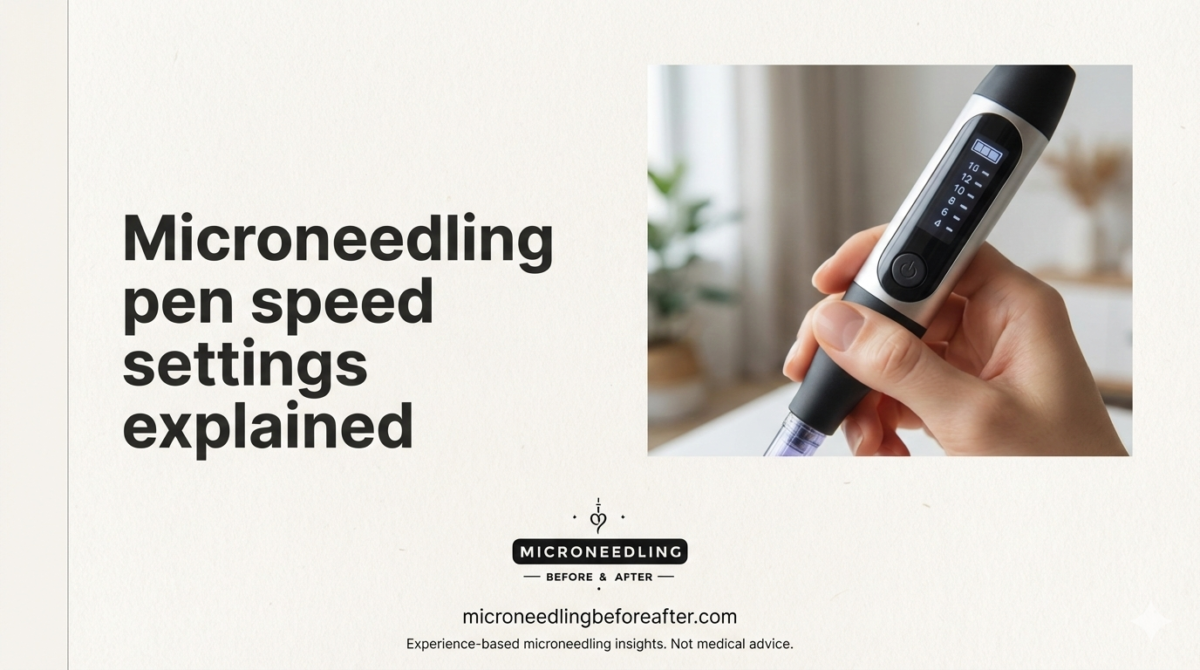
I use the term microneedling pen to describe a motorized device that repeatedly drives a cluster of tiny needles into the skin to create controlled microinjuries. The resulting microchannels stimulate wound-healing pathways that lead to collagen and elastin remodeling and improve skin texture and tone. I emphasize that performance characteristics — including needle depth, needle configuration, and motor speed — together determine tissue response and the clinical outcome.

What does “speed” mean on a microneedling pen?

I define speed as the frequency with which the needle cartridge cycles — typically expressed as strokes per minute (SPM) or revolutions per minute (RPM), depending on manufacturer terminology. Speed controls how many micro-injuries are delivered in a given time period and influences mechanical force per impulse, penetration consistency, and patient sensation. I note that manufacturers may label speeds with simple levels (1–12) or with numeric values that represent motor cycles per minute, so it is important to refer to each device’s specifications.

How speeds are measured and labeled

I explain that some devices display an absolute number (e.g., 1,000–18,000 SPM or RPM), while others show incremental levels that correspond to internal motor settings. I recommend checking the device manual for what each level represents because “level 5” on one device may not equal “level 5” on another. I also emphasize that brand-to-brand variability means numerical ranges should be used as general guidance rather than absolute rules.

Typical consumer and professional speed ranges

I point out that consumer-grade pens often have lower maximum speeds and fewer preset levels than professional devices, and that clinical devices are designed for repeated heavy use and finer control. Broadly speaking, I categorize speeds into low, medium, and high ranges for clarity:

  • Low: approximately 400–1,500 SPM/RPM — used for deeper needling or sensitive areas.
  • Medium: approximately 1,500–6,000 SPM/RPM — appropriate for many resurfacing and scar treatments.
  • High: approximately 6,000–18,000 SPM/RPM — used primarily for superficial or cosmetic resurfacing where rapid microchannels are desired.

I caution that these ranges are approximate and depend on device design; always confirm with the device manufacturer and clinical guidelines.

Why speed matters

I explain that speed influences several treatment variables: the number of micro-injuries created per unit time, the character of the tissue insult (micro-tearing versus clean microchannels), patient comfort, and the thermal and mechanical stress imparted to the tissue. Speed interacts with needle depth and technique to determine clinical efficacy and safety. Optimizing speed helps balance efficacy with tolerance and lowers the risk of adverse events.

Tissue response to speed

I discuss how higher speeds create many microchannels rapidly, potentially yielding uniform coverage with less lateral displacement of the skin. Conversely, slower speeds produce fewer impulses per unit time but may generate higher force per pass, which can increase trauma at a given depth. The skin’s wound-healing cascade — including platelet activation, cytokine release, neocollagenesis, and remodeling — is triggered by the nature and extent of microinjury. I emphasize that an appropriate speed encourages productive healing without excessive inflammation.

Speed versus needle depth: how they interact

I clarify that needle depth largely determines which skin layers are targeted (epidermis vs dermis) and that speed modifies the mechanical effect at that depth. For example, deeper depths (e.g., >1.5 mm) require careful, usually slower treatment to avoid tearing and excess bleeding, while superficial depths (e.g., 0.25–0.75 mm) can tolerate higher speeds with rapid, lighter passes. I recommend pairing deeper needling with lower speeds to maintain control and minimize adverse events.

Speed settings by treatment goal

I provide practical guidance for matching speed and depth to common indications. I stress that these are starting points and must be individualized by skin type, scar maturity, device characteristics, and patient tolerance. I always advise a conservative approach during initial treatments with incremental adjustments based on response.

Indication Typical Needle Depth (approx.) Suggested Speed Range Rationale
Superficial resurfacing, pore refinement 0.25–0.5 mm Medium–High (1,500–12,000) Higher speeds with shallow depth give broad coverage and fast microchannel formation with low risk.
Fine lines and superficial wrinkles 0.5–1.0 mm Medium (1,500–6,000) Balanced speed improves collagen stimulation while controlling trauma.
Acne scarring (atrophic) 1.0–2.5 mm (vary by scar depth) Low–Medium (400–4,000) Deeper, targeted needling requires lower speeds for precision and to reduce tearing. Multiple passes at controlled speed achieve remodeling.
Surgical or hypertrophic scars 1.5–3.0 mm Low (400–1,500) Slow, careful technique reduces risk of further scar trauma; may be combined with other modalities.
Hyperpigmentation and melasma 0.25–0.75 mm Low–Medium (400–4,000) Conservative speeds help avoid post-inflammatory hyperpigmentation; shallow depth only.
Hair restoration (scalp) 0.5–1.5 mm Medium (1,500–6,000) Moderate speeds with controlled depth promote growth factors; avoid excessive trauma.
Stretch marks (striae) 1.0–2.5 mm Low–Medium (400–4,000) Deep pulses at controlled speed encourage dermal remodeling while minimizing bleeding.

I reiterate that these are generalized ranges and that device-specific calibration and patch testing are essential. I also emphasize that speed alone is not the sole determinant — technique, needle configuration, and number of passes matter equally.

Clinical and safety considerations

I focus on the safety implications of speed selection. Faster speeds may reduce procedure time and patient discomfort for superficial treatments, but they can increase mechanical stress and the chance of petechiae or exaggerated inflammation, especially when combined with deeper needle settings. Slower speeds are preferable when precision and control are required, such as in scar remodeling or when treating delicate anatomic areas.

Contraindications and precautions

I highlight common contraindications to microneedling: active infection or inflammation in the treatment area, isotretinoin use within the past 6–12 months (depending on clinician judgment), certain autoimmune or bleeding disorders, uncontrolled diabetes, keloidal tendency (relative contraindication), pregnancy (relative contraindication for some clinicians), and recent radiation therapy. I stress that high speeds can amplify risks when these contraindications are present, so conservative practice and medical clearance are important.

Skin type and pigmentary risk

I note that Fitzpatrick phototypes IV–VI have increased risk of post-inflammatory hyperpigmentation (PIH). When treating darker skin types, I recommend slower speeds, shallower depths, and a conservative number of passes. I also recommend topical depigmenting agents and sun protection as part of the pre- and post-treatment plan to reduce PIH risk.

Pain control and patient comfort

I explain that speed influences sensation: higher speeds can feel less jarring for very superficial work because impulses are rapid and light, while deeper, slower passes can be perceived as more forceful. I recommend topical anesthetic application (e.g., lidocaine-based creams) for deeper treatments and for anxious patients, and stress that anesthetic application should follow manufacturer and regulatory guidance. I always advise monitoring for anesthetic toxicity and advising patients about possible numbness post-procedure.

Technique specifics: stamping, gliding, and cross-hatching

I describe three commonly used techniques and how speed selection affects each.

Stamping (vertical technique)

I explain that stamping involves perpendicular insertion and rapid withdrawal in discrete spots. I recommend using lower speeds with stamping for deep or focused scar treatments to ensure controlled penetration and minimize lateral tearing. Stamping is well-suited to treating individual acne scars or surgical scars with precise depth control.

Gliding (continuous technique)

I describe gliding as dragging the pen across the skin to create continuous microchannels. For gliding, medium to high speeds at shallow depths are appropriate because rapid cycles produce consistent coverage. I recommend caution to avoid long continuous passes at deep settings, which increase the risk of epidermal injury.

Cross-hatching (multi-directional passes)

I explain that cross-hatching uses multiple passes in perpendicular or diagonal directions to maximize coverage and stimulate remodeling. I suggest reducing speed somewhat for deeper cross-hatch passes to avoid over-traumatizing the tissue, and increasing speed slightly for superficial passes to improve efficiency.

Device selection and calibration

I discuss how device characteristics influence optimal speed selection. Motor torque, needle cartridge stability, and ergonomics all matter. I advise clinicians to choose devices with consistent, adjustable speed control and reliable disposable cartridges to minimize variability. I also urge checking manufacturer guidance for recommended speeds for specific cartridges and for the device’s duty cycle and recommended treatment duration to avoid motor overheating.

Battery, motor, and cartridge considerations

I note that lower-quality pens can exhibit inconsistent needle motion at higher speeds, producing uneven penetration. I recommend using well-reviewed professional pens for clinical use and ensuring cartridges are properly seated and replaced per manufacturer recommendations. I also stress that battery-operated devices should be fully charged to maintain consistent motor performance throughout the procedure.

Protocols for professionals versus at-home devices

I emphasize the difference between in-office medical microneedling and at-home microneedling devices. Professional devices typically allow higher depths, finer control, and are intended for trained practitioners, while at-home devices are usually limited to superficial depths and lower speeds for safety. I recommend patients not attempt deeper treatments at home and advise clinicians to counsel patients accordingly.

At-home device guidance

I recommend that I instruct patients using at-home devices to adhere strictly to manufacturer limits on depth and speed, to sanitize the device and skin before use, and to maintain conservative frequency (e.g., weekly or monthly depending on depth) to avoid cumulative trauma. I also advise that patients discontinue use and seek clinical evaluation if unexpected redness, pain, or scabbing persists.

Maintenance, sterilization, and cartridge management

I describe mandatory hygiene practices. I instruct clinicians and consumers to use sterile, single-use cartridges when possible, to disinfect reusable device surfaces between patients, and to follow manufacturer instructions for sterilization. I point out that needle dullness can alter effective penetration and create more tearing; therefore I recommend replacing cartridges per recommended usage limits.

Signs of cartridge wear and malfunction

I list indicators such as uneven needle travel, increased snagging or pulling sensation, visible bending of needles, and excessive bleeding for the same depth/preset as signs to replace cartridges. I recommend that I and other clinicians stop treatment immediately if mechanical irregularities occur and inspect the cartridge.

Common myths and misconceptions about speed

I address several misconceptions and provide corrective explanations.

  • Myth: Higher speed always equals better results. I counter that higher speed improves efficiency for superficial work but can increase mechanical stress and the risk of adverse effects if paired with excessive depth or poor technique.
  • Myth: Faster treatments are less painful. I explain that pain perception depends on depth, number of passes, and local anesthesia; speed is only one factor.
  • Myth: More passes at high speed produce exponentially better results. I clarify that beyond a certain point, additional trauma yields diminishing returns and greater risk of inflammation and pigmentary change.

I encourage measured, evidence-based practice rather than assuming more speed or more passes will always produce superior outcomes.

Troubleshooting: common problems and solutions

I outline common issues related to speed and their practical fixes.

  • Uneven penetration or skipping: often due to low battery, loose cartridge, or debris. I recommend stopping, replacing or re-seating the cartridge, and ensuring full power.
  • Excessive bleeding or bruising: may indicate too-deep needling at too-high speed; I advise halting treatment, applying pressure and cooling, and following appropriate wound-care protocols.
  • Post-inflammatory hyperpigmentation: reduce depth and speed in subsequent sessions, prescribe topical depigmenting agents when indicated, and enforce strict photoprotection.
  • Motor overheating: allow cooling periods between long sessions or use device with higher duty cycle; maintain manufacturer-recommended working intervals.

I recommend documenting any adverse events and modifying subsequent protocols based on patient response.

Evidence and outcomes

I summarize the clinical rationale: microneedling stimulates collagen and elastin production through controlled microinjury. I note that studies support its efficacy for scars, wrinkles, and skin texture, and that outcomes depend on depth, needle configuration, and, to a meaningful extent, speed because speed contributes to the density and uniformity of microchannels. I caution that randomized controlled trial data specifically comparing different speeds remain limited, so much of practice is guided by biomechanical reasoning and clinical experience.

Practical session planning and sample protocols

I provide sample, conservative protocols for a hypothetical clinical session meant for someone beginning treatment. I note that I always tailor these to the individual.

  • Initial evaluation and patch test: I check medical history, obtain informed consent, and perform a small-area test at low depth and medium speed to observe tolerance and healing.
  • Baseline for superficial resurfacing: 0.25–0.5 mm depth, medium–high speed, 2–4 passes across the entire face, with topical serum application post-procedure.
  • Baseline for acne scarring: 1.0–2.0 mm depth depending on scar depth, low–medium speed, 1–3 targeted passes per scar (stamping), avoid aggressive cross-hatching in the same session.
  • Post-treatment care: cold compresses immediately, apply sterile barrier serum and sun protection, avoid harsh topical actives (e.g., retinoids, strong acids) for 3–7 days depending on depth.

I advise that I typically space sessions 4–6 weeks apart for deeper treatments to allow remodeling and that shallower, cosmetic sessions can be repeated more frequently at clinician discretion.

Legal and regulatory considerations

I remind clinicians and device users to adhere to local regulations governing device classification and practitioner scope of practice. I stress that certain devices and settings may be restricted to licensed professionals in some jurisdictions. I recommend documenting settings, needle depth, cartridge type, number of passes, and patient responses in the medical record.

Frequently asked questions (FAQs)

I include brief answers to common questions I hear regarding speed settings.

  • Will increasing speed reduce treatment time? Yes, higher speeds can reduce time for superficial treatments, but deeper work still requires careful pace and multiple targeted passes.
  • Is a higher speed more painful? Not necessarily; sensation depends on depth, area, and anesthesia. Higher speed with superficial depth can feel less intense than deep slow passes.
  • Can I use the highest speed my device offers for all treatments? I discourage this because high speed combined with deep depth or aggressive technique can increase adverse events.
  • How do I choose needle depth and speed for delicate areas (e.g., under eyes)? Use shallow depths and lower speeds, with fewer passes, to reduce risk of bruising and pigment change.
  • Should I adjust speed across the same session? Yes. I often begin superficial passes at higher speeds to achieve coverage, then switch to lower speeds for focused deeper work or delicate zones.

Final recommendations and summary

I summarize practical takeaways: speed is a crucial control parameter that influences the density, uniformity, and nature of microinjuries delivered by a microneedling pen. I advise starting conservatively — lower speeds for deeper and scar-focused work, medium speeds for general resurfacing, and higher speeds for shallow cosmetic coverage — while tailoring choices to device specifications, patient skin type, and treatment objectives. I always recommend a patch test, clear informed consent, and careful documentation. For novice practitioners or patients using at-home devices, I encourage seeking professional training or clinical consultation before attempting deeper or higher-speed treatments.

I offer to assist further by reviewing device specifications, helping create a treatment protocol tailored to a specific device and patient population, or answering case-specific questions based on clinical scenarios.

en_USEnglish