
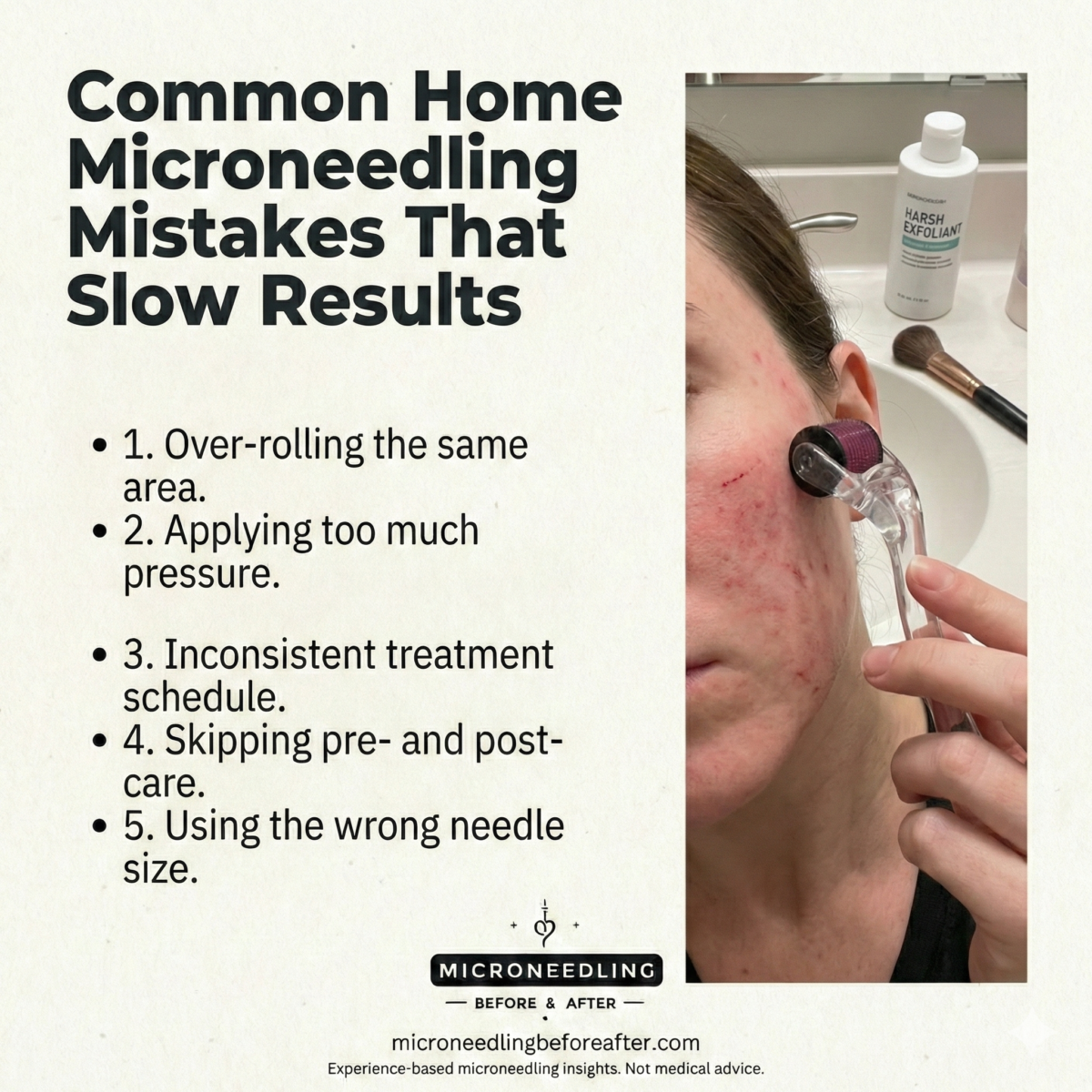
Have you ever wondered why my at-home microneedling sessions didn’t give me the dramatic results I expected?
Common Home Microneedling Mistakes That Slow Results
I wrote this so I can share the pitfalls I’ve seen and made myself, and the straightforward fixes that actually speed up visible progress. Microneedling can be powerful when done correctly, but small errors at home often cost weeks or months of progress — and sometimes create setbacks.
What microneedling does and why technique matters
I’ll start with a quick primer: microneedling uses tiny needles to create controlled micro-injuries in the skin, prompting a wound-healing response and new collagen and elastin production. Because the process relies on a biological repair cascade, technique, timing, hygiene, and aftercare all shape how well and how fast those changes take hold.
How fast should I expect results?
I like to set realistic timelines so I don’t get discouraged. I usually tell people to expect subtle improvements within 2–4 weeks and more noticeable texture and firmness changes after 3 months, since collagen remodeling takes time. If I don’t see any change after several months, that’s a sign something in my routine is off.
The most common mistakes that slow results
I’ll walk through the typical errors in detail, explain why they matter, and give practical fixes I’ve used or recommended.
Using the wrong needle length
Many people think longer needles equal faster results. I know I used to think that too. Needle length should match the skin issue: shorter needles for surface concerns and longer ones for scarring or deeper wrinkles. Using too-short needles won’t trigger enough collagen response; too-long needles increase risk of bleeding, scarring, and infection.
- Fix: Follow a needle-length guideline based on your goal (see table below). If I’m unsure, I start conservative and consult a pro for longer lengths.
| Needle length (mm) | Typical use | Risk if misused |
|---|---|---|
| 0.25 mm | Boosting product absorption, superficial texture | Minimal collagen stimulation if overused |
| 0.5 mm | Fine lines, mild texture issues | Safe at home with proper prep |
| 0.75–1.0 mm | Deeper texture, light scars | More discomfort; consider professional advice for >0.75 |
| 1.5 mm | Moderate scars and stretch marks | Usually best left to professionals |
| >1.5 mm | Deep scarring and medical indications | Higher risk; professional setting recommended |
Going too often or not spacing sessions correctly
I’ve seen people microneedle every few days hoping to speed results, which actually hinders progress. Collagen formation needs time — rushing sessions just irritates the skin repeatedly and prevents proper healing.
- Fix: For 0.25–0.5 mm I typically recommend every 1–3 weeks; for 0.75–1.0 mm every 4–6 weeks; longer needles require longer recovery. I track sessions in my calendar to avoid overdoing it.
Applying strong actives immediately after needling
When the skin is freshly needle-treated, it’s more permeable. That’s useful for hydrating peptides and hyaluronic acid, but potentially dangerous for harsh actives like retinoids, acids, or high-strength vitamin C. I learned the hard way that applying these right after treatment causes stinging, inflammation, or even chemical burns.
- Fix: I use gentle, sterile hyaluronic acid serums and calming peptides post-treatment. I avoid retinoids and exfoliating acids for at least 3–7 days depending on the needle length and skin sensitivity.
Poor sanitation and reusing disposable tools
Infections are one of the fastest ways to derail progress. When I started, I underestimated the germ risk. Unclean rollers, pens, or hands can introduce bacteria into microchannels, causing prolonged redness, pustules, or scarring that can set me back months.
- Fix: I only use single-use needles or sterile cartridge systems designed for pens. I sanitize non-disposable tools correctly, follow manufacturer guidance, and always wash my hands and face before treatment.
Not prepping the skin properly
Skipping a thorough cleanse, or microneedling with makeup residue or sunscreen on, means I’m pushing contaminants into the skin. I used to rush this step and paid for it with irritation.
- Fix: I cleanse twice (oil-based if needed, then gentle foaming or micellar), and if I plan to use numbing cream I apply it to clean, dry skin. I also avoid alcohol-based toners right before needling to prevent extra irritation.
Skipping a patch test for new serums or devices
I learned that allergies and sensitivities sometimes show up only when skin is compromised. Trying a new serum immediately after needling once caused me intense redness and itching.
- Fix: I always patch-test products on the inner forearm and wait 24–48 hours. For a new device, I test a small area on my jawline or forearm to gauge reaction before treating the whole face.
Incorrect technique — too many passes or wrong direction
Technique affects both safety and effectiveness. I used to make the mistake of repeatedly going over the same area or changing angles randomly, which led to more inflammation and uneven results.
- Fix: I use a methodical pattern (horizontal, vertical, then diagonal) and limit passes per area (usually 2–4 passes per direction). I maintain consistent pressure and avoid overworking one patch of skin.
Overestimating the benefits for certain skin types or conditions
Microneedling is not a cure-all. I once thought it would erase deep icepick acne scars overnight. That mindset led to disappointment. Some conditions like active acne, certain inflammatory skin diseases, or keloid propensity are contraindications or require professional supervision.
- Fix: I consult a dermatologist for severe scarring, active rosacea, or inflammatory acne. I avoid needling over active lesions and defer treatment until the skin is calm.
Not managing sun exposure and SPF
Sun damage and inflammation together amplify pigmentation and slow healing. If I microneedle and then don’t protect my skin, I can see hyperpigmentation or prolonged redness.
- Fix: I avoid direct sun for at least 48–72 hours post-treatment and use a broad-spectrum SPF 30+ daily. I wear a hat and sunglasses when heading outside.
Using poor-quality or unregulated devices
I’ve learned that cheaper, low-quality rollers and pens can have irregular needles that tear the skin instead of creating clean microchannels. That leads to more trauma and a slower healing response.
- Fix: I buy devices from reputable brands that provide sterilized, medical-grade cartridges. I read reviews and check for CE/FDA clearance where applicable.
Numbing cream misuse
Numbing creams can be helpful for comfort, but improper use (too thick, left on too long, or over large areas) can cause irritation or systemic absorption issues. I once left numbing cream on too long and had a red, swollen face.
- Fix: I follow recommended application time, use the correct percentage ingredient, and avoid occlusion that increases absorption unless instructed by a professional.
Ignoring post-needling inflammation signals
Some inflammation is expected, but persistent swelling, warmth, pus, or increased pain suggests infection or adverse reaction. I used to downplay prolonged redness and only later realized it was more serious.
- Fix: I monitor symptoms closely for 48–72 hours. If symptoms worsen or don’t improve, I contact a healthcare professional immediately.
Mixing treatments improperly (chemical peels, waxing, laser)
Combining microneedling with other strong treatments too soon can amplify irritation and damage. I once layered a chemical peel into a routine without adequate spacing and created excessive inflammation that slowed results.
- Fix: I space out aggressive treatments. Typically, I allow at least 2 weeks after a peel or laser before needling, but I follow device and treatment-specific guidance and speak with clinicians if unsure.
Expecting immediate collagen miracles
People often expect overnight transformations. I’ve heard “I did it once and nothing happened” many times. Collagen remodeling is slow and cumulative; one session rarely produces dramatic change unless it’s a professional, deeper treatment.
- Fix: I set a realistic plan: consistent, spaced treatments with good aftercare. I track progress with photos every 2–4 weeks so I can actually see subtle improvements.
Not tailoring aftercare to needle depth
Aftercare for a 0.25 mm session differs from a 1.0 mm session. I used to treat all sessions the same and that led to unnecessary irritation after deeper treatments.
- Fix: For shallow sessions I use gentle hydration and SPF; for deeper sessions I extend downtime measures, avoid active ingredients longer, and prioritize rest and barrier repair.
Microneedling over active infections or open wounds
This is a non-negotiable mistake. Needling over cold sores, bacterial infections, or inflamed acne pushes pathogens deeper and risks spreading.
- Fix: I delay treatments until lesions are fully healed and sometimes use antiviral or antibacterial management first if needed.
Is microneedling better than facial massage for collagen?
I get asked this a lot, so I’ll be direct: microneedling and facial massage work differently, and “better” depends on the goal.
- Microneedling creates controlled micro-injury that directly stimulates the wound-healing cascade, leading to increased collagen and elastin in the dermis. For measurable collagen induction — especially when treating scars, deep texture, or significant laxity — microneedling is more effective than massage.
- Facial massage improves circulation, lymphatic drainage, and muscle tone, and it can temporarily plump the skin by increasing fluid and blood flow. Over time it may contribute to healthier-looking skin and some collagen maintenance, but it does not produce the same degree of collagen remodeling as microneedling.
I like to think of it this way: if my goal is structural collagen change for scars or wrinkles, I choose microneedling. If my goal is immediate glow, relaxation, or aiding lymphatic flow, massage is a great tool. Combining both — using microneedling for remodeling and massage for maintenance and circulation — often gives the most balanced results.
Here’s a quick comparison table I use to explain the differences:
| Factor | Microneedling | Facial massage |
|---|---|---|
| Primary mechanism | Micro-injury → collagen remodeling | Mechanical stimulation → circulation & lymph flow |
| Collagen induction | High (especially with appropriate depth) | Low to moderate (maintenance) |
| Immediate results | Redness and swelling; longer-term texture/firmness | Instant glow and reduced puffiness |
| Downtime | 24 hours to several days (depending on depth) | Minimal to none |
| Risk | Infection, scarring if misused | Low (bruising possible) |
| Best for | Scars, deep wrinkles, laxity | Relaxation, circulation, temporary plumping |
Needle length guide and when to see a professional
I already mentioned some lengths, but here’s a clearer breakdown I follow, with guidance on when to get professional help.
My needle-length recommendations and rationale
I find this table helpful to share with friends or clients who ask what they can safely do at home versus when to see a clinic.
| Needle length | Use at home? | Typical use | When to see a pro |
|---|---|---|---|
| 0.25 mm | Yes | Product absorption, mild texture | Home use is fine |
| 0.5 mm | Yes | Fine lines, mild scarring | Home use ok with caution |
| 0.75 mm | Yes for experienced users | Moderate scarring, deeper lines | Consider pro if unsure |
| 1.0 mm | Caution | Deeper scars, more significant remodeling | I usually recommend professional sessions |
| 1.5 mm and above | No | Significant scarring, stretch marks | Professional-only |
Aftercare checklist I use every time
I keep a simple checklist to minimize mistakes and optimize results. You can copy this for your own routine.
- Cleanse thoroughly before treatment (double cleanse if needed).
- Use sterile device/cartridge and clean hands.
- Limit to recommended passes and directions.
- Post-treatment: apply gentle, sterile hyaluronic acid or peptide serum.
- Avoid retinoids and acids for 3–7 days (longer for deeper needling).
- Keep out of sun and use SPF 30+ daily.
- Avoid heavy workouts, saunas, and swimming for 48–72 hours.
- Don’t pick, scratch, or exfoliate until fully healed.
- Monitor for signs of infection and contact a provider if present.
Troubleshooting slow or poor results
If my progress stalls, I run through this checklist:
- Am I using the correct needle length and frequency?
- Are my tools sterile and in good condition?
- Do I have consistent, gentle technique (not overworking the skin)?
- Are active ingredients being applied too soon or too often?
- Am I protecting the skin from sun exposure?
- Do I have an underlying condition (active acne, rosacea, pigmentation) that requires medical guidance?
- Have I tracked results with photos to objectively measure change?
If multiple answers are “no,” I correct them and wait the appropriate timeframe before continuing. If the answers are “yes” and results are still lacking after several months, I consult a dermatologist for a professional assessment and potential in-clinic microneedling or adjunct therapies.
Combining microneedling with topical actives responsibly
I love the idea of enhancing penetration, but caution is key. I routinely use low-risk serums like hyaluronic acid, peptides, or growth-factor serums after treatment. High-concentration vitamin C, strong retinoids, or AHA/BHA acids need to be reintroduced later once the barrier has recovered.
- Practical sequence I follow: Immediately after — sterile, calming hydrating serum. 24–72 hours later — gentle products. After a full week (longer for deeper treatments) — resume actives gradually, watching for sensitivity.
When to stop and seek medical help
I always tell people — and remind myself — that worsening symptoms require professional care. If I see spreading redness, intense pain, fever, pus, or any sign that the skin is not healing, I stop self-treatment and contact a clinician. Early intervention prevents long-term damage.
Realistic expectations and long-term strategy
Microneedling is most effective as part of a sustained plan. I commit to a series of treatments, spaced properly, while supporting the skin with good daily care: sunscreen, a gentle cleanser, barrier-supporting moisturizers, and targeted actives used sensibly.
I also recommend tracking progress with standardized photos and notes about device settings, serums used, and any side effects. That way I can pinpoint what’s working and what’s not.
Frequently asked questions I get asked a lot
I’ll answer a few common questions briefly, the way I usually explain them to friends.
How many sessions will I need to see meaningful results?
I usually recommend at least 3–6 sessions spaced appropriately, with maintenance treatments thereafter. Some improvements appear earlier, but structural collagen changes take multiple treatments and time.
Can I use retinol between sessions?
I avoid retinol for several days after treatment (3–7 days depending on depth). Between sessions, I gradually reintroduce retinol if my skin tolerates it, but I never layer strong retinoids immediately following needling.
Is microneedling painful?
Pain varies. 0.25–0.5 mm is typically tolerable without numbing; longer needles are more uncomfortable and may benefit from topical anesthetic. I weigh comfort against safety and follow recommended numbing protocols if I use them.
Can microneedling cause hyperpigmentation?
Yes, if not done correctly or if I don’t protect the skin from sun exposure afterward. People with darker skin tones should be particularly cautious and often benefit from professional guidance to minimize post-inflammatory hyperpigmentation.
Are derma rollers as good as microneedling pens?
Derma pens with disposable cartridges are generally safer and deliver more consistent needle penetration. I avoid traditional rollers for facial areas because they can traumatize skin unevenly and are harder to sterilize.
Final thoughts and my top tips
I’ll close with the practical, easy-to-remember tips I use myself:
- Start conservative with needle length and frequency.
- Prioritize hygiene and sterile devices.
- Use gentle, hydrating serums immediately after treatment.
- Protect your skin from sun and avoid harsh actives for an appropriate window.
- Track sessions and outcomes with photos.
- Don’t be afraid to ask a professional for help if you have significant scarring, active skin disease, or unusual reactions.
If I follow these guidelines, I reduce the chance of slow or stalled results and make each session count. Microneedling can be a highly effective tool when treated with respect, patience, and consistency.
 English
  Spanish