
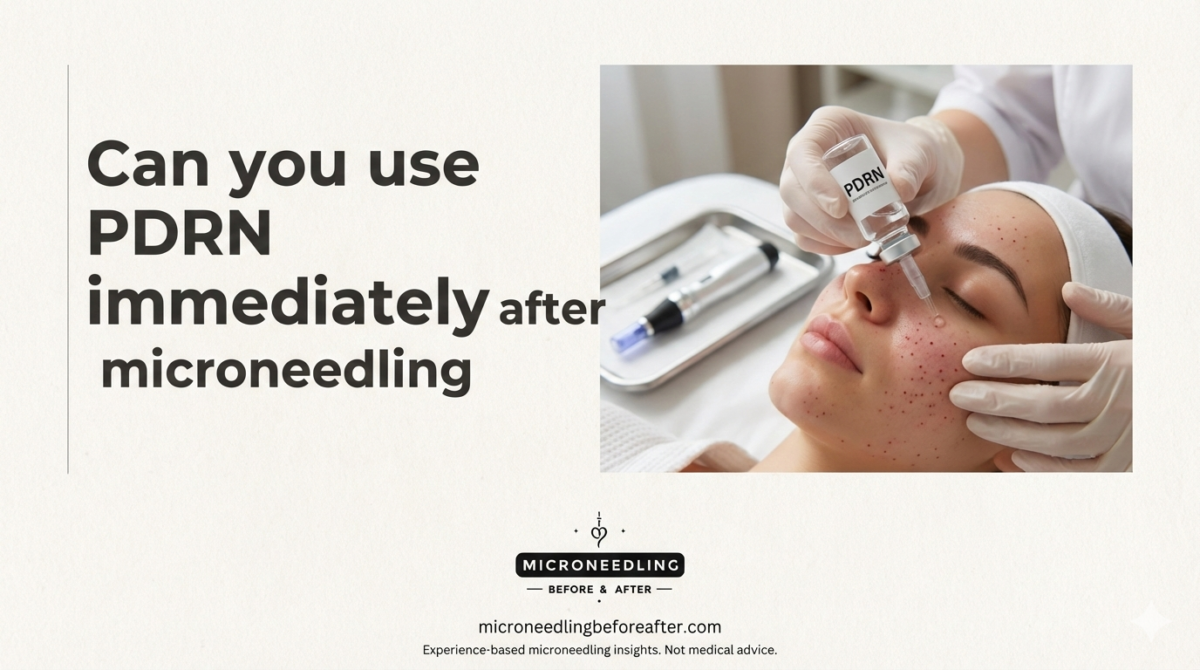
Can I apply PDRN right after microneedling, or should I wait?
Can You Use PDRN Immediately After Microneedling
I often get asked whether PDRN (polydeoxyribonucleotide) can be used immediately after microneedling. In this article I’ll walk through the science, the practical protocols, the benefits and the risks, and what I would personally do if I were getting a microneedling treatment and wanted to add PDRN.
What I mean by PDRN and why it matters
I’ll start with a plain explanation: PDRN is a preparation of DNA fragments derived from fish (commonly salmon) that’s used in aesthetic and regenerative medicine to promote tissue repair. It’s thought to work through several mechanisms including stimulation of fibroblasts, angiogenesis (new vessel growth), and modulation of inflammation. Because microneedling creates controlled micro-injuries that trigger repair pathways, combining it with regenerative agents like PDRN seems logical, but there are practical and safety considerations.
How microneedling works and why topicals matter
I want to make sure the basics are clear. Microneedling creates microchannels in the skin, which do three things: stimulate a wound-healing response, increase collagen and elastin production, and temporarily increase skin permeability so topical products can penetrate more deeply.
I often explain to patients that the skin barrier becomes more permissive for a short window after needling. That window can improve absorption of beneficial substances—if the product is appropriate and sterile.
The window of enhanced absorption
The microchannels created by microneedling typically remain open for minutes to hours, with some increased permeability lasting up to 24–48 hours depending on needle depth, device, and individual healing. I emphasize that this window is a double-edged sword: it can help deliver active ingredients but can also let in contaminants or cause excessive systemic absorption of inappropriate formulations.
Why clinicians consider combining PDRN with microneedling
I’ll be candid: combining PDRN with microneedling has become a common practice in many clinics because the conditions are favorable for delivery. Microneedling’s microchannels allow PDRN to reach deeper layers where it can influence fibroblasts and vascular endothelial cells.
From my perspective, the major reasons clinicians add PDRN are:
- Enhanced delivery: more PDRN reaches the dermis than with intact skin.
- Synergy: microneedling itself stimulates collagen; PDRN may amplify regeneration and reduce downtime.
- Anti-inflammatory and angiogenic effects: PDRN may speed recovery and improve tissue quality.
Evidence base: what the literature and clinical reports say
I want to be transparent: while there are promising preclinical and clinical reports supporting PDRN’s regenerative effect and its use with microneedling, the quantity of high-quality randomized controlled trials specific to immediate post-needling application is limited. Many trials show PDRN promotes wound healing, improves skin texture, and reduces inflammation when used in injections or as topical mesotherapy. Case series and pilot studies often report improved outcomes when PDRN is applied with microneedling, but more rigorous comparative trials would strengthen the recommendations.
What clinicians commonly report
In my experience and according to many practitioners’ reports, immediate application of sterile PDRN (either as injectable solution administered intradermally or as a sterile topical serum applied onto needled skin) often results in reduced erythema, faster recovery, and better clinical improvement than microneedling alone. However, these observations are usually within clinical practice settings rather than large randomized trials.
Is it safe to use PDRN immediately after microneedling?
Safety is my top concern when combining treatments. The short answer is: yes—if certain conditions are met. I will only recommend immediate application if the product is medical-grade, sterile, and intended for transdermal or intradermal use. I would avoid any non-sterile cosmetic serums, essential oils, or unknown compounds immediately after needling.
Key safety conditions I insist on
- Sterility: PDRN must be sterile. Injectable PDRN or medical-grade sterile topical formulations are the only options I’ll consider.
- Intended route: Use formulations labeled for injection or post-procedure topical use. Don’t use oral supplements or household skincare products for this purpose.
- Clean technique: The procedure area must be appropriately prepped and the clinic should follow aseptic technique.
- Patient screening: I screen for active infection, recent isotretinoin use, bleeding disorders, pregnancy, and severe autoimmune disease before combining therapies.
Pros and cons of immediate PDRN application
I like to weigh benefits against risks so patients can make an informed choice.
| Pros (Immediate Application) | Cons (Immediate Application) |
|---|---|
| Improved dermal delivery through microchannels | Increased risk if product is non-sterile or improperly handled |
| Potentially faster healing and reduced redness | Possible hypersensitivity or unexpected irritation (rare) |
| Possible enhancement of collagen and angiogenesis | Cost and need for clinical-grade product/skill |
| Can be applied by injection or sterile topical means | Unclear long-term comparative superiority vs delayed application |
I use this table when deciding with patients whether to proceed immediately or stage treatments.
Immediate application vs delayed application: practical considerations
I usually consider two main approaches: immediate application (during the same appointment, directly after microneedling) or delayed application (waiting hours to days). Each approach has logic.
Why I might apply PDRN immediately
I apply PDRN immediately when:
- The PDRN is an intended part of the treatment protocol and sterile.
- I want maximum dermal delivery during the period of highest permeability.
- The patient has no contraindications and understands the risks and benefits.
In such cases I may administer PDRN intradermally by mesotherapy needles or apply a sterile topical PDRN serum and use needling to enhance deeper penetration.
Why I might delay PDRN application
I might delay application when:
- The product is not certified for immediate post-procedure use.
- The patient has a history of sensitive skin, allergic reactions, or uncertain fish allergies.
- I want to avoid any risk of irritation from combining treatments immediately.
- The clinic lacks sterile PDRN or proper aseptic protocols.
Delaying by 24–72 hours can still allow good outcomes while minimizing certain risks, particularly with less-studied formulations.
Practical protocols I use (step-by-step)
I’ll share practical protocols in first-person so you can see how I’d do this in clinic. Always follow local regulations and product instructions.
Pre-procedure
I ask patients to:
- Avoid topical retinoids and exfoliants for 3–7 days.
- Avoid NSAIDs or supplements that increase bleeding (unless medically required).
- Report any active cold sores, infections, recent isotretinoin use, or pregnancy.
- Patch test the PDRN product if there’s a history of allergies or uncertain source material.
I cleanse and disinfect the area thoroughly, use topical anesthetic if appropriate, and set up sterile supplies.
During microneedling
I select needle depth based on area and condition—shallower for superficial texture, deeper for scars. I perform microneedling under sterile conditions.
If I plan to apply PDRN immediately:
- Option 1: Topical sterile PDRN applied over the area and allowed to be absorbed via open microchannels.
- Option 2: Intradermal microinjections (mesotherapy) of PDRN into the dermis either immediately after or during the session, depending on protocol.
I make sure the PDRN formulation is indicated for dermal application, is from a reputable source, and stored/handled aseptically.
Post-procedure
I instruct patients to:
- Keep the area clean and avoid makeup for 24 hours if possible.
- Use gentle cleansers and avoid active agents for several days.
- Expect redness, mild swelling, and pinpoint bleeding immediately—these are typical.
- Use sunscreen once the skin begins to re-epithelialize.
I often recommend continuing topical sterile PDRN products for several days to weeks after the procedure to support regeneration.
Delivery methods: injection versus topical application
I find it helpful to compare delivery options in a table so patients understand choices.
| Delivery Method | How I use it | Pros | Cons |
|---|---|---|---|
| Intradermal injections (mesotherapy) | Small-volume injections into the dermis right after needling or in a separate pass | Direct delivery to target layers; controlled dosing | Requires injection skills; more invasive; potential for bruising |
| Sterile topical serum applied immediately | Apply sterile PDRN serum onto needled skin, occlude briefly if needed | Non-invasive; easy to apply; good dermal penetration via channels | Dependent on molecular size/formulation; must be sterile |
| Combination (topical + injection) | Inject where needed (scars) and topically apply elsewhere | Customized approach; maximal coverage | More complex; cost and time |
In my practice I choose based on the patient’s goals, tolerance, and cost considerations.
Contraindications and precautions I never ignore
I take contraindications seriously. I won’t use PDRN immediately after microneedling in patients with:
- Active skin infection at the treatment site (bacterial, viral, or fungal)
- Recent systemic isotretinoin (depending on timing per specialist guidance)
- Known hypersensitivity to any component of the PDRN product or fish allergy concerns (I use caution if fish allergy is true)
- Uncontrolled autoimmune disease or immunosuppression without specialist clearance
- Pregnancy or breastfeeding unless product safety is established and discussed with the patient
I always document informed consent and explain that while PDRN is generally well tolerated, no treatment is risk-free.
Side effects and how I manage them
I’m honest with patients: the most common side effects are mild and transient—redness, swelling, tenderness, or tiny crusts. Serious complications are rare but can include infection or a hypersensitivity reaction.
If infection is suspected I start appropriate antibiotics and work with dermatology or infectious disease as needed. For persistent or unusual reactions I stop PDRN and investigate the cause.
Cost and practical considerations
I’m mindful that adding PDRN increases cost. Injectable PDRN mesotherapy and medical-grade topical PDRN are typically more expensive than standard serums. I outline expected costs and benefits so patients can decide whether the potential faster recovery or improved outcomes justifies the expense.
I also check regulatory status in my country and use products approved or widely used in the clinical community.
My recommended timeline for someone considering PDRN with microneedling
Below I outline a practical timeline I often recommend to patients.
| Timing | What I do/advise |
|---|---|
| Day -7 to -3 | Discontinue retinoids and exfoliants; evaluate medications and allergies |
| Day 0 (procedure) | Microneedling under aseptic conditions; apply sterile PDRN immediately if using this approach or inject intradermally as indicated |
| Day 1–3 | Continue sterile topical PDRN formulations if prescribed; gentle care; avoid makeup and irritants |
| Day 4–14 | Monitor healing; introduce gentle moisturizer and sun protection; consider follow-up PDRN applications or additional mesotherapy sessions per protocol |
| Weeks 4–12 | Expect progressive improvement in collagen remodeling; repeat microneedling + PDRN sessions typically spaced 4–6 weeks if indicated |
I tailor this plan to each patient and product instructions.
Combining PDRN with other adjunctive treatments
I’m often asked if PDRN can be combined with PRP, growth factors, or hyaluronic acid. My answer: yes, but carefully.
- PRP: Using PRP plus PDRN is an option many clinicians use; the two agents have complementary mechanisms. If combining, I follow strict sterile technique and consider staged or simultaneous delivery.
- Growth factors/peptides: These can be synergistic but I avoid mixing products in the same syringe unless the manufacturer permits it.
- Hyaluronic acid: Injectable HA fillers should not be placed into acutely needled or infected skin. I sequence treatments to minimize overlapping downtime and infection risk.
I emphasize that combining multiple agents increases complexity and potential interactions, so I only proceed when I can confirm product compatibility and safety.
My guidance on product selection and storage
I only use PDRN products that are medical-grade, come with sterility assurance, and are recommended for injection or post-procedure topical use. I store them per manufacturer instructions—typically refrigerated—and avoid using any vial or bottle past its recommended in-use time once opened.
If I receive a new PDRN product, I check the lot number, expiration date, and storage conditions. I refuse to use any product that looks cloudy or contaminated.
Frequently asked questions I address with patients
Will PDRN reduce redness immediately after microneedling?
I tell patients that PDRN can help modulate inflammation and some report reduced erythema and faster tissue calming. It’s not an instant magic fix, but it can shorten visible downtime in many cases.
Can PDRN cause allergic reactions?
I explain that significant allergic reactions are uncommon because PDRN molecules are small fragments and typically low-immunogenic. However, if someone has a severe fish allergy, I proceed with caution and consider patch testing or avoiding fish-derived products altogether.
How many sessions will I need?
I frame this as individualized: most treatment plans involve multiple sessions spaced 4–6 weeks apart for cumulative collagen remodeling. Many people see improvement after 1–3 sessions, with refinement over months.
Can I self-administer topical PDRN at home after in-office microneedling?
I discourage home microneedling and unsupervised use of non-sterile products. If a clinician prescribes a sterile topical PDRN for home use, I instruct careful hygiene, refrigeration if required, and clear application steps.
Is PDRN appropriate for scarring and pigmentation?
I say yes—PDRN can support dermal remodeling, which may improve acne scars, surgical scars, and skin texture. For pigmentation, results depend on the pigment etiology; PDRN helps healing but may need to be combined with other targeted therapies for best pigment outcomes.
Practical checklist I use before applying PDRN immediately
I give patients a short checklist so they know I’ll only proceed when all points are met:
- Product: Sterile, medical-grade PDRN intended for dermal/intradermal use
- Asepsis: Clinic and staff follow sterile technique
- Screening: No active infection, recent isotretinoin, pregnancy, or serious immune compromise
- Consent: Patient informed about risks, benefits, costs, and alternatives
- Emergency plan: Clinic prepared to manage rare adverse reactions
I won’t compromise on any item on that list.
My final recommendations
I believe immediate application of PDRN after microneedling can be beneficial when done correctly. If I were to undergo microneedling myself and wanted the potential advantages of PDRN, I would:
- Use a reputable clinic with strict aseptic technique.
- Choose medical-grade, sterile PDRN formulated for dermal use.
- Discuss my medical history, allergies, and expectations with the clinician.
- Consider intradermal injections for targeted scar treatment or a sterile topical application for broader coverage.
- Continue topical PDRN and sun protection during the first week to support healing.
I’m cautious but optimistic about the combination. The available mechanistic data and clinical experience support it, but I also stress individualized care and appropriate safety measures.
Summary table: Quick decision guide I use in clinic
| Question | My decision point |
|---|---|
| Is the PDRN sterile and indicated for dermal/intradermal use? | If no → don’t use immediately; if yes → consider immediate application |
| Does the patient have active infection or contraindication? | If yes → delay or cancel; if no → proceed with caution |
| Does the clinic follow aseptic protocols and proper storage? | If no → do not proceed; if yes → proceed |
| Is the goal rapid recovery and enhanced dermal remodeling? | If yes → immediate PDRN may be beneficial |
| Does the patient prefer non-invasive vs injection? | If non-invasive → sterile topical PDRN; if aggressive scar treatment → consider intradermal injection |
I use this guide to structure discussions and set realistic expectations.
Closing thoughts and what I’d ask you next
If you’re considering PDRN with microneedling I’d ask about your skincare history, any allergies, medications, and your primary goals (texture, scars, pigmentation, overall rejuvenation). That information helps me tailor the approach—immediate application, delayed application, injection, or topical—and set a safe, effective plan.
If you want, tell me what your primary concern is and whether you plan to have the procedure in a clinic or at home. I can give more tailored advice about timing, product types, and what to look for in a provider.

 English
  Spanish