
?Can I maintain safe and effective needle cartridge hygiene when microneedling at home after age 50?
Introduction: why needle cartridge hygiene matters for home microneedling
I perform and recommend microneedling with a clear emphasis on safety and hygiene, especially when treating mature skin. Proper needle cartridge hygiene reduces the risk of infection, inflammatory complications, and poor outcomes that can be particularly problematic for skin over 50. I will explain practical, evidence-informed steps to select, handle, use, disinfect (when appropriate), store, and dispose of needle cartridges, with specific adjustments for mature skin physiology and healing characteristics.
Understanding the skin of people over 50
I acknowledge that skin changes with age influence how I approach microneedling. By age 50 and beyond, the epidermis and dermis are generally thinner, collagen and elastin production are reduced, microvascular perfusion declines, and healing is slower. These changes mean I must be more conservative with needle depth, treatment frequency, and post-treatment care to avoid prolonged inflammation, scarring, or pigmentary changes.
Basic principles of microneedling hygiene
I follow three non-negotiable hygiene principles when I microneedle at home:
- Use sterile, single-use needles whenever possible.
- Prevent cross-contamination between sessions and between people.
- Maintain aseptic technique for the skin and the device components that contact the needle cartridge.
These principles reduce microbial transfer to the treated skin and limit the risk of complications.
Single-use vs reusable cartridges: what I recommend
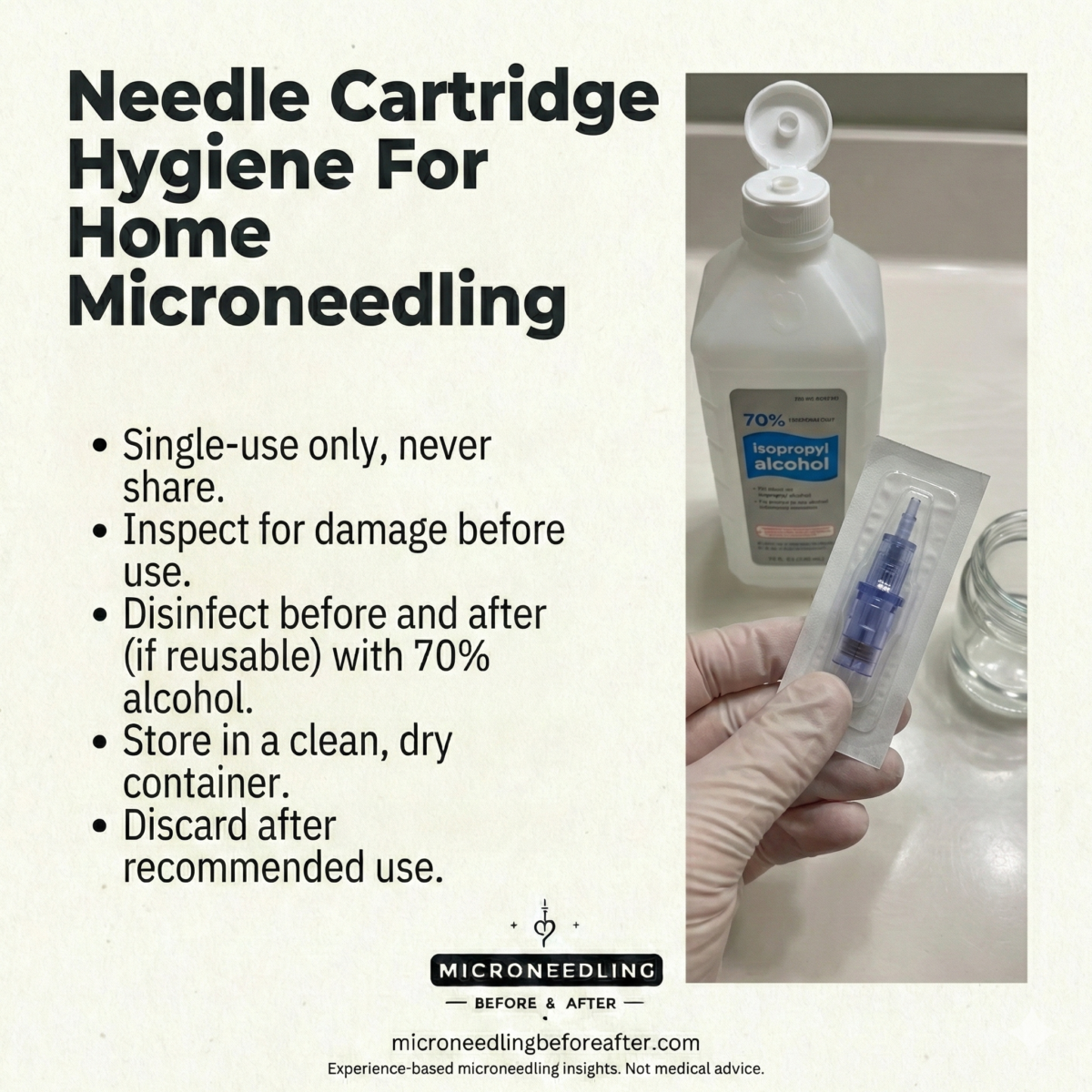
I prefer single-use, factory-sterilized disposable cartridges for home use. Most reputable home microneedling devices are designed for disposable cartridges. Reusable cartridges require validated sterilization (autoclaving) that is not available or reliable in a typical household setting.
- Single-use cartridges: Sterile out of the package. After one session they should be disposed of in an approved sharps container. I treat them as non-reusable.
- Reusable cartridges: I advise against their use at home unless the manufacturer explicitly provides validated home-sterilization instructions and I have access to appropriate sterilization equipment (which is uncommon).
Selecting the right needle length and cartridge for mature skin
I choose needle length with greater caution for mature skin:
- 0.25 mm: Primarily enhances topical product penetration; minimal trauma. Safe for more frequent use and suitable for very sensitive or thin skin.
- 0.3–0.5 mm: Mild to moderate dermal stimulation; commonly used at home with conservative frequency.
- 0.75–1.0 mm: Greater dermal stimulation; higher risk and requires longer recovery—ideally supervised by a clinician.
-
1.0 mm: Not recommended for unsupervised home use because of depth and infection/scarring risk.
Table: Typical needle lengths, uses, and recommended maximum home frequency
| Needle length | Typical purpose | Suggested max frequency for home use (conservative) |
|---|---|---|
| 0.25 mm | Enhance topical absorption, minimal trauma | Up to weekly to every few days depending on tolerance |
| 0.3–0.5 mm | Collagen induction, fine lines improvement | Every 2–4 weeks (start every 4 weeks for mature/thin skin) |
| 0.75–1.0 mm | Moderate collagen induction, texture/scars | Every 6–8 weeks; consider clinical supervision |
| >1.0 mm | Deep remodeling (not for home) | Not recommended at home |
I often start older patients at 0.25–0.5 mm and increase only with clinical guidance and clear healing between sessions.
Pre-treatment preparation and aseptic setup
I set up a clean, designated microneedling area with minimal clutter. I wash my hands thoroughly with soap and water for at least 20 seconds and use a fresh, disposable towel. I open the sterile cartridge only at the moment of use, touching only the exterior packaging, not the needles.
Steps I follow:
- Inspect the unopened cartridge packaging for integrity and expiration date.
- Wash my face with a gentle, non-irritating cleanser and pat dry with a clean towel.
- If I use a topical numbing cream, I apply it according to instructions and remove excess before microneedling; I avoid occlusive creams that attract bacteria.
- Optionally, I prepare skin antisepsis with either 70% isopropyl alcohol or an antiseptic recommended by the device manufacturer (chlorhexidine-based products are commonly used in clinics). I allow antiseptic to air dry fully before treatment.
Note: I avoid alcohol if the skin is extremely dry or fragile; in such cases I opt for mild antiseptic guidance from a clinician.
How I handle the cartridge during a session
I treat the cartridge as a sterile surgical instrument once opened. I avoid touching needles or letting the cartridge contact any non-sterile surfaces. During the session:
- I hold only the device body by the handle and change grips or positions carefully to prevent accidental contact with the needle tips.
- I do not “re-dip” cartridges into any liquids once they have contacted skin.
- If contact with a contaminated surface occurs, I discard the cartridge immediately and open a new sterile one.
Cleaning and disinfecting cartridges: what’s realistic at home
Most home-use cartridges are meant to be single-use and should not be disinfected for reuse. Attempting to sterilize needles at home is unreliable and unsafe. If a cartridge is marketed as reusable, I follow the manufacturer’s validated protocol exactly. That said, I can clean and disinfect non-needle components of the device (the handle and housing) using a wipe with 70% isopropyl alcohol, avoiding immersion unless the device manual specifically permits it.
Table: Cartridge cleaning guidance for home users
| Item | Recommended action at home |
|---|---|
| Disposable sterile cartridge | Single use only. Do not attempt to sterilize; dispose in sharps container |
| Reusable cartridge (rare) | Follow manufacturer instructions; most require professional sterilization |
| Device handle/body | Wipe with 70% isopropyl alcohol; do not submerge unless allowed |
| Cartridge packaging | Keep sealed until just before use; inspect for damage |
Proper disposal of needles and cartridges
I never throw used cartridges into household trash loosely. I use a rigid, puncture-resistant sharps container labeled for biohazardous waste. If I lack a commercial sharps container, I use a heavy-duty plastic container with a screw-on lid (e.g., laundry detergent bottle), clearly label it, and keep it out of reach of children and pets. When the container is nearly full, I follow local regulations for sharps disposal—many communities have pharmacy or municipal drop-off sites.
Post-treatment cartridge handling if reuse is attempted (not recommended)
If a device is genuinely designed by the manufacturer for multiple uses of the same cartridge (extremely rare), I follow validated manufacturer steps which may include:
- Immediate removal and immersion in an approved sterilant compatible with both needles and cartridge materials.
- Rinse with sterile water to remove sterilant traces.
- Drying and storage in a sterile environment.
I stress that these protocols are manufacturer-specific and must be validated; improvisation is unsafe.
Antiseptics and disinfectants: choosing the right agent
I rely on products that are practical and evidence-informed for home use:
- 70% isopropyl alcohol: Readily available, effective against many bacteria and viruses on non-porous surfaces. Good for skin or device wipe-down prior to treatment if tolerated by the skin.
- Chlorhexidine gluconate: Often used for skin prep in clinical settings; requires caution in eyes and ears and may be irritating to fragile skin.
- Hydrogen peroxide: Not my first choice for device disinfection; can be corrosive and may damage materials.
- Bleach (sodium hypochlorite): Effective but can corrode device components and is not appropriate for needles or skin antisepsis.
Table: Disinfectant pros and cons for home microneedling
| Agent | Pros | Cons |
|---|---|---|
| 70% isopropyl alcohol | Readily available, quick drying, effective on many pathogens | Can be drying/irritating to mature, thin skin |
| Chlorhexidine gluconate | Effective skin antiseptic, longer residual effect | Possible irritation; not for eyes/ears; may be incompatible with some materials |
| Hydrogen peroxide | Readily available | Can damage surfaces and materials; not ideal for device sterilization |
| Bleach | Broad-spectrum antimicrobial | Corrosive; not appropriate for delicate device parts or direct skin application |
I use antiseptics conservatively on mature skin to minimize irritation and barrier disruption.
Frequency of cartridge replacement and signs of wear
Even if a cartridge appears intact after one use, needle tips can dull or deform. I replace cartridges according to manufacturer recommendations or after a single use whenever possible. Signs that a cartridge should be discarded immediately include:
- Bent or missing needles visible under magnification
- Any discoloration or residue inside cartridge after use
- Unusual resistance or snagging during gliding
- Pain increases beyond expected treatment discomfort
When in doubt, I discard and use a fresh sterile cartridge.
Technique adjustments for mature skin to minimize complications
I modify my approach for clients and for myself if I am the user and am over 50:
- Use shallower needle depths (0.25–0.5 mm) initially.
- Reduce the number of passes per area—two passes may be sufficient; avoid aggressive multi-directional passes.
- Use gentle pressure; do not force the device.
- Treat smaller areas per session and allow more healing time between treatments.
- Avoid microneedling directly over areas with thinning skin, skin tags, active rosacea flare, or uncontrolled eczema.
I prioritize conservative treatment and monitor healing closely.
Post-treatment care and infection prevention
I follow a simple, structured post-care routine to reduce infection risk and promote healing:
- Gently cleanse the skin with sterile saline or a mild, fragrance-free cleanser an hour after treatment if needed.
- Apply a sterile, preservative-minimal occlusive or serum if tolerated—hyaluronic acid serums are commonly used to support hydration. I choose preservative-free or low-irritant formulations when possible.
- Avoid makeup, retinoids, exfoliants, and topical vitamin A or strong acids for at least 48–72 hours (longer for deeper treatments).
- Use broad-spectrum sunscreen (SPF 30+) once the skin has re-epithelialized; I avoid sun exposure risk during the first week.
- Monitor for signs of infection or abnormal inflammatory reactions.
I keep the treated area clean and avoid touching with unwashed hands.
Recognizing complications and when I seek medical care
I expect mild redness, minimal bleeding, and transient tightness after microneedling. I seek medical attention if I notice:
- Increasing redness, warmth, swelling, severe pain, or purulent discharge (signs of infection)
- Fever or systemic symptoms after treatment
- Delayed healing beyond 7–10 days
- New hyperpigmentation or hypertrophic scarring worsening over time
If an infection is suspected, I stop microneedling and contact a healthcare professional promptly. Depending on the situation, topical or systemic antibiotics may be necessary.
Special considerations: product application through a cartridge
I discourage applying topical serums or products directly onto the cartridge or needle tips. Applying products to the skin before treatment can be acceptable if they are sterile, non-irritating, and approved by the device manufacturer—however, many professionals apply serums after microneedling rather than before. Pre-coating needles can introduce contaminants or alter needle mechanics.
Allergy and sensitivity precautions
I review ingredients of any pre- or post-treatment products. Many older adults have more reactive skin or contact sensitivities. I perform a patch test for new topical agents on an area of skin at least 48–72 hours prior to a microneedling session when possible.
Device maintenance and battery safety
I follow manufacturer instructions for device maintenance. Important steps I follow:
- Do not immerse the device body in water unless the manual permits it.
- Wipe the exterior with 70% isopropyl alcohol.
- Store in a clean, dry place, ideally in the original case.
- Replace batteries or recharge only according to guidance; avoid operating a device with visible electrical damage.
Maintaining the device prevents malfunctions that could cause uneven needle engagement and trauma.
Travel and portability hygiene
If I travel with my microneedling device, I keep cartridges in their sealed sterile pouches until use. I carry a small hand sanitizer or 70% isopropyl alcohol wipes for device and skin preparation when away from home, and I transport a dedicated sharps disposal container or plan safe disposal upon return.
Contraindications and when I do not microneedle at home
I avoid home microneedling if any of the following apply:
- Active skin infection (herpes simplex, bacterial infection)
- Severe acne or cystic lesions in treatment area
- Active dermatitis or open wounds
- History of keloids or hypertrophic scarring
- Uncontrolled diabetes or other conditions that impair wound healing (I consult a physician)
- Recent isotretinoin use (typically avoid for 6–12 months following systemic therapy; consult prescriber)
I consult with a dermatologist or qualified professional if any of these apply.
How I document and track sessions
I keep a small treatment log documenting:
- Date of session
- Needle length and cartridge lot number (if available)
- Areas treated and number of passes
- Any product applied before/after
- Observed skin response and healing notes
This helps me detect patterns, manage cumulative effects, and provide useful information to clinicians if problems arise.
Managing pigmentary risks in mature skin
I recognize that post-inflammatory hyperpigmentation (PIH) can occur, though older skin may be less prone to PIH than darker skin types. To reduce pigmentary risk:
- I avoid aggressive treatments and excessive inflammation.
- I ensure strict sun protection before and after treatment.
- I delay resurfacing or active chemical agents until the skin is fully healed.
If PIH develops, I seek professional management including topical depigmenting agents under medical supervision.
Practical checklist: what I prepare before a home session
I follow a pre-session checklist:
- Sterile, unopened cartridge ready
- Clean device handle and battery charged
- Clean workspace and fresh towel
- 70% isopropyl alcohol or approved antiseptic
- Gentle cleanser and post-treatment serum or moisturizer
- Sharps container for disposal
- Treatment log and camera for photos if tracking progress
This simple checklist reduces the chance of errors and contamination.
Advice on sourcing cartridges and devices
I buy cartridges and devices from reputable retailers or directly from the manufacturer. I verify:
- The product is intended for home use.
- The needles are medical-grade stainless steel and the cartridge is labeled sterile.
- The device has good user instructions and warranty information.
I avoid discounted or unlabeled cartridges with unclear sterility claims.
Educating others: why I won’t share cartridges or devices
I do not share needle cartridges or devices that use cartridges between people. Sharing increases the risk of cross-contamination and bloodborne pathogen transmission. Even sharing between family members is unsafe.
When I consider professional microneedling instead of home use
I refer myself or clients to a licensed clinician for:
- Needle lengths >1.0 mm
- Treatment of deep scars, severe texture issues, or complex zones
- Patients with significant health conditions affecting healing
- If there is uncertainty about technique, infection, or abnormal scarring
Clinician-administered treatments come with professional sterilization processes and medical oversight.
Summary: practical, conservative, and safe
I summarize the essentials for needle cartridge hygiene for home microneedling in mature skin:
- Prefer single-use, sterile cartridges and never reuse or attempt to autoclave at home.
- Use conservative needle lengths and frequency for skin over 50.
- Maintain aseptic handling and skin antisepsis appropriate for fragile skin.
- Dispose of used cartridges in a puncture-resistant sharps container.
- Monitor healing closely and seek medical attention for signs of infection or abnormal response.
I emphasize that safety and hygiene are as important as technique in achieving good outcomes with microneedling.
Frequently asked practical questions I receive
- How many times can I use one cartridge? I recommend single use for most home cartridges. If manufacturer states otherwise, follow their validated guidance.
- Can I sterilize a used cartridge in alcohol? No — alcohol does not reliably sterilize needles and will not remove tissue or biofilm lodged in crevices; discard instead.
- What antiseptic should I use on my skin before microneedling? I typically use 70% isopropyl alcohol or chlorhexidine per device recommendations, balancing antisepsis with skin tolerance.
- How soon can I apply serums after the session? I usually wait until the skin’s initial re-epithelialization (several hours to 24 hours) and use gentle, low-irritant serums thereafter.
If a question is not covered here, I encourage consultation with a dermatologist.
Final practical protocol I follow for a safe home microneedling session
- Verify cartridge is sterile and packaging intact. Wash hands and prepare clean area.
- Cleanse skin and, if appropriate, apply antiseptic; allow to dry.
- Mount a new single-use cartridge onto the device without touching needles.
- Use conservative needle depth and pressure; limit passes.
- After the session, apply a sterile, gentle post-treatment product and sun protection.
- Immediately place the used cartridge into an approved sharps container; label and store until proper disposal.
- Clean the device body as per manufacturer instructions and document the session.
I maintain this protocol consistently to protect skin health and optimize outcomes for mature skin.
If you would like, I can provide a printable checklist or a customizable treatment log template that I use to track sessions and healing for clients over 50.

 English
  Spanish