
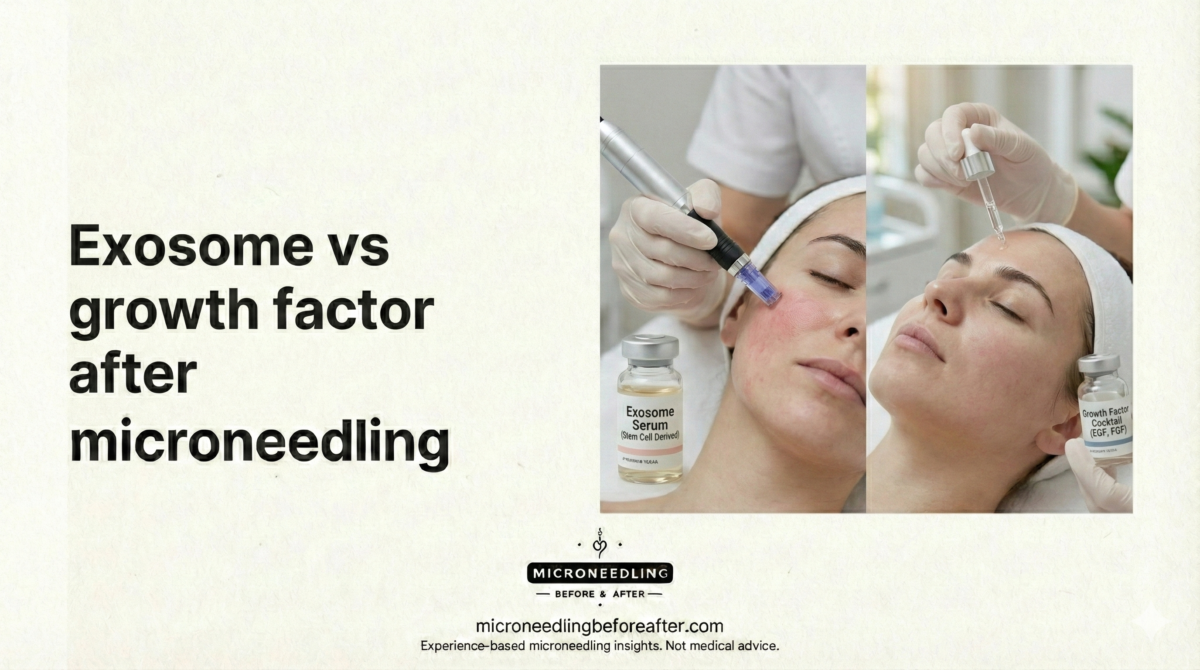
? Which is more effective and appropriate to use after microneedling: exosomes or growth factors?
Introduction: framing the decision between exosomes and growth factors
I often encounter patients and colleagues who ask whether exosomes or growth factors offer superior outcomes after microneedling. Both classes of biologics aim to enhance wound healing, collagen remodeling, and skin rejuvenation, but they differ fundamentally in composition, mechanism of action, regulatory status, and practical handling. In this article I explain those differences, review current evidence and safety considerations, and provide practical protocols and decision-making guidance to help clinicians and patients make an informed choice.
What microneedling does and why adjuncts matter
Microneedling creates controlled microinjuries in the epidermis and dermis to stimulate wound-healing pathways, collagen induction, and remodeling. I explain why topical biologic adjuncts are used after the procedure: microneedling transiently increases skin permeability, allowing larger molecules to reach dermal targets more effectively. By applying growth-promoting agents immediately after treatment, practitioners can theoretically amplify regenerative signaling and accelerate visible improvement.
Mechanistic overview of microneedling
I clarify that microneedling triggers a cascade of hemostasis, inflammation, proliferation, and remodeling. The initial inflammatory phase recruits platelets and immune cells, which secrete cytokines and growth factors that recruit fibroblasts and stimulate neocollagenesis. Adjunctive biologics aim to modify or enhance specific elements of these phases to improve quality and speed of repair.
What are exosomes?
Exosomes are extracellular vesicles (EVs) approximately 30–150 nm in diameter, secreted by many cell types, including mesenchymal stem/stromal cells (MSCs). I describe that they carry proteins, lipids, mRNA, microRNA, and other signaling molecules, functioning as intercellular messengers that modulate recipient cell behavior.
Biological actions of exosomes relevant to skin repair
I outline the primary mechanisms by which exosomes contribute to skin regeneration:
- Modulation of immune response: exosomes can shift macrophage polarization toward a reparative phenotype (M2), reducing prolonged inflammation.
- Angiogenesis: exosomal cargo often includes pro-angiogenic factors that support neovascularization.
- Fibroblast activation and matrix remodeling: microRNAs and proteins within exosomes promote fibroblast proliferation and collagen synthesis while balancing matrix metalloproteinase activity.
- Anti-apoptotic and antioxidant effects: exosomes can support cell survival and mitigate oxidative stress in injured tissue.
Sources and manufacturing of exosomes
I note that exosomes are commonly derived from cultured cells such as human umbilical cord MSCs, adipose-derived MSCs, or other cell lines. Manufacturing methods include differential centrifugation, ultrafiltration, size-exclusion chromatography, and tangential flow filtration, followed by characterization for particle size, concentration, and protein markers. Quality control and donor screening are critical for safety and reproducibility.
What are growth factors?
Growth factors are soluble proteins or peptides (for example, epidermal growth factor [EGF], platelet-derived growth factor [PDGF], basic fibroblast growth factor [bFGF/FGF-2], transforming growth factor-beta [TGF-β]) that bind specific cell surface receptors and activate intracellular signaling cascades that regulate proliferation, migration, differentiation, and extracellular matrix synthesis.
Biological actions of growth factors relevant to skin repair
I summarize major actions:
- EGF: stimulates keratinocyte proliferation and migration, helping re-epithelialization.
- PDGF: chemoattractant for fibroblasts and smooth muscle cells; promotes matrix deposition.
- FGF: stimulates fibroblast proliferation and angiogenesis.
- TGF-β: regulates collagen synthesis and remodeling; can promote scar formation at high concentrations. I emphasize that growth factors have direct receptor-mediated effects and a relatively well-understood dose-response relationship.
Key differences between exosomes and growth factors
The differences are significant in mechanism, complexity, and clinical implications. I provide a comparative table to make distinctions clear.
| Feature | Exosomes | Growth Factors |
|---|---|---|
| Composition | Lipid bilayer vesicles carrying proteins, mRNA, microRNA, lipids | Single or combinations of soluble protein/peptide ligands |
| Mechanism | Multimodal: deliver regulatory RNAs/proteins to modify cell behavior and intercellular signaling | Receptor-mediated activation of signaling cascades (direct agonists) |
| Source variability | Depends on donor cell type and culture conditions; complex cargo | Recombinant proteins or isolated from plasma/platelets; defined molecules |
| Stability | Often require cold chain; can be lyophilized/stabilized formulations available | Some are stable topically; others require refrigeration; shorter half-lives in vivo |
| Regulatory status | Evolving; many products lack formal FDA approval for aesthetic indications | Recombinant growth factors have regulatory precedents in some indications; topical cosmetic formulations variable |
| Dosing complexity | Difficult to standardize by bioactivity units; measured by particle count, protein content | Easier to quantify in mass/concentration; defined dosing possible |
| Immunogenicity | Potentially lower if from human sources, but risks exist with allogeneic material | Low to moderate; depends on source and impurities |
| Biological breadth | Broad immunomodulatory effects; can influence many pathways | Targeted effects tied to specific receptors |
I use this table to underline that exosomes are inherently more complex and potentially pleiotropic, whereas growth factors provide targeted signaling.
Evidence base: clinical and preclinical studies
I summarize preclinical and clinical evidence and emphasize quality and limitations.
Preclinical data
I note that numerous animal studies demonstrate that exosomes from MSCs accelerate wound closure, reduce scar formation, and increase collagen organization. Growth factors have long-standing preclinical evidence showing promotion of re-epithelialization and collagen synthesis.
Clinical data for growth factors after microneedling
I state that clinical studies on topical growth factors (often combined in serums) applied after microneedling show improvements in texture, firmness, and pigment irregularity. PRP (platelet-rich plasma), a growth-factor rich autologous option, has more robust clinical literature supporting improved outcomes when combined with microneedling for acne scars and skin rejuvenation.
Clinical data for exosomes after microneedling
I explain that clinical data for exosomes in aesthetic dermatology are emerging but more limited. Small case series and pilot studies report accelerated healing, reduced postprocedural erythema, and improvements in texture when exosome preparations are applied after microneedling. High-quality, randomized, controlled trials are currently sparse, and heterogeneity in exosome products complicates interpretation.
Limitations of current evidence
I emphasize that differences in product source, manufacturing, concentration, and application protocol make direct comparisons difficult. Regulatory oversight is limited for many cosmetic biologic products, which affects study reproducibility and product quality.
Safety and regulatory considerations
Safety is paramount in aesthetic procedures that incorporate biologic products.
Safety profile of growth factors
I indicate that topical growth factor products—especially autologous PRP—have generally favorable safety records, with transient erythema and swelling being the most common adverse events. Rare theoretical risks include aberrant cell proliferation if improperly used in oncology patients; thus I recommend screening for active malignancy and caution in patients with histories of skin cancer.
Safety profile of exosomes
I explain that exosomes are biologically active and can modulate immune responses. While clinical reports seldom show severe adverse events, potential risks include immune reactions, transmission of unwanted signals (e.g., pro-tumorigenic signals), and contamination if manufacturing controls are inadequate. Long-term safety data are limited.
Regulatory landscape
I summarize regulatory status concisely:
- Many growth factor-containing topical cosmetics are classified as cosmetics and are subject to less stringent regulation than drugs.
- Some growth factors have approved medical uses; for example, PDGF in wound healing products for diabetic ulcers.
- Exosome products frequently occupy a gray zone; the FDA has issued warnings about some exosome products marketed with unapproved claims. I advise clinicians to verify product registration, manufacturing standards (GMP), and available safety data before use.
Practical aspects of product handling and storage
I cover logistics that affect clinical use.
Storage and shelf life
I note that many exosome products require cold storage (refrigeration or freezing) and may be supplied frozen or lyophilized to stabilize cargo. Growth factor serums and PRP preparations also may need refrigeration, but many topical growth factor creams are formulated for ambient stability.
Preparation and sterility
I emphasize that sterile technique is essential when applying any biologic to microneedled skin. Autologous PRP must be prepared in a closed system under aseptic conditions. Commercial exosome and growth factor preparations should be opened and applied according to manufacturer instructions to avoid contamination.
Timing and technique of application after microneedling
I outline practical protocols for maximizing effect and safety.
Immediate application vs delayed application
I explain that microneedling creates transient microchannels that usually close within 4–24 hours depending on depth. I recommend applying biologic adjuncts immediately after microneedling to maximize dermal delivery. However, in cases where product sterility is uncertain or when a patient has high infection risk, delaying or avoiding application may be prudent.
Typical protocol for application
I provide a sample stepwise protocol that I use or recommend:
- Perform microneedling under sterile conditions with appropriate topical anesthetic.
- Immediately cleanse the treated area with sterile saline.
- Apply the chosen biologic: exosome suspension, growth factor serum, or autologous PRP. Distribute evenly using sterile applicators, avoiding pooling.
- Optionally, perform a second pass of very light microneedling only if indicated and with caution.
- Apply a sterile occlusive dressing or barrier serum as directed by the product instructions.
- Advise the patient on postprocedure care and followup.
I add that clinicians should document product lot numbers and consent patients regarding the biologic used.
Dosage, concentration, and treatment frequency
Dosing varies widely among products. I discuss practical recommendations.
Exosomes
Because standardized bioactivity units are largely lacking, clinicians often rely on particle count (e.g., particles/mL) or total protein content. I recommend following manufacturer guidance, using the lowest effective dose validated in clinical studies when available, and monitoring response. Typical regimens involve a single application immediately postprocedure and repeated microneedling sessions every 4–6 weeks for a series of 3–4 treatments.
Growth factors
Topical growth factor serums usually list concentrations in micrograms or IU; follow manufacturer instructions. PRP dosing is determined by platelet concentration and volume; most microneedling protocols use 2–5 mL of PRP applied to the face. Treatment frequency commonly mirrors exosome protocols: 3–6 treatments spaced 4–6 weeks apart, with maintenance sessions every 3–6 months.
Comparative efficacy: expected outcomes and timelines
I describe realistic expectations for patients.
Early improvements
Both exosomes and growth factors can reduce postprocedural erythema and accelerate re-epithelialization within days to a week. Patients frequently notice reduced downtime when biologics are used.
Intermediate outcomes (weeks to months)
Improvements in texture, pore size, and superficial scar appearance may be apparent after 4–8 weeks as collagen remodeling proceeds. Growth factors encourage keratinocyte proliferation and fibroblast activation, while exosomes may produce more modulation of inflammation and angiogenesis.
Long-term remodeling (3–6 months)
Clinical improvements in scar appearance, skin laxity, and fine lines mature over months. I note that combining biologics with multiple microneedling sessions tends to yield cumulative benefits.
Combination approaches and synergistic use
I discuss how exosomes and growth factors can be used together or with other modalities.
Combining exosomes and growth factors
I explain that some clinicians combine exosomes and growth factor serums to harness complementary effects: growth factors for receptor-mediated proliferation and exosomes for immunomodulation and microRNA-mediated regulation. Limited clinical reports suggest additive benefits, but robust comparative trials are lacking.
Combining with PRP, lasers, and topical actives
I note that autologous PRP is commonly used with microneedling and has a strong evidence base. Combining microneedling with fractional lasers, chemical peels, or topical retinoids (after healing) can enhance outcomes. I caution against combining aggressive resurfacing modalities in the same session without careful patient selection.
Patient selection and contraindications
Patient safety requires appropriate screening.
Contraindications and cautions
I list common contraindications:
- Active infection at the treatment site (herpes simplex, cellulitis, etc.)
- Isotretinoin therapy within the last 6–12 months (I usually recommend a 6-month washout for microneedling; some practitioners extend to 12 months)
- Uncontrolled diabetes with poor wound healing
- Bleeding disorders or anticoagulant therapy (assess risk vs benefit)
- Active cancer in the area or uncontrolled systemic malignancy (biologics may theoretically influence tumor microenvironment)
- Pregnant or breastfeeding patients (limited safety data; use caution)
- Known allergy to any product vehicle or excipient
Counseling and informed consent
I stress the importance of documenting a discussion that covers expected benefits, limitations, off-label or investigational product status, and potential risks, particularly with exosome products that may lack regulatory approval for cosmetic use.
Cost, accessibility, and practice considerations
I describe the economic and logistical factors that influence product choice.
Cost comparison
Exosome products often command higher prices than standard topical growth factor serums or PRP due to production complexity and newer market positioning. Patients should be informed about cost per session and the expected number of sessions for meaningful results.
Availability and supply chain
I note that exosome availability can be inconsistent across markets, and cold chain logistics may limit access, particularly in smaller practices. Growth factor serums and PRP kits are generally more accessible.
Practical case examples
I provide two brief illustrative cases to contextualize usage.
Case 1: Moderate acne scarring, limited budget
I might recommend a series of microneedling treatments combined with autologous PRP, performed every 4–6 weeks for 3–4 sessions. PRP offers a cost-effective, autologous growth factor source with good evidence for scar improvement.
Case 2: Patient seeking accelerated healing and has higher budget
I may recommend microneedling with immediate application of a validated exosome product (from a reputable manufacturer with GMP standards), followed by maintenance sessions and adjunctive topical growth factor-based serums. I counsel regarding limited long-term safety data and higher cost.
How I evaluate product quality before use
I list practical quality checks I perform.
- Verify manufacturing standards (GMP certification or equivalent).
- Review available safety data and peer-reviewed studies on that product.
- Request certificates of analysis and donor screening information for cell-derived products.
- Confirm storage and handling recommendations, and ensure my clinic can maintain the cold chain.
- Assess sterility packaging and single-use delivery systems to minimize contamination risk.
Postprocedure aftercare and instructions
I provide a simple aftercare protocol I give patients.
- Keep the treated area clean and avoid active rubbing or exfoliation for 48–72 hours.
- Avoid makeup for at least 24 hours if possible; when resumed, use mineral-based, non-comedogenic products.
- Use gentle cleansers and broad-spectrum sunscreen daily once re-epithelialization is complete.
- Avoid retinoids and strong actives for at least 5–7 days or per clinician guidance.
- Report any signs of infection (increasing pain, purulent drainage, fever) immediately.
Common questions and misconceptions
I address frequently asked items I hear in practice.
Is one option guaranteed to be better?
I emphasize that no option guarantees superior outcomes for every patient. Clinical response depends on baseline skin condition, product quality, protocol, and patient adherence.
Are exosomes just a marketing fad?
I argue that exosomes have a strong biological rationale and encouraging preclinical data, but clinical adoption should be tempered by scrutiny of product quality and regulatory compliance. They are not merely a trend, but they require rigorous evidence to become mainstream.
Can I use exosomes or growth factors at home?
I advise against home microneedling combined with potent biologics. Professional administration ensures sterile technique, appropriate device settings, and safer handling of biologic products.
Practical decision-making framework
I propose a concise framework I use to decide between exosomes and growth factors for patients.
- Assess patient goals, budget, and tolerance for experimental options.
- Review medical history and contraindications.
- Prefer autologous PRP or well-characterized growth factor serums when regulatory clarity or budget is a priority.
- Consider exosomes if clinical urgency for accelerated healing exists, the patient is informed and consents to off-label use, and a high-quality product is available with appropriate safety documentation.
- Document rationale, product details, and follow-up plan.
Future directions and research needs
I outline areas where further data are needed.
- Standardized potency assays for exosome bioactivity to allow dose-response studies.
- High-quality randomized controlled trials comparing exosomes, growth factors, and PRP after microneedling.
- Long-term safety monitoring for cell-derived biologics to assess oncologic and immunologic risks.
- Head-to-head comparative effectiveness studies to guide best practices.
Summary and practical recommendations
I summarize the key takeaways and give actionable recommendations.
- Both exosomes and growth factors can augment microneedling outcomes by enhancing healing and collagen remodeling.
- Growth factors (including PRP) are better characterized clinically and are generally more cost-effective and accessible.
- Exosomes offer broader, multimodal signaling that may confer advantages in modulating inflammation and scar quality, but evidence and regulatory oversight are currently more limited.
- I recommend choosing products from reputable manufacturers, applying biologics immediately after microneedling under sterile conditions, and following established treatment intervals (usually 3–4 sessions, spaced 4–6 weeks).
- Informed consent and thorough documentation are essential, especially when using products with evolving regulatory status.
Practical comparison table: quick-reference for clinicians
I include a concise table that clinicians can use as a quick reference during consultations.
| Question | Growth Factors (incl. PRP) | Exosomes |
|---|---|---|
| Typical cost per session | Low–moderate | Moderate–high |
| Ease of access | Widely available | Variable; may require special ordering |
| Regulatory clarity | Better (many topical GFs well-established) | Evolving; many products unapproved for aesthetics |
| Clinical evidence after microneedling | Moderate to strong (esp. PRP) | Emerging; limited RCTs |
| Handling/storage | Refrigeration common; easier | Often requires cold chain; sensitive |
| Safety profile | Generally favorable; autologous PRP safest | Favorable in reports; long-term data limited |
| Ideal use case | Routine scar/rejuvenation protocols | Cases where immunomodulation/angiogenesis is targeted |
Final thoughts
I encourage clinicians and patients to weigh evidence, safety, and practical constraints when choosing between exosomes and growth factors for use after microneedling. In my practice I tailor recommendations to the individual, prefer proven, reproducible options when evidence is stronger, and consider newer biologics like exosomes selectively when benefits justify cost and the product meets high manufacturing and safety standards. I remain attentive to emerging high-quality data that will further clarify the optimal use of these promising adjuncts.


 English
  Spanish